Assuming

Perhaps it was the distance from home turf
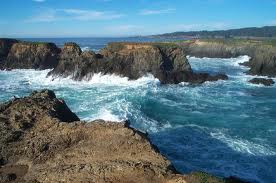
that softened me, perhaps the spanking blue
of sky that pried me open, pounding surf,
eroding wind that turned ideas askew,
but I was struck by tender gesture, seen
outside a small cafe: a woman took
her partner’s arm while glancing love between
them – gentle longing in an upward look.

They neither cared I saw nor what I thought.
I cherished my own loneliness the while
I watched, and didn’t learn till later on how wracked
she was, behaving like her mother taught:
with awful admiration, wiggle, smile,
when he was breaking up with her, in fact.

Posted in Poetry | Leave a comment

Traffic (Part 4 of 4)

Airline travel died. Trains and buses began to lose business a few months later. Early in 2013 the home delivery of newspapers ended. That service had always been both a luxury and a security nuisance. At the end of May Clara managed to make it home to the West Coast. She had to do it in a car. There wasn’t a viable alternative.

A few members of her family had survived but no one shared her dream of a clean existence. She left the LA area for good six weeks after arriving, and lived with Hank in the Bay Area for the four months it took them to conclude that they needed more space and privacy than were available there.

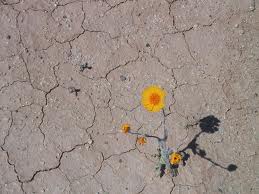
Hank’s family was more understanding, and some of them accompanied Hank and Clara on the initial explore and the first several months. Their gypsy caravan headed north and east, considered the Trinities, concluded that the area would grow too congested once the exodus from the cities really began, and settled on the northern California/Nevada border, near Eagleville. They actually dug in there, partly in the South Warner Wilderness west of Eagleville and partly in the Hays Canyon Range of northwestern Nevada, just beyond the Middle Alkali Lake at the border. The good thing about northwestern Nevada and adjoining northeastern California was that it was unpoliced, unpatrolled, unprotected. Free. The bad things were the wildness of the Wilderness and the complete lack of shade on the Nevada side. That’s why they dug in. Forest lairs and desert caves.

In time they assembled a motley tribe. It was disharmonious but organized, anarchic but united, at least as long as Hank and Clara kept breaking ground in social and other theories. They all felt guilty enough about their dependence on gasoline-powered vehicles that they developed alternatives. Together they began assembling a new underground railroad, to bring back travel and social evolution.

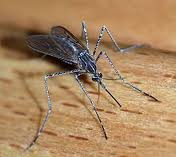
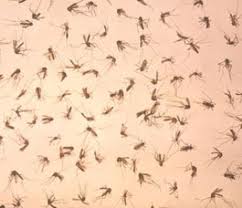
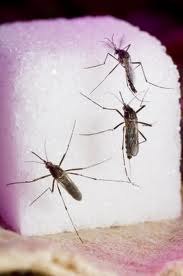
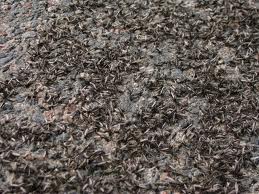
It was on a trek to their special hot spring, fifty miles away from any paving, near dusty Soldier Meadows Road, that Clara first understood traffic. Contrary to some unsubstantiated reports, neither she nor any of her and Hank’s companions were under the influence of hallucinogenics; in fact for that retreat they didn’t even bring their home beer or marijuana. But that’s where Clara first saw cars as the machine analogy to mosquitos. Swarming the planet, sucking its blood from the inner veins and capillaries, serving no good purpose …

At first, Clara’s insights were received like Lilly’s theories about dolphins, which were resented by jealous scientific colleagues and discredited by the irrelevant reports about Lilly’s experiments with LSD, even though the theories were correct. Clara’s early publications about the Traffic Laws were smeared with malicious rumors about her life among the communards. She and Hank retreated even further underground.

It wasn’t until 2029, three years after the damage to earth’s ozone layer reached the point that was in fact irreversible, that some folks began to pay attention to the simple observations now known as the Clarian Laws of Traffic. It wasn’t until it was too late to make any difference that the survivors realized it had all, always, been about fuel. Oil. Gas. Blood. Sucking. Ironic that the civilized response to fundamental Middle Eastern terrorism was the scrapping of planes, trains and boats for an increased dependence on the black greasy resource that was beneath all the inequalities and unrest in the area. But death, even global death, is like that. Ironic.

Posted in Fiction | Leave a comment

Traffic (Part 3 of 4)

Clara had never been camping, and she liked everything about it except the mosquitos. She hated them. She didn’t understand why something so horrible had such a cute name. Little moscas: mosquitos. They were ugly, hideous bloodsucking abominations as far as Clara was concerned, and she couldn’t see that they served any useful purpose. She once read that the irritation from a mosquito bite comes from an anticoagulant the insect injects before she starts sucking. The article went on to state that if one doesn’t disturb the mosquito, she will withdraw the anticoagulant along with her needle-like proboscis, and there will be no resulting bumpy itchy reminder. It was hard to hold still while the nasty mosquito finished her meal, but Clara tried it. And it didn’t work. The bite left a welt just as irritated as any other, and Clara missed the satisfaction of trying to kill the bug.

The Everglades trip was important in two ways. It got Clara and Hank together; they began a relationship over those few days and, although they were separated by the width of the continent for awhile, they remained a tight couple ever after. Also, the Everglades with its obnoxious and omnipresent mosquitos started Clara thinking along the lines that would later develop into her Laws of Traffic. That was the dawning of the fractalization of traffic, circuit diagrams, and the natural circulatory systems.

People like Hank and Clara escaped anthrax exposure because they regularly failed to read the newspapers. They didn’t live in the suburbs. As innovative as was the terrorist attack against the World Trade Center and the Pentagon, it paled in comparison to the hideous brilliance of the later biological strike. Somehow everyone in America noticed that most cabs were driven by swarthy turbaned men, and that many corner stores were owned by Middle Easterners, but no one observed their other industry. The newspapers were delivered before dawn, after all, tossed with a regular thunk-swish from the darks of car interiors to the rough concrete of residential pathways. Nobody noticed the tossers, who were invariably young men of Arab descent. Hard-working, passionate Muslim men who had limited economic opportunity, no matter what, in this country.

The initial anthrax spores came through the mails, and landed in the offices of the media. No one was watching the home-delivered newspapers. On that Sunday in December nobody got suspicious about the slightly yellowish dust in the folds of the datebook section. Back in the days of old-fashioned inks a number of readers would have washed their hands to remove dark smudges after reading, but with the slightly-glossy convenience of unsmearable printer’s ink few washed between reading and eating breakfast. Americans blithely conveyed inhalational anthrax spores from their palms and index fingers to the warm moist vicinity of their noses and mouths. Epidemic ensued, with the expected vignettes of greed and generosity around the antibiotics. The U.S. lost almost eight percent of its population, mostly in the suburbs. Northern Mexico and southern Canada were affected too.

Posted in Fiction | Leave a comment

Dance Marathon

We overflowed the hall – we’re such a crowd
we littered every niche and split the schools.
While other cohorts gossiped we made loud
eruptive innovations, suffered fools,
invented newer music, ate vaccines,
and danced until the sun sent us to bed.
Our parents put their hopes into machines
but we were warm and mystical instead.

Now reeds are split and gut has come unstrung
and all the instruments have gone untuned.
The night is old and we few move among
the ghosts of dancers, limping, sore, marooned
together, rhythm-linked by happenstance:
coincidental partners at the dance.

Posted in Poetry | Leave a comment

Traffic (Part 2 of 4)

Starting late in 2012, American society ceased to move. Communities turned inward, made do with less, stopped interacting. But some of the college-age kids, those who had been associating most freely with each other, refused to quit.

Clara and Hank met half a year before that. As odd as their names was the site of their introduction: Ft. Lauderdale at spring break. It’s true that they were college students, but they weren’t party-type college students. She was a diligent architecture major at MIT, and he studied physics at UC Berkeley. It was a pure fluke that each of them made it to Florida that week, but once there it wasn’t that strange that they found one another.

Clara came from Los Angeles but she attended MIT because her parents were from the east coast and were secret snobs about college. She lived in the French house, and her housemates cajoled her into going with them to the spring break capital of the western world. But Clara was a diligent serious studious young lady, and she did not enjoy the heady hedonism of the Florida scene. She tended to sift back against the walls in any tavern or party.

Hank was born and raised in Walnut Creek, a suburb of San Francisco. He traveled less than twenty miles from home to move into his northside co-op at Cal. Compared to Clara he was a lackadaisical student, but he had a gifted brain and an outgoing disposition; he did well at school.

His full name was Henry, for no familiar reason. His parents were Creative Anachronists, ever into the Renaissance Faire, and they named their children Henry and Morgaine. The whole Arthurian atmosphere so permeated his childhood that Hank eagerly embraced science in school. He had an aptitude for it anyway, and he grew up a total rationalist. He was too sensible to waste spring break on frivolity when he could be contemplating quantum physics, but his best friend Jason was competing in a bicycle race there and then, and Hank didn’t have the heart to refuse Jason’s plea to make the trip with him.

Clara and Hank bumped into each other at the back of a party. He leaned against his left shoulder and looked toward the bar, half attentive to the flirtations going on there. She rested her right hip against the same wall and glanced the other way, toward the dancers. Without either intending it they bumped butts just as a song ended, and they heard each other’s awkward excuses. Eyes looked into eyes and they made a connection. Before an hour had passed they agreed to disdain the party, left it, and started making plans for a broader escape. The next morning they assembled sleeping bags and backpacks, borrowed one of her housemate’s cars, and drove off to experience the Everglades and each other.

(continued next Monday)

Posted in Fiction | Leave a comment

Traffic (Part 1 of 4)

Before the Jihad, travel was easy. Before the Jihad, “jihad” meant holy war, but terrorists and the media changed that. Muslims had to come up with another word for holy war, afterwards. After-word.

In the old days, travel was easy. That was before newguilds were established or traffic was understood, back when people carried separate cellphones and personal computers.

They had all sorts of little devices hanging from their belts, but they didn’t have air travel restrictions. They could book their whole trip online, use electronic tickets, carry everything with them, and arrive just a few hours ahead of takeoff to make their planes.

It was easy then, often cheap, always popular. People from developed nations traveled all the time. The planet was wrapped like a golfball in airline routes; con-trails wreathed it like rings. Culture coursed. Commerce flourished. Viruses were transmitted. Terrorists acted.

Amazed afterwards at how obvious it was, it took the genius of Abner Abeneski to observe that neither terrorism nor disease could spread without travel. And it took the forcefulness of Capt. Powell to actually shut travel down.

The Jihad started in 2012. Within a year easy travel was a nostalgic memory. At first everyone declared the spirited intention to move and trade like before. Anything less would “let the terrorists win.” But the business-as-usual plan was like trying to stay friends after a romantic breakup. The participants have the sincerest intentions, but a process is initiated, a process which must proceed in its own inexorable time, eroding intentions and reshaping attitudes, until what results, the gradual complete estrangement, is perfectly natural and retrospectively obvious. In the same way, although everyone vowed to keep on keeping on, folks tended to stay in their communities because it was too much hassle to move around. Their communities began to resemble villages. There was a measurable improvement in security.

The problem was, novelty went down as security went up. It sank along with travel. There weren’t many visitors, and there wasn’t much news. Those conditions, along with a general fear of terrorist acts, led to a provincial distrust of strangers and of anyone who looked or acted differently. Nonconformity was not well tolerated.

Everything might have devolved with blissful ignorance if it weren’t for the transition group. If only there had been some adjacent wilderness area that people could inhabit for a generation, civilization might have made the shift and secured the advantages of a cozy feudal society. But the late adolescents were present. Most of them were caught up in the indignation and carried by the tide of fervent nationalism, but some paid attention. Theirs is the age most likely to attend, grown out of the pretense of childhood and not yet sheltering under the nostalgia of maturity. Some of the twentyish actually shake their heads, look up and around, point and say: “But see here: This makes no sense!”
Posted in Fiction | Leave a comment

Studio

I feared I’d waste myself: I used to dream
recurrently about an unused room.
Reminded nightly to it, I’d redeem
it from the day’s oblivion, resume
a planned inhabitance, investigate
its windowless perimeter, and then
I’d wake to tasks already running late,
soon harried to forgetfulness again.

I used to think my solitude a waste
of personality. I thought I must
bestow myself on someone else. I chased
a wraith of Iris to a pot of rust,
and found beside the rainbow room for me
to like my own peculiarity.

Posted in Poetry | Leave a comment

Deliberately Adrift

I used to have an automatic gauge.
It didn’t matter where or when I went:
there always was a crowd of folks my age
around me. We are the experiment
abused by apres bellum attitude
(they fought to keep us safe, to make us doze),
confused as cancer, vigorous and rude,
but ever having others to oppose.

I see my way diverged. The major stream
when I was yet a minor took the route
of least resistance. Clinging to a dream
I hooked into this rivulet and doubt
I’ll find me company, abandoned free
without a paddle, gauging only me.

Posted in Poetry | Leave a comment

School Spirit (2 of 2)

They never make it to the vigil. Rob is hauled into the waiting area outside the dean’s office, and after 19 minutes he is summoned inside and suspended for three days. Colleges are informed; he always afterwards believes he was rejected by Stanford because of the suspension.

Vivian waits the 19 minutes with Rob. Mrs. Engles (Dean of Girls) orders her to return to classes but Vivian harangues the woman about the true purpose of school. She maintains then and afterwards that most kids can educate themselves, through books and discourse, but that school is for socialization and civilization and the application of ethics. She speaks with eloquence and vehemence. Her cheeks flush and her eyes shine. Mrs. Engles rears back a little awed and retreats to her office. Rob is rapt with admiration.

Of the 312 seniors at the school, 214 try to protest the execution. 84 of those, Linda among them, simply cut school and drive to the vigil. 63 more make it off the campus before the cordon goes up. The remaining 67 are trapped in school, although Rob is sent home.

David goes back to class but Vivian doesn’t. She circulates from room to room of senior students, trying to enlist her classmates in a real movement to do the work to outlaw capital punishment entirely.

She stops in one doorway after another and makes a plea that loses some passion with each iteration. She appeals to her fellows and at the last class, the one at the northwest corner upstairs, she even begs a little. But no one offers to join her.

She’s wrought up and reactive. She orates hard but she can’t help noticing that the crowd energy has dissipated. The faces look empty. The eyes don’t meet hers.

She considers all the spirit she felt when she tried to get to the vigil. Reveling in the excitement, the rush of actually doing something, the extreme focus. Her friends were then invigorated; now she reads their embarrassment for her and their tepid reluctance to work.

Whatever inclination Vivian has to activism was mortified today. She concluded that people would rather be riled and excited than sweaty and laboring. Now she becomes more loyal to Rob and less smitten by David. She remembers David’s wry face in Rob’s car and she disdains his noncommittal style. She doesn’t know that David will become a psychologist or that Rob’s actions were driven by an impulse to rage rather than heroism.

Vivian will grow up to be a sardonic adult, assuming the worst about her species, laughing at human foibles. She will be uncomfortable in large groups and will seek gratification in sporadic kinky sex and the controlled consumption of controlled substances. She’ll be nearly sixty before she tries politics again and allows that people want to be better. Actually love to be taught. It’s just that people have a taste for high production values, Vivian will finally understand. Seldom moved unless entertained. Never entertained unless moved. Those are her best realizations, and they’ll take her almost forty years.

Posted in Fiction | Leave a comment

School Spirit (1 of 2)

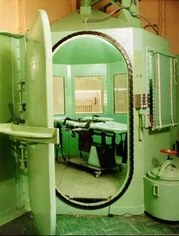
It is the first execution in almost 20 years. The state intends to kill James Abner Maddox, and the students are against that. Their high school looks like the prison; the seniors enjoy not a lawn but a quad. They can see the penitentiary from the back parking lot. But they’d have protested the procedure anyway. They’re against capital punishment.

No one argues that Maddox is a good guy. Over a two-year period he raped and murdered six women in the area. Before that he offed his parents in Michigan. He is a white sociopath with very little likelihood of rehabilitation. But capital punishment is too final. Not a deterrent. Uncivilized. The students are 17 and 18 and their futures are so wide they want to keep the rims unsullied.

A vigil began outside the prison last night. Votive candles. A lot of students considered it but most didn’t attend. By morning, excitement had built up a bit. More students showed up. But many made it to school before the urge to demonstrate became irresistible.

The time is February 1967. The place is northern California.

Vivian and Rob and David are seniors. They are all bright, white, and headed for prosperity. Each appears totally together to the others; each within feels awkward and unsure. Vivian is short, too plump in her own opinion, and very intelligent; she likes both boys but has a sneakily strong crush on David. Rob hides a major attraction to Vivian while David feels fond and of course curious about her. The boys are alike lanky, but Rob’s a tall redhead and David is medium height and medium brown.

They have a number of classes together. In math, English, and Latin they sit in a block with their other friend, Linda, and sometimes they’re so sarcastic that they get in trouble. (Linda has a crush on no one at this time. She is more interested in creating new tastes, like raw mushroom slices on corn chips, or baby carrots with salsa. Linda will be asexual until her early twenties, when she will admit she is gay and try to make Vivian her lover, and seriously rock their friendship for almost a year).

They have a lot of classes together but not till third period. Vivian and Rob and David make a plan to go to the vigil at the prison. They conspire before school starts, her dark blonde hair next to red and brown. They agree to meet in the front parking lot, at Rob’s car.

Rob has PE second period and David has photography. It’s a simple matter for them to cut their classes and rendezvous at Rob’s Corvair. More often than not they cut second period anyway. They tend to hang out then in the senior quad, where Vivian can see them and toss them notes in two-hole rubber stoppers. She spends second period as lab assistant to her old chemistry teacher, whom she respects, so she drops by Mr. Gibson’s room to let him know she’s going to the vigil. During their brief talk the school administration forms a cordon around the doors to the rectangular building, and when Vivian tries to get to Rob’s car she is confronted by a phalanx of dark-suited adults.

She attempts to get through anyway. She asserts herself between the dean of boys and a counselor, but Mr. Roscoe pushes her back. She tries again, and again the dean shoves. A third time. Rob and David see it all. Rob is so incensed that he comes tearing out of his maroon car and around its rear to do unto the dean. A little friendly assault.

Posted in Fiction | Leave a comment