Lake Winnipesaukee 1957

My father carved a walking stick for me.
He chose a sturdy branch and trimmed it free
of shoots and then he whittled carefully
my name and figures of geometry.

They sat the summer afternoons away,
two fathers tall and old two score of years
ago, but young they are for me today,
remembering:
the Pabst Blue Ribbon beers
they drank – the way they sat secure and strong
with patterned walking sticks between their knees –
are pictures no one’s camera took. As long
as life I’ll rent them room within my memories,
for clearer than the image of their craft,
I recollect how frequently they laughed.

(one of my few print-published pieces: The Enigmatist, December 2009)

Posted in Poetry | Leave a comment

Narrator (2 of 2)

Lanie was surprised that so few of her women friends had babies. That so few of the guys had careers. Not only did no one she knew grow wiser with age; the common consensus was that any good idea had already been thought, so there wasn’t much point in thinking.

All of that surprised her, but nothing stunned her so much as the way she saw people lie to themselves. She often watched her acquaintances at parties or on vacations. What she usually witnessed were people who were less than happy. Maybe they were good sports trying to have a nice time, but usually they were dissatisfied, putting in hours at an event that didn’t live up to their expectations. Wearing false smiles. Stifling yawns. Forcing gaiety. Growing testy.

That wasn’t the surprise part. Most of the time the event didn’t live up to Lanie’s anticipation either. No, the stunner was the debriefing. In the conversations afterward, those same participants claimed to have had a wonderful experience. Really. Best (fill in the blank) ever. And Lanie had watched that witness have, at best, a mediocre time.

It got worse. The person may have known at first that she or he was putting a positive spin on a boring party. But faster than Lanie could even record it, the speaker began to act as if she or he believed the spin.

It wasn’t just parties. When Lanie’s friend Nancy was around thirty-five she had a secret abortion. She was married and her husband would have liked a child, but they already had two and Nancy was convinced they couldn’t handle another kid. Lanie helped get her through the procedure; as far as Guy and the world knew, Nancy had a miscarriage and then a complication which resulted in a tubal ligation. That therapeutic abortion was called a miscarriage, miscarriage, miscarriage so widely, that by the time the aspiring fetus would have been ten Lanie heard Nancy refer to the experience as a miscarriage even to her.

She tried to talk to Nancy about it. Coming away from a good dinner at a downtown restaurant, Lanie broached the old subject. Nancy acted confused. Then she stammered out her pale insistence; she said she’d never had an abortion.

Lanie was stunned by Nancy’s denial. She went silent, considering the inaccuracy of recollection and also how estranged or even hateful some life partners are toward each other, when they were interrupted. As often happened, Lanie’s posture or stride triggered something in a stranger, and an interaction occurred.

They were about a block from Nancy’s car. Lanie was half-aware of a street person, young and female, in torn jeans, light shirt, denim jacket, athletic shoes, sitting on wide concrete steps, eating something out of a small fast-food bag. The young woman jumped to a stand and accosted her:

“I know you, bitch!” She placed herself about three feet in front of Lanie, a little to her left. She was a few inches taller than Lanie’s five foot six, with a fine light mahogany complexion and hot chocolate eyes. “I hear you talkin’ about blowin’ things up! I see your nasty grin!”

At first Lanie was scared. Then angry. A familiar stubbornness bloomed in her and she told herself that the street was hers as much as anyone else’s. She felt Nancy tense beside her, but she resumed walking. The young woman followed, still ranting. Every impulse in Lanie was to speed up, so she deliberately slowed down. And felt the young woman, behind her, slowing too. She stepped yet slower and she heard from the diminishing voice that her antagonist was allowing a gap to widen between them.

Suddenly she understood. That young woman had mistaken her for someone else. That young woman had, in fact, begun to realize her own mistake even while she confronted Lanie. There had been understanding at last, in those hot chocolate eyes. Momentary beautiful connection.

“Crazy street person,” Nancy concluded. Lanie couldn’t agree less.
Posted in Fiction | Leave a comment

Narrator (1 of 2)

Lanie works in stories. She records episodes in her diary from her experiences or from what people tell her, which makes her remember them, which prompts her to tell them again, better, to others, which often results in others telling her theirs.

It isn’t only that people are more disclosive to her. Around Lanie they remember things they are otherwise likely to forget.

The journal entries began when she was six and took off in junior high, but the tendency became marked in tenth grade. That was the year Lanie hated herself and longed to be catatonic. She concluded that nothing could be worse than self-disesteem. After a long bad wallow she started to talk more and then to recraft herself, using as her models book characters, random glances, classical traits. She carried visions around: the fierce independence of Howard Roark, the enduring wisdom of Athena, the serenity implied by the softness of an acquaintance’s palm, the erotic potential in her scarf-clad Barbie doll. Of course the recrafting process required that she face her own demons.

She felt insecure.

She felt like there was some rule book distributed to everyone but her, at birth or sometime.

She felt exposed.

She dreaded embarrassment.

No sooner did she enumerate those evils than she understood that she didn’t have any corner on them. Everyone she knew, everyone she watched, had exactly the same imps flitting around their souls.

That was her tenth grade epiphany. Only to Lanie it seemed more like a penetrating glimpse into the obvious. It was all there, in front of her and everyone else, but most other folks were too busy tending their own tenderness to notice (she carried the image of dogs curled into corners, protectively licking their own trembling limbs).

She talked about it at the time. Of course she did; Lanie always talked, and people always talked back to her. Over and over she witnessed the cascade of surprise as her interlocutor detected a common bond, a fellow traveler, understanding. She began to live the theory: from then on, until refuted by experience, she would assume everyone else was as insecure and imperfect as she was.

Nothing contradicted that assumption in the ensuing decades. But there was a greater charm to it than that. It was as if the theory – her understanding about the insecurity and flaws of all folks – acted as some sort of shield to prevent the veil of narcolepsy that benighted everyone else. Starting when they were in their mid-twenties, Lanie watched her peers stall, forget, and start to proclaim. They began to rewrite their childhoods as happier or sadder than they really had been. Most of them settled on certain opinions, once and for all – put matters to bed as it were – and ever after prevented the entry of any new information by continually projecting a settled stance. Somehow her friends had become people with policies instead of passions.

Meanwhile, some things became as clear to Lanie as if she were wearing night vision goggles on a scouting mission. Like all first daughters she watched her parents, and she saw them seek pity points as if they were carousel rings, competing about how much each labored or suffered (her mother needed roller skates to keep up with the household demands and a genie to fulfill her husband’s micro-instructions about home maintenance and car repair; her father had all of the trials of breadwinning, and also suffered from year-round hay fever). In time, Lanie and her brothers became expert at slightly exaggerating their efforts and their illnesses. And no sooner did she note the Pity Point game in her own family than she started seeing it in everyone else’s.

It didn’t stop when she grew up, either. That’s when she got to discover the myth about quality time vs quantity, the fact that laziness was the true mother of invention, the twist that work produces inspiration.

Posted in Fiction | Leave a comment

Telomerase

Abnormal cells divide and reproduce,
and replicate again without an end.
They multiply amok in mad abuse
mitotic and chaotic, and so bend
ideas of potent immortality,
they take the twisted shape appropriate
to teeming crowded cruel calamity,
like maggots convoluting in a pit.

How many minds have sought an end to death?
How many scientists, philosophers
and prophets, too, have acted like it’s good
to live forever, ever drawing breath
and with that ever growing? Let the curse
of cancer give us death best understood.

Posted in Poetry | Leave a comment

A Little Death

A raccoon died last night, I think. Actually I’m sure many raccoons died last night, globally, but I’m recording events in the backyard of _____ .

That’s where I live. My home is a studio cottage in the garden. It was built as a guest house in 1944.

My cottage is too small for more than one person, but that’s not to say I live alone. The yard, including my roof and underneath the boardwalk leading to my door and the outbuilding I call my office, is home to skunks, opossums, squirrels, raccoons, and insects. Birds and cats visit often. We’re all aware of one another and we co-exist pretty well.

Sometimes the raccoons are pests. I’ve seen herds of them on my skylight, moving like maggots. They are aggressive and sneaky and while their faces are cute, their feet are ugly.

But lately, for the last week or so, I’ve been aware of one raccoon. She looks not young; she seems experienced and not shy. I spotted her on the trellis and heard her on the roof with increasing and abnormal frequency. I started to wonder if she could be ill.

Yesterday the crows got loud. They seemed to increase in population and assertions. I heard them raucous all morning. It struck me: perhaps they sense imminent mortality; perhaps they’re waiting to feast.

Last night the crows continued loud. And the raccoon was around a lot. I heard footsteps on the roof so often that it creeped me out enough to shut my deck door. I saw the animal on my trellis at least half a dozen times.

It must have been 3 or 4 this morning when I woke to the fading squeals of mammalian distress. I thought I might be hearing death.

I’ve been up for over two hours now. I haven’t seen or heard a raccoon or a crow. It reminds me of when a homeless character disappears from the corner where I’ve seen him for what seems like forever. I want the absence to be owing to a good change in fortune but I fear it’s not. And probably, I’ll never know.

Posted in Lessons | 1 Comment

Meeting

I fell in love at 2:05 PM
just yesterday – aware you shut the door,
my belly heating and from nowhere phlegm
between my voice and air. My thoughts implore
you to approach, to cover me, surround
my limbs, insist on me, and take my neck
between your teeth. Now to the carpet, downed,
impressed, and business comes a sweaty wreck.

So raced imagination while we spoke
financial stuff, my fantasy a wheel
about a conference table, cleared for use.
There came a minute quick when something woke
in me, as if you laid a stark appeal,
and now I’m half-convinced and coming loose.

Posted in Poetry | Leave a comment

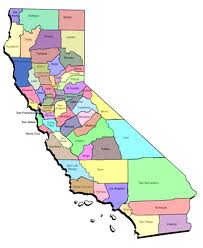
Political Poem

Our state put subdivision on the map,
invented traffic arteries, suburbs,
redesignated dead end cul-de-sac
and made the freeways frequent. It disturbs
the symmetry – our huge diversity
a manatee that tips a dish of prawns
that cluster near Long Island on a quay:
the West has water wars; the East has lawns.

If we could subdivide our state in three
we mostly think we’d better spend our lives.
We’d part north-center-south so naturally:
divide the baby and the kid survives.
“Too big to flourish and too large to fail”
is purchased with economies of scale.

Posted in Poetry | Leave a comment

The Key (2 of 2)

A big part of the problem was Jeannie herself. Her head. They had to tread carefully around this one. The report did mention her aneurysm; it says the accident was definitely the direct cause of the concussion, but all parties agree that the injury was greatly exacerbated by the time bomb in her brain.

What they didn’t mention they didn’t know. But I’ve worked with Jeannie for six years. The woman has phobias and doesn’t hesitate to describe them. She won’t ride in the first or last car of a train. Whenever she gets a cold she accuses the building of making her sick. She’s so uncomfortable alone that we always try to arrange to have someone with her. She would have tried to insist on a low office except she’s convinced that she’s vulnerable to environmental insults if she works below the 6th floor. And she’d take the stairs if that were feasible, but we settled on 14 and that’s a thigh burn.

So Jeannie is very nervous in the elevator. And that time she was riding alone. I’m sure her tension contributed to the concussion which triggered her aneurysm which caused the brain bleed which has her in the ICU, even now.

Maybe I shouldn’t describe her in present tense? Not that she’s terminal – in fact, she’s amazingly conscious and now expected to recover – but maybe she has changed.

It’s ironic that Carl can’t see her. But only family gets into ICU, and he’s not that yet. Now maybe never.

He doesn’t take to adversity. Many people can become irked to the point of tantrums by small things but rise to the occasion in a real catastrophe. My husband is just the opposite. He seems so easy going: all sorts of minor irritations flow past him like water off a duck’s back. But bring on a crisis and he freezes. He was stranded on the bridge during the Loma Prieta quake. Other people walked on, some even climbing past the break. Carl stayed put and waited for rescue that never came. Hours later he and a few other sad cases finally shambled back to First Street and to finding their ways across the bay. Or when our son was injured, up at the river, by a stick-batted rock … why, I had to actually argue with Carl about the trip to the hospital. There was a probable concussion and lots of dirty water, but daddy wanted to just bandage it and watch.

No. Carl isn’t good when the chips are down. Unless Jeannie makes a fast complete recovery, I won’t bet on them going any distance any more.

Carl’s more of a good-time guy. The first year with him was the most fun in my life. We laughed all the time. After he left his wife he moved into my apartment. I’ll never forget when my neighbor Linda mentioned how jealous she was of me. I asked why. “Oh, your love affair,” she said. “Carl?” I replied. “Not him: you two. I have to tell you, I often hear you through the wall. I mean, our bedrooms are this close,” she explained, holding up the index and second fingers of her right hand, pushing them hard together. “I’ve heard you two laughing as and after you made love. God, you sounded happy …”

That was the beginning. Sweet times. Except I remember them now and the shades are different. Then we were dealing with Barbara, his crazy soon-to-be-ex-wife. Fielding her emotional phone calls at odd hours. Ultimately getting a restraining order to make her leave us alone.

Now I’m the soon-to-be-ex-wife. I’ll admit I’ve been confused. I’ve made a few calls. My timing probably could have been better. But to get a restraining order against me? When I don’t even know where they live? Carl won’t tell the kids his address or new phone number, ostensibly because they might give it to me, the harridan, the terror of their pure love. Give me a break.

Because I’m finally giving Barbara one. Suddenly I’m sure she was never crazy. Now I’m sure the problem was Carl.

I’m sorry about Jeannie. Not in apology, but in sympathy. Maybe my key had something to do with the accident, but I’m sure I didn’t mean it.

I’m sorry, in apology, about Barbara. I’m ashamed now of how we mocked her. How we even used her distress as an aphrodisiac. For that loving laughter that Linda overheard? That laughter was mean.

If I prayed I would do one for Jeannie. But the longest prayer would be for myself. It’s awful and sorry and trite that I had to be the mocked wife, the wronged woman, to see my own cruelty.

I’m toting around a lot of baggage. I may as well carry more keys.

Posted in Fiction | 2 Comments

The Key (1 of 2)

It was a freak accident. It never should have happened. The forensic people have finished their work now, and they say it took a perfect conjunction of unlikely events. But the fact is, an office elevator fell last month. And Jeannie is still on life support because of it.

I swear it’s dust. It’s always dust. There may only be one God, but dust motes are His messengers. Every time there’s a problem with machinery nowadays, it seems to boil down to an intermittent glitch somewhere very small. It’s got to be dust. Some mote lodging somewhere, momentarily blocking or constricting or otherwise affecting. That’s when they actually manage to find the problem. Most of the time the repairpeople just aim blame at other involved parties (they point at each other so much it’s called the Digital Age) and replace whole modules. It’s cheaper to do that than to find the problem and fix it.

Except maybe it isn’t dust.

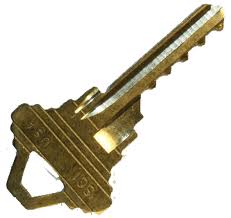
My problem, no matter what the experts say, is I think I may have caused the accident. I rode the elevator that morning. And I dropped my key down the shaft.

That wouldn’t have happened if I’d been more awake. But I was suffering from a lot of sleep deprivation right then. And it wouldn’t have happened if I carried a collection of keys, like most people. But I love to travel light. I hate to bring along anything that turns out to be unnecessary. It really bothers me to return from a trip with something unworn in my luggage. Or to live in a house with a formal dining room or other unused space. So I carry single keys on clips when I can. And since the same key that opens our office door will give me access to the ladies’ room, that Schlage lives alone in my bag.

I was distracted as I exited the elevator that day. I’ll admit it – I was indulging in vengeance fantasies. I tell myself all the time that the best revenge is living well – I chant that as I book a facial or a massage (and would chant it as I make an appointment for hair color, except right now I don’t have my hair colored, because my friends advise me to look my age in court, and my attorney doesn’t disagree). I try to just concentrate on me and ignore Carl and Jeannie, but I’m human. I slip up.

And I was tired! I was running the script where his ED returns, and Jeannie gets to deal with the drag of trying to help, and Carl finds someone even younger. I was thinking some version of that when I stepped off the elevator, and I wasn’t even aware of it when my hand relaxed. My key fell between the edge of the elevator and the 14th floor, flew like an arrowhead, downward between the strips of corrugated brass at my feet.

I remember feeling chagrined. I even thought about that word. What a fluky thing; I probably couldn’t have dropped the key so it fell that way if I tried all day. It was like those sneakers you see flung over a power line, hanging by their twinning laces and twisting in the wind; those dangling shoes are ugly, but you can’t help admiring the skill or tenacity that managed to hang them.

I wasn’t particularly inconvenienced by dropping my key. The office was already open and there were spares inside. But I thought fleetingly when it happened, and more elaborately since, about that plummeting metal piece. Did it slice through something vital at the bottom of the shaft? Did it manage to land without doing damage but then act as a metallic bridge between signals that never should have crossed?

The report said there was evidence of breakage and suggestion of a short, but there really was too much damage to be sure. They know the spring failed in a spot. And they acknowledged that the elevator was long past required inspection. But that’s true of nearly every elevator in the financial district; go ahead: take a look at the framed card the next time you ride one.

(continued/concluded tomorrow)

Posted in Fiction | Leave a comment

Object Lessons

Disposed to loving comfort as we age,
we rush from work to kitchen, bed or bath,
as if a foot massage could manage rage,
as if a DVD could blanket wrath.
We snooze commute with earphones or we drive
with NPR – we flinch beneath the barbs
of day’s misfortunes – till it’s after 5
and we’re released, except for counting carbs.

Regard our parents, living still and dim,
and let us learn a different way to spend
our time, for time cannot be saved in spite
of advertising claims. A quicker him;
a softer her: let’s mean that for an end,
and maybe by finesse endure it right.

Posted in Poetry | Leave a comment