Hating Charlotte (4 of 4)

I went, but I learned later I didn’t go alone. Charlotte tailed me, which of course she would not have been able to do if I had Pippi with me, but I didn’t, because Pippi would have complicated my vandalism.

Charlotte learned where I live, and now I’ll probably feel a little bit stalked, especially when my curbside recycling is disrupted more than my neighbors’, or when my newspaper isn’t where it should be, or when my garden sustains a little damage and there wasn’t any weather to account for it.

I’d get me a bright light and start lurking in my own windows except it won’t happen often enough. I hope I have better things to do.

Anyway, that’s not the worst of what I brought on. For Charlotte ran her own search, about me. She’s still friendly with her ex’s sister, and Norah knows Pat, who used to be with Christy, who actually roomed with Libby for a year in college. (These links appear at near light speed.)

Now Libby has met Charlotte, and liked her. Now Libby wants me to call her Eli, and she wants me to like Charlotte, and I’m not sure I can do either. The additional clues about Charlotte – that she only reads or sees what The New Yorker advises her to read or see, that even with her front yard she considers herself a gardener – haven’t uncurled my toes.

What goes around comes around, they say here and elsewhere. The next time I see crazy signs, I’ll know I’m supposed to honor the absent perpetrator for expressing opinions in a way most of us wouldn’t. I’ll remember that I should smile and just continue on my way.

But I’ll fail. The truth is, I can’t bear Charlotte’s kind of hostility. I can get used to her as Libby-Eli’s mate I guess (she’s no worse than some of my cousins), but I’m not going to ignore barbaric yard signs or assertive front fences.

I want a Red Balloon ending. I always loved that book – about a boy who loses his friend the balloon to a gang of rock-armed bullies, and who then receives condolence and adventure from all the balloons in Paris.

I’ve considered the bathroom idea again – could I gather dogs to Charlotte’s parkway if I anoint it with a lot of pee? But again: too much work; no fun; not positive. I need the gathering to be people. I need social coercion. I have to come up with more signs and beguile others into the game.

Limericks present signage problems. But epigrams may work:

Here lies a lawn that struggles to be free
Of your dog’s shit and your discourtesy

This lawn is grown for landscape. Don’t assume
It’s purpose is to be your dog’s bathroom

We love your purebreds and your mutts
But not the product of their butts

NO
POOP

Posted in Fiction | Leave a comment

Hating Charlotte (3 of 4)

It took me two blocks out of my way, but I couldn’t resist going by the next morning. I stayed on the opposite side of the street and peeked. My signs were gone.

I wasn’t totally surprised about that; in fact, I’d considered making duplicates along with the first set. If all the signs had been removed I might have stopped then, maybe even assumed that I’d gotten some point across. But only mine were gone. The original sorry three still stood.

Not for long, I vowed as I headed for the bus. And then I remembered Burma Shave. Perfect! I needed to come up with a rhyme and break it into four signs and plant them in order, in place of hers.

The best I came up with at first was NO POOP/NO PEE/DON’T LET YOUR DOG/RUN FREE, and I just couldn’t love it. But I worked on the idea, and around mid-afternoon I had it:

THEIR SHIT IS GROSS
AND
STINKS A LOT

 THEIR PEE
WILL KILL
THE GRASS

 IF YOU ALLOW
YOUR DOG
TO SQUAT

 I’LL AIM
TO KICK
YOUR ASS

I knew it was good. I could barely wait to get home and make the signs. And this time I made doubles. This time I pulled hers, leaving mine well-spaced in the four-by-twelve foot plot. I even built my signs to be bi-directional, mating 1 and 4 and 2 and 3 so readers got it no matter which way they were going. I did myself proud.

Charlotte had restored her own idea of order by the time I walked by the next morning, and I resisted another visit that (Wednesday) night. I figured she might be watching for me, so I waited till Thursday to respond. And I guess that wasn’t wait enough.

It was a moonless night and I arrived around 11, so I was covered by darkness. I had removed her signs and was pushing my first into the ground when a light as bright as halogen was suddenly on me. It was like one of those motion-detector bulbs people hang on the eave of their garage, except Charlotte was standing in her front window holding it, aiming it my way.

I had a childlike impulse to abandon all and just run, but I didn’t have the childlike speed. Charlotte was through her door before I took a step, yelling “What the fuck are you doing?” with a shrill tone. (I know she isn’t brave. It was probably only after she pegged me as another woman that she decided to confront me, and even then I heard nerves in her tone.)

I actually stammered. I said “I, uh, well, er,” or something slick like that, and she yelled in stronger voice, “You need to leave. Now! Get out of my yard!”

“Look,” I tried. “I was just responding to your signs . . .” and she barked “Leave!!”

I went. Maybe I should have continued to try to discuss, but it was late and I was ashamed. Oh, I still thought her signs were neurotic and mine were great, but the objective picture didn’t flatter me. The person in the house, with the bright light and indignation, played way better than the one doing the midnight mischief.

Posted in Fiction | Leave a comment

Hating Charlotte (2 of 4)

At first I considered the obvious: that parkway could be the final resting place for Pippi’s used poop bags. Except I’d have to be careful not to get caught, which meant night-time walks, which I didn’t want and old Pippi didn’t need. For that matter, the yard was at least a block farther from home than our regular ambles, so it just wasn’t convenient. Not enough payback for the effort.

I started thinking satirically. Take a ridiculous position (No Dogs!) and defend the hell out of it. And I started chuckling. Imagining the anonymous help I could give this advocate …

But first I thought I’d better do a background check. I called Libby.

If you want the skinny on an unfamous person, talk to a woman. A good, networking woman. Better: a Jewish woman. Best: a Jewish homosexual woman. My friend Libby.

I’m not gay (yet), but most of my girlfriends are. We have free loving supportive open friendships but they don’t invite me to their parties. They don’t pressure me but most are biding their time, me-wise, waiting for me to discover my full gayness, as they all did in time, after mucking about to their varying levels with people of the other sex.

I want to tell them it really isn’t a matter of choice, but the subject almost never actually comes up, so my words would sound like protesting too much, and I am silent. However, I can use the resources. So when I wanted something on the resident of 3978 Fresno, I called Libby and started her snooping.

She was even more amazing than usual. Only three degrees of separation, she said. It was easy once she knew that Charlotte was both gay and a paralegal.

Briefly, Charlotte was despicable. Middle-aged and bright enough to know better, she filled her life with affectation in place of passion. She was rude to waiters and bellmen, which was always a bad indicator. She insisted on traveling with a large carry-on bag even though she’d never had her luggage lost. For that matter, she was compulsively cautious – fearful of all bumps in the night and also dog shit – and she was amazingly (megalomanically?) self-centered. Everything had to be about her. Even Paula leaving her – Charlotte’s primary response was argument, because it didn’t make any sense to her that Paula would stop loving her enough to leave her.

So her dog deal wasn’t a cultural thing. And while maybe Charlotte could have used some Prozac or Paxil, it didn’t sound like any psychotropics were around. I felt safe enough to prank.

I made the signs Monday evening and first planted them that night. One said, “They make us laugh but NO DOGS!” and another said “One million years of co-evolution but NO DOGS!” and my favorite, the one I really spent some time on, read:

YES
They’re the best
home security
But
NO
DOGS!

I felt a little weird, walking over there late at night, but it only took a few minutes to push my little sign poles into the parkway. At first I thought I’d pull hers out, but I concluded that more was better and left that little plot of weeds with six messages sprouting from it.

Posted in Fiction | Leave a comment

Hating Charlotte (1 of 4)

You never know what’s going to put someone over the edge. The straw that broke the camel’s back probably looked like any other straw.

For Charlotte, it was walking out of her house a month ago and stepping in soft dog shit on the way to her car. For me, it was Charlotte’s response to stepping in soft dog shit on the way to her car.

To be thorough, we’d both been going through a rough patch. I now know that Charlotte had recently lost her life partner to another woman, and I’d lost a raft of clients, which happens cyclically if you serve small businesses but which invariably brings me down.

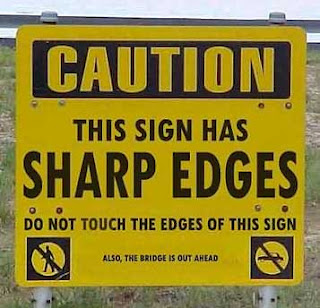
All I knew (at first) was the surreal scene in her parkway, unfolding on my left as I walked home from the grocery store one Sunday. It was an eyespanking cheekslapping afternoon. Copenhagen blue sky pocked with puffy clouds. I was striding along with my two shopping bags, when suddenly: “NO DOGS!” screamed a cardboard sign on foot-high sticks, planted in the weedy grass between the sidewalk and the street. And “NO DOGS!!” blared another, shorter, four feet further. I turned in my tracks so swiftly the shopping bags knocked into my thighs. I read the biggest sign, aimed the way I’d been walking. It was about 18 inches off the ground and after “NO DOGS!!!” it said “CLEAN UP AFTER YOUR ANIMAL!”

This seemed to be an hysterically strong response to an invisible threat. My first wonder was whether the resident went off his or her meds. This is Berkeley after all. Then I tried imagining what could drive anyone to plant such signs.

The yard was unexceptional. Offensively low-maintenance: juniper and camellias near the one-story gray stucco edifice, ratty lawn elsewhere, all shaded by a big parkway elm. Only ginger rock and ivy would have been worse. I wondered what the resident was trying to protect.

I began walking again and I started to get angry. I’m like most dog owners: responsible. I don’t let Pippi out without me. I use a leash unless there’s clearly no one around. I carry a bag for scooping her poop. I’ll admit that, very occasionally, when my supply of plastic bags and patience is low and my social resentment is high, when no one appears to be looking, I walk away from Pippi’s shit. I feel a little young and reckless doing it, like when I dare to litter the floor of the bus. But mostly I’m socially ept.

So I was surprised about my anger at those signs. But I flashed on a high school memory. Some movie in Driver Ed called “Courtesy is Contagious.” It showed a woman driver pleasantly waving another driver into traffic ahead of her, and that other driver then behaving well to the next person he encountered, and so on, extending to people holding doors open for those behind them and all the way to smiling at passing strangers. I remember thinking it was hokey but completely true, and 40 years of life experience haven’t contradicted it.

But at the same time that I “got it” about courtesy, I also understood the contagion of rudeness: a person offended is a person ill-disposed toward others, tending not to inhibit his own offensive behavior.

I took a lot of offense at those signs. I felt my heart swell with determination to somehow say fuckyou right back at the sign-planter. And nothing arose in me to inhibit that determination.

Posted in Fiction | Leave a comment

Invoice

“You’ll pay for this” he said to me today
when I diverted to the telephone.
“Beyond my phone bill?” prompted him to say
“Um hmm” and then I asked in quiet tone
“Is that a threat or promise?” He replied
“Um hmm” again, and both of us were charmed.
Our voices smiled as our words goodbyed,
our ordinance by dialogue disarmed.

I’ll pay for this, I think, most happily.
I’ll gamble weeks of inner peace on him.
Infatuated I appear to be
and into it too deep to call it whim.
I’ll pay for this, and find it nothing strange
to purchase pleasure for a little change.

Posted in Poetry | Leave a comment

R – O – N – G

I still don’t get it. I’m almost elderly and I still think there are some important subjects about which my culture is completely incorrect. Am I the only one noticing these?

There seems to be general agreement that the world of academe is more ethical and “pure” than that of business.

We view nonprofit organizations as more honest, more transparent, and less likely to play (statistical, deadline, or regulatory interpretation) games than corporate America.

Some power, some time, must have sold us on the idea of comfort food. It makes sense if the discomfort is physical, but it is patently stupid to feed a stressed individual. Odds are their digestive processes have been disordered at least and probably disrupted. And it’s not a good idea to give them alcohol if you’re not feeding them. For goodness sake, take them for a walk, a dance, bowling, anything that will allow them to work it out and through.

We hug our kids backwards. Instead of using our love to hide their eyes from dangers, we should turn them around and face the world with them, guiding them with our words as we guard their backs instead of their fronts.

Art and money don’t mix. It confuses the brain to try mixing them. The days of patronage are over and endowments are an endangered species. It’s time to drop the fantasy that one can work full-time at art. Instead, every citizen should be given a few hours a day to engage in creativity. And every citizen should work for pay or goods a few hours a day as well.

How can it possibly be that victimless crimes are still illegal? It’s well past time to drop the prohibitions against drugs and sex, and instead regulate and tax them like the luxuries they are.

I can’t believe the barbarism of the continuing attacks on female reproductive freedom.

Shall I go on? Okay: one more. I have no argument with people who think the Bible is the only book, contains all truth, and must be followed literally. At least not here, not now. I accept the statistic that tells us many of our citizens believe this way. But everyone knows the Bible was not written in English. How can it be that so few try to learn Aramaic or Koine Greek? I’m not suggesting all believers become Bible scholars, but what does it mean that they don’t even try?

Posted in Uncategorized | Leave a comment

Assuming

Perhaps it was the distance from home turf
that softened me, perhaps the spanking blue
of sky that pried me open, pounding surf,
eroding wind that turned ideas askew,
but I was struck by tender gesture, seen
outside a small cafe: a woman took
her partner’s arm while glancing love between
them – gentle longing in an upward look.

They neither cared I saw nor what I thought.
I cherished my own loneliness the while
I watched, and didn’t learn till later on how wracked
she was, behaving like her mother taught:
with awful admiration, wiggle, smile,
when he was breaking up with her, in fact.

Posted in Poetry | Leave a comment

Traffic (Part 4 of 4)

Airline travel died. Trains and buses began to lose business a few months later. Early in 2013 the home delivery of newspapers ended. That service had always been both a luxury and a security nuisance. At the end of May Clara managed to make it home to the West Coast. She had to do it in a car. There wasn’t a viable alternative.

A few members of her family had survived but no one shared her dream of a clean existence. She left the LA area for good six weeks after arriving, and lived with Hank in the Bay Area for the four months it took them to conclude that they needed more space and privacy than were available there.

Hank’s family was more understanding, and some of them accompanied Hank and Clara on the initial explore and the first several months. Their gypsy caravan headed north and east, considered the Trinities, concluded that the area would grow too congested once the exodus from the cities really began, and settled on the northern California/Nevada border, near Eagleville. They actually dug in there, partly in the South Warner Wilderness west of Eagleville and partly in the Hays Canyon Range of northwestern Nevada, just beyond the Middle Alkali Lake at the border. The good thing about northwestern Nevada and adjoining northeastern California was that it was unpoliced, unpatrolled, unprotected. Free. The bad things were the wildness of the Wilderness and the complete lack of shade on the Nevada side. That’s why they dug in. Forest lairs and desert caves.

In time they assembled a motley tribe. It was disharmonious but organized, anarchic but united, at least as long as Hank and Clara kept breaking ground in social and other theories. They all felt guilty enough about their dependence on gasoline-powered vehicles that they developed alternatives. Together they began assembling a new underground railroad, to bring back travel and social evolution.

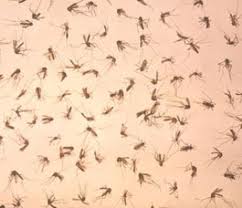
It was on a trek to their special hot spring, fifty miles away from any paving, near dusty Soldier Meadows Road, that Clara first understood traffic. Contrary to some unsubstantiated reports, neither she nor any of her and Hank’s companions were under the influence of hallucinogenics; in fact for that retreat they didn’t even bring their home beer or marijuana. But that’s where Clara first saw cars as the machine analogy to mosquitos. Swarming the planet, sucking its blood from the inner veins and capillaries, serving no good purpose …

At first, Clara’s insights were received like Lilly’s theories about dolphins, which were resented by jealous scientific colleagues and discredited by the irrelevant reports about Lilly’s experiments with LSD, even though the theories were correct. Clara’s early publications about the Traffic Laws were smeared with malicious rumors about her life among the communards. She and Hank retreated even further underground.

It wasn’t until 2029, three years after the damage to earth’s ozone layer reached the point that was in fact irreversible, that some folks began to pay attention to the simple observations now known as the Clarian Laws of Traffic. It wasn’t until it was too late to make any difference that the survivors realized it had all, always, been about fuel. Oil. Gas. Blood. Sucking. Ironic that the civilized response to fundamental Middle Eastern terrorism was the scrapping of planes, trains and boats for an increased dependence on the black greasy resource that was beneath all the inequalities and unrest in the area. But death, even global death, is like that. Ironic.

Posted in Fiction | Leave a comment

Traffic (Part 3 of 4)

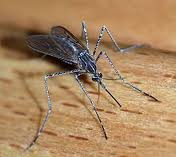
Clara had never been camping, and she liked everything about it except the mosquitos. She hated them. She didn’t understand why something so horrible had such a cute name. Little moscas: mosquitos. They were ugly, hideous bloodsucking abominations as far as Clara was concerned, and she couldn’t see that they served any useful purpose. She once read that the irritation from a mosquito bite comes from an anticoagulant the insect injects before she starts sucking. The article went on to state that if one doesn’t disturb the mosquito, she will withdraw the anticoagulant along with her needle-like proboscis, and there will be no resulting bumpy itchy reminder. It was hard to hold still while the nasty mosquito finished her meal, but Clara tried it. And it didn’t work. The bite left a welt just as irritated as any other, and Clara missed the satisfaction of trying to kill the bug.

The Everglades trip was important in two ways. It got Clara and Hank together; they began a relationship over those few days and, although they were separated by the width of the continent for awhile, they remained a tight couple ever after. Also, the Everglades with its obnoxious and omnipresent mosquitos started Clara thinking along the lines that would later develop into her Laws of Traffic. That was the dawning of the fractalization of traffic, circuit diagrams, and the natural circulatory systems.

People like Hank and Clara escaped anthrax exposure because they regularly failed to read the newspapers. They didn’t live in the suburbs. As innovative as was the terrorist attack against the World Trade Center and the Pentagon, it paled in comparison to the hideous brilliance of the later biological strike. Somehow everyone in America noticed that most cabs were driven by swarthy turbaned men, and that many corner stores were owned by Middle Easterners, but no one observed their other industry. The newspapers were delivered before dawn, after all, tossed with a regular thunk-swish from the darks of car interiors to the rough concrete of residential pathways. Nobody noticed the tossers, who were invariably young men of Arab descent. Hard-working, passionate Muslim men who had limited economic opportunity, no matter what, in this country.

The initial anthrax spores came through the mails, and landed in the offices of the media. No one was watching the home-delivered newspapers. On that Sunday in December nobody got suspicious about the slightly yellowish dust in the folds of the datebook section. Back in the days of old-fashioned inks a number of readers would have washed their hands to remove dark smudges after reading, but with the slightly-glossy convenience of unsmearable printer’s ink few washed between reading and eating breakfast. Americans blithely conveyed inhalational anthrax spores from their palms and index fingers to the warm moist vicinity of their noses and mouths. Epidemic ensued, with the expected vignettes of greed and generosity around the antibiotics. The U.S. lost almost eight percent of its population, mostly in the suburbs. Northern Mexico and southern Canada were affected too.

Posted in Fiction | Leave a comment

Dance Marathon

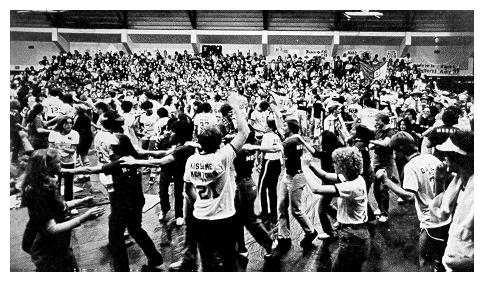
We overflowed the hall – we’re such a crowd
we littered every niche and split the schools.
While other cohorts gossiped we made loud
eruptive innovations, suffered fools,
invented newer music, ate vaccines,
and danced until the sun sent us to bed.
Our parents put their hopes into machines
but we were warm and mystical instead.

Now reeds are split and gut has come unstrung
and all the instruments have gone untuned.
The night is old and we few move among
the ghosts of dancers, limping, sore, marooned
together, rhythm-linked by happenstance:
coincidental partners at the dance.

Posted in Poetry | Leave a comment