Unified Theory of Fabrication

     When I was around 50 I encountered Nader Khalili (electronically), and I fell deeply in admiration.

I read about his idea for ceramic homes in the Middle East, and how when asked for ways to build on the moon, he came up with the concept of moondust-filled “sandbags,” coiled like beehives and secured with four-point barbed wire. He’d gone on to make small houses with sandbag tubes and barbed wire in underdeveloped areas, and I’m sure he wished like you and I do, for laxer building codes that would permit us to slap up such replaceable structures in our country.

He had a website (calearth.org), and I bookmarked it. I’m sobered to report that when I just revisited it I read that he is no longer alive.

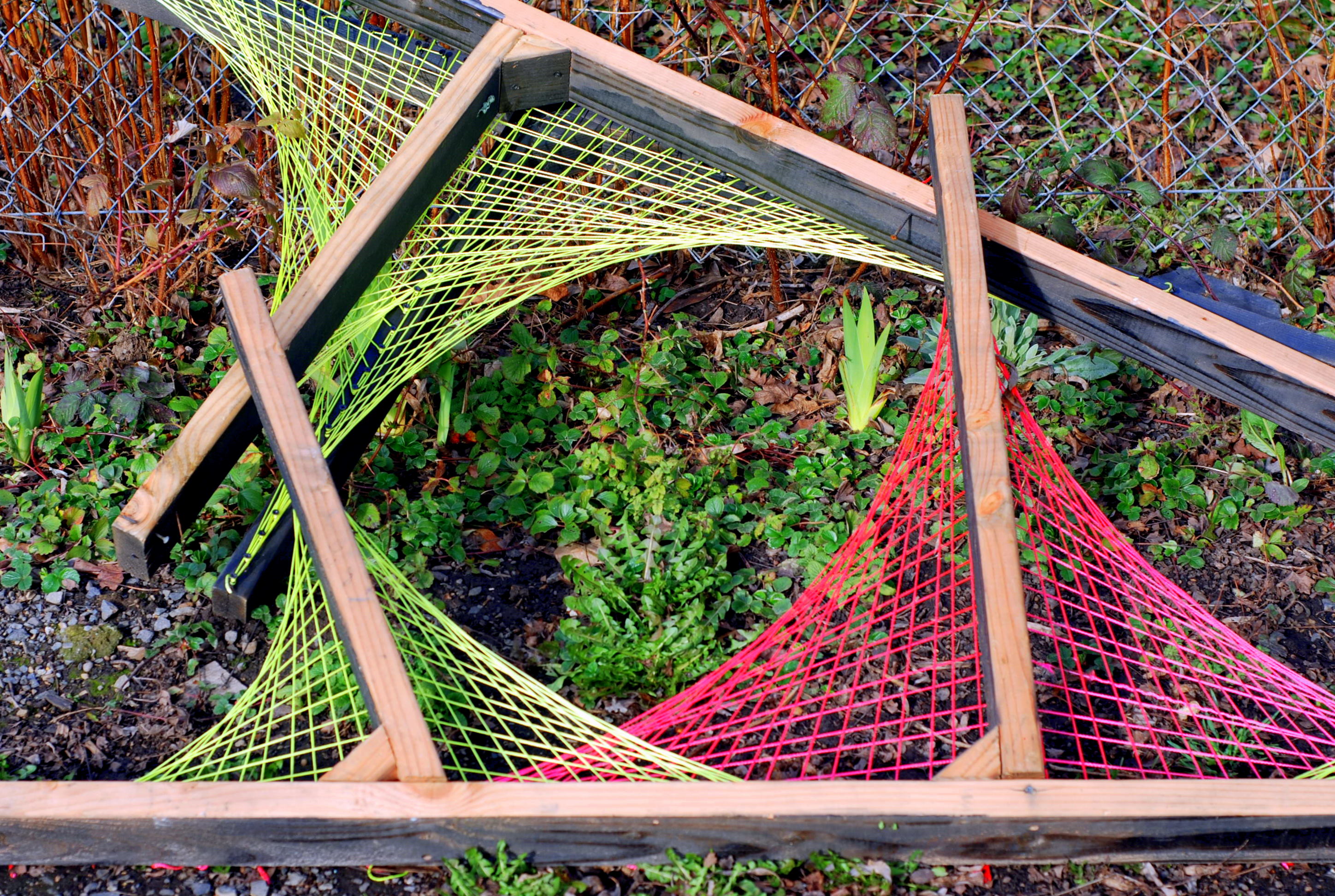
But of course his ideas are. And the sandbag or sandtube approach – I think it can be enhanced or at least varied. When I saw the website pictures of the simple houses, I was reminded of beehive pottery and coiled rugs. I wondered what other textile applications could be used for construction: macrame, knitting, crochet, weaving …?

For the sandbags are forms of very thick yarn. Fabrications could be hung from simple pipe frames, which could carry water and power and which would open the way for easy windows and doors.

I never thought of clothmaking and housebuilding as forms of the same activity, until then. Until now.

Posted in Universal Design | Leave a comment

Chemistry

   When I was 15 I took high school chemistry. That’s what college-bound kids did in the 60s; enrolled in Biology, Chemistry, and Physics in that order, the final three years of school.

It wasn’t a favorite course but I did well enough. I liked biology and physics more than chemistry, but it turned out to be useful, just like algebra has been handier than geometry even though it was not the subject I preferred.

Remember, we were boomers. So experiments and new programs were forever run on us. That year and for a few following, it was “Chem Study.” A different approach, I heard, from what had gone before. But I wouldn’t know about that. I didn’t do the before or after, and I did Chem Study twice.

Although I rarely felt as secure about my chemistry as about my other work, apparently it was good enough. I got a decent grade and the teacher asked me to serve as his lab assistant the following (my senior) year. They gave me academic credit the first semester and $0.98 an hour the second. And the teacher hooked me up with a rich college girl from Kent Woodlands. I don’t remember her name but I recall that she went to Dominican and took Chem Study there, that she had an anorexic twin sister about whom I heard but never met, that she drove a powder blue Mustang convertible in which she picked me up at school and delivered me home, and that I sat at a table while she did her homework next to me, looking either at her paper or the swimming pool in the yard, munching Doritos and drinking Fresca. She paid me $3 an hour and I now believe it was the cushiest job I ever had.

The teacher’s name was Mr. Girton. He was quiet and bookish, narrow-built and bespectacled with thick dark barbered hair, and he had unusually long clean fingernails. He looked like Dennis’s father in the comic strip. There were rumors of weirdness about him among the students, but they never amounted to scandal or arose from malice.

I got to know him, of course. He was a good soul, a gentle man and a gentleman, thoughtful and interested. The fingernails were owing to his hobby; he was a serious classical guitarist.

I penned a ditty about him when I was his student. I just dug the piece of lined notebook paper out of the footlocker (Feb 7, 2011). It’s rough and I blush for its meter, but it’s got spirit. And it helped me never forget John Girton or Avogadro’s number (6.02 times 1023).

(sung to the tune of “Yankee Doodle”)

JE Girton came to class
Riding on a slide rule
He stuck an atom in a cell
And called the test tube neutral

Chorus:


John E Girton keep it up
Keep our young minds churning.
Help us know Le Chatelier
And we can’t help not learning!

You rehearse your daily speech
Inspired by your goal
To help us find atomic weight
And meet your friend, the mole

(chorus)


We really are awake in class
Although you have to prod so
We hang on every word you say
And worship Avogadro

(chorus)


I think we’d flunk without the aid
Of faithful “Help Yourself” box.
We love to sit here taking notes
We live to see your lab smocks

(chorus)

 

Posted in Poetry, School | Leave a comment

Garage

    When I was 40 I bought the North Berkeley cottage, and that move caused a chronic small anxiety in me, about swollen creek water and the garage.

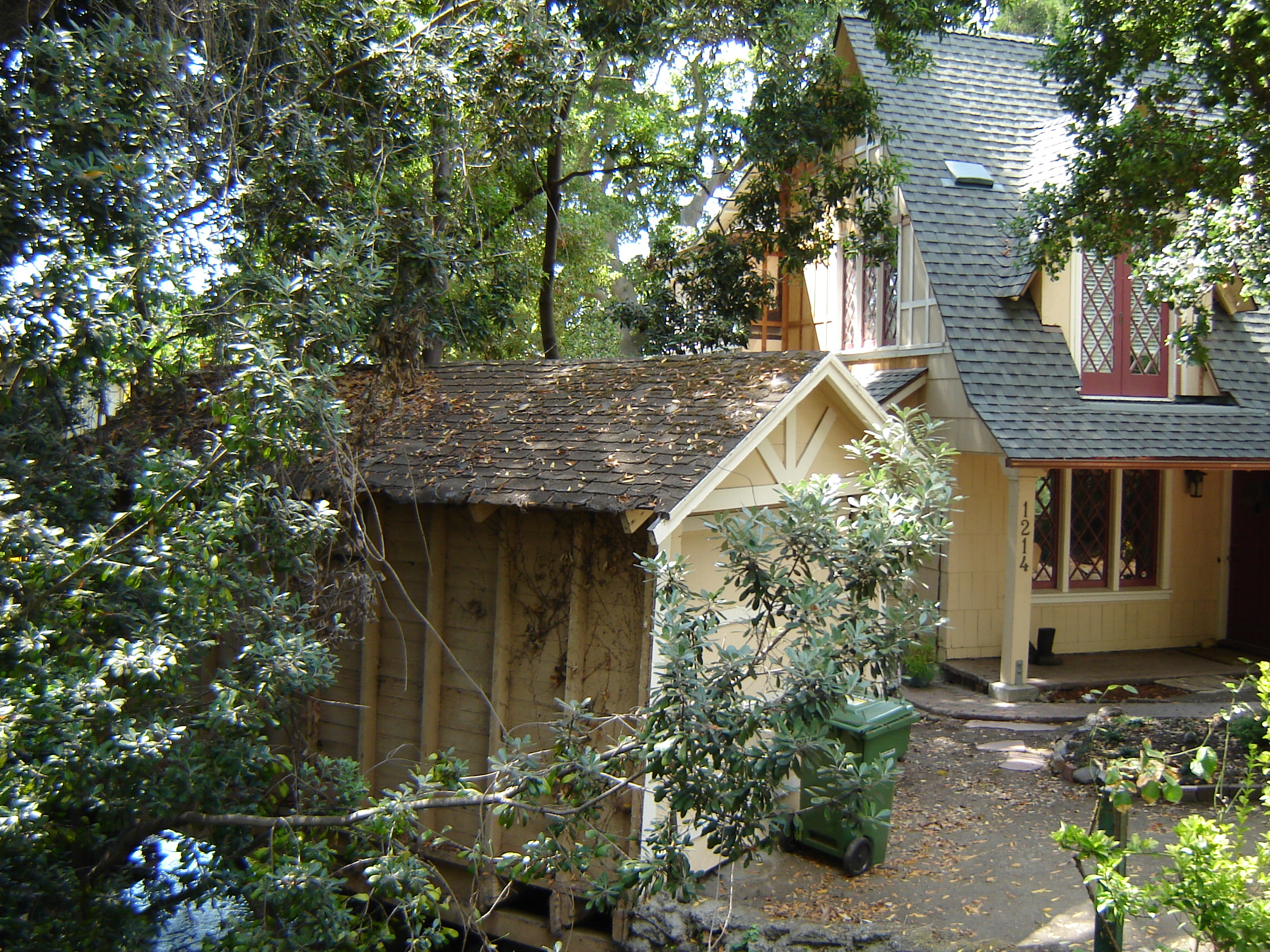
It was more of a covered bridge than a proper car house, so small it was framed on the outside, and its rear supports were in the creek. It was rotted and wobbly and frequented by rats; even after Richard brought electricity to it Katie never used it for the art studio she envisioned. It couldn’t take the weight of an automobile. We used it for storage, especially after we learned how much water the basement could host in a flood.

One inspector wrote that it was a “severely compromised structure” and should be demolished. Another labeled it an “attractive nuisance” and recommended removal.

But here’s what I have to tell you. I accompanied the inspectors both times. What they said is not what they wrote. Both guys laughed out loud at the garage, opined that it ought to be used as an exhibit in a construction class, told me what they had to write in the report, and said they’d do nothing to the garage if it were theirs. After all, each said in his own way, the structure is light and it’s stood for a hundred years – unless something big comes down the creek sideways, it’ll probably last another hundred.

So I did nothing. Oh, I made some tentative inquiries with the City of Berkeley, but I backed off when it became apparent that it would cost hundreds even to present a plan and then the likely response would be “we’d prefer that the structure be removed from the waterway.”

I did nothing, and there was no consequence in 17 years. The new owners have done nothing to the garage and it continues to stand.

I’m a worrier. I’m sorry to report that the garage kind of damped my love of rain. I have always enjoyed precipitation but I got anxious when it stormed hard. I worried too thoroughly about what would happen if that garage collapsed.

But I’m glad that I followed those inspectors around. I learned that the written report is worth very little compared to the expert’s conversation.

Posted in Lessons | Leave a comment

Continuum

“I need more space,” my boyfriend used to plead
in 1969, but what he meant
was “I want other girls, and I don’t need
a steady yet.” It wasn’t his intent
to settle down before his oats could sprout,
who’d waited all his life for jaw and beard.
He knew what Dean and Brando were about;
he aimed for outlaw and made do with weird.

But that was forty years ago. We’re old
today and we’ve exchanged our goals. I seek
a little interrupt of solitude,
but every guy I meet wants to enfold
mine into his at least four days a week.
I need more time. I love my latitude.

Posted in Lessons, Poetry | Leave a comment

OJ

    When we were in our mid-20s, Nick and I once made a memorable mess.

We were on a road trip vacation, which meant we carried detailed maps and plenty of food and drink so we could tool around on byways less traveled. He drove. I navigated and assisted.

We spent time then in the Mendocino area. I have an impression we were heading north that day, with the ocean not far off our left. It was a beautiful warm afternoon. Between our bucket seats was a big plastic bottle of orange juice.

You know the type. Opaque whitish plastic with a flimsy screw top. This was around 1974, so the juice inside was not fresh-squeezed.

Nick had taken a swig a few minutes earlier and replaced the bottle. I swear the top appeared affixed when I lifted the thing. Always before he’d retopped the bottle; why would I check?

It’s perfectly natural to shake a bottle of orange juice before drinking. Especially if it was made from concentrate. So that’s what I did. I lifted the plastic container with my left hand and just before bringing my right up to open it I gave that bottle a hearty shake: down up down up

The cap flew up at the first down. The juice flew up too. I managed to spray the windshield, the dashboard, the ceiling, the doors, and us.

Posted in Food, Lessons | Leave a comment

On Closet Doors

     Once I got into universal design (see the last few Wednesday posts), I never got out of it. I began to view housing, inside and out, big and small, as a new puzzle instead of a previously-solved issue.

The closet door question engaged me for some weeks, for example, and I’m sure the subject isn’t closed yet.

I was living in the old creekside cottage then. We were having persistent door problems. The front door tended to drag on the entry tile during the wet months, and my father had already jammed more toothpicks than I would have thought possible into its old screw holes, to reduce their aperture. The back door deadbolt worked every day, provided you jimmied the door up or down to engage it, but the knob almost never latched.

I was in my bed and about to start drifting to dream when I aimed my tired eyes at my closet door and was momentarily grateful that it didn’t have a hinge problem

And stopped cold. Stopped drifting to sleep and started wondering: why do we make closet doors so solid? That closet entrance was just like a door to any room in the house, paneled and able to collect dust on its trim, hinged and vulnerable.

I asked myself what sort of closet door is needed? What is the question?

The answer is: not much. A closet door only has to be a visual and dust barrier.

I got to thinking: when it comes to disability, the issue isn’t “if.” The real questions are “When? How bad? How long? How visible?” If I were in a wheelchair, what sort of closet door would be best for me? Certainly not the variety I was seeing. I’d have to back my chair up as I opened it. What about sliding doors? Better, but they require space to slide into. Bifolds? They’re iffy – too easy to get off track. A curtain? Tacky-looking.

The best idea I came up with then is still my front-runner: light wooden bifold (or multi-fold) frames, with fabric stretched over them. The lightness of the frame gets around the off-balance or off-track problem and puts low stress on hinges. The fabric is a design element that can easily be cleaned or changed.

As I said above, the closet door question is still an open one. Like most.

Posted in Universal Design | 3 Comments

Codes & Epigrams

When I was around 55, I finally figured out that people don’t always mean their words. Some phrases are in fact code.

For example, “Hi, how are you?” is seldom an honest inquiry about your health or mood. You’re supposed to say “fine” and then the conversation continues. If you respond with something like “Oh, I’ve been better. My neck is acting up again and this wrist is either carpal tunnel or arthritis,” you’ve sent the dialogue somewhere your interlocutor never meant it to go.

“Whatever” means “go soak your head.”

And when someone declares, “That’s your opinion” with that playground face, they don’t really mean it. There’s no point in you replying with “Well of course it’s my opinion; I’d attribute it if I were quoting someone else.”

Your companion really means something like “Not this again! I’m tired of it” or perhaps “Aack! You’re making this too difficult. Let’s change the subject and just chat.”

It’s okay to mean your words and assume meaning in the words of others, but it would be delusional to pretend the attitude is normal. It’s one of the ways I’m quixotic and I’m sticking with it.

So I’ll declare here, in the face of no one’s curiosity, that I may quote others, but I write my opinions.

Like:

The first obligation of intelligence is to be happy.

The first obligation of art is to be interesting.

Life is a communication challenge, so stop avoiding the work.

and

There isn’t enough
space for a victory dance
in your comfort zone

Posted in Lessons, Poetry | 2 Comments

The Anticipator

   When I was 15, the family moved from southern California to the San Francisco bay area, and in the next few years the place exploded with music, drugs, sex, and politics.

I was already eccentric and suspected I might be a beatnik. That’s when I tried being a hippie.

I failed.

I wasn’t a fan of cut flowers. I wasn’t blonde and I couldn’t grow my frizzy hair to any impressive length. I was nocturnal. I craved decadence. I wasn’t strong on current events or even newspapers; I may have been the last in my coterie to go anti-war.

But my biggest failing, the quality that seems to have gotten me expelled from the club, is my unwillingness to live in the here-and-now.

I like to dwell on my history. I am motivated by the idea of my future.

In general, I do not enjoy spontaneity.

I know me well enough to state with authority that I derive a large measure of my pleasure from anticipation of a happy event. I often like the actual happening too, but I usually enjoy more pleasure moments during the time before than during the running or replaying.

Of course there have been attempts to correct this condition. I’ve lived in Berkeley for the last 40 years. Yoga and meditation and rolfing and EST and howling and drumming and, well – you know – are not unfamiliar to me.

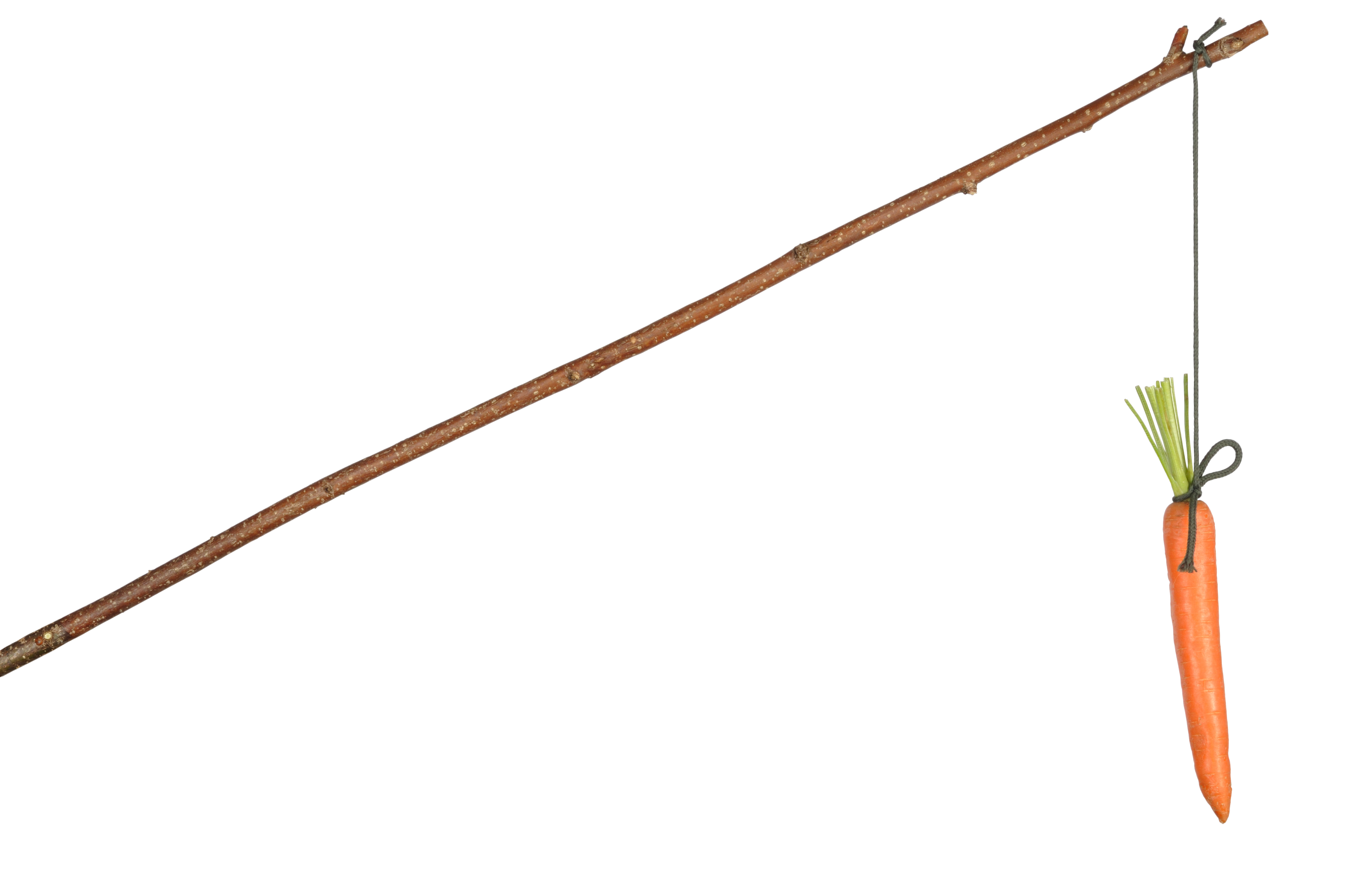
If I make a plan with a friend, I then look forward to it. I anticipate it with pleasure. It is something of a carrot for me, visible beyond my tasks. If the friend is flaky, then I don’t get the anticipation. I’ve learned that the plan is as likely as not to be cancelled. I cannot trust the plan. I can’t anticipate.

There went half my pleasure. Frankly, it’s not worth my time to only achieve half my pleasure.

I have no need for flaky (I mean spontaneous) folks.

Posted in Lessons | 1 Comment

Canyon Road

  When I was in my 50s, I checked out opera. I had a friend who was recently widowed, and he held two season tickets to what SF put on. I attended performances with him a few times a year.

I hated the seats there. We were in the dress circle but it was a torture tier, with no leg room and little air. I wondered if the physical discomfort damped the experience for me; I was impressed but not as impressed as I anticipated I would be. The orchestra was always good and the voices were extraordinarily powerful. If the composer was Puccini or Mozart then the melodies were perfect too. But the whole shebang was just not good enough, in my opinion, to be considered the top of one’s art. There was too much affectation and ostentation.

I tried somewhere else. I went to Santa Fe, New Mexico for a week in August for several consecutive summers, and I took in their mountain-top opera. It was much more comfortable. But the performances weren’t smashing enough to lure me there now.

The Santa Fe weeks were enjoyable though. Although the opera schedule forced us to hurry our dinners, the rest of the day was easy, the place was hospitable, and the art was rife. We always spent a few afternoons on Canyon Road. My companions were as likely to buy original art as opera tickets.

I was a witness. I didn’t buy stuff. I’d seen art streets before, in Laguna Beach and Mendocino and San Francisco and Berkeley, but I never encountered any place as serious about it as Canyon Road.

On Canyon Road in Santa Fe, the street
is mostly marked one-way, purveying craft
and art of any scale, inclined to feet
and wheels. With buying eyes the lookers laugh
in scorn or lust to own a plate of glass
frit-fused, or black-on-white lithography,
or jetsam-woven things the rich amass
till they matriculate to ancestry.

The tourists upward ooze for seven blocks,
discomfited by heat and damped by rain,
their socked or polished toes in Birkenstocks,
their vision visored and their silver plain.
They are collectible; the sellers trade
the lookers like they’re stones the desert made.

Posted in Poetry | Leave a comment

Irish Coffee

    I think I was 22 when I drank my first, and the site may have been the place that claims to have invented the recipe: the Buena Vista near the Hyde Street cable car turntable in San Francisco.

Not that there’s much to the recipe. It’s nice to start with the tall glass coffee mug. After dropping two sugar cubes into it, you pour the coffee till the glass is two-thirds full, add an inch of Bushmill’s, and spoon on thick but not stiff whipped cream. You can use regular sugar instead of cubes, but you must be careful not to oversweeten the cream.

The summer of 1972 I worked at La Paz Imports in Ghirardelli Square and waited for my September wedding. Nick had a night job involving computers at B of A. His best friend Dick used to drive his funky little orange BMW from Marin to San Francisco most nights, pick me up at the store, and then whisk us down the short hill to the BV. We’d enter the packed bar and enjoy one while watching the bartender line up a dozen glasses rim-to-rim and toss sugar cubes. We eavesdropped on the neighboring drinkers and listened to them lie and sometimes we told a few stories ourselves.

After we married, Nick and I acquired a set of Irish coffee glasses and experimented till we knew what proportions we preferred. And we continued to enjoy the cocktail when we weren’t home too; we spent time in Mendocino then, and I can still recall Nick teaching them how to make the drink at the Sea Gull Inn.

The last time I remember indulging in Irish coffee was the weekend after New Year’s Eve 1975-6. Steve and Becky came by that Saturday night and we made an occasion of it. I know we had some good talk and lots of laughs. That mid-winter event, filled with love and warmth and whiskey and caffeine and cream, was the occasion that, well, it inspired us. And three seasons later, made us parents.

Posted in Food | Leave a comment