Paraphernalia

9.8.08
Usually it’s a thin device, to begin a piece with a dictionary definition. I remember receiving criticism for such a thing in high school assignments. So I’m impressed with the new Sprint ad on TV right now, featuring the CEO of the company as he claims to have looked up the word “unlimited.” Sure, right. (Oh but the ads are getting bad. There’s another one starring a depressed spatula, whose ambition to flip burgers will never be realized. Again, I tried skits like that when I was a teenager, and learned from audience reactions that the idea is neither unique nor instructive).

The only time it’s okay to begin with a dictionary definition is when you’re talking about a word. Today’s word is paraphernalia.

I’ve been meaning to look it up for years. A considerable while ago I ran across a statement I believed but didn’t seek to substantiate: that “paraphernalia” refers to the property a woman brings to marriage which is not part of her dowry.

Today I checked. For this it is handy to own a print dictionary.

Although the first definition is personal belongings, and the second gets closer to what we all agree on – any collection of articles, usually things used in some activity – the third is property or possessions (other than dower), given over to the control, but not complete possession, of a wife.

It’s a plural noun. It’s from the Latin paraphernalia bona, but that’s really from the Greek (para beyond and pherne dower (from pherein, to bring)). In Roman law, the parapherna was the woman’s property as described above, and it remained at her disposal even after her husband’s death.

I think Paraphernalia would be a great name for a magazine. It is probably most appropriate for a periodical about financial issues, directed to women in general and perhaps wives in particular, but I wouldn’t limit it that way. Paraphernalia would serve a wider audience than that, and would aim to become part of everyone’s equipment. Got your Paraphernalia?

Posted in Language | 3 Comments

Eloi 1966

     I found this in the old poetry folder. I was 16 when I wrote it. I was starting my senior year of high school. The Summer of Love would come right after graduation.

I remember that I composed it as a song, although I had no melody in mind.

“Peace!” the children bleated,
Brandishing punning pens.
I watched as they sang out a slogan.
I saw their identical grins.
They paired off and spun round in circles,
Then regrouped and shouted out “Love!”
And drawing their circle together,
They bowed to the wing of a dove.

“Peace!” they exchanged as they parted.
Their mothers were calling them home.
The pinwheel of streets stirred in motion
As every one ran off alone.
I witnessed the night’s quiet lifetime,
The stars spun their dances above.
But the children, alone and too timid,
Dared not even whisper out “Love!”

“Peace!” crowed the children at daybreak,
Lynching the frightening night.
They baptized the sun with their smiles
And rolled in the comfort of light.
They talked in their circles for hours,
They banished the nights they had feared,
And, looking at only each other,
Sang “Love!” till the sun disappeared.

Posted in Poetry | 2 Comments

Habits

   My father was a proponent of moderation. He loathed extremism and he dreaded mindless habitual activity. He used to tell me that it was sensible to form good habits, like the custom of turning off lights as you leave a room or leaving your keys in the same place all the time. But he repeatedly warned me about the danger of surrendering my judgment to history and habit, or spending my time thoughtlessly engaged in repetitive activity that once but no longer makes sense.

It was more than that. He seemed to fear falling into habits. As articulate as he was, he never told me what in his history made him so vigilant on the subject.

I’m sure he was correct. In my lifetime researchers have learned that it takes about six weeks to form a new habit, but that the process creates or modifies the neural pathways in the brain. You get etched. You want to be careful what avenues you blaze.

Dad was also always physically active. As far back as I can remember, long before he joined Physis or talked Mom into working out too, he was doing morning calisthenics. He collected Air Force and other exercise pamphlets. He stretched and did pushups and (straight-leg) situps and all sorts of old-fashioned non-yoga movements.

He was a model and an inspiration, and sometimes he cracked me up. My father was so concerned about falling into a habitual rut, that he conscientiously altered his morning routine, every six weeks, like clockwork and by calendar, like a habit, lest he form a habit.

Posted in Lessons | Leave a comment

Campfire

     When I was 43 I backpacked for the last time. I’m sure of that, because the highlight of the trip was its ending. I would have paid a hundred times what I did for that hot shower.

Not that the trip wasn’t wonderful. There’s no denying that the way to get away from other people is to walk places where vehicles can’t go, and the gear is getting lighter and smarter every season. It’s simply that this comfort-seeking nester had outgrown the sport.

I could no longer achieve good rest on the ground. I was never okay without a toilet. I loathe mosquitos. I became so uncomfortable, trudging bent forward with that frame on my back, sweating in an almost sick way, that I had to restrain myself from throwing tantrum-like fits of irritability.

I have camped since, and I intend to again. I have slept in Humphrey’s Basin, but a mule carried my stuff in. I have enjoyed the eastern Sierras and some amazing nights in Death Valley, but we had wood and water in a pickup truck and we checked into a motel at least every third night. I’m not quite as stern as my mother, who says she won’t camp anywhere that doesn’t have an escalator, but I’m getting there.

That last backpack trip had fine moments I want to keep. There was a morning I rose alone and left the tent and perched on a big rock in the middle of a meadow. I felt like the only person in the world as I watched the rising sunlight sweep the valley.

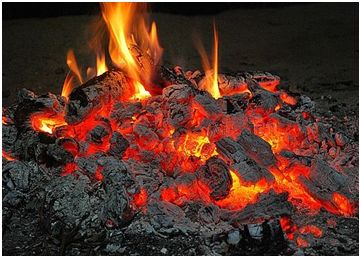
And there was that final night, after Mike retired, when I sat with the campfire until it slept too. I started a sonnet about that fire then, and I think it’s just about fully baked now:

A crater pulses glowing at my feet
as if I were a goddess in control
of lava moving maggot-like in heat
and colors ribboning within its bowl.
As if Hephaestus mixed a soup for me
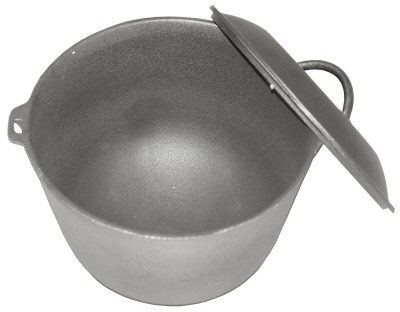
and brought it in a cauldron made of earth,
I stoop to sample radiance and see
the syrup of volcanic afterbirth.

The scarlet and the gold erupt in bright
calligraphy and then subside to black,
until I breathe on them and blow them light
again, and coax the searing color back,
until at last I let them cool and fade
and slumber, under night’s encasing shade.

Posted in Poetry | 4 Comments

Body Slang

Do you look into a person’s eyes when he or she is speaking to you? I rarely do. My attention is drawn to the moving part: the mouth. Oh I’ll check out the cheeks and the chin and the lines around lips and eyes, but it’s the amazing mobility of mouth/lips/tongue that can mesmerize me. (And years ago, when I bathed with my babies and talked to their upside-down faces in my lap, oh my how undulating-beautiful is a child’s face when the chin’s at the top and the eyebrows are smiling at you.)

It’s different when you are speaking to a group. Then you’re the face that is moving. You will probably find the eyes of your audience distracting. I recommend that you aim your gaze at foreheads. They’ll think you’re meeting their eyes.

(It’s also important to rehearse. Either before a mirror or a video camera.)

When you’re in a people-watching situation, like on public transportation or waiting in an airport, do you amuse yourself by imagining the strangers naked? I’ll give you a game that’s more fun than that. Try switching their genders. Envision the men as women and the women as men. What adjustments are necessary to their faces and frames? How many require surprisingly few alterations?

Posted in Lessons | Leave a comment

Rigmarole

9.8.08
I was rereading a Nero Wolfe mystery recently, and the word “rigmarole” jumped off the page at me. Every once in awhile that happens; I notice a word in a way I never did before, become curious about it, like it. It’s similar to the experience we’ve all had, of writing down a word so many times that it begins to look wrong to us no matter how we do it and we begin to be insecure about spelling.

You don’t hear rigmarole often in colloquial speech. When you do, it has four syllables instead of its visible three. Like “Tijuana,” the word somehow acquired an invisible short “a” as a second syllable. I’m sure that insertion is about our mouth physiology; it’s just plain easier to say these words with the extra vowel. Okay. I note that New Yorkers make two syllables out of “museum” (museem) and one out of “ruin” (rune). I heard a flight attendant recently, and she managed one syllable out of “carry-on” (kyon) and “oxygen” (unspellable). Obviously this syllable quantity issue is flexible.

It’s easy to find the definition of rigmarole, online or in print, but its origin doesn’t pop right up. That’s because it didn’t start out as a word but as a phrase: ragman roll. Rigmarole now means a long unintelligible story; loose, disjointed talk or writing; incoherent harangue; nonsense.

According to my brief research, a “ragman roll” denoted a legal document recording a (presumably long) list of offenses.

Posted in Language | Leave a comment

Money Love

I got into the footlocker recently, and found a tattered folder titled “My Poetry.” It contains the first poem I remember writing (published in my third post in this blog, last July) and I smiled to read that I remembered every word just the way I wrote it. According to the folder, it was composed the Halloween when I was 7 (1957) instead of the “6 or so” I guessed when I put up the post. I see that I was writing in cursive. However, the other side of the lined paper has a piece called “Our World’s Beginning” that carries a date of Feb. 4, 1959, so perhaps the dates are when I penciled the words on these pages, and not a record of original composition. I see that I illustrated the page with a dancer and an astronomical scene. I see that I misspelled the most important word of it: the title and first line contain “Balleriner.”

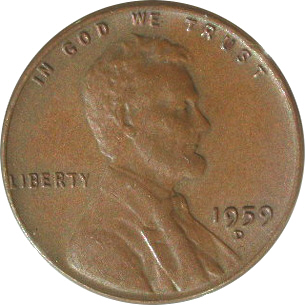
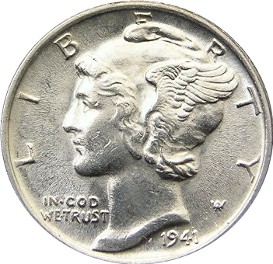
The third poem in the folder is delighting me today. The title is “Mr. Copper Penny And Miss Lady Dime,” and the date is April 25, 1959. That was the spring after we moved to California. I was newly placed in fourth grade. I wonder if I was into Robert Service then. Maybe. I remember reading “The Ballad of Lenin’s Tomb” to my class a year later so it’s possible I was already under his narrative influence.

Mr. Copper Penny And Miss Lady Dime

Once upon a time
There lived a copper penny
Whose owner’s name
Was Mr. Denny.

One day Mr. Denny
Spent his shiny copper penny
On a present for his
Little baby boy.

Out went the register.
In went the penny.
Out came a toy,
Held by Mr. Denny.

But who was in the register?
Why little Lady Dime.
And what did Penny say to her?
He said, “Will you be mine?”
Lady Dime said, “Yes.”
That’s the end of this rhyme.

Posted in Poetry | Leave a comment

Soup Secrets

 I am not a good cook. Oh I’m sure I could say that I would be good if I did it more, but that’s empty. There are scads of activities I could vainly predict my own success at, if I were interested enough in them to do them more. What counts is not what I think or say, but what I do.

When I enjoy cooking I work without a recipe. I’m too impatient to read instructions – that’s probably why I don’t get excited about new electronics. So I write poetry but rarely read it. I started a business without any schooling in it. And I launched this blog with energy and without reading the blogs of others.

My memorable culinary adventures were experiments. I enjoyed making sculptures out of bread dough, up to the time I wove the basket. I have almost perfected matzo pizza for vegetarian Seders. And I had a lot of fun running soup experiments.

I like to make a meal-hearty soup out of whatever ingredients are around. During the 80s it was one of the ways I avoided the stresses of my blended family; I’d retreat behind the bar in that lovely North Berkeley kitchen, and I’d make a batch out of what I found in pantry and fridge. Leaving the house for additional ingredients was not allowed. I learned I could make good soup every time, provided I had an onion. That’s right: onion was the indispensable ingredient. I could do without garlic, carrots, celery, beans, corn, tomatoes, but I just couldn’t work up a tasty liquid unless I had an onion.

I’ll admit there were other ingredients that were good to add. My soup always has a little coffee in it. I’m rarely inspired to start unless I have at least one potato to dice into it. And it is very nice to include wild rice in a soup that will be reheated like mine always are. It gets nuttier with repeated cooking.

Oh, and pizza should be ironic! When you make your pizza dough, add a pinch of rye.

Posted in Food | Leave a comment

Antiprayer

Allow me disadvantage so I’ll pay
attention to my life. Bestow on me
a dare, a tiny hassle toss my way;
anoint my psyche with adversity.
I need a little friction. I can’t sense
a passage unabrasive or the slick
cartoon of heaven. My intelligence
is challenge-fired, solve-inspired, sick
of hearing every common fantasy.
I run from easy money and abhor
your corny dream of immortality.
A stumble is a chance to rise, and more:
nor ovaries nor testicles I need
to stay awake. Obstruct me and I’ll speed.

Posted in Lessons, Poetry | Leave a comment

Three Stupids

     When I was around 14 years old, I had an idea that has never stopped cracking me up. I was walking along a road in unincorporated Bonita, California with either my buddy Alice or my neighbor Cindy, when the fancy occurred to me. We saw a lot of VW bugs back then, putt-putting around in their economical way, and I wondered aloud how it would be to trip one.

Yes, trip. I imagined just sticking my sturdy leg out in front of one of the round-topped vehicles, and in my mind I could see it stop abruptly and flip like a bug. Forward motion ceases, and the spherical car is rocking on its back, wheels spinning ineffectively at the sky. I still love the stupid image.

I’m sure there were other silly notions, but the next one I’m describing occurred to me in my mid-40s. What if people talked like dogs? I’m sure you’ve noticed how enthusiastic a dog’s greeting is, no matter how often. A dog’s goodbye is as absent as his hello is present. Really. Dogs don’t say goodbye. All I have to do to bring on a guffaw is imagine business telephone conversations involving dogs. “Hi! How are you! Wow but it’s good to hear your voice! Hot damn, this is fun!” And then you discuss whatever. As soon as you’re done, you both hang up without a word. One of you forgot a comment so you reconnect 30 seconds later. “Hellooo! It’s you! How delightful! What’s shakin’ pal?”

And a few days ago, in the midst of the terrible news coming out of Japan after the 9.0 earthquake and tsunami, I heard a reporter explain to the viewing audience that it isn’t the actual wave of water racing across the ocean toward our west coast. Rather it’s the energy. He repeated that fact again. And then he said it a third time: it’s not the water moving but the energy.

Well, at that point I had to conclude that a lot of people must need that truth. There must be a vast group who think the actual water molecules are what’s moving. Get it? Just imagine the near-supersonic water molecule that can move at 550 mph. Wouldn’t it boil off, in friction against the less super molecules? What is this molecule’s mission? Oh I suspect there’s a story in here somewhere …

Posted in Lessons | Leave a comment