Scuttlebutt

9.8.08
I never thought about the word until I encountered it in the autobiography of Mark Twain. He reported on the term not from his Mississippi River days, but from his experiences in the ocean around Hawaii.

He wrote that the scuttlebutt on a ship was the cask of fresh water that had a hole in it so sailors could drink from its contents. It tended to attract the seamen in thirsty groups, and while they surrounded it they chatted. From that practice its definition evolved to mean gossip. That’s right: the original talk-around-the-water-cooler scene.

Today I consulted the dictionary. I read that the term originated in 1805. A butt is a cask, from the late Latin buttis. A scuttle is a hole made in it, from the Middle English scutel which descended from Latin scutella (drinking bowl).

When we say butt we refer to the protuberances formed by the gluteal muscles, or the target of a joke, or the stub of a cigarette. But the one is actually short for buttocks, the next is related to how a goat or other horned animal knocks with its head (from ME butten and Old French bouter, to hit), and it looks like the last is the cigarette’s ass.

Buttock is from the Old English buttuc, for “strip of land, end.” Obviously we most often use the “end” meaning, but the strip of land brings up fundament: earth, bottom. Your fundament is what you sit on. I’m tickled when slogan-type words are poorly chosen. Whenever I hear the political call for Solidarity I think of constipation. Now isn’t it delicious, what the definition of fundament suggests about Fundamentalists?

Posted in Language | Leave a comment

Bad Poetry

     Be warned: what follows is a really bad poem. I am posting it partly as encouragement to any young poet: yes, your work will probably be as full of itself as this, at first. This is an example of why we must keep at it. I am also posting it as a way of getting rid of it. It feels a little like a gross story; maybe if I say it out loud I can move it out of my head and into yours instead.

These 28 lines got more attention when I wrote them than any others I’ve ever penned. As I recall, the piece was inspired by my passionate outrage about racism, and I loved how much my father loved it, but the praise of others felt wrong in a way I can’t fully explain even now.

I wrote it shortly after my 15th birthday. Dad encouraged me, maybe even nagged me, to submit it to Harper’s magazine. Their rejection was gentle and not unexpected, and I value it more than the poem. Dad was the one who exposed me to poetry, read it to me, memorized it with me. He’s the one who gave me Robert Service, who presented me with the illustrated Rubaiyat of Omar Khayyam. Dad’s comments were always welcome and his advice was often followed.

It was the compliments of teachers, neighbors, and relatives that made me uncomfortable. I may have been sensing the shallowness of pop liberalism, but I think what really put me off was how easy I found the emotional manipulation. It’s like writing a verse “To Mother:” a sure-fire audience mover.

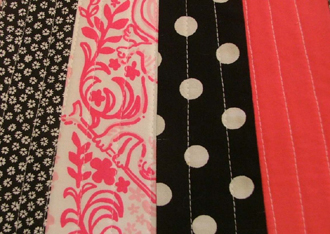
But I kept Patchwork (and the rejection slip). I learned from the experience. And I still prefer its metaphor to the old melting pot.

We’re all people, all human beings,
Black, yellow, white, red; all of one mold.
All of one cloth, but dyed different colors,
Styled a little different, but all of one fold.

The fold called humanity is the cloth of the universe,
The crease called people in the bolt of life,
The fine swath of satin in a strip of material,
But so like thin satin, split with a knife.

The knife that divides us is simply our ignorance,
Stupidity splits us; it keeps us apart,
Prejudice separates us from our brothers,
How can we fight this; Where can we start?

Let’s start at the bottom, the root of our problem,
The fine, thin, rich satin in harsh-colored threads,
The delicate cloth divided through ignorance,
Our once-fine, light satin, now separate bright shreds.

Now we are trying to splice strips together,
We’re trying to build up a cloth that won’t tear.
But how can we come up with satin from patches;
How can fine satin and patchwork compare?

Perhaps if we start with a new piece of satin,
And blend all the colors and dye it to match,
Perhaps if we did this, the cloth would be stronger,
The color more subtle, more soft than a patch.

And maybe if children could learn we’re all equal,
If we could be taught that all races are men,
Then maybe we’d be a much stronger people,
Maybe we’d be fine, strong satin again.

Aack! I couldn’t resist making sarcastic comments as I typed it out. Too bad I rhymed mold with fold and threads with shreds. Too bad I didn’t work that metaphor. Oh well, the meter is pretty good.

Harper’s sent a little typed note (the envelope was postmarked August 30, 1965):

     We regret to say, after careful
consideration, that we cannot use the
manuscript which you have sent us. Thank
you for giving us a chance to consider it.
     Every issue of Harper’s Magazine
contains material which, like yours, came
unsolicited. However, our editorial space
is necessarily limited and we therefore
have to decline many manuscripts which
are ably written and publishable.
     We should like to comment individ-
ually on those we cannot accept, but the
size of our editorial staff makes this
impossible.
Posted in Lessons, Poetry | Leave a comment

How to Age

 I don’t have an answer for this one yet, but I’m getting some ideas. Mostly my model for it is my last dog.

Shelby came into my life in 1991, when she was one and I was 41, and she continued for nearly another fifteen years. She was a retriever/shepherd/other mix – in other words a biggish dog – so she lived to what we call a great age. She suffered from chronic allergies to just about everything at sea level (she was meant to live in high desert I think, wearing nothing but a red bandanna). She was also the most athletic dog I ever knew. Absolutely born to move.

She had a simple approach to the degeneration of age. She tried to use every muscle in her body, every day. She’d rise from her floor pillow bed, stretch and test each limb, and then use what was working. She continued to try with the non-working parts too.

That dog had her ACL rebuilt when she was fourteen. I caught her the next day, trying to work it out on the stairs.

Now I try to mimic her attitude. I use what works. I keep testing parts.

But I’d be unfair if I didn’t describe the other approaches I see around me. I witness two types of extreme behavior, and I wonder.

Some of the people I love are fixers. They go for regular checkups and every recommended screening, they receive a doctor’s words as if issued from the burning bush, and they worry about their test numbers. When anything changes for the worse in their bodies, they embark on a crusade they describe as “getting to the bottom of this” and they expect a cure.

Others I observe are avoiders. They neglect to make appointments with doctors or dentists, even when they have alarming symptoms. I know ex-smokers with painful coughs who won’t get a chest X-ray, post-menopausal women who are leaking but not telling any M.D., individuals with loose or painful teeth who haven’t seen a dentist in ten years and aren’t about to now.

I guess the fixers are super-patients and the avoiders are non-patients. I looked up the word “patient” once. I remember reading it meant to bear suffering without complaint. I aim to continue to be a bad patient.

Posted in Health, Language, Lessons | Leave a comment

Consequences

     I wonder sometimes, how much adult opinions about youth are colored by adult experience instead of youth memory. It seems like I’ve known forever that nostalgia is hogwash: remembering the angst of adolescence as “the carefree, best time in life” or trying as an adult to engineer and duplicate holiday traditions that were in truth obnoxious when experienced as a child.

Those admonitions about stretching, about not swimming for an hour after food, about reading in good light? Those are good suggestions for older folks, and unnecessary for kids.

Or what about those 30-something guys whose wives are pregnant, and who say “I hope it’s not a girl, because I remember what adolescent boys are like”…? No they don’t! Most teenage boys are shy or easy for the girl to govern, that way. Most of the time, the young couple go only as far as the female permits. But guys in their mid-30s are still horny and now way less inhibited. Those incipient dads are feeling their own urges and laying them in the groins of well-meaning boys.

The facts, the actual experiences, of me and my acquaintances were not what the grownups warned about then, and not what many of my peers are reminiscing about now. The truth is, kids are more durable than portrayed. Oh we lost a few to automobile or climbing accidents, and drugs took a handful who were close to the edge anyway, but most of us made it through. The nails in the playground equipment didn’t lock our jaws, the strangers didn’t snatch us, we learned from being bullied and from making mistakes, and we had long horizons in which to recover. The boogie-man consequences just didn’t occur.

But it’s different for adults. Grownups have a boatload of experiences (mostly unprocessed) they have to haul around. And they have far less recovery time. If they don’t eat right they will probably experience the sad result soon. If they don’t parent wisely they may in fact lose their offspring. I have been shocked at the severity of the consequences that can besiege grown people.

It may be time for the kids to be the advisors.

I never thought reality would be
as absolute as this, or as abrupt.
Apprentice training showed me subtlety
till recently. Catastrophes erupt
around me: first a child’s unseen death –
by father lost and way too lately missed –
and then a friend is gagged; her expert breath
by passion blown, she’s ordered to desist.

I ponder consequence: I’ve watched the plays
and read the fables, but they didn’t seem
intended to be literally construed.
Of late I am agape. Reactions raze
the crazy actors; consequences ream
their lives. The fates are fell. The runes are rude.

Posted in Lessons, Poetry | Leave a comment

Shelba and the Plum

 I was 14 or 15 the night of that slumber party, so it was during the summer of 1964 or ‘65. I think the venue was Jill’s house (see Bad Idea, posted on April 14), which was unusual. It was also a different party because the guests were not all in the same school grade.

Shelba, for example, was the older sister of a classmate who lived on my street. I wasn’t close to her or even her sister but I knew the family (I recall that they raised rabbits for a time, and one batch of babies was born with blot clots in their toes, and when the dad tried to correct the situation himself – operating on those rabbit baby toes without anesthesia of course – the result was infection and then a litter of dead baby rabbits).

Anyway, there at Jill’s that night was a bunch of us. We were lounging around in the den/family room, in our nightclothes but nowhere near ready for sleep. Among the snacks available to us was fresh summer fruit.

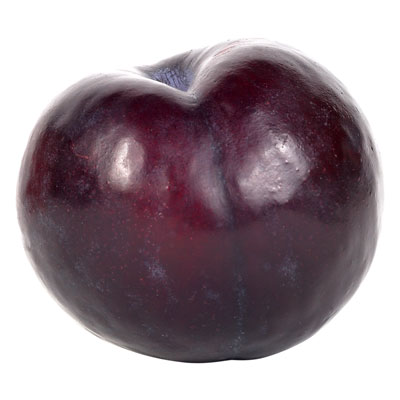
I don’t know how the plum-eating competition started, but some of the older girls tried ingesting them whole. Or said they were going to. Shelba was not an outgoing person, but she surprised us all by announcing she could do it and ramming an entire plum into her mouth. She got it past her teeth but then couldn’t bring them to bear on it. And when she tried to remove it from her mouth, her teeth prevented that extraction. She began to panic. She started to wheeze. Then gag.

We ran for Jill’s parents and they couldn’t get at the plum either. Shelba was freaking out and so were some of us. Next thing we knew, the fire department was in the room. Big men in dark outfits, authoritative but calm

They held Shelba firmly and spoke assurance to her. Then they cut the plum while it was in her mouth and removed it in pieces. They retreated to their trucks and left us to grow calm.

Long afterwards I heard of a mean prank: drunk guys betting a patsy to put a pool ball into his mouth (much harder to surgically remove).

But I’d already learned the lesson. There’s an expression that goes, “Don’t bite off more than you can chew.” This variation is “Don’t try to eat what you can’t chew.”

Posted in Lessons | 1 Comment

Cats

9.8.08
Andy suggested “cattywampus” as a word o’ the week, and that brought “cattycorner” and “caterwaul” to mind. Let’s look.

I’m composing this in Eugene, where I have more comforts but less books. The dictionaries I have here are electronic but this is what I see.

Cattywampus = catawampus. It probably originated around 1830 in the U.S. and means “askew, awry, positioned diagonally.” It seems to come from cata (from the Middle French quatre = 4, suggesting a foursquare and from that diagonal) and wampus (from the Scottish “wampish,” to wave about or flop to and fro).

Catercorner = cattycorner =kittycorner and, like catawampus, has nothing to do with cats. Its cata is again diagonal, so cattycorner is understandable as a diagonal across quadrants. The dictionary indicates that cattycornered originated at about the same time as cattywampus and can be used as its synonym.

With caterwaul the feline arrives. It means to utter long wailing cries, like cats in rutting time or at quarrel, and probably goes back to the 14th century. Middle English and Middle Dutch used cater for tomcat. In Old English, wawen or wawan meant howl, and waul developed into wail.

This investigation led me to “caterpillar.” According to what I read, it (the word, not the worm) emerged around 1440, and the cater in that word is the same tomcat. The pillar is from the French pelose (hairy), although it at least suggests the pillage the larvae can cause in our gardens. That’s right: etymologically, a caterpillar is a hairy cat.

Posted in Language | Leave a comment

Dial Tone

     When I was a teenager during the 1960s, we didn’t have cell phones. There were no personal computers. The Internet hadn’t been built. When I and the other boomers grew up we were in a culture a bit ahead of the good ol’ days of letters in longhand and visits of six weeks, but not much. We communicated by hardwired landline telephones or the U.S. mail.

Our phone system was the best in the world. Our innovators were converting us from a rotary dial to pushbuttons during that decade. I remember the telephone display at Disney’s Tomorrowland; I prided myself on being fast at the dial but no matter how swiftly my fingers pushed that ring around, my brother Steve, standing by my side at the newfangled unit with the button pad, was able to make the connection more quickly.

The fact was, dialers didn’t stand a chance against buttons, speed-wise. Unless the phone number consisted of only low digits, it just took too long to pull that wheel clockwise and then push it back. An 8 or 9 or 0 in the phone number was a drag.

But those dials had been innovative in their time. They’d replaced talking to an operator. When rotary dials arrived, so did the dial tone: the audible clue that the system is ready for you to give it an address. We still call that ready signal a dial tone, even though today’s kids don’t know a rotary phone from an Edsel.

And although kids now connect in more and faster ways, they don’t connect as much as they want. I think this verse, written the summer I was 15, still says something.

The hand now pushes buttons down
That disconnect a busy line,
And then release a dial tone,
An empty hum, a lifeless whine.

The dimming eyes reflect no thought.
They blankly stare down at the phone.
They see their boredom can’t be fought
By what is now an empty moan.

The spark within the unused brain
Can’t understand why life’s a bore.
Why did she seek a voice in vain,
And only hear a hum once more?

Why should she spend her life this way,
Depending on these things alone?
Just kindle flames from dying sparks
And never hear a dial tone.

Posted in Lessons, Poetry | Leave a comment

Gullible Me

     When I was in fifth grade, we still had a form of show-and-tell. I think it was a once-weekly ritual, and as I recall it was about current events instead of toys and hobbies. We were expected to share news.

We had a fat girl in our class. She was lumpy and greasy-haired and taller than most of us, and she had no friends. I tried to be kind to her but she was boring too; that poor child didn’t have the compensation of a good personality. But one day she got my attention.

She came in with a report on spontaneous human combustion. She had a section of newspaper with her but she spoke without reading from it. She looked at the class and talked with a convincing measure of awe. She reported that every once in awhile, not often but enough for science to mark it, a person who was engaged in an innocuous activity would burst into flames.

As I recall, every incident of it was fatal. I guess it happened too fast for anyone to react. A guy might be watching TV, a woman might be sweeping a floor, perhaps a child was at play alone in her room, when from within the person’s body flames would erupt.

Well I was astounded. It was probably that very day that I took the story home. I know I was in the back seat of the family car, brothers beside me and parents in the front, when I shared the horrifying news.

My father chuckled. My mother looked around at me but Dad kept driving and chuckled some more. “Really, Dad!” I objected. I mentioned the name of the student and I assured him that she had the news from authority; she had a newspaper.

I’m sure now Dad couldn’t have asked for a better introduction to the lecture he then gave. That was the day I was informed that I should not believe everything I read, even when the author assures me it’s true. That day opened the door for me to healthy skepticism about reportage.

It was 1960. I was 10, Steve was 7, and Andy was nearly 2. But we all got it. It became one of our family jokes. Spontaneous Human Combustion! Gullible Mar.

Posted in Lessons | Leave a comment

Black Hole

   I’ve known a number of damaged people in my time. Mostly they were the victims of narcissistic or religious parents and many of them also suffered early loss of a sibling or other close relative with no opportunity to talk, grieve, or understand.

They all tend to be rule-followers. It’s rather obvious why, to me anyway. All kids misbehave, so it’s natural for a child to conclude that his or her misbehavior contributed to the tragedy. “If only I hadn’t …” is not a province exclusive to adults.

Maybe they like me because I don’t follow rules. Or perhaps it’s the disinterested counsel I provide (I’ve been told I can be a tiresome acquaintance but a good friend). I’ve had years to love and observe them.

Sadly, I’ve met a few whose self-protection is so extreme that they aren’t really having lives. They made decisions when they were young, decisions that closed doors to strong emotion, faith, hope and heroism, a choice which helped them survive their youth but which was never reviewed in the arena of maturity and latitude.

After awhile in a relationship with that sort of closed person, I just have to withdraw. It’s too painful for me to continue to witness it, and the future becomes too obvious, too sorry for me to stay to watch.

Here is a 14-line attempt to capture what I’ve seen:

I know a man who won’t allow a laugh
to leave his lips, although he’s been advised
to be amused. He really isn’t half
that serious; in fact he’s paralyzed
by fear of what more pain can do to him,
of what more life can take from him, of why
if God exists and rules He rules by whim
and how, no matter what, I too will die.

He knows a million words and makes no wit.
His gravity sucks every yawn or sneeze
back in, contracts his chest, his knees, his face,
and leaves a pursing mouth appropriate
for nothing but complaint. He cannot tease.
He will not play. He wants his own embrace.

Posted in Lessons, Poetry | Leave a comment

No No

     It’s not productive to complain about the degeneration of the English language. Even the clever bemoaners don’t slow down the process, and most of the protesters are not clever.

Anyone who understands word origin or how grammar works appreciates the significance of those processes, but that appreciation is probably best enjoyed in private; it bores people who don’t share it.

Even so, I want to take a few sentences to acknowledge the precision of the (fast-disappearing) double negative.

The fact is, “I don’t got no apples,” means you have some.

There’s a big difference between “I’m not disinclined to go with you to the movies” and “I want to go with you to the movies.” “I don’t dislike chicken” is never the same as “I like chicken.”

If that isn’t sufficient argument to retain the deliberate double negative, perhaps this is: As we’ve all seen in the last several decades, the enemy of your enemy is not necessarily your friend.

Posted in Language | Leave a comment