Plight

9.8.08
I came across the word “plight” recently, and that’s the first time I wondered about it. The context meant “danger,” and I conjectured that plight was some past tense of plow, the way wrought and wright is from work.

Not so, according to the dictionaries I’m consulting. It appears that “plight” has two different meanings, and they arise from different parent words.

The first listed definition means to pledge or engage, to bind yourself, as in “plight one’s troth” (yes, troth appears related to truth and as used in betrothal). It’s from the Middle English plihten, from the Anglo-Saxon pliht, pledge. As a noun, this plight means a pledge, an assurance given.

Next comes plight meaning a condition, a state of affairs, a dangerous or awkward situation, and (obsolete) a fold. This plight is from the Middle English plit (a state or condition) from the Old French ploit (a fold or, obviously, plait). As a verb, this plight means weave or braid.

Sometimes words appear related but aren’t. Plight looks like plight but pliht isn’t ploit. It reminds me of the time I sought the connection between iron and irony. I couldn’t find any. Iron the weighty metal is from the Middle English iron, iren, from Anglo-Saxon iren, isen, isern = the magnetic element we all know. Irony comes from the Greek eironeia (a dissimulation), from eiron (a dissembler in speech), from eirein = to speak.

Posted in Language | Leave a comment

Furious

Fury's final resting place    I was 8 when I got my own big bike, and I treasured that machine like a dear friend. I rode it briefly in New York and then it became my transportation in Chula Vista. I could ride with no hands all the way around the block.

Something was done to the frame in the move to Marin County in 1965, but old Fury lost his balance (yes, my bicycle was male, even if it did have a slanted bar) and from then on I had to use a hand to steer. But I continued to ride around Marin, paused for most of Cal, and then resumed after graduation, and after converting Fury to ten speeds by scavenging Campagnolo parts from a totaled machine.

Nick and I rode our bikes a lot at first. We commuted by bicycle from our apartment at 10th & Geary to the financial district each weekday, and we added pleasure jaunts to Lake Merced or Larkspur when we weren’t working. We came up with plans while we rode for pedal-driven small cars (rain protection, luggage, and side-by-side travel), and we fantasized about our own soup kitchen/repair shop somewhere on the coast near Mendocino.

I continued to ride till about 1978. Till Katie grew so big that she could throw my balance off from her seat over the rear wheel.

Since then, although I acquired a new bike with a bigger frame around 1994, I haven’t ridden much. I don’t have friends who are into it, I never got the helmet habit, and life is full without it.

But I kept Fury. Even after I got the new (never named) bike I couldn’t dispose of my old friend. In 2008, I buried most of Fury under the foundation of my Eugene cottage.

I published a few paragraphs about my bike on October 7, 2010. Recently I found a poem on the subject. I started this sonnet in 1993 but polished it for Fury’s funeral.

When I was 8 years old, my parents bought
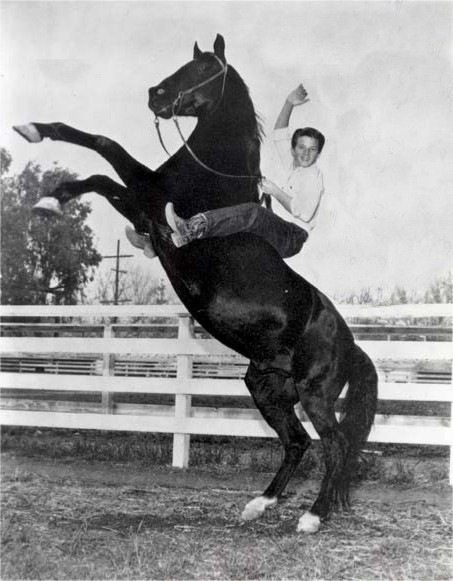
a bike for me I treated like a horse.
The frame was black – I never had a thought
except to name it Fury, and of course
I understood I took that from a show
I watched on TV every chance I got.
But I still own that bike, and now I know
it’s named as much for how I felt as not.

So Fury was an emblem of my youth,
and fury is the anthem of my soul.
Amassing rust as I matured, the truth
is that for 30 years my Fury’s role
was motionless, and grave its destiny,
while I corralled my angry energy.

Posted in Poetry | Leave a comment

Regarding Henry

   My middle grandson is a big handsome boy. He’s now three years old but he’s always had those traits. A large newborn, a lusty nursling, Henry has thick curling blonde hair, intense blue eyes, button nose, generous mouth, and dimples. Everyone predicts he’s going to be a lady-killer.

He has a prodigious appetite, but I’ll admit it startles me sometimes, the way he eats. It’s not just that Henry usually wants a lot of food; it’s that he loves cramming it into his mouth until he almost chokes. Really. If it’s popcorn or crackers or grapes or dried pineapple, Henry wants to so crowd his mouth that his eyes water with the incipient gag reflex. I harbor an eating disorder and of course I see them all around me, so I’ve wondered now and then how it will be for him, as he grows older, if he keeps this up.

But recently I’ve relaxed about it, stopped worrying and started chuckling. You see, a mouth isn’t just for eating. It’s also for speaking. And I’ve noticed that Henry likes to cram language into his mouth just like it’s food. I suspect that for Henry, words are food.

He’s always loved books. More than other babies, a book was the go-to item for him. Recently he’s discovered poetry and now he’s eating that up. But it’s bigger than that. Henry collects syllables. He’s the most poly-syllabic person I’ve ever known.

He won’t let us shorten his name. He’ll answer to Henner but not to Hank. He insists on addressing me with the full “Grandma Marilynn” even after I’ve been there for weeks with no other grandparent in the state.

When I was around during the December holidays, Henry told me the nutcrackers on the shelf were just for “decoration” and that his favorite Nutcracker character is “Herr Drosselmeyer.” The kid was then 33 months old.

And last month, shortly after he turned three, Henry explained digestion to me. He leaned toward me with a solemn smile and said, “First the food goes in my mouth, Grandma Marilynn. And then it travels down my es-o-phag-us! Next it’s in my stomach, and then my in-tes-tines. And then,” and he leaned toward me and started his big grin, “I poop it out!”

Posted in Kidspeak | Leave a comment

North Coast


In fact it was Sea Ranch, and the year was 1997, but the season is now.

The cypress branches eddy on the breeze
like kelp in ocean currents. Ravens ride
the tidal air above wind-twisted trees.
Below, the ocean creams like cloud; in slide
and swirl it mimics hectic atmosphere.
The purple iris stand like Ws
reflecting flight, above the scarlet spears
of ice plant and the eye-surprising hues
of tiny clumping succulents.
                                                 The sea
corrals detritus in a tube of teal.
It intimates the marbled sky as three
retreating women stop to watch a seal
initiate her pup to swim, before
she lets him suckle on the rocky shore.

Posted in Poetry | Leave a comment

My Other Best Friend

   Soon after we moved to Marin County in 1965 I met Ellen, the sister I never had, my soul friend. We were not similar – we came from very different families – but we agreed about what was important: our shared goal was to figure out existence. We have each continued to explore the question through different relationships and in different areas and for nearly fifty years, and we are still in touch and in general agreement.

My other friend was Kit. Kit and I were not metaphysical. What we shared was creative energy, math aptitude, and similar families. I thought hers was more artistic (her Mom threw pots and wore denim and had tangled silver hair) and mine was more technical (my renaissance dad was an engineer, after all, and taught us that if man built it then man could fix it).

Our families socialized. Our dads liked one another and our younger sibs were friends. Pairs of us got into scuba diving, camping, majoring in landscape architecture. It was a satisfactory family friendship.

I think Kit is around here but I’m not in touch with her. I remember hearing she married and had a child; I can’t recall anything else. Funny how I lost her. We had some good times, creating our district-wide literary magazine, camping in Yosemite, even hanging around at UCSD, which is where she went to college and I visited her.

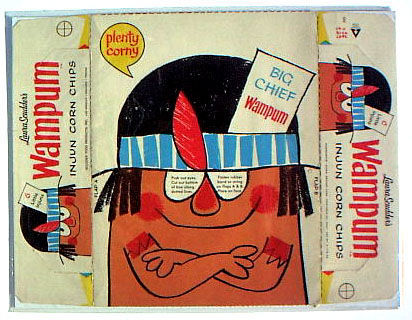
But mostly what I remember are her plump relaxed hands, her serene attitude, how surprising it was that she joined Rick and Nick and me in disrupting Trigonometry class. And I recall weekday afternoons when we’d hit Petrini’s on our way from school to Kit’s house. We bought raw mushrooms and Wampum corn chips. Wampum were made by Laura Scudders and appreciated for their thick crunchy structure.

When we got to Kit’s house we cleaned the mushrooms, trimmed their stem edges, and sliced them about a quarter inch thick. We sandwiched a mushroom slice between two corn chips and snacked. The earthiness mixed with the salt and the mealiness of the corn to create an exquisite mash of flavors. We felt satisfied and sophisticated.

Posted in Food, School | Leave a comment

Versus

9.8.08
Recently Otto and Henry discovered the MAD show on cartoon network, and that led to the original Mad magazine, much to their parents’ delight.

Particularly popular with them is the “Spy vs Spy” series, on TV and also in print. Obviously some of its charm is in its wordlessness.

The subject sent Otto into a verbal chapter on “versus.” He introduced pairs like Lego robot vs Playmobil farmer or the surreal toothpaste vs balloon. And that got me to thinking …

“Versus” is Latin for “turned, against,” and it signifies a battle or conflict between two opponents. I think it was originally abbreviated as just v, but some time somehow the s got added: we most often see vs.

My dictionary says it’s the past participle of the Latin vertere (to turn, change, overthrow, destroy). It seems to have first been noticed in the mid 15th century, but it goes back to the Proto Indo-European wert and the base wer, which led to the Old English wyrd which is another form of weird (April 27).

In law and sports it still means a battle. But conversationally it’s starting to become equal to “or.” As in “bath vs shower?” Or “Chinese food tonight vs Italian?” Neither of those indicate a battle. But “versus” has a secondary definition – “considered as an alternative to” – which can be expressed “as opposed to,” and that phrase maintains the true sense of the word.

Posted in Language | Leave a comment

Literary Magazine

   There was a literary magazine at my high school in Larkspur, but it was difficult to have one’s work selected if one wasn’t on the staff, and it was difficult to get on the staff if one was new to the school and not getting along well with the teacher in charge, both of which applied to me.

It was a four year school, and I arrived late in the October of my junior year. I don’t know why the other kids nicknamed our English teacher “Stretch.” I never called her that, but I despised her taste in literature, loathed her personal style, and deplored her method of attempted discipline.

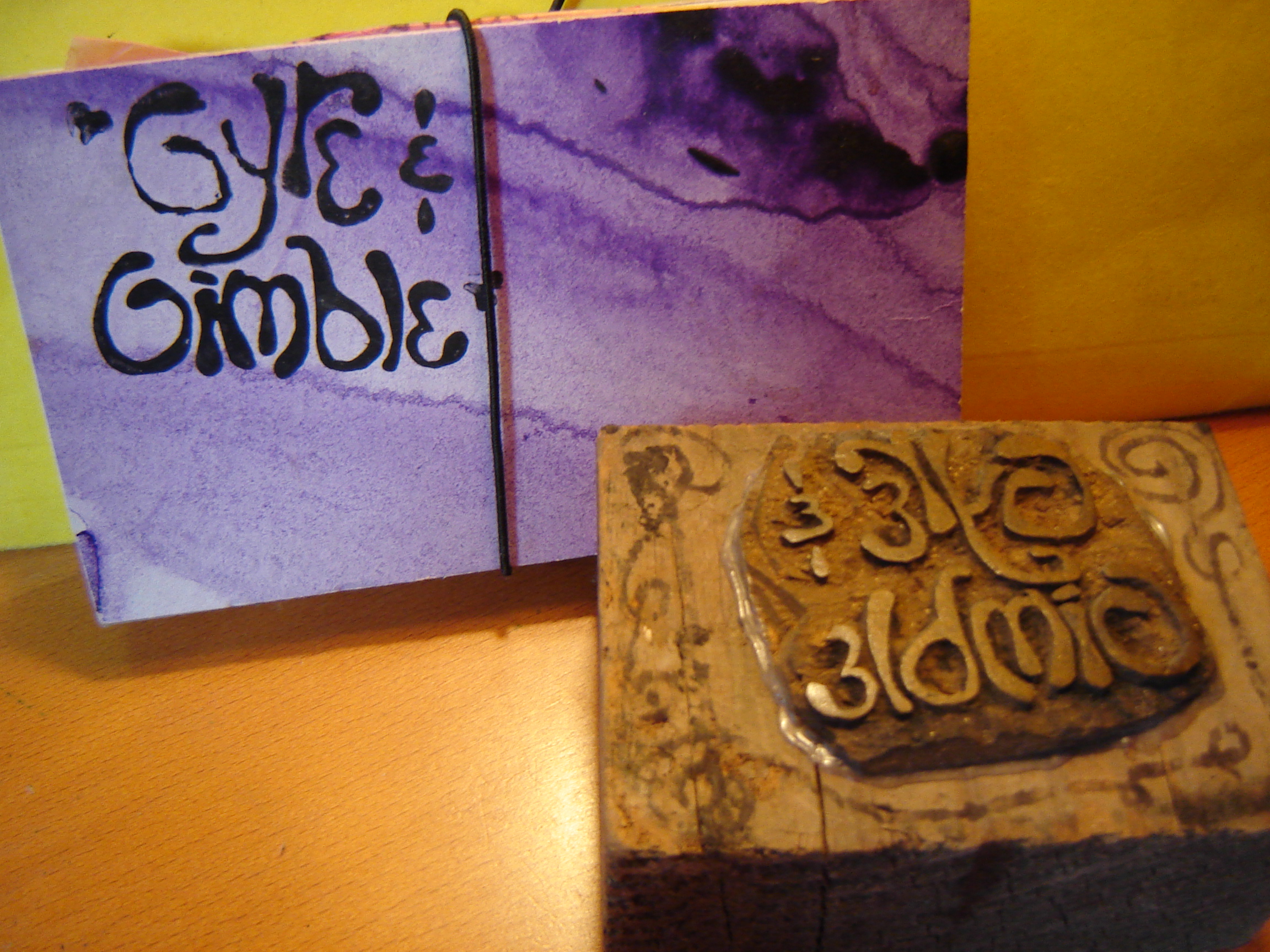
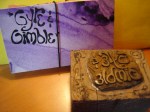
So a year later, I formed a district-wide literary magazine. I did it with Kit and a few other friends, we named it Gyre & Gimble from the Lewis Carroll poem, we managed to acquire at least one member from each of the other two high schools in our district, and we put out a handmade, linoleum-block-printed little folio of high school poetry, with no ads and for little money. It kept us busy enough for awhile, and we certainly never did it again.

I have souvenirs from that project. There’s a typed note from the Office of the District Superintendent, dated 10/12/66, wherein Mr. Neumeier spells my name correctly, exclaims that the idea is great, and announces his intention to attend the meeting that was scheduled for Tuesday, October 18. In the same envelope is a Hall Pass with my name misspelled, for 10/13/66. The date stamp on the back reads 11:31 AM.

There’s a longer note from Mr. Neumeier, undated, with my name misspelled on the handwritten envelope and also on the typed contents. He sends congratulations for getting the project off the ground. He offers to serve as overall advisor. He gives discouraging information about financing, and he closes modestly: “And what’s ‘Gyre and Gimble’? I’m really out if it, you know.” (I remember being disappointed that he didn’t understand the title, but that was way better than adults who tried to be cool, like the (other) English teacher at Redwood, the male one who made a point of “grokking” us. (Stranger in a Strange Land was popular then, but the best of us were into Ayn Rand, really, and one of us had a Dymo-label reading “Who is John Galt?” on his corduroy cap.))

I also have one copy of the magazine, and the linoleum block that Kit carved for our title stamp. The inside cover is inscribed “To Dad – who made it possible. Love, Mar.” So maybe this copy was his. The fifth item within is a co-op piece by me and the wearer of the labeled corduroy cap. In a small circle are my words: “Perhaps we’re fools/We take our tools/And search for jewels/In dirt.” Next to them and in a bigger circle, Rick wrote “Eve walks to me/holding forth the chocolate covered/cream lined essence of Nirvana/Cherry filled it is:/But cherries rot, with time…” And outside the circles, squeezed around the bottom edge of the smaller one, is Rick’s final “Oh, god, where are the ‘EXIT’ signs?”
Posted in Poetry, School | Leave a comment

Telegrams

     There was a time when the only way to send an instantaneous message across distance was the telegram. Morse code was used, and electrical wires, and the customer so respected the cost that brevity was more than wit: it was essential. Even after the telephone was installed in every household, the telegraph was sometimes the only way to connect overseas; it was a surefire system compared to long distance phoning.

When I was a kid, receiving a telegram was as exotic as a ride in a stretch limousine, a night at the opera, an airplane trip. It was a suspense-triggering plot device in movies, as absent from film now as the borrowed telephone or phone booth.

I’m not asking for telegrams to come back. I’m just taking a few moments to mention the system to the kids. If nothing else, maybe this post will explain the movie “On the Beach.”

The last telegram I received was in 1982, on the occasion of Danny’s birth. Steve and Becky sent the congratulations that way because they were living in Jakarta.

I also remember getting at least one in 1972, when Nick and I married. I think it was from a NY aunt/uncle, who sent it just because that was the type of thing that was done in the 1930s, when they wed.

But what I remember best is the first one. On January 8, 1963 my father sent me a wire to say happy birthday. It was my 13th, my entry into teenage. I have the thin buff paper and envelope and I can’t find a date on it anywhere. Looks like it was sent at “456P EST” and that’s preceded by “B LEA074 BDA PD RUMFORD ME 8,” maybe telling us it was transmitted from Rumford, Maine, on the 8th. It’s addressed to me, name misspelled, at home in Chula Vista. The message: HAPPY BIRTHDAY HONEY SORRY I CANNOT BE THERE TODAG SEE YOU SOON LOVE DAD.

Dad couldn’t be with me then because he was in Maine to help build the Telstar antenna. His mechanical engineering career had landed him with a firm that had nothing to do with the lenses or moving parts of the project; instead they built the shell. Dad used to bring home paper samples of the “honeycomb” system they were developing. That’s when we learned how strong you can make paper without adding to it, by folding it. Just as corrugated cardboard will support weight that would crush it unrippled, embedding a form of fanfold between layers of paper can create an astounding lightweight support.

Posted in Lessons | Leave a comment

Epithalamion

Here is my favorite acrostic sonnet. I composed it the first week of 2000, and the occasion was my daughter’s marriage.

The sonnet form is always a challenge. Trying to say it all in 14 lines, making every syllable count, is a project that doesn’t normally spin out in one piece or one day. Adding the acrostic constraint, which means first finding a 14 character theme and then contending with the set first letter for each line, encourages affectation and flipped syntax.

But when the labor pays off, it pays off big, in terms of my satisfaction. I’ve composed about a half dozen acrostic sonnets, and this is the best of them.

My theory on compatibility,
Authoritative as my every word,
Revolves around enmeshed velocity,
Relates to rates of living. Hummingbird
Is not the mate for elephant, you see,
And I would have you quick to recognize
Good times and honest timing. May you be
Entirely awake, and moment-wise.

Precisely I esteem your brave attempt,
Refreshing the familiar avenue.
As you adapt the symbols someone dreamt
You model hope. Your vigor pulses through,
Engaging me to sing and wish you this:
Reciprocating work, and labor’s bliss.

Posted in Lessons, Poetry | Leave a comment

Serpentine

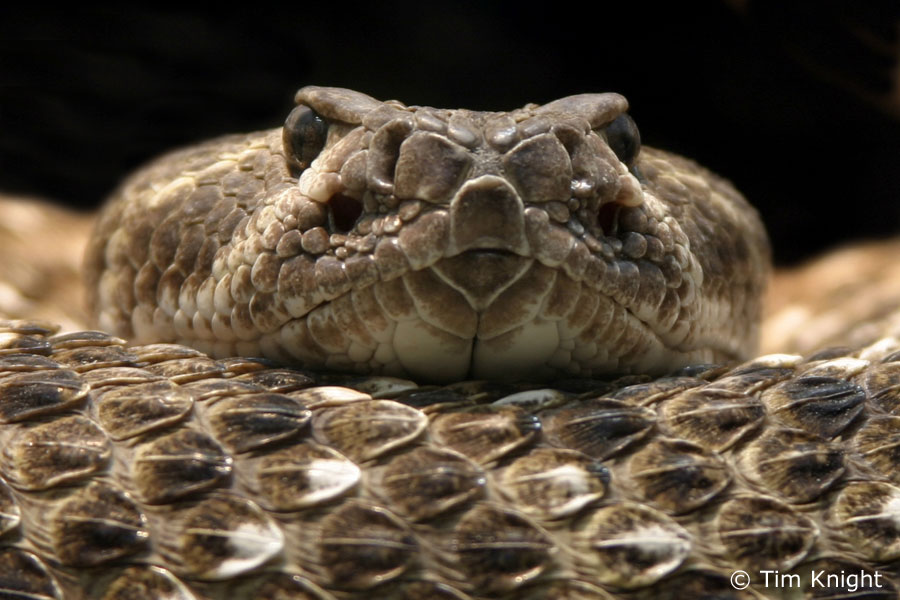
     When I was around 7 years old, I had my first acquaintance with rattlesnakes. There were two boys named John in the neighborhood that extended around us, and the fat one’s dad raised snakes for venom.

Mostly we played with the kids on our own street or those from the more recently-built tract development behind our back fence, where the farm was when we came in 1953. But once we started grade school our physical universe expanded along with the intellectual one. We walked to the Thayer House, we walked to the Bohacks market in the little strip mall, we walked.

As I remember the geography, handsome John lived out our cul-de-sac and a block or so to the right; fat John lived at the far left end of the horseshoe that intersected with the open end of our curved street.

Fat John’s father had at least one wire cage in their garage area, and the cage always contained at least one rattlesnake. He didn’t let us handle the animals, but he told us about them as we watched.

We learned to be respectful about vipers but not afraid. He showed us that the way to hold a snake is with one hand clasping the animal immediately behind the jaw and the other hand grasping the end of the tale just before the rattles. We saw that, in 1957, the way to milk a rattler was to irritate it till it attacked a clean sponge, and then to squeeze the venom from the sponge into a cappable container.

What shocked us most was what fat John’s dad told us about the venom. It’s pure protein. Similar to the white of an egg. Very good food. Till then we had no idea that intravenous egg white can kill.

A year or so later we moved to Chula Vista. Rattlesnakes were as prevalent as field mice. We heard them in the scrub areas behind the high school and we encountered them in rock piles near Otay. We learned to listen and look and, although it seemed everyone had a snakebite kit, I never saw one used.

I guess the closest I came to a bite was the time I was running with Becky the beagle, early one sunny morning behind the high school. The dog was pulling me at the end of her 6-foot leash, and when she jumped the snake that was stretched out in the sun, I had no choice but to follow her leap.

The only time I got scared around a snake was on a camping trip to the middle fork of the Feather River. It was around 1974 when Nick and I encountered the crazy fisherman who said he saw a rattlesnake in the rocks around him. The guy was shooting a handgun where he thought the snake went, and his bullets ricocheted in every direction.

Posted in Critters | Leave a comment