Thayer House

  There were so many of us kids in the 1950s, with parents all revved up about the American dream, that communities were forced to be eccentric about schoolhouses and calendars. Historic buildings were converted to limited-grade schools, split sessions were established, year-round instruction was explored. We were all encouraged to become teachers, there was such an obvious shortage (although it was equally obvious to the best of us, that by the time we got through the credential process the need for teachers wouldn’t be so urgent).

The prettiest alternative school for me was the Thayer House, in Glen Cove, New York. I attended second grade there. I was 7 for the first almost half of the academic year, and 8 for the second part.

The school had been a mansion, and the estate was north of our houses. That was unusual; everything else we visited was south of us. We walked to the Thayer House through residential neighborhoods and fields that were snowy in winter. We neared the intersection where Roy Campanella spun out in his car and broke his neck. That accident occurred on January 28, 1958.

The Thayer House contained a kindergarten with its own playground in the right wing, the first and second grades in the left wing, the offices up the grand staircase, and the grounds – semi-circular lawn edged by rows of trimmed trees, punctuated by shaded benches – in the back.

The one flaw, and it was minor, was the absence of a real playground. There was only so much walking or lurking one could do in the arbor. But other than that I loved the place. It had an exclusive feel I’d never experienced before. And it had one of my best teachers. Miss Seaman harnessed my energy by having me help the slower group learn to read. She kept me after school and invited me to read to her, and I think she’s the one who told my mother to make lists of numbers for me to add and subtract. I wrote about her in a post last September 1. She was the first adult after my father to show appreciation for my weirdness.

Posted in School | 7 Comments

Rapture

9.8.08
There was talk about a Rapture up to a couple of weeks ago. We expect it to resume some in about five months, but probably less than this spring.

Among the sardonic comments, the sarcasm, the jokes, I heard occasional wonder about the definition. I’m sure most of the wonderers had ways to look it up on their phones, but as far as I know, they wondered and then wandered into other thoughts. At least one of us likes dictionaries, though, and here’s what I see.

Rapture suggests rhapsody to some of us, but the words are not related. Rapture seems to have been used since around 1600 and came to us through Middle French and Middle Latin from the old Latin raptus (a carrying off).

My sources say the word was originally applied to women and is cognate with rape. Rapture is like rapt, and rapt (around 1350) derived from the Middle English past participle of rapen (again from raptus), which meant to carry off, abduct, rape. The word rapture evolved from violent seizure to the sense of spiritual ecstasy, the carrying of a person to another sphere of existence, around 1629.

The brutality of the original word survives in raptor. Those birds of prey are named for the word that means seizes by force.

If your best friend told you to jump off a bridge, would you do it? I hope not. And just because a word has been used since 1629 doesn’t mean we have to keep using it. We need a better term for translation to a higher plane of awareness. If you please.

Posted in Language | Leave a comment

Opossum

   We have lots of critters in Berkeley. I became acquainted with more than I wanted in the 17 years of creekside dwelling, but that was probably good, since they are plentiful around me now. I live in a backyard cottage, on ground level.

There are birds of course, including the crows that have invaded in the last decade or so and also one visit from a ring-necked pheasant. I’m not considering the insects. The mammalian inhabitants are squirrels and rats and raccoons and skunks and the occasional loner possum.

The possum is really an opossum, and it’s the largest marsupial in our hemisphere. It has a pouch and a prehensile tail. And the possum really does play dead, except it’s not play. I just looked it up, and I read that the dead act is an involuntary reflex – kind of a panic induced trance that besets the animal for up to four hours. The possum has anal sacks like a skunk; foul odor is part of the trance.

Almost two decades ago I walked out of my house one Monday morning and thought I spied a cat corpse at the curb. It was a possum, odorless, well and truly dead.

The curbside corpse appeared a cat to me
until I saw the pointed snout, the head,
the naked tail that made a summary:
this morning showed me possum newly dead.
I nudged the body inches to the street,
but I can’t push it from my thoughts today.
For I am overcast and see defeat
in every corner, colored possum gray.

Tradition says the possum fakes his death,
and old philosophers equate with sleep
the end of life, but here’s a creature left
a shape that will not draw another breath:
enough like me that with relief I’d weep,
enough like us for me to feel bereft.

Posted in Critters, Lessons, Poetry | Leave a comment

Because

     I don’t know what it is about people, but we sure like to find a cause for every effect. It starts when we’re very young – all kids love stories and it seems that what they love most is the way the stories explain the why of events, the what-caused-it that the hero must understand, most times, in order to fix it.

And we don’t outgrow the pleasure the way we outgrow liking to roll downhill or the way we grow into liking wine and kisses; people continue to hunger for stories, to stop what they’re doing to listen to a story, to look for the lesson and the moral in every event. People like plots, and people love character development.

That’s fine. I love narrative too. I think all education should be story-based. But I warn you: don’t be overready to connect cause and effect. It’s usually more complicated than it appears. Anyone can make up a tale that explains observed phenomena. If you can get enough folks to buy it, you have at least a myth and maybe a religion. But you don’t have truth.

And it’s just plain silly to observe the same situations occurring to more than one test subject and conclude that one situation is causing the other.

For example, there was a public service message on television a year or two ago, which stated that of the kids who finished high school, most had been enrolled in pre-school. It advised parents to send their kids to preschool or risk having them drop out later. Aack! I began to do what I do: I sputtered. It was obvious to me that the same parental quality – attention to what’s best for the child – could lead a parent to enroll a kid in preschool and also to take enough interest in later schooling that the parent would influence the child, when necessary, to stick it out. But it’s just crazy to think that the preschool experience in itself prevented truancy …

And recently, in Diabetes Forecast magazine, I read that there’s a statistical coincidence of poor sleep and type 2 diagnosis. Even non-diabetic test subjects, when restricted to 4 hours of sleep a night for 6 nights, showed changes in sugar metabolism. Okay. That’s not surprising. And it was refreshing to read that the scientists running the study are concluding that sleep is good for the body as well as for the brain (a fact already known to all).

What sent me sputtering (again) was the article’s conjecture that sleep deprivation may cause diabetes. Nowhere in the piece did I see the suggestion that was shining out so brightly to me I almost had to shade my eyes: the same conditions that can disrupt sleep – among them, failure to manage stress – can cause type 2.

Consider this: every case of cancer, worldwide, involves a person who regularly drinks water.

Posted in Lessons | Leave a comment

Hospital

     I do not enjoy hospitals. My first experience, when I was 5, was thoroughly painful, traumatic, and life-changing. I’ve written about it a number of times, most recently here, in a post I called “Operation” and published on October 12, 2010. The last stay (1985) was terrible and terrifying (mentioned in “My Medical Blessing” on January 5). In between I delivered two babies at Alta Bates, which should have created positive hospital memories, but it didn’t work that way. I was irritated by the environment each time and I got out as soon as they’d let me, happy to be home even if it that meant more work.

I wrote one sonnet about the hospital, after the 1985 near-death debacle. I started it over a decade after the events, tweaked it now and then for another 12 years, and saw it published in a very small poetry magazine called The Enigmatist (no website, out of Georgetown TX) two springs ago.

I still like the piece. Now that I’m self-publishing, it’s on the playlist.

The only time I ever died before,
I didn’t see a light or feel the breath
of messenger. I didn’t reach the shore
of Styx – I skirted then the realm of death.
Just far enough I went to feel inside
decomposition halfway to my heart.
My body warned me as my innards died,
with threads of pain that pulled my gut apart.

I told the doctor and I told the nurse,
but patient words are not like test results.
They spoke advice while daily I grew worse
and nearer death. Infection’s soft insults
at last were seen and taken with a knife,
but I recall the seep of death in life.

Posted in Poetry | 3 Comments

Sally’s Tell-Tale Heart

  I’m trying to recall the specifics, and I think what I’m about to describe occurred during the winter of 1964-65. There was one stormy day in high school when we all stayed inside for P.E., and sat on the floor, and told or read stories to each other as if we were camping.

I can’t remember if it was spontaneous because of the weather or a planned event, but I think it was the latter. I think we had time to prepare. And I know that we combined grades for the entertainment, because I was a sophomore and Sally was in 11th grade.

Sally was a neighbor a few doors to the west of our house. She was a shy quiet tall girl, and her family had a swimming pool. Most of us kids were welcome to play there and did, and I can see Sally in the pool with us, but we never got close to her or joked with her or found out what she was like.

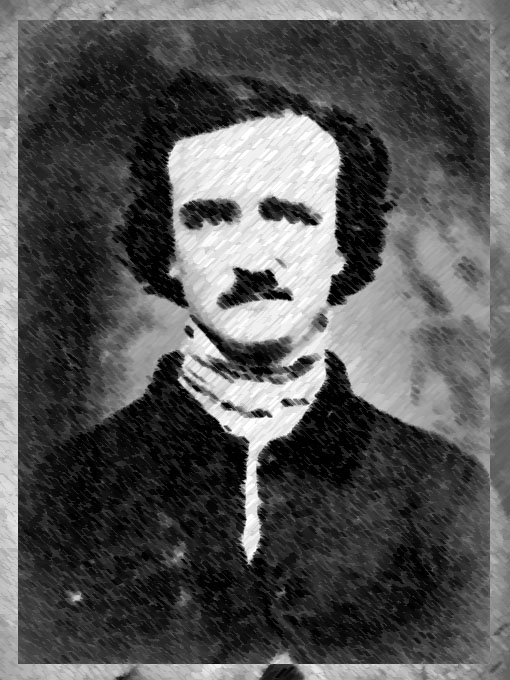
The day of the P.E./Campfire Tales event we listened to a succession of fumbled jokes and half-assed readings before Sally stood up. Without referring to any notes or pages, she then recited Poe’s “Tell-Tale Heart” to us, flawlessly as far as we could tell, and with feeling.

She gave a polished perfect delivery, and she pumped up her volume with the meter of the heartbeat. By the end we were all attentive and entranced. We were also amazed.

She really surprised us with her skill and passion. But I’ll admit I was also surprised at how surprised we were. What was most remarkable was how much we were moved. I would have expected it of elementary school students, and maybe even junior high kids, but we were cool. We were blasé. We weren’t supposed to be fazed. Nondescript Sally fazed us.

Posted in Lessons, School | Leave a comment

Spellbound

9.8.08
I’ve heard that French is the hardest language to spell. Knowledgeable people have told me that even the native speakers have a hard time with it. I’m sure that’s not correct.

It’s true that you can’t tell singular from plural in French from how it sounds; final “s” is not pronounced. But other than that I don’t think French is much of a spelling challenge. Like the other romance languages it doesn’t have many vowel sounds so what you hear is mostly what you spell.

Not so our native tongue! We have at least as many vowel sounds as there are cards in a deck. And English has been spoken for so long and so widely that it’s had many chances to pull in foreign spellings and to increase its irregularity.

There are many words that can be sounded out, but for much of our language you just have to memorize the spelling to get it right.

I think good spelling comes from two qualities: much reading and a retentive memory. I’m referring to amateur good spelling; I’m not going to get into what it takes to compete in those spelling bees.

Even good (amateur) spellers have their moments. I am always tripped up when I try to use the noun form of absent: absense or absence? (the latter, indicates my spellchecker, but I’ve learned defense and offense are defence and offence in the UK, so I’m sure to continue unsure).

Here are three tricky spellings: rhythm, privilege, and supersede.

Rhythm is cool because it puts y in your face as a vowel. The word doesn’t have any others. My dictionary indicates it’s a cousin to rhyme, and it’s from the Greek rhythmos (measure, measured motion) from rhein (to flow).

Privilege looks like it’s spelled wrong. We’re accustomed to seeing a d before that g: priviledge would be more like what we expect. But the word is from the Latin privilegium, an exceptional law made in favor of (or against) any individual, from privus (separate) and lex, legis (a law).

I first heard about supersede’s spelling at some party. “Bet you can’t spell supersede.” The common answer is “supercede.” You then bring it home by suggesting they consider the word in its noun form. “Oh!” they realize. “Of course. It would be supersession – not supercession!”

And that would be true, except in my time our language has evolved so much that, according to online dictionaries, supercede is now considered an acceptable alternate spelling.

Posted in Language | Leave a comment

egaugnal

     I was hesitant to post poetry when I started this blog. That was partly because I was impelled to jot down lessons for my grandchildren to hear, but it was also because I didn’t know how good it would feel. I’ve always understood that there’s no money in poetry, but I didn’t suspect there was as much audience for it as there appears to be, at least on the Internet.

I also didn’t suspect how much I’d prefer self-publishing to the process of submitting to small magazines, awaiting their decisions, and accepting their judgments.

So I drafted a number of posts about subjects on which I’d already composed sonnets, and I published the posts without the poems. Now and then I’m inclined to add the poem to this blog, like today.

On November 17, 2010 I put up a post called “Life in Las Rever,” in praise of reading backwards. I’d provide a link to it here except I don’t want colors or highlights to interrupt your reading. Life in Las Rever is about 8 pages from where I started.

Anyway, this is the companion sonnet, begun about a decade ago and finished in 2008:

I started reading backwards on my way
to work this morning and before I got
to yelekreb (the htron), I have to say
my grin had grown to smile and I’d shot
ahead to laughing as the everyday
advertisements and public service signs
put on new looks and sounds, began to play
with sweet absurdity and antic lines.

That tiny shift converted dull to rare,
subsumed banality and made a case
for kicking off the customs. Care to share
a dance with me? Ecarbme with grace?
Desserts are what you get for what you give,
and evil is an unright way to live.

Posted in Lessons, Poetry | Leave a comment

Old Glory

   I had occasion to contemplate our flag a few weeks ago. Conversations occurred about when to fly it and why, and those led to memories.

I’m not much into flags (or symbols in general), but I respect the power they exert on many. I think traditions are sort of like language; you have to learn the rules before you can break or satirize them. So I don’t display the stars and stripes, but I also won’t stand by while a flag is on the ground, and I notice when traditions aren’t respected.

Nowadays, some people think it’s okay to leave the flag up at night and without a light on it. Of course it isn’t. There’s no reason to fly a flag that can’t be seen. And there is a symmetry in the tradition of sunset flag-lowering: the ritual of triangle-pleating the cloth without letting a corner of it touch the earth.

Some young adults think that all or most or many households regularly flew the flag in the good ol’ days of the 1960s. Not so! In fact, it was ticky-tacky enough in the suburbs then, without adding matching flags to everyone’s front porch every day; that would have been dreadful. We would have resembled rows of ships.

I spent formative years in the suburbs of San Diego. That’s the largest naval base in the contiguous U.S. Every dad in our neighborhood was a war vet, and most were career servicemen. It was easy to find the John Birch Society, or Goldwater headquarters, and the newspaper? The San Diego Union? It was the Fox News of the time. In other words, our community was conservative.

Here’s the truth, kids. Most households had a flag, just like they had a gun. Most porches had a bracket for flying the stars and stripes. And those households put the flag out for Memorial Day, July 4th, and Veteran’s Day. The father or one of the kids took the banner in at sunset. Other than that, the only times the flag appeared was to fly at half-mast, to mark the death of a patriot.

Oh, and we didn’t have flags for our cars then. That seems to be a post nine-eleven style. I’ve always thought it’s silly when a car’s bumper tells me to kill my television. It’s beyond silly, it’s oxymoronic and surreal, when a citizen uses a gasoline-fueled car to fly the flag.

At freeway speed the flags are bound to fray:
appended to antennas like the crests
of gaudy parrots, signaling the way
to be American. Within our breasts
our arteries are hard, our hearts are sick;
without we bind to us the stripes and stars.
Exchanging motion for emotion, slick
for crude, we manifestly deck our cars.

Beneath disputed territory pools
await the tap of human enterprise.
There’s compound sludge and salts and fossil fuels
and everybody knows it, for the spies
have reared economists – they mark the curves
of battle-lines above the world’s reserves.

Posted in Lessons, Poetry | Leave a comment

My Father’s Funeral

  My father died in October 2006, after a good long life and among a large healthy family, so he could have done worse. He managed to acquire three children, four grandchildren, and one great grandchild by then. That was Otto, whom Dad declared a miracle when they met.

Otto has two brothers now, but he was only nine months old then. He came with his mother from Eugene to Marin County for the funeral.

I think we did a good job. We drank Dad’s favorite whiskey (Johnny Walker Black Label), we sang one of his favorite songs (I’ve Got Sixpence), and I recited one of his favorite poems (My Heart Leaps Up When I Behold a Rainbow in the Sky). But my best memory from the sad event is about Otto.

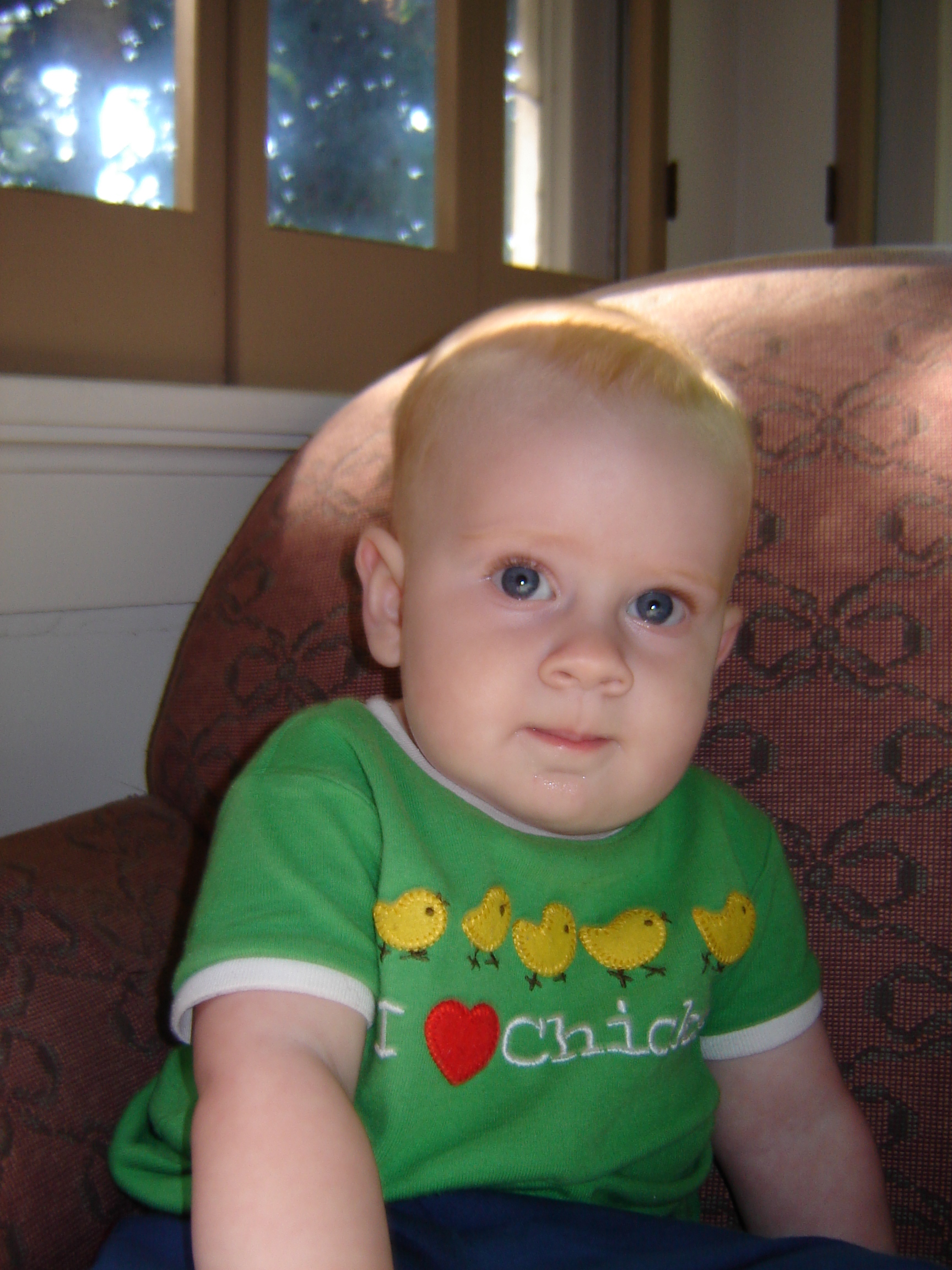
Throughout the speaking, he sat on his mother’s lap, next to my mother. It was clear that baby boy sensed the emotions around him. I don’t think the speeches went for more than ten minutes, but he was absolutely quiet throughout that time, perched sideways on Katie’s lap, looking into his great grandmother’s face with intent concern, patting and stroking her right arm.

Dad was right. Otto is a miracle. He’s almost 5½ now, and still attuned and sensitive to the emotional currents in which he wades.

Posted in Kidspeak | Leave a comment