Verbal Aggravation

9.8.08
My father insisted, sometimes, on verbal precision. He would not let us say motor when we meant engine, and he was adamant about the fact that cement is just fancy sand; you have to mix it with water to form concrete.

He managed to make his points with me and my brothers, but he didn’t stop the tide of language evolution. He was an influential man, but local.

In similar futile fashion, there are a couple of common verbal uses that make me wince. Like when a friend or mother claims to be aggravated. “I’m so aggravated,” she says, and I want to correct her. But I don’t. I’ll slip it in here though: people don’t get aggravated; situations get aggravated. It’s okay for a person to become annoyed or irritated, but it’s dehumanizing if she gets aggravated.

And here’s one I know I’ll lose, but in my world “lend”is a verb and “loan” is a noun. I may lend you money. I might make a loan to you. I will never loan you anything.

Posted in Language | Leave a comment

Inaudible Woman


You see me though I don’t make any sound
no matter what I do or where I move.
My heart beats silently and won’t be found
by ear or stethoscope, and I can’t prove
I breathe or chew by any sound effect.
I can speak but no one hears a word.
Invisible people you’ve come to expect,
but I’m a heroine who can’t be heard.

This muting doesn’t cancel noise from shoes
I wear, or clothing’s intermittent swish,
so daylight’s too embarrassing to use
and night’s too harsh to wander where I wish,
for if I put on shoes to spare my feet
my silent self makes footsteps on the street.

Posted in Poetry | 1 Comment

Neat Freaks and Hoarders

  I mean: minimalist or collector? It seems to me that one of the ways we can classify folks is into two categories based on how many possessions they aim to acquire.

I’m not into having stuff. Never have been. When I was a kid I harbored a romantic longing to be poor: the idea of owning just one doll or other toy, and treasuring that object without distraction, was powerfully attractive. You know how kids are into ordering items – what’s your favorite color? song? game? food? Well, I wanted my answer to be fast and definite. I wanted the field of choice limited.

Even now, I avoid department stores. Big shopping opportunities just make me nervous; I’m sure no matter how I go about it, I won’t see all choices.

Clutter makes me anxious. Chatter puts me on edge. You can call me anal or accuse me of OCD, but I know what doesn’t work for me, and it looks like a collection of items that need shelving and will require dusting.

There are other people, even in my own family, who see life differently. They acquire often and well. Although they practice rituals about which I know nothing, like the passing of no-longer-needed items to friends or the sale of possessions through the Internet or the occasional yard event, they never dispose of their stuff as fast as they acquire more, so their homes are accumulating components as inexorably as a river collects silt.

You can call them packrats and maybe they’ll smile. Say “hoarders” and they’ll argue right back at you: I’m not a hoarder; I’m a collector. And then you can smirk a little because you both know that’s exactly what any hoarder would claim.

They’re collectors. Really. They take pleasure out of having sets of items around. They probably find my walls too blank.

There are other ways to divide folks. Democrat or Republican. North or South. Male or female. Nostalgically: Chevy or Ford; Wards or Sears. Most of the classifications are useless, except maybe to create “sensitivity” toward others. Which should have been created long ago, right? Right?

Posted in Lessons | Leave a comment

Wraith

   I encountered different hints at origin when I looked up “wraith” in my Webster’s Unabridged (1979) and on the Internet.

I googled the word and peeked at the first four definitional sites, and all of them said “origin unknown.” They agreed it came from Scotland and at least two of them cited first use in 1513, in a translation of the Aeneid by one Alexander Douglas. I read that J.R.R. Tolkien thought wraith was connected to writhe (from the Middle English writhen, which meant twist, turn).

My print dictionary declares that wraith is from the earlier Scottish warth (guardian (angel)) which came to us from the Old Norse vörthr (warden, guardian).

All references seem to agree that wraith means an apparition that’s an exact likeness of someone, usually seen just before that someone’s death. Other meanings are ghost or specter, any insubstantial form or semblance, and even a barely visible vaporous column.

I think I had every meaning in mind except the first, when I named this sonnet.

I dwelt eleven seconds in your mind
today: six moments now, five instants then.
For fractions of eternity I shined
into idea in you. I flashed again
and flickered out before you caught my form,
but I was there and radiant as youth.
Disembodied I in you grew warm
eleven seconds, glowing like the truth.

My pulse insists upon a simple goal:
I’m dancing deep for wisdom as I dream
the chair at God’s right hand, where I am taught
the answers to the question, how the whole
is crazy fabric, and the strongest seem
is simile, like me inside your thought.

Posted in Language, Poetry | Leave a comment

My Father’s Speeding Ticket

   I love it when this blog provokes a reader to recall and tell a memory. That happened recently from my mother; she came by on a Saturday and we strolled from my place to lunch on College Avenue, and on the way back she told me a story about Dad.

She said it happened in Chula Vista (we arrived there in fall of 1958). The plot involved election results and I wasn’t told about the event when it occurred, but it makes sense to us to place the escapade in November 1960, when I was 10 and John F. Kennedy was running for president against Richard Nixon.

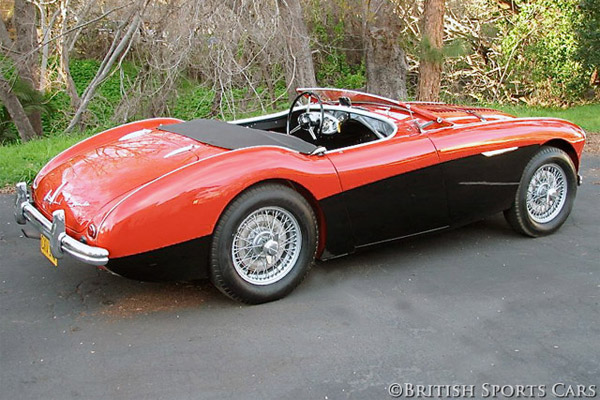
Dad’s car was a 1958 two-tone Austin Healey. He loved that machine. One night he was stopped by a policeman and given a speeding ticket. It was an unjust bust, he told my mother. And he decided to contest it.

He went to court. He was allowed to explain a feature about his beloved roadster. The weak part in that Healey was its radio. A simple AM unit, it didn’t have good fidelity or strong sound. In fact, you couldn’t hear the radio if you drove the car at any speed; the roar of the engine just drowned out whatever the radio was broadcasting.

Dad’s argument was simple. He’d been listening to election results while driving. He declared that there was no way he could have heard the radio if he’d been traveling at the speed the ticketing cop claimed.

Dad won.

And Mom says he always maintained that his argument was true. He hadn’t been speeding. He was an early victim of red sportscar profiling.

Posted in Lessons | Leave a comment

Cucumber

9.8.08
I was walking to work awhile ago when I considered the word cucumber. Here’s a random group of facts I’ve collected about it.

The word has been in our language since the late 14th century. It came to us from the Old French cocombre, from the Latin cucumis, which may have descended from some pre-Italic Mediterranean language. The Old English word for it was unrelated, and meant earth-apples.

The botanical name for the genus is cucumis sativus and in the 17th, 18th and even early 19th centuries, the vegetable was often called a cowcumber.

It’s a member of the gourd family. We eat the fruit before it is ripe. Stuck in the part of my brain where I store food trivia is the fact that cucumber skin is the hardest substance we can digest; anything more dense will pass through us like tomato seeds.

I read today that cucumber was planted in this land in 1609, by Jamestown colonists.

I owned a copy of The Arabian Nights when I was younger, and I was enchanted by one story, which featured a damsel who served her guests a dish of cucumber stuffed with pearls. I knew it wasn’t edible but it sounded so cool to me, in all senses of the word, to replace cucumber seeds with pearls.

Speaking of cool, a cucumber really is. The phrase “cool as a cucumber” has been around as long as the food, and it was tested in 1970. Scientists took cucumber temperatures, and found that the inside of a cucumber on a warm day is about 20 degrees cooler than the field in which it reclines.

Posted in Food, Language | 2 Comments

Rats

I’m sitting in my Berkeley office, which is an uninsulated small structure described by building inspectors as a pretty shed. It has a big desk, plenty of wiring, and several windows, so it’s a nice spot for working in or exercising, provided it isn’t too dark or cold outside. This shed sits on the ground, across a small deck from my studio cottage, and it’s used as much by backyard denizens as by me.

Varmints get under it. It sounds like some live under it, at least part of the year. I hear disturbing scrabbles and sometimes mewling late at night and early in the morning. I see evidence of digging and burrowing on the ground at the ends of the building.

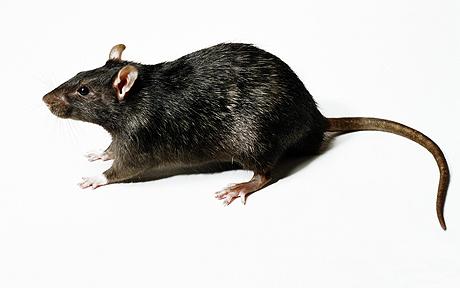
I hope it’s skunks. I fear it’s rats.

I don’t like rats. I like mammals in general and I have tried with rats, especially during those years when Katie kept them as pets, but I have never admired their canniness, let alone their naked tails.

I strive to not be squeamish with its tone
of weak dependence but the scritch I hear
of late unsettles me … I nearly moan
surprised to note that rats are what I fear.
Their hairless tails repel me horrified,
imagining a mob, recalling too
the one that ate a neighbor’s pesticide
and how we winced at what we had to do.
I shudder to remember, and I dread
the image cast by worry on the screen
tomorrow makes. I’m wishing mammals dead
as if I were the heir presumptive queen
of hissy fits and shivers, flailing wrist
and shoulder quivers, suffered to exist.

Posted in Critters, Poetry | Leave a comment

Dirty Books

     The first suggestive book I ever held was my father’s copy of Candide. I have the volume here, with its “Ex Libris” bookplate and its penciled $1.50 used-book price. It was published by Hartsdale House in New York, in 1930, and in addition to Voltaire’s ideas, it carries illustrations by Mahlon Blaine. The translator is not acknowledged.

Some of the pictures have unclothed women. You can see breasts, butt cleavage, even the shadow of pudenda. I found the sketches provocative when I was 10 or so.

And then there were those National Geographic magazines in elementary school classes. Some issues featured articles about communities in undeveloped countries. There might be a photograph that included women, and then breasts were likely to be visible. These were not the perky units that would later be shown in Playboy and Hustler, but they were noted nonetheless, by boys and girls alike.

I knew Candide wasn’t trash, and we knew the Geographic pictures weren’t salacious. We snuck a little stimulation from them, but we didn’t feel any tarnish.

I was a little older when I got my hands on porn.

I think I was around 12. I was visiting in New York with Mom, and staying as usual at her sister’s house in White Plains. I bunked with my cousin Susie (3 years older than I), but right through the shared bathroom was her brother Jeff’s bedroom. Jeff was a year my senior and thoroughly obnoxious. He teased, he drooled, and he bored us to tears.

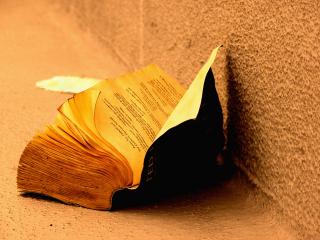
One day I slipped into his room and looked at his bookshelves. I pulled a paperback called The Amboy Dukes, scanned the back cover, and borrowed it. Total filth. The yellowy pages opened to a gang-rape-on-bus scene, and went on to abuse women from there. Took the top of my head off.

My aunt caught me with the book. She dragged me and the book to my mother and began lambasting me for reading such filth, repeatedly demanding to know where I got the thing but ranting non-stop so I couldn’t answer. When I finally got to say that the book was Jeff’s, well, that stopped the noise. It was a precious occasion for me.

After that it was kind of easy. I had friends with older brothers. All we had to do was sneak into their rooms and invade their stash.

Of course the porn didn’t work. We soon saw that every plot line could only be maintained by increasing the number of participants. The climax orgy scene was boring. We found that what worked instead of porn was a good book with appropriate moments of eroticism. Like Another Country, by James Baldwin, presented to me by my stepgrandmother about the same time. I remember she tried to take it back from me when she learned it had some sex in it. No way! I loved that book.
Posted in Lessons | Leave a comment

Quit Yer Bellyachin’

Another art gallery is about to close. It hardly matters where; they’re dying like flies trapped in a closed summer cottage. I don’t know how the for-profit galleries are doing in big cities, but the “community” galleries aren’t commercial. They’ve been funded by nonprofits and face it, kids: that well has just about dried up.

Too bad, sure. But whining won’t make it not so. And I’m more tired of the whining than of the art.

Where does this fancy come from, that it’s okay to aspire to work full-time on art? Do folks think this is the Renaissance? Are they looking for patrons? Are they ready to suck butt and dedicate everything they produce to the man with full pockets? That’s as crazy as buying a lottery ticket and expecting to win big. Or majoring in business with the idea that you’ll get a management job, rise to CEO, and retire rich at 45.

Don’t expect endowments. Look for a job. Get a paycheck job or go commercial (and please, do not delude yourself that the commercial art path – with its forced repeat of what happens to have recently sold – is creative).

The job won’t take that much time from you. We work 40 hours a week in this country, max. You’ll still have 128 other hours. And listen: if you pay attention at the job, if you try to do it well and improve it, it’ll feed your creative belly in ways you can’t imagine.

I’m sorry we’re running short on dollars, but so it goes. Food and housing have to come before art endowments. It’s sad, but so is the death of independent bookstores, print newspapers, elegant talk.

And don’t try that silly claim that art will stop, without endowments. Artists create, regardless of financial payoff. Maybe if the art were better it would be better funded. Maybe if the artists and writers and editors and orators strove for the ideal in their souls instead of the quick high of creative euphoria, maybe then there’d be the support for which they grieve.

Burt P. Upset

Posted in Uncle Upset | 2 Comments

Decompression

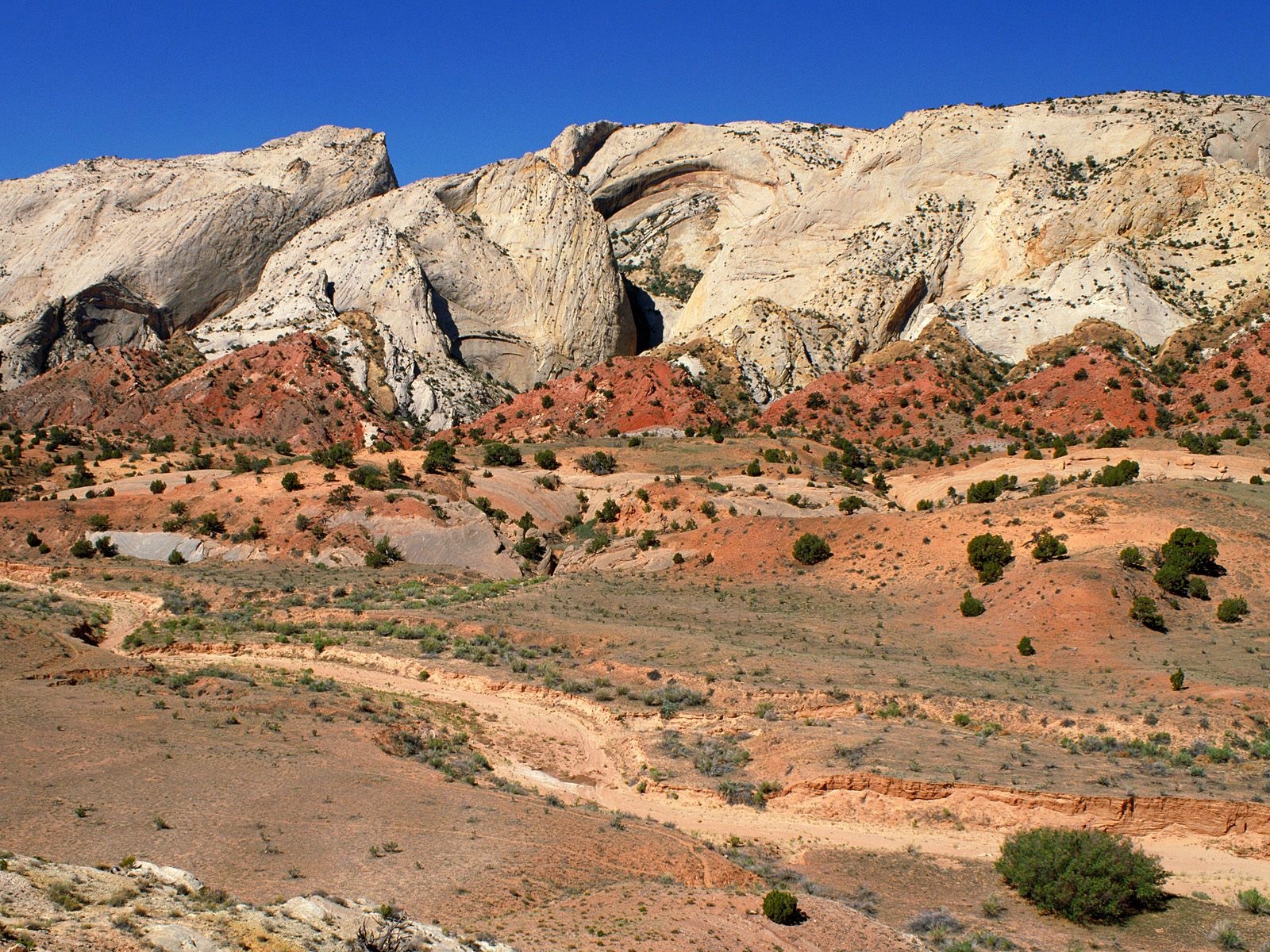
   I did some desert camping in the 1990s, and I was surprised at how much I liked it. Always before I’d headed for the mountains or the seashore, but in my 40s I began to appreciate the silence, solitude, and immensity of desert.

As far as I experienced, it didn’t get any grander than Death Valley (I’m chuckling, because I started to type “the high point of my desert camping” or “the zenith” and realized I’d have to say “the low point” or “the nadir” in discussing that landmark).

The process went like this: I came, I saw, I began to slow down, I saw more, I slowed more and felt myself shrink as I collected impressions, until I became a fly on the wall of the universe, a little witness to infinity.

Here is a sonnet I wrote about the experience. It was published in The Enigmatist a year ago. It’s my best example of what can be done with meter in a sonnet.

Here’s what I’ll tell you to capture the journey in words:
wind before Avenal gusted on us for two days;
waking in Barstow I listened to dawn-feeding birds;
you made a tally of creosote shoulder displays.
Roadkill was rubber; the curlicue strips of retreads
littered like corpses the asphalt our truck tires took.
The buzzing at sunset of zippers on tents, packs and beds
were treble we added subtracting some stress again look:

Within a labyrinth of canyon walls
we came upon a garden fully formed.
A glance held snow-robed mountains, waterfalls
run dry, a lake of flowers morning-warmed.
We eavesdropped on the galaxy, and found
all tendency to urgency unwound.

I’m taking a week off now. I’m not going to Death Valley but I will be in warm weather and arid landscape. I won’t be using electronic devices. I’ll be back on June 20.

Posted in Lessons, Poetry | Leave a comment