Letters

“What’s your least favorite letter?” Danny asked us at lunch.

We goggled.

“Come on,” he said. “It’s the opposite of when you were little, and everyone asked what’s your favorite this or that. I want your least favorite.”

“Letter?”

“Yeah. For example, mine’s ‘c’. Completely needless. You can do it with ‘s’ or ‘k.’ I mean, look at the word ‘circus,’ or ‘circum-anything.’ It’s crazy to have one letter make different sounds in the same word.”

“Like ‘Xerox,’” I said. “Make up your mind: pronounce it ‘x-erox’ or ‘zeroes.’”

“Okay, okay,” Andy was grinning. “What’s with ‘w?’ Why three syllables to say a letter, when all the others are just one?”

“Yeah,” I added. “Good old ‘www.’ It’s way shorter to say ‘world wide web.’”

“Or GSW,” Danny said. “‘Gun shot wound’ is only three syllables.”

“You can figure how those would develop,” Andy opined. “You see ‘www’ or ‘GSW’ on written stuff. You can’t pronounce them the way you can initials like ‘asap’ or ‘awol,’ so you start saying the letters. Even though what they signify is easier to pronounce. Funny …”

“I get you.” I thought, and continued, “I find writing ‘e’ tiresome. Unless you do it like a backwards ‘3,’ which seems affected, it takes too many pen strokes to make ‘E.’ And the letter is notoriously, boringly recurrent.”

“And I’m not crazy about ‘q,’” Andy said. “It’s as unnecessary as ‘c;’ we can do ‘qu’ with ‘kw.”

We all agreed.

“What about cursive capital ‘Q?’ It’s worse than the capitals ‘G’ or ‘S.’ It’s silly …” We stopped there, for then.

Posted in Language | Leave a comment

On Reading of the Future

… In a Comic Book 20 Years Old

I read a Richie Rich the other night:
A story run in 1973
that had an uncle travel to the bright
occasion of the coming century
which seemed approaching slowly surely then
(a score plus seven years of life away).
But now it’s little more than six again
until we see 2000 New Years Day.

How suddenly there sometimes falls on me
a bit of obvious, as when a word
correctly spelled will yet appear to be
misspelled: the true looks false, the right absurd
and I am shaken, wakened to a sight
I didn’t see before, in other light.

December 1993

Posted in Poetry | 2 Comments

Voyeur

The creature most interesting to a dog is another dog. The being most interesting to a child is another child. The people most interesting to people are other people.

Our favorite disability is blindness, because we think we can stare at the blind without them knowing it.

Kids love to spy on adults. They’d spy on kids but the other kids are on to them.

The sweet thing about walking is that you get to be a fly on the wall; you witness what others won’t. The drivers don’t see you – stop wasting your time on dayglo vests and street markings and instead attend to what the car operators are doing (that’s why we want brake light indicators on the fronts of cars).

People-watching and eavesdropping are public forms of entertainment. They are easily enjoyed at airports and on sidewalks in pedestrian-friendly neighborhoods, in buses and on trains. Those venues offer more interesting fare than shopping malls and concert halls and amusement parks but these places aren’t bad either.

I used to scoff when I heard of a writer who got a story idea from listening to the kids talk in the back seat of her van, while she ferried them to afterschool activities. I thought, “That’s almost a waste of time, compared to what you can overhear teenagers discussing in the Elmwood, or city kids doing on the 1 California bus.” But the fact is, you find news or gossip items where you happen to be, and the trick is to pay close and clear attention.

When you look at the development of the novel, you’ll see that the form is all about gossip, spying, and eavesdropping. A good novel is an opportunity to take that comfortable perch on the wall, and watch other people live.

It seems to me, but this is just my opinion, that it’s a better use of my time to go outside and watch and listen and try to record what I witness, than to screen reality shows or read tabloids.

Posted in Lessons | Leave a comment

Norange

9.8.08
Andy asked me which came first: orange as the name of the fruit or the color? And then he asked a few more times, so I gathered that he meant it.

The fruit. It goes back to at least 2500 BC (China) and is the most widely cultivated fruit tree on the planet.

It looks like the word began way back. I see references to Sanskrit (nārangah meant orange tree) and even to a Dravidian root meaning fragrant. It passed through Arabic (nâranj) and Persian (nārang) and landed in Spanish (naranja) before it started to lose the initial “n.”

When Danny was a little guy, he thought his favorite fruit was called a napple. In similar fashion, naranj was usually preceded by an indefinite article that ended with an “n” sound – like une or un – and it isn’t surprising that “une naranj” became “un orenge” (Old French). I read that the process is called juncture loss (Danny must have been practicing juncture gain). I conjecture that the Spanish never lost the initial “n” because the word is feminine so the indefinite article ended in “a” and adequately separated the two “n’s.”

While collecting these etymological nuggets, I gleaned the following about the fruit:

It’s a berry (hesperidium).

It was probably originally a hybrid of pomelo and mandarin.

The naval orange carries its own undeveloped twin (the berry ate the baby!)

Posted in Food, Language | Leave a comment

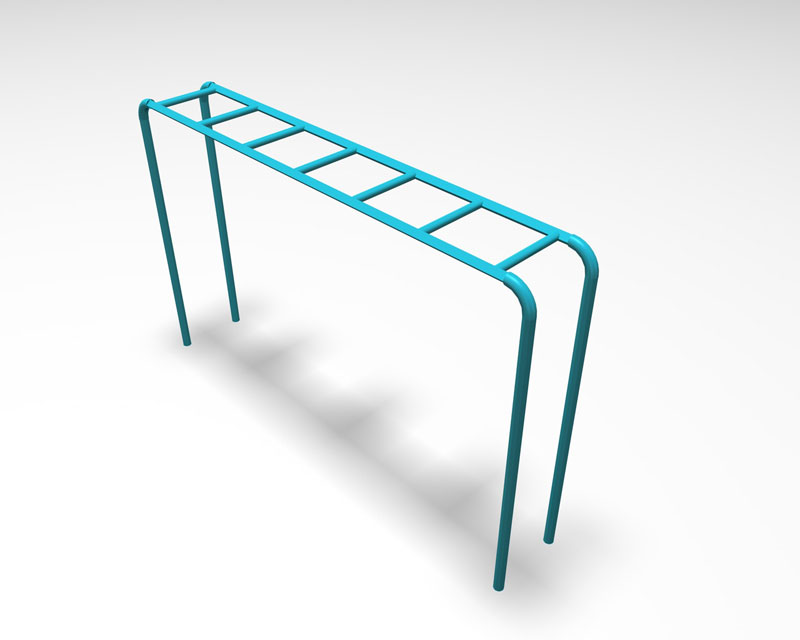
Monkey Bars

I watched the children in the corner park
amuse themselves on monkey bars. I saw
each swinging body ride a measured arc,
depending arm to arm on natural law.

(You cannot rush a pendulum. Its swing
is its identity, its moment set.
The gravity of earth plays everything
in terms of periodic minuet.)

No more can you condense into a week
emotions it took seasons to produce,
than you can push a pendulum to wreak
unlawful pace. There isn’t any use
in seeking the perspective that you need
at any but its own intrinsic speed.

Posted in Lessons, Poetry | 2 Comments

Conservation

Of course I’m naturally conservative. Most people are. That doesn’t mean we’re Republicans. It means we resist change, at least a bit, at least at first.

People are almost as ready as dogs to make a tradition. Do something once and it’s new, twice and it’s familiar, three times and it’s a regular activity becoming a ritual. We can be impulsive, we enjoy novelty, and many of us savor responsible destruction, but most people most of the time want stores, landscapes, and loved ones to remain as they were.

I’m not just conservative; I’m a conservationist. I want the good things preserved, or at least not wasted. I think the national park system is in general a benefit. I’m absolutely glad that Yellowstone has been set aside for all of us to experience. I treasure Yosemite. I even love little-used Lassen.

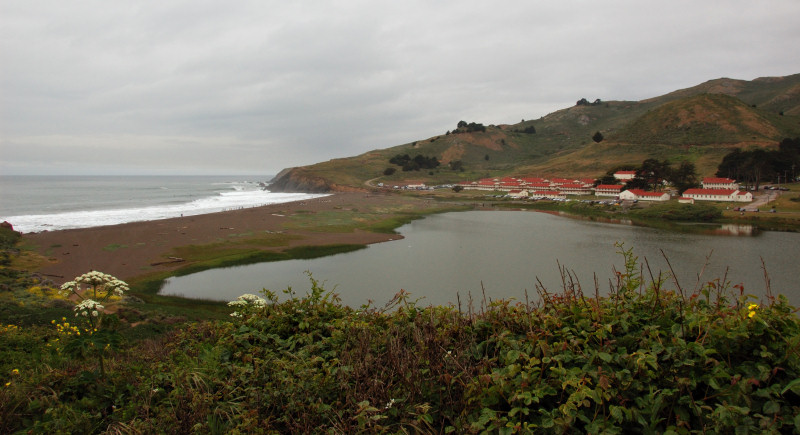
But I’m not sure Lassen needed preservation. And I have complaints about what has become of the Marin headlands and Death Valley, in the name of good.

I stomped around the headlands in the late 1960s. It was a playground for some of us high school students: foggy and mysterious at night, wild and solitary during the day. We explored bunkers and emplacements. We learned to run sideways down the steep grass-covered slopes to the pebbled cold beaches. We conquered the bike hill to the bridge.

We didn’t experience any crowding. We never minded waiting for the one-way tunnel. To this day I don’t understand why it had to become National Recreation Area, and consequently beautified, publicized, regulated. I fear this was part of a “if some is good then more must be better” example of political will.

I think a similar process regulated Death Valley. The area is awesomely desolate, deep, and privy to celestial music. As late as the 1990s you could enter the landmark during springtime in an unairconditioned truck, and as long as you had a supply of wood and water you were set. You could camp just about anywhere provided you toileted far enough away from roads and others. Easter time is the height of the season; the desert is in bloom and the weather is not yet insufferable. Yet I was there several springtimes, and there was no traffic. So I’ll always wonder why National Park “protection” was necessary.

All it seemed to bring were restrictions on camping and traveling with animals. As soon as it became a National Park, Death Valley went on the required list for sticker- or magnet-collecting families. My last trip there, the only visit after the place got protected, required a camping permit and confined us to a small space on asphalt, amid a little crowd of RVs.

Posted in Lessons | Leave a comment

Treasures

Of all the gifts my life bestows on me
ideas I value most.
Computer treasures electricity
but software is a ghost
that current-craves as we require blood,
as sunshine is essential for the bud,
and we, elaborate, are built to be
concerned with more than molecules and mud.

And if I’m asked to name another thing
essential to my glee,
then language is the paragraph I’d sing
about as pet for me,
and I don’t need to name a favorite third
and I don’t care who thinks my joy’s absurd:
Ideas to me are food and foot and wing
and I am ever searching for a word.

Posted in Poetry, Writing | 2 Comments

Thanksgiving

Surveying me as I depart from home,
I stipulate to happiness today.
So light and clear it’s hard to make a poem
and if I die this afternoon, I say
it needn’t be more wonderful than this:
dependents well, acknowledgment at work;
by exercise and writing bathed in bliss;
eschewing meat and mania and murk.

I mark this morning and with joy remark
it bold, emphatic in the Wednesday crowds:
a scimitar of moonlight in the dark;
a jet athwart a canopy of clouds;
and knocking wood within, I send to God
a little fervent gratitude. I nod.

Posted in Poetry | 2 Comments

Fat Club

I speak for every female ever fat
in mind or mood or belly, butt or thighs.
Presumptuous pronouncements are my chat
and this apparent fitness my disguise.
For I am fat in memory and fears
beneath the slender shape I work to be,
and I remember all those heavy years
when I felt thinner than the truth of me.

I speak for every look at form and face
we give ourselves, reality or role,
and echo to the self of granted grace
that overrides the myth of self-control.
But most of all, I open mouth to tell
the awful loneliness of feeling well.

Posted in Poetry | Leave a comment

Steam

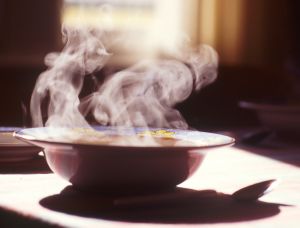
I cooked and ladled chowder for us three.
I served it to each person with a roll.
When Danny saw the steam, he questioned me:
Why does it tumble upward from the bowl?

He let me look through eyes not twelve years old
at something I see often and ignore,
for now I note that till the soup grows cold,
against the sunset steam appears to pour
in upward tendrils almost perfect white,
in billows ribboning and curling gray,
like cigarette smoke climbing to lamp light,
like fog reversed and rising from the bay.

His question gave a blessing to our group:
The miracle of steam above the soup.

Posted in Poetry | Leave a comment