
Prospective Guilt

Sure I experienced guilt growing up. From my perspective, who didn’t? There was early guilt about toilet training mishaps, intermediate shame about laziness, stupidity and lack of common sense, and advanced teenage angst when I came up short in self-examination.

Guilt was so prevalent in my development that it was a subject for peer discussions. More than politics or folk music, my friends and I shared the bad personal feelings we incurred after acting (or not) to our (or others’) satisfaction. As often as I debated the value of religion with my pals, we compared Catholic confessional guilt to Protestant work-ethic guilt to Jewish everyday guilt, and argued about which form was most insidious.

It wasn’t till I was around 24 that my light bulb lit. In a dazzling illumination of the obvious, I realized that retrospective guilt is substantially useless. I’m not saying one shouldn’t apologize (most of the time I think “sorry” expresses sympathy, but it means responsibility when it’s used after one errs). I’m not advocating that one avoid the consequences that come with one’s own acts. I’m just saying that castigation is useless. Self-abasement and groveling are irrelevant (not to mention unattractive).

I say, kids, don’t waste time feeling bad about what you did. Learn from your acts not to do whatever makes you feel bad, again.

There’s probably no state worse than shame. There’s probably no feeling finer than when you’re pleased with your actions. So whenever you’re confronted with a choice, select what will make you proud of yourself tomorrow. Imagine just far enough into the future that you can see the blame or credit in the alternatives before you now. Use that vision to make your choice.

I’ve been accused of extreme honesty. I am often credited with honorable behavior. It’s easy. I always pick what will make me not regret. I don’t like rue.
Posted in Lessons | Leave a comment

Skunk

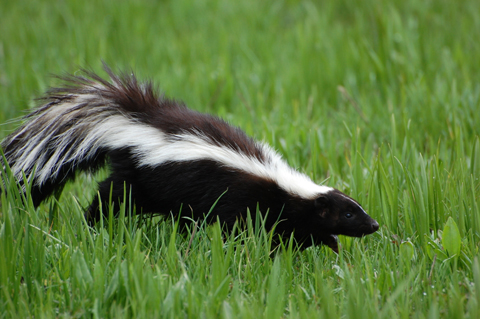
I have a skunk clan as yard mates and the current resident seems very active lately. She may have insomnia. She was on the deck twice last night and then an hour later, after I realized that the chirping I was hearing wasn’t coming from the TV show, I opened the door and was assaulted by the reek of her musk.

And this morning, at least a half hour after light, there she was again. I had to “ah hem” to get her away from my office door. It sounded like she took some time to settle down below the floor. She may have been squabbling with another critter. It’s not the right season, but maybe she has kits.

I did some quick research when I realized I had these close neighbors. I read that skunks don’t have natural predators (except for a few owls) but also that they don’t spray readily. They can only store about 5 charges of effluvia and it takes half a day to make more, so they use it sparingly. They mostly den alone. Since I’ve occasionally seen young ones, I conclude my main tenant is a single mom like me, usually living without offspring.

We’re aware of one another. I’m not anticipating getting sprayed myself. I don’t mind the odor when it’s air-diluted.

She’s got beautiful fur. Her snout is small and her forepaws are powerful; I can tell she’s a good digger. She can flatten her body like a cat or a mouse when she wants to. I’ve seen her flop almost as flat as a mat on my front boardwalk, in midday sun. Insomniac.

I wondered where the name came from, so I looked it up. My old print dictionary says it’s a contraction of an American Indian word: segonku. Online sources give more information. Various spellings are offered. Origin is attributed to Abenaki or another Algonquian tongue. Although a couple of skunk varieties come from Indonesia and the Philippines, most are native Americans.

Skunks have been called polecats. It appears that most familiar languages call the animal after its Latin name. The striped skunk is Mephitis mephitis, and the French call the animal mouffette. In Spanish it’s mofeta or zorrillo (little fox).

It’s obvious why some marijuana is called skunk weed. But so far I can’t discover why as a verb the word means to defeat overwhelmingly and prevent from scoring. You got skunked suggests you stink?

Posted in Critters, Language | Leave a comment

Inventions

Illusion is the television’s art.
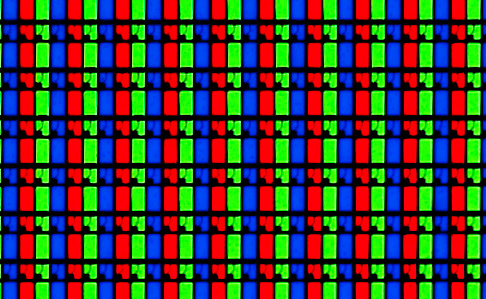
Ten thousand pixels listen currently
and make their light emissions blink apart
but link themselves like cells apparently:
Befooling brains with signals to our eyes,
enhancing with the audio in sync,
and now we learn that surfacing disguise
can etch and influence the way we think.

But I won’t wreak destruction on the screen
(nor will I vandalize the cars I hate),
for monsters are less scary when they’re seen,
and tools should not be instruments of fate.
If we are worthy, surely we are skilled
enough to regulate the goods we build.

(It’s okay to watch
and it’s okay to drive; just
never let them rule)

Posted in Poetry | Leave a comment

The Inaccuracy of Projections

I pulled a fact out of a recent article in Rolling Stone magazine, by Tim Dickinson (How the GOP Became the Party of the Rich).

It was a good article. Long but providing an accurate summary of all the Republicans who raised taxes, all the Democrats who lowered them, and how incorrect the theory of trickle-down economics always was. Almost buried near the bottom of a page not the first was this little gem:

Assuming the economy continued to grow as it had under Clinton, the Congressional Budget Office forecast a federal surplus of $5.6 trillion by 2011.

Got that? That’s how far off the CBO was capable of being, in 2001, looking ahead 10 years. We don’t have a $5.6 trillion surplus. We have no surplus at all. Isn’t the debt like $14 trillion? Wasn’t that forecast off by such an astronomically large number that it makes the act of forecasting full of folly?

The article wasn’t about forecast inaccuracy. But I want to focus on it for a minute. It strikes me that our species is very good at looking forward and rather uninterested in casting the vision backward to ascertain the accuracy of that forward look. It’s like the forward feels so good we want to keep looking there no matter what.

I never hear of anyone reviewing the astrology chart that was produced a decade ago, to see how much of it was accurate. We seldom get a report summarizing the precision of theater reviewers’ predictions. We joke about how the meteorologists get paid whether they predict the weather right or not, but none of us charts their reports for accuracy.

No one lists the UFO or ghosts sightings that weren’t.

I don’t hear anyone admit that the Cold War was just an excuse to jack up the military business.

Most market analysts are not correct, but we continue to listen to them.

Over and over again we grant credit where it’s not due. Go figure (‘cause we sure aren’t).

Posted in Lessons | Leave a comment

Birds of a Feather

Their timbre irritates my ears, as high
as if they sucked on helium for air.
They poultry-hop their happiness to spy
each other in a crowd. Too quick they share
their girlish hopes, romantic fancies, dirt,
collapsing into silliness so soon,
it isn’t incorrect to murmur “flirt”
or unrealistic to expect a swoon.

Esteeming each, the sum is what I hate,
whose voices seek that unremitting pitch,
who judge and peck at differences. I’m struck
by their unfairness while I suffocate
in fluff. And I can’t even call them bitch
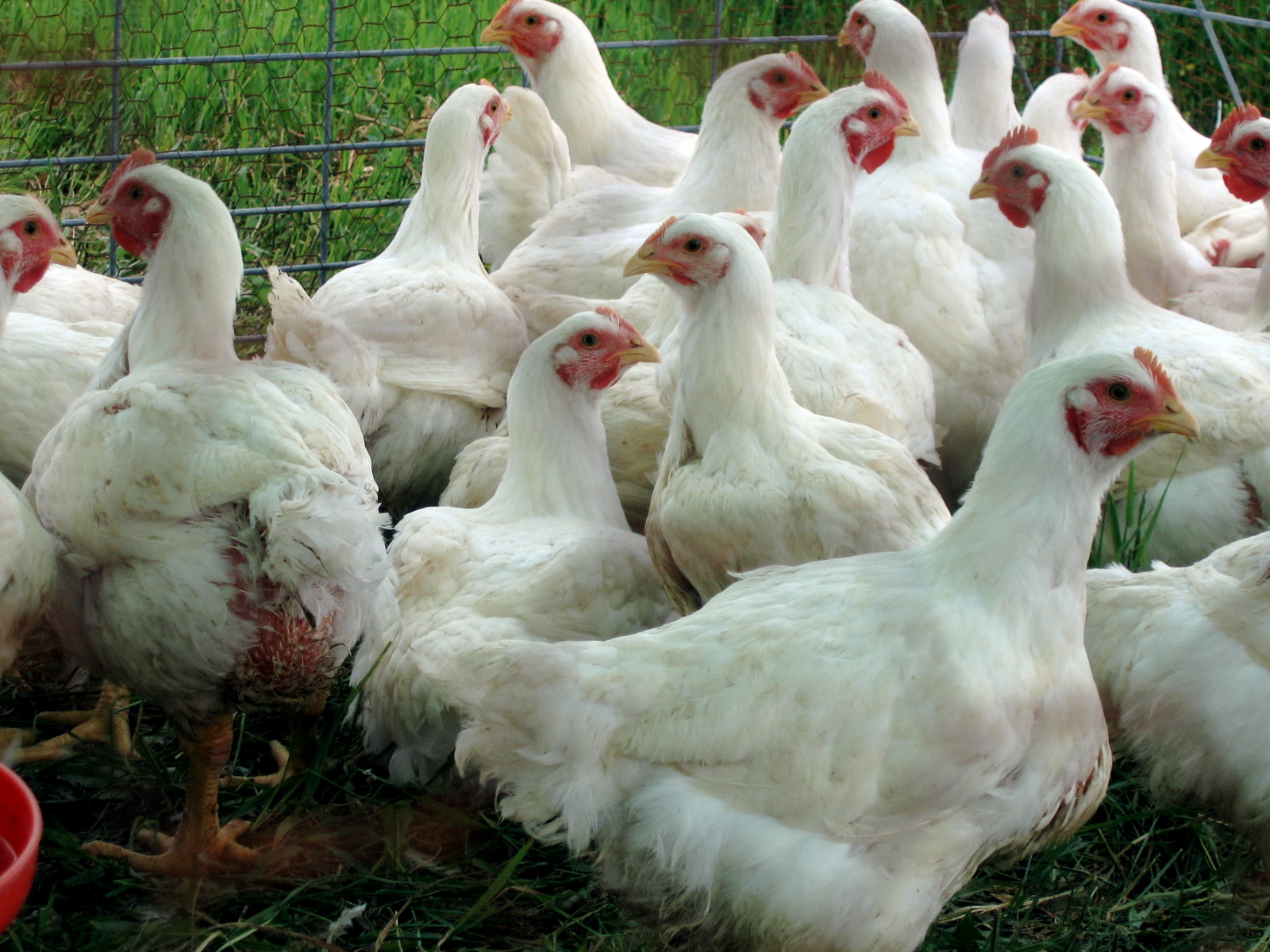
when chicken comes to mind with every cluck.

Posted in Poetry | Leave a comment

Close One

I witnessed a near-accident on the way to work. A woman driver nearly backed into an oblivious pedestrian.

The only thing that prevented collision was the driver’s extremely slow speed. That’s what made me notice her in the first place – she crossed the intersection with the intent to park at the curb, moving in jerks so slowly that her minivan’s rear end was still in the crosswalk, about to be in my path, when her right front tire scraped the curb. She stopped. She put the van in reverse just as a young woman was stepping off the curb behind the vehicle. The pedestrian wore a hat and muffler and held her cellphone to her right ear, blocking her peripheral vision along with her attention. There was no way she saw the van.

And the driver? I watched her profile. She drove chin up. She hesitated going backward just like she did going forward. But she never saw the pedestrian.

Their near encounter reminded me of those old Popeye cartoons, where fugitive Swee’Pea or sleepwalking Popeye travel the moving girders of high rise construction, without mishap.

Posted in Uncategorized | Leave a comment

Ten of Four

When I was 22ish I spent some time on a kibbutz. The other volunteers (studentim) were from the US or Canada or the Netherlands, and the Dutch kids were pretty fluent in English. So I was surprised one afternoon, while cleaning potatoes in the big kitchen, to participate in the following exchange.

I was working with a Dutch girl whose name I don’t remember. The potato peeling machine was a heavy metal object that rested on the floor. It worked by spinning the potatoes around in its rough central cylinder, while the operator (one of us) ran cold water into the action. The abrasive interior took off all the dirt and most of the skin; we just had to hand-peel around crevices. We sat low, near the peeling machine, and we had to empty the thing of starchy water whenever we reloaded. The waste water splashed on our bare legs and dried white and stiff, attracting huge flies that we couldn’t easily swat away, because our hands were then occupied with potato and knife.

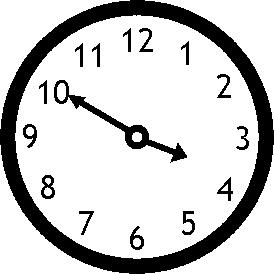
In the midst of this routine, my companion asked me what time it was, I looked at the sturdy watch on my left wrist, and I said, “Ten of four.”

“Of four?” she shot back. “What is this ‘of?’ Does it mean ten before four? Or ten after?”

Our shift went till 5, so I don’t think she was asking about the minutes, really. It was my first noteworthy experience with the power of prepositions.

We’re taught in elementary school that verbs are the action words. And that’s true, but there’s so much more to it that it may as well be false. It’s the prepositions that suggest intention and relationship. Prepositions are the stage directions of our descriptions.

Take a sentence like “He runs (preposition) the fence:”

He runs at the fence.
He runs to the fence.
He runs by the fence.
He runs into the fence.
He runs under the fence.
He runs around the fence.
He runs over the fence.
He runs toward the fence.
He runs from the fence.
He runs off the fence.

Or hear how a scandal could build: “The priest prays with children” or “The priest preys on children.”

I was exposed to classical Greek 40 years ago, and so impressed that I’ve retained some of what I then learned. Old Greek prepositions were even more powerful than ours. “Epi,” for example, isn’t just “about.” It’s more like “on top of a mountain surveying the widest view.” And “ana” is away from and up, like an army retreating from the seacoast into the defensible hills (thanks, Xenophon).

Posted in Language | Leave a comment

The Traveler

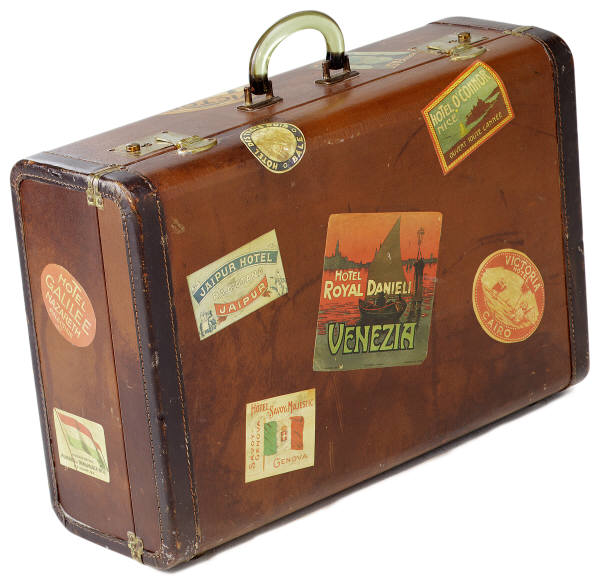
He says he loves to travel for the new
impressions, foreign cultures, ethnic arts.
His mind is stimulated by each view
he photographs. He’s speaking as he darts
from site to site arranging flights and stays
at charming B&Bs, selecting shows.
He types up evening plans and packs the days
with jaunts to visit places no one knows.

He says he loves to travel for the thrill
of learning, but that isn’t really it.
He’s made his daily life into a drill
with no surprise allowed, and too no wit,
but travel plans can frequently go wrong,
and getting through the snags makes him feel strong.

Posted in Poetry | Leave a comment

Letters

“What’s your least favorite letter?” Danny asked us at lunch.

We goggled.

“Come on,” he said. “It’s the opposite of when you were little, and everyone asked what’s your favorite this or that. I want your least favorite.”

“Letter?”

“Yeah. For example, mine’s ‘c’. Completely needless. You can do it with ‘s’ or ‘k.’ I mean, look at the word ‘circus,’ or ‘circum-anything.’ It’s crazy to have one letter make different sounds in the same word.”

“Like ‘Xerox,’” I said. “Make up your mind: pronounce it ‘x-erox’ or ‘zeroes.’”

“Okay, okay,” Andy was grinning. “What’s with ‘w?’ Why three syllables to say a letter, when all the others are just one?”

“Yeah,” I added. “Good old ‘www.’ It’s way shorter to say ‘world wide web.’”

“Or GSW,” Danny said. “‘Gun shot wound’ is only three syllables.”

“You can figure how those would develop,” Andy opined. “You see ‘www’ or ‘GSW’ on written stuff. You can’t pronounce them the way you can initials like ‘asap’ or ‘awol,’ so you start saying the letters. Even though what they signify is easier to pronounce. Funny …”

“I get you.” I thought, and continued, “I find writing ‘e’ tiresome. Unless you do it like a backwards ‘3,’ which seems affected, it takes too many pen strokes to make ‘E.’ And the letter is notoriously, boringly recurrent.”

“And I’m not crazy about ‘q,’” Andy said. “It’s as unnecessary as ‘c;’ we can do ‘qu’ with ‘kw.”

We all agreed.

“What about cursive capital ‘Q?’ It’s worse than the capitals ‘G’ or ‘S.’ It’s silly …” We stopped there, for then.

Posted in Language | Leave a comment

On Reading of the Future

… In a Comic Book 20 Years Old

I read a Richie Rich the other night:
A story run in 1973
that had an uncle travel to the bright
occasion of the coming century
which seemed approaching slowly surely then
(a score plus seven years of life away).
But now it’s little more than six again
until we see 2000 New Years Day.

How suddenly there sometimes falls on me
a bit of obvious, as when a word
correctly spelled will yet appear to be
misspelled: the true looks false, the right absurd
and I am shaken, wakened to a sight
I didn’t see before, in other light.

December 1993

Posted in Poetry | 2 Comments