Chronos (Beginning)

Her eyes are nearly fifty years old but they can still accommodate close work. Lily feels unreasonable pride about that. As if she could take credit for the elasticity of her lenses.

She can read the tiny characters etched into the back of the old watch: A.F.U.S. ARMY/TYPE A-11/SPEC.NO.94-27834-B. Et cetera. She remembers when she first took it for repair, a few months after her father gave it to her. The watchmaker was delighted, because all he had to do was read the back of the steel case to ascertain what parts were needed.

It was a simple job and he didn’t charge much for it. But even after that and the addition of a black leather wrist strap, Lily didn’t wear the watch as often as she thought she would. It gained five minutes a day. It was so heavy that it tended to slide sideways on her wrist and she kept banging it into door frames and furniture.

When her father first showed her his old Air Force watch, he told her that the creamy numbers and hands glowed against the black-gray face in cockpit light. The second hand stopped when the pin was pulled out, so the instrument could be synchronized with others.

He gave her the watch a few years later. It had lost its band by then. When she spun the stem the mechanism raced, the minute hand a dizzy whirl and the hour hand sweeping like seconds.

Her father lives with her now. With her and her 17 year-old son Zack. Lily’s father is 78 and was in love with his wife her mother all the years (53) of their marriage. Lily’s parents gave her a brilliant example of happy union but the lesson didn’t take. She’s twice divorced and disinclined to try again. She knows that her parents loved each other and were happy – she was there and witnessed it – but she also believes that each would have been a better person alone.

Her mother died of a massive heart attack four years ago. She never knew what hit her, which was a good thing, because Lily’s mother was not a patient woman. Her father stayed put in the old house for the year everyone advised, but he was miserable. And he couldn’t bear the idea of an old folks’ home as he called it, for he was an active anti-social septuagenarian. He moved into Lily’s big house with her and Zack. The three of them get along pretty well.

If her father comes in and sees her playing with the old Air Force watch, he’ll make a remark about wanting it back. He’ll start reminiscing about what a great watch it was, how they don’t make them like that any more. He has a problem discarding any machine that works. Lily got him a new phone when he moved in. He came to appreciate its features. But he hasn’t tossed his old one.

(to be continued tomorrow)

Posted in Fiction | Leave a comment

Death Valley

We arrow like electrons, driving flux-
impelled directly east across the state.
Zigzagging past the pachydermal trucks,
we slow our mood as we accelerate.

We ratchet down like gears the attitude
that in the city agitates our days,
adopt the view of rocks, and let the mood
of stars and planets influence our gaze.

As hummingbirds to mastodons are we,
compared to lives of lakes or canyon walls.
Our sojourn, in the stars’ chronology,
is less material than waterfalls.
But here is silence slow enough to try
to hear the planet talking to the sky.

Posted in Poetry | Leave a comment

Anarchy

I argued with my dad for anarchy.
I told him total freedom is my cause
and said if we were all we’re meant to be,
we wouldn’t need to fashion any laws.
But he asserted lawmaking’s a proof
that we are wise enough to know our need;
we make of rules a basement and a roof
that let our species prosper and proceed.

He’d have the laws denote a miracle
of self-evaluation and control,
but is that cup half-empty or half-full?
I don’t see signs in laws of wisdom’s role.
What’s good enough may not be for our kind:
we’d better question what we have designed.

Posted in Poetry | Leave a comment

For Whom the Bell Curves

I seldom speak to telemarketers or survey-takers any more. My caller ID warns me when it’s one of those folks and if I’m too distracted to read the display, there’s always that tell-tale silence after I answer – while the “system” informs some minimum-wage caller that a live one has spoken – and when that caller begins I try to close the connection firmly but without rudeness.

Seldom isn’t always, though. I’ve fielded the “just a few minutes to gather your opinion” inquiry enough to write this about it.

Don’t survey me. Don’t collect my opinions. Because I know a little bit about statistics, and it will be a waste of our time.

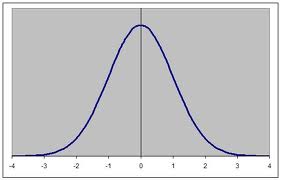
That’s because the researchers are going to plot the responses on a graph. The line of the graph will form a shape we call the bell curve; there will be a few responses at the far short ends of the line but most answers are going to cluster in the fat middle section, reaching for the top of the graph. The folks who analyze the survey have been taught to disregard the short edge parts of the shape.

My answers are going to be at the far end of the bell. Disregarded. Really. I don’t drive a car. I don’t like to shop. I don’t eat most meats. I avoid the medical industry like it’s the plague. I love to live alone. I tend to view problems differently than most. Interviewing me will be a waste of my time and the surveyor’s – I’ll be disregarded and discarded.

Really? Yeah. And yet …

I exert undue influence. I don’t mean to, but I have a large personality and a good vocabulary. I like people. I do lunch well. I am by no means a world-shaker or any kind of celebrity, but I’d be speaking falsely if I didn’t admit that people have strong reactions to me, and those reactions often produce behavior that might otherwise not have occurred.

And I’m small stuff. Consider some of the acknowledged shakers of our species. Individuals like Leonardo, Franklin, Payne and Twain. Do you think their responses to telemarketing surveys would fall inside the bell curve?

Posted in Lessons | Leave a comment

Hypochondriac

9.8.08
I looked it up today. I knew the “hypo” meant low but I didn’t have a clue about chondria until I googled around. Khondrios is cartilage, specifically that around the breastbone. Originally, hypochondria referred to a pain in the high stomach area, besetting women more than men, just a suggestion or so away from hysteria, or vapours, or somesuch.

In the beginning, hypochondria referred to an unnamed complaint at the bottom of the esophagus. Probably gastric reflux, I say. Probably due to feminine frustration. Understandable.

By the late 1600s it referred to a person who suffered from depression without an identifiable cause.

Last century the term assumed its job of describing a person who is overly interested in and worried about his or her health.

Why am I composing this post? That’s a legitimate question. Here’s the answer. I have been accused of hypochondria. True, the accuser was a beloved enemy, a close relative who will not be named at this time, but the term was declared, overheard by me, internalized for a bit, debated here.

I am not hypochondriacal. There’s a difference between being observant and being somewhat fascinated by an observed changed in oneself, or being pathologically preoccupied with one’s health. The truth is that I pay attention to my body and its messages more than do many of my friends. I enjoy very good health. So when something goes off, I notice it, I wonder about it, I give voice to the situation. That may be boring but it’s not dysfunctional.

So there.

Posted in Language | Leave a comment

Shhhh

“You need to talk more quietly,” misspoke
her dad with elder mouth. He cupped her chin
for emphasis and curled a gentle stroke,
his index finger down her cheek. Within
she understood at once, at last, he meant
no hurt; he didn’t want to shut her down.
He tried to guide – paternally intent
to have her modulate each verb and noun.

He’s hard of hearing but too easy hears
her every argument, her any case.
He’s losing tones but finds her wrath too loud.
It makes no sense until exhaustion clears
her head and lets her feel upon her face
his loving touch, his gaze upon her bowed.

Posted in Poetry | Leave a comment

Omission

Oh I can pen advice I wouldn’t heed,
compose an argument that I’d ignore,
devise a dialogue I’d never read,
report a juicy item that would bore
me if I happened on it in a book,
and even leave me cold on film or stage.
This writer as a reader wouldn’t look
at phrases I’m creating for the page.

No, I read for the quality I lack,
and relish what I covet but have not.
I scan the characters while I ransack
the prose for what I lost or never got:
an aptitude for action and the knack
to fabricate the essence of a plot.

Posted in Poetry, Writing | Leave a comment

Estranger Danger (Part 3 of 3)

In the beginning, when Guy traveled away from her she worried. He never left her except on business and then, in her opinion, there was peril. He was a structural engineer. He wanted to design museum buildings but he made a living by working on roads. His business trips were to forsaken barren places, where cold winds blew all winter and the summers were brutally hot.

During those early times Nancy couldn’t help fretting about plane crashes, rental car accidents, on-the-job injuries. Guy called her every night and told her he missed her so much it actually hurt, and she’d respond with coos of tender concern.

But after 12 years her imaginings changed. They went from persistent worries to occasional crazy fantasies. Painless as an execution: swift and fatal. If it was a plane crash no passenger knew what hit him. If Guy died in the rental car, he was the only fatality and the truck driver was blameless. Her power plant fantasies were vaguer; she had him somehow shaken off his perch but not conscious of it.

Just news of his death. Friends and family rallying around her and the kids, arranging the funeral issues. A quiet time and then, gradually, a return to life. Comfortable. Not chaotic. And friends would probably introduce her to men: a widow was so much likelier that way than everyone’s spare divorcees.

Nancy is thankful that she is not psychic. She has so many worries that if they were prophetic her future would teem with trouble and her meditations could never be calm. But nothing necessarily bad happens to her after a nightmare. Earthquakes don’t occur after she gets that funny feeling on an unseasonably warm spring or fall day. She’s quite sure she didn’t really wish Guy dead.

It was quick and painless. He didn’t see it coming. He wasn’t on a tower. She never would have imagined it.

The plant he was inspecting produces blacktop. He was inside a huge conveyor when the operator ignored all standard precautions and started the machine. Two tons of hot asphalt hit him from behind. Death was immediate.

There was a month of amazing solace from their community. A trust fund was started for all five kids. Neighbors chipped in and covered the funeral. Insurance money let Nancy pay off the house and provided enough day-to-day income that she could drop work to part-time and finally go to college.

The biggest surprise about it all for Nancy is that she doesn’t miss Guy. At all. She keeps waiting for a sadness to creep into her but she thought it would have happened by now. It isn’t that she’s numb. It’s more that she used up all the good feelings about Guy already.

She thinks she ought to feel more for him. She wonders if she’s in trouble.

Posted in Fiction | Leave a comment

Estranger Danger (Part 2 of 3)

It didn’t help that Guy was alcoholic. Nancy should have been quick to spot that, what with her parents, but Guy threw her off by being functional. He could down four Jack Daniels at lunch and have a productive afternoon. He drove well. He’d never be the sort of father you’d find sleeping in the morning on the dewy front lawn. True, it was unattractive the way the shade came down in his eyes every evening, signaling a likeliness to be stupid and sentimental. That’s when he’d start repeating his reminiscences or ambitions, moist-eyed at least every third night. But after a few months of living together Nancy developed the skill of being somewhere else in the house when Guy got like that, or not responding if she didn’t get away. No: what led her to realize he was a lush was the progression that started with arguments they had some mornings after, when Guy too readily offered to give up booze entirely, followed by her accidental discoveries of hidden bottles, leading to his ceremonial pourings into the kitchen drain, triggering those horrible memories for her, ringing in her skull with the obnoxious familiarity of a car alarm sequence.

The sex dwindled to marital maintenance, the conversations faded, the plans stalled. But Nancy could no more give concrete reasons for falling out of love with Guy than she’d had for falling into it. She didn’t mark the moment any better than one can pinpoint the second when a headache disappears. It must have been weeks, months maybe, before she noticed that she didn’t want to return home after work. She had no place else to go but she just didn’t want to make that last left down her street and into her house. Where at best it would be boring.

Posted in Fiction | Leave a comment

Estranger Danger (Part 1 of 3)

Nancy knew she was in trouble when she started to imagine Guy’s death.

They’d been married 12 years. They’d survived the early marital challenges and at first she didn’t understand her morbid fantasies.

In the beginning, when she was madly in love with Guy, she was very creative about worry. Whenever they were apart she’d play the awful “little did they know when they kissed goodbye that morning…” script and imagine a freak car accident, a plunging elevator, construction pieces dropping from the sky. These were different. Nothing specific and not out of worry. Not as regular, but recurring enough to be noticed.

These fantasies didn’t include pain for Guy. Death was immediate, clean.

Everything was drastic and simple. It didn’t take long for Nancy to understand. She didn’t want to be married to Guy any more, and his death would be the most convenient way to end the marriage. Then there’d be no money hassles. No public shame.

Whoa, she thought then. Wouldn’t she miss him at all? Did she hate him?

The short answer was yes. Not enough to kill him herself – far from that. But it became clear that Nancy really felt she and the kids would be better off with Guy gone.

They weren’t his kids anyway.

Nancy had gotten herself knocked up in high school. She thought she’d have an abortion, but four parents argued too persuasively, so she and Gary got married. Miranda was born when Nancy was 18, and she and Gary managed to stay together long enough to also produce the twins. They split up after four years and she didn’t marry Guy for another (hard) five, so she thought she’d done all her growing by then. She thought she knew herself and what she wanted.

Guy was older (by nine years). He was a professional (engineer) and seemed happy (not). Nancy had thought he was strong, but she came to reconsider that later. After it was over she tended to view the whole marriage, for Guy, as a symptom of an early mid-life crisis (other men bought sports cars). But in the beginning his passion for her and his drive to marry her felt like it swept her, if not off her feet, at least sufficiently along, in his slipstream.

The sex was very good at first. Intense and varied. The life plans (sex, travel, sex, business, sex, dining, sex) were exciting. But reality paled.

Guy had two sons by his first wife, and he was a diligent daddy. The five kids swamped Guy and Nancy. And Miranda, nine years old when Guy moved in and precociously already adolescent, charmed, boggled, tested, and frustrated him. He’d never had a sister. He didn’t abuse her or anything, but he didn’t get her either. They argued often. Home life became unremittingly tense.

Posted in Fiction | Leave a comment