
Where They’re At in 2014 (Middle)

Liaison

They hardly conversed in the car. The few sentences they exchanged concerned where to eat (Karen picked Liaison) and a place to park. As further evidence of divine caretaking they found a meterless space one short block from the bistro. Karen couldn’t walk far but she was able manage that distance.

They were seated immediately. Annie winced when she saw the table; they’d eaten at the bistro many times in the old days when they walked together, and this was the table they were often given. The sight of it reinforced some unpleasant memories. Karen had always been a trial in public. It seemed she was either arguing with Annie about a business practice, in which case she’d let her volume increase and salt her phrases with fuck and shit and other words that made neighboring diners cringe and parents cover their toddlers’ ears, or she was laughing in apparent pleasure at the conversation, which meant she loosed a loud witchy cackle across the room.

Karen took the banquette. Annie draped her purse strap over the back of the chair and sat facing the window to the street.

The waitress stopped by their table. She rolled the aperitif stamp onto the paper, but the women had already selected their food. Karen ordered iced tea and quiche. Annie disapproved but said nothing. It was better than the old days, when Karen would have gone for the eggs Benedict and finished all the potatoes too, but it wasn’t good enough. Annie asked for a glass of Sancerre with her salad Nicoise.

Karen had been on a collision course with disease for as long as Annie had known her. From the beginning she’d had the emptiest refrigerator Annie had ever encountered. The woman stocked nothing but bottled water in there, and her cupboards didn’t hold much more than jelly beans and some chocolate. She breakfasted at Starbucks, on drinks that had a bare acquaintance with coffee and pastries that contained more sugar and butter than grain, tended to go most of the day on handfuls of sweet snacks, dined late and without regard to nourishment, and kept crazy solitary hours. Annie wasn’t perfect on personal health herself, but she was light years beyond her companion. She exercised every day. She didn’t eat meat or poultry. She drank in moderation and got lots of water. She didn’t color her short silvery hair and she managed to look a decade younger than she was. But she still took drags on other people’s cigarettes, and she smoked almost as much pot as she used to do tobacco. She was addicted to the sensation of inhaling burning material, her peak flow was down around the level of untreated asthma, and still she didn’t quit. She knew she shouldn’t criticize others. But that didn’t stop her.

Karen had been so stubborn about her unhealthy habits that Annie had been certain there would be consequences. Not wanting to witness them is the main reason she’d backed away from the relationship. She was surprised that her old friend still had all of her limbs.

Karen had acquired her Type 2 diagnosis just three years earlier. Annie remembers a walk they took shortly afterward, when Karen declared that she’d sooner die than take insulin shots, and vowed to improve her diet. She did buy some yogurt and a few frozen meals around then.

But she degenerated rapidly. The oral meds didn’t control her sugar and she didn’t seek attention for a troublesome foot until it swelled too large for any of her shoes. She learned in the ER that she had broken it, but she hadn’t felt the pain signals. She had to go on insulin. She learned to inject herself, and by this lunch, of quiche and potatoes at Liaison, she was up to four shots a day. She was also just released from six weeks of wound care at the hospital and then a rehab facility, because she had developed a sore in that troublesome foot, ignored it till the infection had dug into bone, and now her walking-for-pleasure days were over. She was glad to be out of a chair, but she really couldn’t amble more than a block or two.

So Annie watched her old acquaintance make her way through egg pie and fried potatoes, and felt sorry. But she didn’t comment. She didn’t argue. And Karen was mostly slow and calm, eerily so. The only contentious moment was when she described her goddaughter’s recent diagnosis of Type 1. Isabella was 17. Karen reported that Isabella and her mother had just returned from a session in San Francisco where Isabella had an insulin pump implanted.

“They don’t implant pumps,” Annie stated.

“Yes they did.”

“No. Really. You wear the pump, and a tube from it is inserted into you. But you have to change the insertion site at least once a week.” Annie spoke from actual knowledge. Her best friend and former college roommate had developed Type 1 when they were both 35, and Annie had taken on the science aspect of Mary’s disease. That’s how work had always been allocated between them; Mary was the sociologist and Annie’s strength was math & science. So Annie had been a member of the ADA and a reader in the subject for almost 30 years. She knew how a pump works.

Karen reasserted the implant idea and started to raise her voice. But then she closed her eyes for a moment, shook her shoulders a little, and calmed herself. They changed the subject.

The new Karen did not seem to get angry or yell or use obscenities. She acted warmer and humbler and more appreciative. She laughed readily. Unfortunately the laugh was still a startling loud cackle.
Posted in Fiction | Leave a comment

Where They’re At in 2014 (Beginning)

Liaison

Karen called Annie at 12:25 but she didn’t speak any words Annie could hear. The connection abruptly ended. Annie knew it was Karen from the caller ID. She pressed the green button on her landline, but all that came through was two clicks and some static.

She expected confusion from Karen. She waited a minute and then tried again, this time with her cell phone. Karen picked up.

“I’m outside your place,” she informed Annie, “but there’s no parking.”

“That’s weird; I was just out front and there were places everywhere.” Annie couldn’t see the street from her garden cottage, but she knew the block wasn’t busy. “Are you in front of 2611?”

“Twenty-six eleven? Oh. I must have read my phone wrong. I thought your address was twenty-eight eleven.”

“I get it. I know where you are.”

“Right near Russell Street.”

“Sure. Let’s see: You’ll have to turn around, and …” Annie paused as she considered the traffic barriers. What a muddle. “On second thought,” she concluded, “stay right where you are. I’ll come to you.”

“You sure?”

“Oh yeah. Stay there. Just give me five minutes.”

Annie locked doors, picked up her keys and sunglasses, draped her bag across her torso, and left her yard. She took her weekday route, south toward the BART station. Within a few minutes she crossed Stuart and began looking for Karen’s car.

“A boxy silver SUV,” was Karen’s description. Which meant Annie was looking for one of the commonest cars in Berkeley, and a major difference from the Mustang convertibles Karen used to drive.

Annie perused the street as she paced south. She saw a few SUVs, all boxy and silver, but most of the parking spaces held Priuses. She was reminded of pop-beads – same-shaped car bodies of every color, all parked parallel and appearing bumper-connected. She glanced into the driver’s windows of the boxy few and didn’t see her friend. Then she shifted her focus from curbside to street center.

She saw what she concluded must be Karen’s car. Not parked but idling. Not at the curb but in the middle of the southbound lane, at the stop sign, immediately before the right turn onto Russell.

As Annie approached she was overtaken by a moving Prius. Of course she didn’t hear it, but she glimpsed the blue body in her peripheral vision and then watched the vehicle edge up, dolphin-like, behind Karen. The Prius driver hesitated only a second before pulling left and around Karen’s car.

“Wow,” Annie murmured. “I guess she took me at my word when I said ‘Stay right there.’ Wow.” She went right and opened the passenger door.

“Hey there,” Karen said. Karen always opened a conversation with “hey there,” and concluded with “bye now.” The phrases annoyed Annie but there were other qualities about Karen that annoyed her more. Annie’s friends marveled that she still spent time with Karen, but she had no skill at breaking up with friends, and she and Karen went way back. And it wasn’t like they spent much time together, any more. It had been three months since they’d conversed and almost a year since they’d been together without others.

Annie looked her old friend over as she strapped herself into the passenger seat. Karen had reported that she’d lost some weight, but to Annie she looked as large as ever. She’d aged ten years in as many months. She still wore big tops and loose pants, still sat like a truck driver and walked like a cop, had traded her old sensible oxfords for truly orthopedic footwear, continued to pull her hair straight and have it colored pale red. But the freckles that had concealed her face wrinkles had given up the battle; now her round spotted face was fully lined and her light blue eyes peered out from sagging lids. The skin on her hands looked a little shiny. Her always trimmed and unvarnished nails showed ridges and discoloration. She was halfway through her 60th year and she looked 80.

She drove like an 80 year-old too. Karen used to enjoy fast cars and aggressive maneuvers, but on this cross-town jaunt she never reached the speed limit. She didn’t pull into an intersection to start a left turn until the traffic had cleared: like she was navigating the streets of Eugene instead of Berkeley. She was eerily calm and oddly slow, and no one honked at her. It was as if the other drivers knew she was “special,” and gave her extra room. The short trip reminded Annie of the adage about the Lord taking care of fools.

Posted in Fiction | Leave a comment

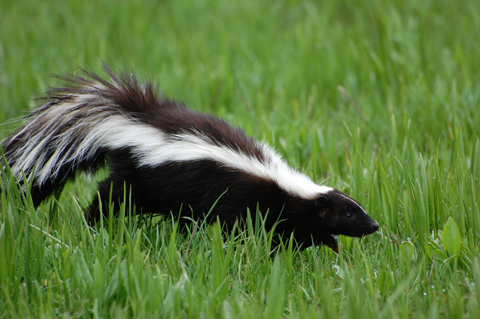
Skunks

skunk-480[1]

I share the yard with 7 skunks, I think.
I know they’re polecats but they’re hard to count.
I see them out at 4 a.m. – they slink
and romp and by their tails the kits amount
to 5 or 6. They’re cute. They rarely spray,
conserving their repellant for the threat
from dogs too dashing eager to give way,
who even after dousing will forget.

I freaked at first and told the skunks to leave,
but as I live and read and learn their ways
I like them more and more I do believe
my time among the skunks are holidays
compared to other trespassers of late –
it’s raccoon packs and ’possom shit I hate.

Posted in Critters, Poetry | Leave a comment

Reaction

bible

Bizarre and perilous seems my routine
today, and I don’t understand the cause
of this foreboding mood. It cannot mean
catastrophe my dog has tender paws,
abraded brow and irritated skin.
My dreams are derelict as my garage,
I nothing signify with fear within,
and apprehension radiates mirage.

I read today of God’s revenge on Saul.
The text requested I believe that seven
sons must hang for him. I find it all
preposterous, to think so ill of heaven:
Another wisdom bound to disappoint.
I think I’ll miss the train and smoke a joint.

Posted in Poetry | Leave a comment

The Rise and Fall of Political Awareness (II of II)

graphics17[1]

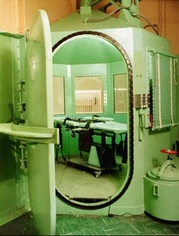
In April of 1967 she was a senior in high school. What would turn out to be the last gas chamber execution at San Quentin was scheduled. Melanie was against capital punishment. So were most of the students she knew.

The kids at Redwood High felt an interest in that prison. Their back parking lot had a view of the complex, their school resembled the penitentiary, the way it was built around a (senior) quad, and the stretch of bay leading to the prison entrance was one of the popular parking spots for making out with a view.

The night before the execution, events started to brew. Melanie received three different phone calls about the vigil at the prison gates but her parents would not allow her out of the house on a school night.

When she got to her first class the next day she heard the vigil was still on and going stronger. The execution was scheduled for noon; she and her friends John and Don could make it if they left soon. They agreed to meet at John’s car between first and second periods.

His ride was a maroon Corvair convertible. He parked it in the front lot even though most kids used the rear parking area. Melanie spotted the car and the boys as she exited the school.

But there was a barrier in her way. The school administrators and most of the teachers had formed a chain of authority between the school doors and the parking lot.

Melanie proceeded with purpose. She attempted to attain the asphalt by wedging between the Dean of Boys and a PE teacher, but Mr. Bosque pushed her. She stumbled back three steps and then caught sight of John. He was striding from car to dean, and then he pushed Bosque, hard.

Suddenly John and Melanie were surrounded by adults. They didn’t see Don return to school. They were escorted to the main office, John was hauled into Bosque’s room, and Melanie took an impatient indignant twitchy seat in the reception area. She found a kitchen match in her pocket and chewed on the wood while she waited.

The Dean of Girls tried to send her back to class. Melanie stood up and let the woman have her perspective. She told Mrs. Wright that school isn’t about education – any fool can get that in a library – so much as it is about socialization: forming friendships and learning to support one another. No way was Melanie going to abandon her young hero.

Melanie could express herself forcefully when heated, and she was hot then. She harangued Mrs. Wright with a matchstick between her molars. She stood breast to breast with authority and yelled in her face. The Dean of Girls retreated. But John didn’t emerge from Bosque’s office. After half an hour Melanie reconsidered her intentions. She decided not to return to class – as far as she was concerned it would not be business as usual that day – but to circulate through the rectangular halls and recruit activists for the future.

She failed. The totality of her unsuccess was remarkable. Students listened to her. She remembers standing in each doorway and collecting the attentive faces, the open eyes, the body shift towards her voice. But no one rose to sign the paper Melanie held in her hand. Some nodded like they’d get to it later, but Melanie collected no signatures that day, and never sought them afterward.

The idea formed in her then, that most of her colleagues weren’t as sincere about hating executions as she was. It seemed like just about everyone was eager to attend the vigil the night before, if they could manage to obtain parental okay or enjoy parental inattention. And the students who didn’t get to hold candles and socialize with other vigilants in the romantic dark wanted to join the group that morning. There was excitement in gathering at the prison gates and there was group-shared and -fueled passion to float their boat. But no one was responding to what Melanie thought were her own articulate pleas. As far as she could determine, nobody was willing to put in the hard work but everyone wanted to reap the adrenaline rewards.

Melanie remained loyal to her friend John but she turned off political activism. She didn’t argue with John’s opinion that his suspension report kept him out of Stanford. It didn’t matter to either of them; they both crossed the bay to Cal that September. They became students at Berkeley in 1967, they enjoyed rock&roll and drugs and lots of sex together and with others, but neither of them were active politically.

Cal didn’t have big sports teams then. Fraternities and sororities were not in favor. What energy students would have put in to bonfires and keggers and hazing rituals they devoted to protests and flipping patrol cars. Everyone wore denim. The sex afterwards was excellent.

Posted in Fiction, Melania | Leave a comment

The Rise and Fall of Political Awareness (I of II)

graphics17[1]

Looking back, it’s now apparent that Melanie awoke to political awareness when she was almost seven, and went back to sleep about it when she was seventeen. And it’s not like she was noticeably political during that decade: just more so than before and after.

It all began for her in Spring Valley, New York, one Sunday evening in October of 1956. She was in the back seat of Betsy the Buick. Her family had spent the afternoon at her paternal grandparents’ apartment. They were idling in that moment between descending the concrete stairs to the ground-floor parking area and pulling away from the building. Melanie knew the next step: after her dad backed the car out into the street he was going to turn the radio knobs so they could listen to “Gunsmoke.” But first a final goodbye.

Her grandmother had stayed upstairs of course. Melanie’s father’s mother didn’t move unless she had to. But her grandfather escorted them all to the car as usual. She’d collected her last hug from him and she was sitting behind her dad when her grandfather leaned in the driver side window and asked, “So who you going to vote for?”

“Now, Pop,” replied Melanie’s dad, “have I ever voted Republican?”

Melanie was six. She was in the first grade. She gasped at what she heard. “But Dad. You mean you’re not going to vote for the President?”

The President was Ike. Dwight David Eisenhower. They’d learned how to spell his last name in school. He was a war hero. He was the President. He was being challenged by some guy named Adlai Stevenson. As odd as the name “Dwight” seemed, “Adlai” was even weirder.

Melanie hadn’t encountered elections yet. She hadn’t wondered how one got to be President. She just assumed that supporting the President was like saying the Pledge of Allegiance or singing “I’ve Been Working on the Railroad:” an act of fundamental Americanism.

Her father postponed “Gunsmoke” while introducing Melanie to the concept of voting. He didn’t go into the electoral college; instead he analogized it to the process of choosing team members for the neighborhood softball games.

She got it. Melanie hated those games, because she was such a poor athlete that she was always chosen last. In fact the neighbor kids assigned her the job of steady catcher when she played; they didn’t trust her in an important position, and in their dead-end games even a baby could have caught and returned the balls that weren’t hit.

Melanie despised softball and came to look upon baseball as boring too, but she understood team choosing. She had a sense for consensus. She comprehended the edge of the American voting system.

And as she grew so did her political awareness. Not as far and widely as her literary, math, and science awareness, because Melanie didn’t take to history or the other social studies, but she of course acquired familiarity with campaigns and elections and petitions and referenda. Her family relocated to southern California and she went to elementary school there during the Cold War: learning to duck-and-cover during a drill, to spell the name Khrushchev, to distinguish between socialism and Communism. Then she experienced the assassination of JFK and the passage of the Civil Rights Act; it was impossible even for a news-shunning voracious reader of fiction to be untouched by those current events.

Situations that would lead to the Vietnam conflict occurred and Melanie didn’t notice them, but she did walk into the American Opinion Library and that earned her a talk with her father about the John Birch Society. She read the works of Ayn Rand and she was captivated by The Fountainhead (she liked Atlas Shrugged too, but later and more like a cult – she always thought Anthem was too in-your-face).

Her family moved from Chula Vista to Marin County in late 1965. Melanie was starting her junior year in high school, but she didn’t much mind leaving her friends and the suburban landscape for what she considered real life in the Bay Area. She was charmed by the mature trees and the small sidewalk squares in their new neighborhood. She felt her good fortune when she realized her dad commuted to work across the Golden Gate Bridge. She got into the music and arts&crafts and even absorbed some of the politics of that time and place.

Posted in Fiction, Melania | Leave a comment

Penetration

220px-Cerebral_lobes[1]

The fog against my face is fleet and chill,
inspiring me to processing inside
my panoramic plans; my acts of will
and attitude; a deviance; a tide
as tubular and strong as lunacy
creates. Now morning blares the fog to haze
while I involved revolve philosophy,
and burn in words to annotate my days.

The sunlight brazens silver mist to piss.
It thins the air and yellows atmosphere.
The shadows out of nothing form and this
distracts – it interrupts. Be still, I here
inside myself. Attend and make good work
of time. It’s either that or dwell in murk.

Posted in Poetry | Leave a comment

Lines

sidewalk-good

The view down Sacramento Street aligns
today. The garbage cans like fences edge
the boundary of yard and street. Designs
of linearity are drawn with hedge
and pepper tree, while arrowing ahead
of me recede the blocks of old concrete:
a seam of squares from white to almost-red
appear a tiled path beside the street.

I run an elementary exercise,
and try to notice everything I see.
I fit a wedge attention in my eyes
to lodge a focus into memory.
So full existence is, my portion’s small
but too immense for me to see it all.

Posted in Poetry | Leave a comment

Extremities (Part 3 of 3)

feet

Jane complained to her mother about her marriage. Martha counseled her to try to work it out with Alan. Jane began wearing better clothes and tried to be gracious. Alan didn’t notice but other men did.

By the time Jane stopped growing at seventeen, she was five foot six and wore size eleven shoes. She didn’t buy heels until she experienced the dullness of Alan and loveliness of John Jerra pumps.

They were plain strapless shoes, not too pointy in the toe, with three inch heels that got stuck in the silicon grout between the sidewalk bricks on Market Street. But they looked so good and felt so comfortable that she bought them in five colors and learned to tiptoe on those bricks. For the first time in her life she felt like she had pretty feet. She wore shorter skirts. She moved with more confidence.

One day she walked by the shoe store and saw the pumps, her John Jerra pumps, in a perfect shade of forest green. She owned a new dress that begged for those shoes; she had to have them. She went into the store and learned that the closest they had to her size eleven medium was a ten narrow. She asked the clerk to stretch them, and she bought them anyway.

She decided to wear the new shoes and dress the following day. She had an important morning meeting at work and was then to lunch with Charlie at his favorite restaurant.

The shoe stretching was not sufficient. She got through the meeting, but by the time that was over her pain was excruciating. She limped into her office and pried off her new pumps. The problem was that most of the nail on her right big toe came off with the shoe. Beneath her nylon she was bloody.

She couldn’t wear the new shoes to lunch. She didn’t have others with her. She had to go to the restaurant via her place, which meant she was late for her date with her brother.

And lived to tell about it. Charlie knew about the restaurant from one of his outlaw buddies. He had so many friends to drink and smoke and gamble with, some of them were bound to be real criminals. It probably wouldn’t have surprised Charlie to learn that his favorite restaurant was a likely place for a violent act, if he thought about it. But Charlie didn’t think about it. Sitting at a table, drinking Johnny Walker Black Label over ice, waiting for his sister, Charlie didn’t think about anything as the three men in dark clothes filled the doorway and then sprayed the place with bullets from their automatic guns. Jane in her old comfortable black flats was still two blocks away from the restaurant when her brother breathed his last.

Three months after Charlie’s death, a woman showed up with a four-year-old son. Her name was Kathy and she had a story everyone believed about an affair with Charlie. The boy’s name was Kevin and he even looked like Charlie. Kathy thrust Kevin into LeAnn’s arms and ran away. Literally. No one ever saw or heard of her again.

LeAnn wasn’t having any of Kevin. She said she had to get on with her own life. There was no one for it but Jane and of course Martha. That’s how Jane got to be Kevin’s mom.

Nowadays, in the new millennium, many women are wearing slide shoes. Toeless backless things on platforms of various thicknesses. They have to shuffle a bit, or risk kicking off their footwear. They all paint their toenails, and many wear silver toe rings.

Jane’s surprised by the style of showing so much foot. Again. She thinks feet are in general ugly. Fundamentally lumpy. Contorted by use.

She and Kevin are walking side by side down a street in the financial district. They’ve been talking about silly slide shoes and bright colored nail polish. Kevin is fifteen and he looks remarkably like Charlie. Jane is now fifty and she looks a lot like Jane. Kevin has just been explaining how important the big toe is for balance. He learned that in his martial arts class. Jane understands, remembering. When Charlie died and even months later when Kevin came into her life, Jane had an injured big toe. She discovered then how important that toe is for walking. She recollects how exposed and vulnerable it felt.

Kevin and Jane look at the feet of women walking toward them in slides, big toes lifting with each stride, big painted toenails facing upward while all the other nails scrunch forward and down. Aunt and nephew observe those feet. Alike repulsed.

Posted in Fiction | Leave a comment

Extremities (Part 2 of 3)

feet

There’s a picture of Jane and Charlie at ages eighteen and fifteen. It was taken on a family vacation and they are in swimsuits on a dock by a lake. Their father is a blurred shadow in the background, which everyone in the family agrees is perfectly symbolic. Jane and Charlie look like an attractive young couple, dark-eyed, dark-haired, healthy. In typical fashion Jane is standing with one foot crossed over the other while Charlie is flat-footed confident. She looks directly into the camera, a little curious and impatient. He gazes sideways like he’s searching for fun.

That’s how they grew up: Jane awkward/angry/impatient and Charlie easygoing and eager to be happy. Both of them got rather large feet, but only Jane was bothered about it.

Large feet, dark hair, well-shaped. They looked like each other to Martha but no one else saw it; everyone focused on the gender differences, and Jane’s curly hair, and Charlie’s glasses. Their father died…first he faded away as a personality in the family, growing quieter as he aged, shorter and paler…then he got lung cancer from his incessant Marlboros, and the cancer and the doctors chipped away at his body until he finally gasped his last one morning, at home in a hospital bed, ninety-two pounds light and colorless as his laundered sheets. Their mother was by then well-connected enough to get a job at the oncology center. Jane and Charlie were in college.

They shared a two-bedroom apartment near the north side of campus. They’d tried different roommates but they liked living together better. Each had an active independent social life, anyway. Charlie was as easygoing as ever: never without a beer, a joint, a cigarette, and a woman. Jane was practical and less carefree, but even she engaged in more than one romance. She had a sexual relationship with her boyfriend Alan. But she also had a flirtation going with Gary in her Greek class. He was a brilliant linguist with a tall firm body, and he confessed to Jane that he had a major thing about feet. Gary didn’t think his attraction rose to the level of a fetish, but he was fascinated with a shapely foot, and he found Jane’s foot shapely. He told her she drove him a bit crazy when she wore the flats with the cutouts that showed toe cleavage. He confided in her that he had a girlfriend named Sandra, whom he loved and admired, but he thought Sandra’s feet were ugly, and that was a big problem for him.

Gary’s confession had a dual effect on Jane. It made her consider her feet as something someone could consider lovely, which was strange and wonderful. And it creeped her out. She felt self-conscious, inhibited to the point where she just didn’t wear those flats. She loved to study Greek with Gary, but she tended to hide her feet from him.

Jane and Charlie got married within weeks of each other. Martha stood up for both of her children during the summer of 1975. She thought Jane and Alan had a good chance; they divorced four years later. Martha was less optimistic about Charlie, but he stayed with LeAnn (unfaithfully) for the rest of his life. It was Gary and Sandra she should have put her money on: they remained married and relatively happy, once Gary learned how to put his fantasies on a shelf and ignore his wife’s feet.

Jane missed living with Charlie when she got married. Alan was a nice man but he wasn’t her brother; no one could get her to lighten up like Charlie. Alan bored her.

Charlie found LeAnn boring too, but she was a good wife. She kept a home for them, ran all the errands, provided a warm atmosphere. She didn’t ask questions when Charlie stayed out weeknights till nine or ten. So Charlie went from work to drinks with friends, told jokes and laughed and sometimes spent a little time with people he shouldn’t have spent time with, but he never made plans and he always came home. He never wore shoes in his house. He strode barefoot through the place in drawstring pants, beer in hand.

Posted in Fiction | Leave a comment