Of Pot and Peaches (Part 2 of 3)

image

Jeff Connor and Mary arrived while we were in the kitchen breaking the kilo into lids. As usual, Kinsey set aside one for the dealer. But it wasn’t until the decadents showed up that we decided to do the whole ounce at once. My dormmate Michelle and Matt her dark-minded boyfriend walked in at sunset with Red Mountain wine, French cigarettes, and a desire to deepen the bags under their eyes. Alan tagged along. Matt started baiting Michelle as he poured his first glass of wine. Michelle began shaking her finger at him. The rest of us agreed to get high.

Jeff Kinsey set up the hookah in the living room. The thing was three feet tall and had four working hose connections. A small metal cage, sufficient to contain a normal amount of smoking material, sat within its embellished six inch bowl. The two Jeffs soon figured out that if they removed the cage, a full ounce of pot would fit in the smoking bowl.

Ignition was a challenge. We figured we needed people at all four mouthpieces; the two Jeffs, Alan, and I each took up a hose. Rick wanted the fourth spot, but I always try to play with the big boys, so I kind of muscled him out, in a non-physical way. We each tried to stand at the cardinal points of the compass; if we got that right, I was north. We knew we’d need a big flame, so Connor rolled sheets of newspaper diagonally into a torch. All that was straightforward. The trick was going to lie in the steady, deep, simultaneous inhalation.

The Doors album played on the turntable. Connor lit the newspaper torch and held the flame half an inch above the pot. As one we toked. Smoothly. After about six seconds I knew this was going to turn into an endurance contest, and I wasn’t interested in competing.

But Alan dropped out first, coughing across from me. “Wow,” he gasped. “I am stoned.” I continued to inhale for another five or six seconds, and then I offered the hose behind me to Mary. Connor and Kinsey were watching each other across the bowl, west and east, going for it.

It didn’t last much longer. At around 25 seconds Kinsey got cute. Acting like he couldn’t take in any more sitting down, he rose to his feet while still trying to inhale. He shouldn’t have stood up.

None of us saw him actually pass out. I recall thinking he was continuing the joke as he started to fall backwards toward the plate glass window. That’s the thing about suddenly-unconscious people; your first idea is that they’re faking it.

Jeff didn’t bend. He didn’t stop. He broke the window with his head.

The cheap venetian blinds probably saved him. All the shards fell outward onto the front porch. He didn’t bleed, and he came to in a minute. We cared for him without a trip to Cowell Hospital or the Free Clinic. We even continued to smoke. But Kinsey definitely made us a memory.

Unfortunately, it may have made a medical consequence for him. The doctors say a cerebral aneurysm is a ticking bomb that was probably always there and can detonate any time, but what do they know? They told me that my herniated disk wasn’t related to the hard hard fall I took 15 months before the back symptoms started, but they weren’t there when my ass smacked those bricks. They didn’t hear the impact or feel the thud. I don’t think it’s a stretch to connect that trauma to a gradual inflammation or dislocation that finally resulted in me feeling it. They told me the hernia wouldn’t repair itself, but no doctor orders an MRI for a patient who’s feeling good…

Posted in Fiction | Leave a comment

Of Pot and Peaches (Part 1 of 3)

image

I smoked pot before I came to Cal, but I don’t think I really felt it until that fall evening in 1967. Afterward I shared a big fresh peach with Alan, and it tasted more wonderful than any peach I’d ever eaten. Its skin was firm and gently fuzzy and its flesh was sweet without stickiness. I could feel my cells take it in. I remember marveling at nature’s perfect packaging.

Alan was an anti-beau. He was a year ahead of me and we met the day after I moved into the dorm. He wanted us to be a couple. I didn’t. He was a nice guy, and he had some intriguing theories about mathematics, but he was too besotted with me to be sexually interesting, and I was put off by his horrible acne and his stringy brown hair. I liked to visit him, talk about life and the universe, smoke with him. I met his friends and was soon involved with one of them. Even after Rick and I became a couple, a bunch of us tended to gather in Alan’s apartment those evenings, sometimes for most of the night.

I remember the time Alan took acid and I told him to write down the ideas as he had them. I wasn’t yet into hallucinogenics, but we were careful with the serious drugs; if one of us dropped acid at least another of us would stick around and act as escort. His face lit up at the writing suggestion, dilated eyes rounding, and he grabbed paper and pen and turned away from me to his desk. For the rest of the night he hunched over the paper, writing. When he gave me the finished work, he had covered the page in amazingly small print. Everywhere it read: “I am stoned. I am stoned. I am stoned.”

As that academic year progressed, our group of course evolved. Some drifted away. Others introduced new acquaintances. We spent more time in the Spaulding house than in Alan’s apartment. We picked up two Jeffs.

Jeff Connor was thin, with longish blonde hair in soft curls. He looked cherubic but he acted mischievous. He was the kind of guy who would regularly spearhead a prank, like group-dismantling and reconstructing a VW Bug in a dining hall, or the (unsuccessful) attempt to lead a horse up the stairs and into the dean’s office. He drank gallons of coffee and smoked pounds of pot. Connor had gone to the same high school as I, one year ahead of me, had even been a friend of a close friend’s brother, but we didn’t meet till I came to Cal. He cohabitated with a dull blonde named Mary. I never found her interesting, but Rick ultimately did, enough so that she was the catalyst for the hiatus that became our breakup. I don’t know what became of Mary after Cal, but Jeff was one of two friends who died in climbing accidents, the only people I lost in those years, which is odd when I think of how dangerously we lived.

Jeff Kinsey was a different type. Chubby, with lank black hair and a bad complexion, he was ever a businessman. He sold the Berkeley Barb, Fillmore posters, lots of pot and hash. During the summers, he was one of two individuals who could fix cherry-counting machines. On the north coast, where the canneries operate, fruit cocktail is assembled. The most expensive ingredient in fruit cocktail is the cherries. In order to be fruit cocktail, each can must have a minimum number of maraschino halves. In order to be profitable, each can must not have one cherry half more than required. So the cherry-counting machines are important tools. And finicky. I’m sure Jeff did what he could to keep them finicky.

The most memorable event that winter was the party in the Spaulding house. Rick and his old friend Carl rented the little place: a one-story house with a living room in front and a kitchen in back and two small bedrooms and a bathroom on the side. I shared Rick’s bedroom with him about half the time; I knew the place better than my dorm room.

Everyone had just returned from break, and the quarter’s classes hadn’t yet picked up the scary momentum that drove each 10-week academic session. Carl, Rick and I were sitting around the living room, expecting Jeff Connor and Mary to arrive, when Kinsey showed up with a key.

Jeff Kinsey could buy 2.2 pounds of marijuana for around $60. So could anyone. At that price, burns were common. More than one apparent brick was unwrapped after purchase only to find compressed sawdust behind an outer inch of herb. Kinsey specialized in product quality; he didn’t buy at lower prices, and he always acquired good stuff. He packaged manicured buds in small plastic bags, with a card inserted that described the variety of pot within. His bag-work was beautiful and foreshadowed dispensary products by almost 50 years.

Posted in Fiction | Leave a comment

Full Moon in July

ggfog

Elsewhere, the sun is shining and the men
will barbecue this summer afternoon.
But here we’re chilly overcast again
and even though it’s full tonight, the moon
won’t penetrate our evening fog (its glow
will be a smudge upon our blanket sky).
The golden gate is open and the flow
is off the sea. We’re Berkeley in July.

I wish the sausages a decent grill
for someone else’s meal; I hope they plump
deservedly. I’ll dine beneath the chill
tonight on food that couldn’t run or jump,
connected to the lunar fantasy
that no one where I live tonight can see.

Posted in Poetry, Weather | Leave a comment

Early Works

rukopisy_slovinsko

Reviewing verse I wrote when I was young,
the feet uneven and the tenor brass,
I skimmed what didn’t scan: a toddler tongue
in stammer; my conceit as green as grass.

I understood what made my lover groan
when I imposed my efforts on his gaze.
He wasn’t kind – he could have praised my tone,
but he found affectation in each phrase.

He called me clever and he mocked my laugh.
He made me conscious of self-consciousness.
I’d hesitate at rhyme or paragraph
while rooting round me desperate to confess
experience that I was yet to know,
with ink more ready than my words to flow.

Posted in Poetry, Writing | Leave a comment

Periscope

periscope

One hundred pages written fifty years
ago, I’m reading like they’re fresh this week.
Amid the words a character appears:
a woman-girl whose memory I seek.
She wrote of incidents I don’t recall.
She often seemed too self-dismayed to thrive.
Each day she’d start the diet to end all,
for she abhorred one hundred sixty-five.

It doesn’t take the wisdom of my age
to see the shape of personality
obsessed with numbers, graphing on a page
a hopeful record of futility.
I do not need more time to recognize
myself, esteem the well, and lose the lies.

Posted in Poetry | Leave a comment

Meltdown at the Information Desk (2 of 2)

info

Tom has shaved off his beard. Corey remembers the last time he did that – traveling for work and needing to get into protective gear, he had to remove the whiskers for the headpiece to seal right. When he returned from that trip, their daughter (then five) didn’t recognize him and freaked out at the stranger walking into their house. That was long ago. So Corey may have failed to recognize her ex even if she’d been looking at oncoming faces.

She isn’t pleased to see him but she can’t miss his motioning to her. He indicates the overhang of the building they had each been about to pass, and she steps out of the rain for a moment.

Tom wants to continue an argument from two nights ago. He’s peeved because Corey hung up on him. He had initiated the call to their old landline number, and she’d tried to keep it pleasant. She thought her conversation was friendly and amusing when she reported to him that the subject of her annual client newsletter was praise of couch potato time. She told Tom she’d finally stopped berating herself for unproductive evenings – she did more than enough from dawn till dusk to earn her downtime without guilt.

“I haven’t experienced any guilt,” Tom said then, “since we broke up.”

That was a boldfaced lie. Tom had been busted (by Corey) abusing their son. She hadn’t known about the punishments the poor kid experienced when at his dad’s, until she witnessed Tom’s out of control rage one afternoon when both parents responded to the school’s complaints. Tom came with them back to Corey’s house, and she had to put her body between her ex and her son to get Tom to stop smacking the boy on the head. Tom had always had anger issues, but no one took them seriously when they involved defacing a detested Bozo record in kindergarten, or yanking the windshield wiper off a jitney bus after the driver honked so loudly at Corey on her bike that she collided with a car. Those events had seemed spirited, or protective, at the time.

Tom had felt plenty of guilt, about that and other deficiencies.

When Corey went quiet after his no-guilt telephone declaration, Tom got riled. He must have sensed her disdain through the phone wires, and clearly he’d been drinking a bit anyway, but he started in with epithets. And Corey listened for a moment. Until she realized that she was voluntarily holding the telephone to her ear. It was like she was complicit in her own verbal abuse. She almost laughed.

Then she removed the phone from the side of her head and set it in its cradle. Tom could call it hanging up if he wanted. For Corey it was plain and simple disconnection.

She has no interest in continuing the guilt or hang-up conversation with Tom. And she has no time. “I can’t deal with you now,” she states. Her damp determined strides brook no argument. Tom lets her go.

She experiences a millisecond of pride. She feels a flash of self-confidence. She enters the bookstore in a relatively happy moment.

And crashes as soon as she sees all the books and all the shoppers. She’s been there hundreds of times, she knows what category of books is shelved where, but at this moment she can’t seem to find anything she seeks.

She takes a deep breath. And another. She decides to ask for help. She approaches the Information Desk.

The customer in front of her is satisfactorily aided in a minute or so. Corey confronts the young man behind the counter. He appears receptive. She tells him she’s looking for a 2006 translation of The Three Musketeers. The e-book sellers don’t mention the translators’ names or the translations’ dates, she explains, and she can’t remember the name of the translator herself. The young man searches his data base but doesn’t come up with anything now in stock.

Next she asks for a book called Altered Genes, Twisted Truth or maybe the other way around. It’s about the dangers of genetically modified food, she says, and as far as she can tell, its publication keeps getting postponed.

The Information clerk can’t add any facts. His resource indicates that the book was published two months ago, but it can’t clue him in on how to acquire it.

This is when Corey begins to leak. Usually when she cries her tears are preceded by other conditions; her eyes will feel hot and swollen, and it’s like a mass develops in her throat that doesn’t make her choke but is unsettling anyway. At the Information Desk, and to Corey’s profound embarrassment, tears stream out of her eyes and straight down her cheeks. Some even drip off her jawline.

And then a movement like a miracle occurs. From every direction, swiftly and silently, it seems like all the employees in the store converge on Corey, protectively, surrounding her and creating a space where she can have time to recover. She stops crying, and starts breathing smoothly, and begins to feel sufficient and clean. Afterward she will say that it was like the end of The Red Balloon, when all the balloons in Paris come to Pascal. But at this moment it’s more like she floats above the scene and sees a Busby Berkeley dance: herself enclosed in people petals, which open like a blossom when she’s ready to fly.

Posted in Fiction | Leave a comment

Meltdown at the Information Desk (1 of 2)

info

December is always a challenge for Corey. She was born two weeks after Christmas; as far back as she can remember, her birthday has been a time of party-fatigue, fresh inhibiting New Year’s resolutions, and gifts bought at post-holiday sales that can’t be returned. Everyone else seemed to have birthdays half the calendar away from winter.

Her family was Jewish and didn’t celebrate Christmas. In Protestant San Diego that made young Corey feel left out and ripped off. She didn’t get those net stockings filled with hard candy, let alone a living room with a decorated tree and a pile of wrapped packages and tinsel and music and fudge.

As she got older and more retrospective about the past, and more likely to make vows of improvement for the coming year, her approaching birthday cast a tone of review and resolution into December that always resulted in low spirits and often in a head cold.

And to cap all of her complaints, she’d landed in a tax consulting career, which she liked in general, but which meant every December was so busy that she couldn’t find time for the social scene even after she grew old enough to have one of her own.

Viewing Corey in any December, she seems beset and bothered. She tends to forget good posture and scramble from errand to task. She’s often up before her alarm and it isn’t because she’s sufficiently rested. Each list is longer than the one from the day before, mostly because of the items on it that have been moved there from earlier, acquiring a dash, an arrow, and finally a solid underline as they become crucial. Seeing her from above, she resembles a large scrabbling bug. Or a hermit crab, except her burdens are packages and files instead of shelter.

Today is particularly irksome for her. There are less than five shopping days till Christmas/Chanukah, which are coinciding this year. She’s done what she can with gift cards, and she still has at least four presents to acquire. There are three new plan documents to draft before she tries to close the office for the last few days of the year, and there’s one large error to resolve unless she wants to refund a few thousand in fees or face an E&O claim (she has to resolve the issue to everybody’s satisfaction or she’s going to be ashamed of her ability). All those, plus she must do the year-end planning to close her own corporate books, and she has tweaked her lower back again, so she stands like an elderly person and takes initial steps like a spastic toddler.

She’s embarrassed about her back. She knows that’s inappropriate, but it’s true. She acquired the diagnosis (herniated disk between L2 and L3, left side) a year earlier, along with some excellent oxycodone experiences and several sessions of physical therapy. She knows to roll to her side before getting out of bed, and she would never lean forward from a chair and twist at the waist to pick up a weight off the floor. But two days ago she sneezed, first thing in the morning and with some violence, and that’s when she felt the dreadful release of warmth at the base of her spine. She said “oh shit” at the time, she stretched side to side and back and forth and kept moving, but there was no interrupting the consequences of whatever happened. She sensed the inflammation a day later, yesterday, and ibuprofen isn’t easing it. And it’s too much hassle to add narcotics acquisition to her list of projects; O is so controlled that a prescription can’t be phoned or faxed in, and there’s no way she has time to travel cross-town to her doctor’s office for it.

She soldiers on. She figures she has about twenty shopping minutes before she has to get back to the office. She doesn’t think online will work this week; she has to see and touch the gifts she is about to acquire. She regrets the disappearance of stores like the Nature Company and Rand McNally; she’d always been able to find items in shops that featured artifacts and maps and globes. She concludes that the only option now is the big bookstore ahead of her. She waits for the crossing signal while it starts to rain.

She’s wearing a water-resistant jacket but she left her umbrella in the office. The forecast threatened rain later in the day, but the pathetic fallacy seems perfect to her. “Sure,” she thinks sourly as the first drops frizz her hair: “just what I needed to make the day perfect.”

The signal turns green. She steps into the intersection with a crowd of people. She is the only one of them whose shoe slips on the now-moistened streetcar tracks. She goes down.

Like any other pedestrian who falls on the streets of the financial district, she jumps up immediately, refuses the assistance offered by a few strangers’ arms, doesn’t even meet their eyes as she thanks them and hustles to the sidewalk, and keeps walking to get away from the scene of her clumsiness. She brushes at the wet smear along her right thigh. She’ll figure out if any damage was done later.

She is so distracted by her fall (envisioning what it must have looked like from the overhead wires, with herself splayed on her side on the tracks and convulsively contracting her limbs to regain verticality, something like a long-legged insect impeded by a web), that she doesn’t look at any of the oncoming pedestrians. She almost collides with her ex-husband before she recognizes him.

Posted in Fiction | Leave a comment

Synthesis

compass

I say you make me know I have a soul.
I feel inside the core of me a pull
that takes me out of me. I’ve no control
about this tractor beam, and I am full
at once with ache and bliss. My spirit’s spun
like silk and tensile bends to where I yearn
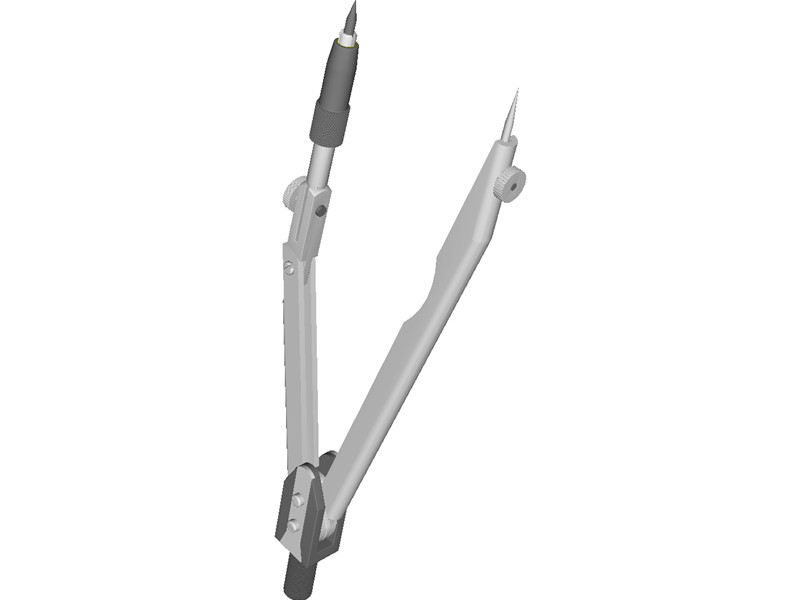
as sharply as the compass Mr. Donne
employed to illustrate this angling turn.

No pheromone’s involved in this, no touch,
no open-pupilled eye. Requited lust
and mounting love is just a dream with feet,
unless there’s more to us. If we are such
that we have souls, then what I’m feeling must
be evidence that ours were formed to meet.

Posted in Poetry | Leave a comment

Podiatry

foot

Today I tried three different pairs of shoes
before I strapped these sandals on my feet.
I’m careful – if I incorrectly choose,
I’ll pay for it on path or stairs or street.
I hate a heavy shoe or heated foot,
and blisters turn me negative and gruff.
When I select the proper shoes to put
around my feet, that’s happiness enough.

I advocated function long ago
against my roommate’s preference for form.
And I was right – we’re middle-aged – we know
pedestrian requirements. Too warm
or tight or high of heel we will not wear.
We’ve learned to treat extremities with care.

Posted in Poetry | 2 Comments

Where They’re At in 2014 (End)

Liaison

Annie wasn’t having any fun. Not that she’d use the word to describe time with the old Karen, but at least then they could walk, they could argue about business philosophy in the privacy of the street, and they could give one another ideas that sometimes worked out to be productive afterwards. At this lunch, Annie felt like a caretaker. Her volunteer work was about building inclusive housing, which meant meeting a lot of disabled folks, and lunch with Karen was feeling like volunteer work. She looked past her companion’s fat face, out the bistro window onto Shattuck Avenue. She was startled to see her old friend Philip.

He was walking, poorly, with an escort. The escort was his friend George. George recognized Annie, spoke several times to Philip, and they turned toward the bistro entrance. Within a minute they were at Annie’s tableside.

Annie knew Philip wasn’t doing well. Up to a few years ago they used to hike on weekends, share dinners out, attend opera together. Philip was a Britishy bachelor-type even though he’d been married for twenty years before Susan died of cancer. He had finicky ideas about food and wine and fine art, and very little sense of humor. He looked like Don Knotts but with a sparse beard on his retreating chin. Annie remembers being startled once by his wit – in response to her recommendation that he get more exercise than walking, he stated that sometimes he felt the urge to exercise, but he found that if he lay down for a bit, the urge would pass. Annie was tickled. It was a few months later that she happened across the quote he’d lifted, from Robert Maynard Hutchins or J.P. McEvoy, or maybe from the movie “Mr. Smith Goes to Washington.” Anyway, it wasn’t original to Philip, and he acted like it was. Annie didn’t approve.

George and Philip only spent a minute at the table. The brief encounter didn’t allow time for her to introduce Karen to them, but that was just as well. Neither Karen nor Philip was particularly conversant, and George looked beset by friendship responsibilities.

Philip seemed as slight, inhibited, and womanish as ever, but unsteady and confused. He managed a little smile but stumbled over “how are you” and misplaced the word for “weather” when he pointed through the window at the perfect sunshine. Blocky George reminded Annie, as always, of a leprechaun built of Lego bricks. After the men departed, Annie briefed Karen.

“He’s the man I used to travel with sometimes,” she said. “A few of our mutual friends thought or hoped we’d make a couple, but that was not happening, for me at least. As far as I know, his wife Susan was the activist in their relationship – maybe if I’d told Philip it was time for us to be together, we would have been. But there’s no way that would ever work for me, even if I found him attractive (not). Anyway, he’s developing some dementia now.”

“He seemed a little off,” Karen commented.

“More than a little. And the poor man is losing his ability to speak. He had the biggest vocabulary I’ve ever encountered – he taught me how to pronounce ‘desultory’ and he’s the only person I’ve ever heard use ‘excrescence’ in casual conversation – now he gropes even for simple nouns. You know,” Annie introduced, “I think the end of our friendship was connected to his slide.”

“What happened?”

“The last time we were in Santa Fe, he complained several times that he was misplacing his words. It seemed to the rest of us like normal middle-aged slippage, although I’ll admit I was struck when he lost ‘usher.’ For a well-educated highly articulate patron of opera and symphonies, there was something disturbing about the moment when his face flooded with confusion and he stammered out ‘you know, the person who seats you.’

“Anyway, the next day we were driving somewhere and got lost. Philip attempted to use his new phone to find our way or even a phone number, made mistakes, and ran out of patience. I tried to assist a few times but when he grew snappish I said ‘fuck yourself.’ That was it. He tightened up, I didn’t apologize, he didn’t forgive, and he then degenerated so rapidly there was no room for reconciliation. I’d get news about him occasionally, even saw him a few times, like just now, but our old intimacy was dead. He’s not doing well. He’s losing his mental faculties, but he lost language first. Acute progressive aphasia was the Mayo Clinic’s diagnosis. His sister and friends have moved him into a care facility, for the rest of his life. What we just experienced was surely an outing, arranged by good old George.”

Annie thinks Philip brought some of his illness on himself. She theorizes that if he’d been looser, more flexible, more active – if he would have just learned to laugh or sneeze without inhibition – if he weren’t so damned tight and self-protective and controlled, then he wouldn’t be degenerating yet. He always disdained her recommendations; he wouldn’t even try crossword puzzles, or writing poetry. She thinks he let some important parts of him atrophy. She told Karen about him partly to keep the conversation going but also in hopes that she’d learn something about her own cause and effect. But Karen wasn’t connecting stories. She acted semi-attentive and soft and sad and grateful and like she didn’t have a clue that her own decisions caused her present condition.

They refused the dessert stamp and left the bistro soon after. Karen insisted on paying the tab because she’d initiated the get-together. Annie would have rather split the bill, so she wouldn’t have to feel she owed Karen a followup meal, but Karen wasn’t having any of Annie’s cash or credit card. They walked, slowly, back to Karen’s SUV and drove, slowly, back across town to Annie’s place. Then Karen went on to her apartment and Annie walked inside and smoked.

Annie won’t have to reciprocate. She’s going to experience one of those interruptive life changes. She’ll soon see her dentist about the bump that has developed on the right side of her tongue, and that visit will start her on the nightmare cascade of oral cancer.

She will become a bit disfigured. The quality of her speech will change. It won’t be accurate to describe her as a kinder or gentler or humbler person. But among the other new skills she’ll learn, Annie will develop an ability to turn the critical and causal glass on herself.

Posted in Fiction | Leave a comment