Extremities (Part 1 of 3)

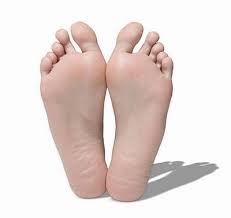
feet

“Stinky feet! Stinky feet! Get your stinky feet away from me!”

Martha heard it all the time. On the floor of her living room, from the back seat of the car, wherever her barefoot son and daughter were, so was the foot protest.

It didn’t really surprise her, but it dismayed her. She read Spock when she was pregnant with Charlie; she knew about sibling rivalry. She expected tension. But her children couldn’t seem to be in the same room with their shoes off.

Picture Jane at six, as Martha does, sitting on the floor watching TV in her own strange position: kind of a reverse lotus, heels by her hips so her legs make a W. Barefoot. Along comes three-year-old Charlie, flopping sideways onto the floor, propping his head up on his hand. His face is four feet away from his sister’s toes, but he yowls in complaint. Or Jane prone, chin on elbow-braced hands, when her brother stretches out on the floor so that his sock-clad feet approach within a yard: “Ee-yew! Get those away from me! Your feet smell like Aunt Betty’s Parmesan toast!” (Which toast upset Jane anyway, because she thought it smelled awful when it was heating but she admitted it was delicious to eat, buttered and warm. The whole visit to Aunt Betty’s house upset her, from the smell of the Parmesan toasting to the glow of the hideous wall heater in the bathroom to the midnight rumble of the water softening system. In the mid-1950s, in the San Fernando Valley, life was a far different, garage-oriented, ranch style than what she was used to back East.)

The irritation only increased after they moved to California. Land of sandals. The whole family was amazed at all the bare toes. They were accustomed to seeing feet only in the summer, near the water. In California everyone showed foot skin. Socks were a hard sell.

Martha knew then it wasn’t the smell. Jane had been at first squeamish about showing her feet (“…ugly toes! Oh look, Mama, how pale and bony…like chicken feet…”), but after they found her a pair of sandals she liked, and as soon as she got a little tan from the western sun, she no longer insisted on wearing socks and enclosed shoes. Charlie, for his part, took to going barefoot like a hillbilly. So Martha knew no one had smelly feet. Still the children objected to each others’.

Maybe Martha should have read some Freud in addition to Spock, because the thing about the feet came from Jane, and it was partly about sibling rivalry but mostly about sex and incest.

Jane definitely did not enjoy getting a brother. She was born to be an only child, and while she remained the pearl of her father’s eye, her father wasn’t a notable in the family. Her mother, impatient and pretty, was the nucleus of their suburban home, and her mother fell in love with infant Charlie. In Martha’s eyes, three-year-old Jane shot from baby to child overnight, while she was in the hospital birthing her boy. She came home and diverted her attention from toddler daughter to newborn son. Charlie needed more. He was born with crooked feet, and the doctors put casts on him when he was only six weeks old. Jane was taught early to notice her brother’s feet.

She wanted to hate Charlie, but he was too cute. And as he grew he became too honest, attractive, fair and good to dislike. She had to find his feet repulsive or she would have been attracted to him. But she was middle-aged and Charlie was dead, before she realized that. In Jane’s memory, the anti-foot mania was started by Charlie. As an adult, understanding it, she figured that it must have originated with her, the older sib. But Charlie was enthusiastic in sharing the aversion. They hated each others’ feet.

All kids mature in fits and starts, but Jane never got to be coltish. Charlie grew in a graceful attractive way, but Jane’s feet and nose reached full measure before she started her adolescent lengthening, so she wore size nine shoes when she was five feet tall, and she was convinced she was ugly until she was twenty-one.

The first and only time she bowled (she was eleven), she got a score of forty-seven. But that’s not why she forsook the game. It was the loud size 9 on the back of the rented shoes, proclaiming rearwards her deformity every time she paced the lane to roll the heavy ball. Charlie of course was a natural bowler. Even though the casts hadn’t fully repaired his feet, even though he had almost no arch and he pronated on his right, he looked adorable at the bowling alley. He scored high enough to be invited to play on a team.

He grew tall and handsome and well-mannered, while she became gawky and strident and mad. Charlie found Jane attractive, but they had established their wonderful natural barriers; they bickered and baited and stayed away from each others’ feet. Both of them were sexual, especially if compared to their responsible inhibited parents, but they didn’t experiment together. Jane taught her girlfriends how to masturbate; in deserted cavelets behind their high school or in empty houses when parents were away, she and her friends Gail and Gwen read to each other from the dirty books and magazines they stole from their fathers. Charlie meanwhile did what peri-adolescent boys tend to do: he took instruction in projectile ejaculation from the red-haired older boy who lived in the neighborhood.
Posted in Fiction | Leave a comment

Sensing

blindfold
I closed my eyes this morning as I strolled,
and sought to sense surroundings without sight.
The air upon my chin was clean and cold.
The chirps of birds were speckles on the white
of 8 a.m., and humming undertones
were laid beneath the traffic symphony
by trimmers clearing gardens of the bones
of winter storms, while chippers ate debris.

I closed my eyes and walked with extra care,
avoiding root upthrusts and pavement flaws.
My lips apart, I masticated air
until my tongue was dry and feeling raw.
I couldn’t taste today, but I could hear
and feel the world my will made disappear.

Posted in Poetry | Leave a comment

4D

flat clock

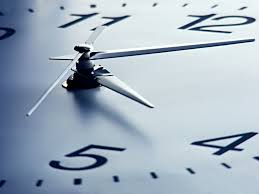
The seconds mount to minutes grow to hours,
and add to days and weeks and months and years.
No creatures of this planet have the powers
to alter time’s progression. Petty fears
and grand ambitions neither speed our clocks
nor slow the reeling of our clues of thread.
We dwell within the bars of tempo. Locks
of time adorn our doors until we’re dead.

We never know how long a life we’ll get
but each of us is given in a day
four score six thousand seconds plus a bit,
to dream awake or toss asleep or play.
We cannot cook our books of time, but I
intend to squeeze the moments till I die.

Posted in Poetry | Leave a comment

Touching Terry (End)

fever

She examined her hands as she waited for the pharmacist, and they looked ugly to her. This is not normally the case: Terry is attractive enough, no raving beauty, but she has the most extraordinary skin. Fine-pored and golden like an Indian child’s, soft as a cloud. Everyone notices it, most comment on it, many touch it. In fact Terry gets touched a lot. It usually annoys her. But it generally gives her pleasure to look at her own skin. The back of her hand is normally a comfort to her. At that moment, to her fevered eyes, her veins stood out like blue gopher tracks. Her skin looked dehydrated. She took LSD once in college; that’s the only other time her hands looked so ugly.

She paid for her prescriptions without thought and won’t remember that later, but she was deep into metaphysics as she left the pharmacy. Dodging among the shoppers and vendors, the panhandlers and the strollers with strollers, she said to herself that it didn’t matter if you’re an evolutionist or an – ahem! creationist, either way the behest is to be fruitful, multiply, propagate the species. Either way, the behest has been fulfilled. She said to herself that people shouldn’t have babies. Terry didn’t know how to apply that insight but she thought it was probably significant.

She heard a crowd of birds at that moment, and it disoriented her. Usually she saw them when she commuted home; at each end of the Transbay Bus Terminal entrance is a big common pine, and hordes of small dark nondescript birds flock from one tree to the other chattering every dusk. Terry had never noted the loud crowd at any other time. But there they were, gathered in the Market Street foliage, mid-morning on a winter day. Soundalike birds above and lookalike folk below.

She smiled to herself as she thought that, and simultaneously caught the eye of a toddler, in a stroller, to the left and just ahead of her, looking backward. The baby reacted as if Terry were smiling at him; he grinned at her. He was absolutely adorable.

He was being pushed by a young, light black woman. She could be his mother or his care-provider; she looked to be in her late teens. The baby was also light black: amber-toned with curly hair and liquid chocolate eyes. He had sweet nectarine cheeks and he gazed at Terry with unmitigated love. Looking like her baby would have looked.

Terry was mesmerized. She walked a little faster, moved a little closer, smiled again at the baby and was pulled again into the warm orbit of the answering grin. The baby’s mother/caretaker wasn’t paying attention; she pushed that stroller ahead of herself, mindlessly. They were all approaching an intersection, and they had the green light and walking figure. The stroller was the first thing into the street.

But there was one of those City-irked drivers, impatient to make the right turn on red. Looking to the left where other cars would be, never to the right for the pedestrians who had the green.

The driver was starting to accelerate through his right turn, peering only to the left, as the stroller was pushed into the path of the car. Terry’s leap was automatic; before she could articulate her act even to herself, she swooped to the baby and lifted him in the stroller as she tried to spin back out of the car’s way. Her right hip was clipped and she lost the stroller as she went down, but it and the baby landed back on the sidewalk. The baby got a bad jolt and a scrape on the arm.

Terry’s hip, femur, and tibia are broken. Her right leg was so badly abraded that she’s going to need a skin graft. But the little boy is fine. Terry’s in a hospital bed right now, with hypersensitive feverish skin that would be responding to every thread of the boiled sheets if it weren’t for the morphine in her system. As it is, she feels the exquisite sensations but she finds them interesting. She’s waiting for her fever to cool and her bones to knit. She’s pondering how her skin will be harvested from one part of her body and grafted onto the wound area.

She’s almost ready to receive the members of her family. She knows both her mother (aunt) and her aunt (mother) are waiting, and that there’s no way to avoid full disclosure about the abortion. She’s thinking she might try to distract herself by returning to those ideas (true insights, she remembers) about the overpopulation of the planet. But right now, Terry’s laying back on the flat pillow with hot tears tracking down the sides of her face, humbly glad that baby will be okay.

Posted in Fiction | Leave a comment

Touching Terry (Middle)

fever

“Doesn’t matter.” Terry could hear the doctor drinking tea or coffee or something while they talked. “All the antiseptic procedure in the world doesn’t always prevent. Fact is, we were introducing foreign objects into your body. Probably picked up something on the way in. So you have an infection. I’m going to call in a prescription for antibiotics. And a cream for the vaginitis you’re bound to get from the medicine. I want you to pick up the medications and go home. Now.”

“But other than the fever I feel…”

“Now Terry. Seriously. You underwent surgery and you have a complication. I’m your doctor and I’m telling you to go home and rest.”

Terry complied. She read the pharmacy phone number into Dr. Goldstein’s ear, and she informed her supervisor that she had to leave work. She went to the bathroom again, endured the rasp of soft cloth on her fevered skin, and was so spacy that she dozed off while sitting on the toilet. Thoughts of her gone lover and her flushed baby. Her son. Terry somehow knows the fetus had been male.

Edward isn’t really gone. He’s right where he always was, to the left and down the corridor from her work area, twenty years older than she, twenty tiers higher in the company, married, black, and now frightened of her. As unavailable as if he were dead. There was no way she could have borne the baby. Not in her family.

The woman Terry calls “Mom” is really her aunt. Her biological unwed mother Norah had her at seventeen, and Norah’s older sister and husband took little Teresa and raised her as their own. The world knows her as Terry O’Brien, daughter of Colin and Peggy, but she is really the bastard offspring of Norah Halloran and some nameless guy from some degenerate party.

Terry knows and loves her Aunt Norah, who is really her mom, and who hasn’t yet married. Norah had a second child, a son, when she was nineteen, Terry’s biological half-brother Guy, but he was raised as her cousin by her other aunt, Colleen.

That’s how Terry’s Catholic family handled illegitimacy: by intrafamily adoption.

There was no way Terry could have brought a mixed race infant into that stew. She couldn’t tell her aunt (mother) about the abortion, but she did confide in her mother (aunt). Norah would have insisted on raising the baby (she thought the family owed her an infant), and Terry couldn’t have endured that or a continuing relationship with Edward.

She tried to shake herself alert on the toilet. She looked at her watch. She’d only drifted for a minute or so. She rose, carefully pulled her clothes about her, and left the bathroom and the building at about ten forty-five.

The streets of the financial district seemed strange to her. Less crowded than at morning, noon and quitting time, but with more shoppers. A sea of strollers and carriages with children in them, and even some small dogs on designer leashes. Terry felt woozy and sleepy and wished she had Edward to lean on, but he was gone and their baby was gone. She didn’t regret her decision, but she felt sorry for the baby who wouldn’t be born. She had hated the dreadful waiting from the time she knew she was pregnant till the embryo was big enough to remove, feeling her body prepare for something that wouldn’t happen. She felt sad and weary, in need of sex or support or both.

Posted in Fiction | Leave a comment

Touching Terry (Beginning)

fever

When Terry has a temperature, her skin becomes exquisitely sensitive. It’s as if all her nerve endings prick up like hairs, perpendicular to the surface of herself, and vibrate with the loud sensations of air currents and soft fabrics.

Until she was nearly twenty she thought it happened to everyone. She figured skin hypersensitivity was a regular symptom of fever, like appetite loss and sleepiness. She’s sure she talked to her mother (aunt) about it, and also to her aunt (mother), but they must have shined her on. Terry is now twenty-five.

Her normal body temperature is around ninety-seven and a half. Even at ninety-nine degrees she begins to find it unbearable to pull her underpants down her thighs to use the toilet. This is a benign genetic condition, rarer than a sneeze-response to sunlight or the inability to smell freesias, and it’s how she knew, today, that she had a fever.

She was at work when she became aware of it. She rose this morning feeling weird, sure, but she expected that. It was like having a hard period, and not as bad as the hideous drippiness after cervical cryosurgery, with a bit of spaciness mixed in. Terry felt crampy and a little high. She had no appetite for breakfast but she was never hungry in the morning; today she skipped even her grapefruit juice. Her legs felt tingly on the bus ride in, reminding her of that phantom feeling she sometimes got when she stayed up too late, falling asleep in her chair and forgetting where her body was, stretching her feet out just to locate her deadened legs.

It wasn’t until she stopped in the ladies’ room before entering the office, when she pulled her soft panties down so she could release all that coffee-engendered commuting urine, that Terry knew she was ill.

“Whoh…” she breathed out through her mouth at the irritating/delicious sensation of white nylon on hot skin. “I must be warm.” She raised the back of her right hand to her forehead and guessed she was up a degree. She would have panicked a little if she knew the reality was one hundred two point eight.

At first she didn’t call the doctor. She checked her phone messages and sorted the mail, warmly, dreamily. But when she got dizzy picking a paper clip up off the carpet, and after two co-workers commented on her flushed face, Terry figured she’d better take care of herself. She phoned the gynecologist’s office and was surprised when the advice nurse put her right through to Dr. Goldstein.

“Well, you’re post-operative, Honey,” the doctor explained. “Of course I want to talk to you.”

That startled Terry. It was just an abortion. It had its effect on her, sure, but that seemed mostly emotional. To Terry it had been a procedure more than an operation. Post-operative? She described her symptoms to Dr. Goldstein.

“You have an infection.”

“But it was so simple, and I was well-scrubbed.” Terry can’t forget that scrubbing. Brisk and business-like. The farthest you could get from erotic. But she must have been inflamed or something. That scrubbing, under the influence of intravenous Valium, was a memorable experience.

Posted in Fiction | Leave a comment

Head Cold

imagesCA11WPFS

I couldn’t use my nose to breathe last night.
I closed my mouth and didn’t get the air
it takes to talk or chew or drink. I might
have borne it better if it weren’t rare
for this big nose to stop entirely,
for ornamental it has never been.
The feature’s broad and always worked for me,
until last night. This head cold’s origin
was sudden with a Wednesday cough that burned
my chest congested in a sharp surprise.
It Friday dried my throat, and then I learned
within my bones its weight. My heated eyes
and heavy head prepared me for this phase.
I hope to freely breathe within two days.

Posted in Poetry | Leave a comment

Watching Your Face

22mirror_600[1]

Your smile makes some wrinkles, but your frown
engraves you ugly. Horizontal lines
can be accepted; it’s the up and down
that carves a witch. We recognize the signs
of bitterness, perpetual complaint,
and self-directed needy attitude.
Your scowl drags your cheeks, and stripes in faint
remarks an upper lip of foul mood.

I’ve watched your smile make your eyes expand.
It smoothes your skin; it rounds your face; it turns
a corrugated mouth from bitter, bland,
or angry to an arc of glee, and burns
a brand of beauty it took years to form,
exquisite as the love that kept you warm.

Posted in Poetry | Leave a comment

Sojourning (3 of 3)

paris1[1]

They stand like insects amid all the carved stone. Mary looks at the box hedge planted around the large empty traffic circle; the way the lights shine on it, the hedge appears more like an institutional-green textured short wall than a living thing. Claire considers sculpture. She couldn’t resist touching one statue in the Musee d’Orsay: a marble woman draped in a lovely onyx robe. “S’il vous plait,” growled a seated guard she hadn’t seen. She shot him a sheepish look but his face was as stony as the sculpture. He was not amused. That event set Claire to pondering sensory pleasure and art. Of all our senses, Claire thinks we derive the most pleasure from touch.  She knows we’re very sight-oriented; she remembers a time in fifth grade when her teacher played a record for the class and then pointed out afterwards that all of the students watched the phonograph, even though they could have listened while looking anywhere in the room. And Claire certainly appreciates the pleasures of music, and the strange potencies in our olfactory systems. But there’s no question to her that touching and being touched bring the most actual pleasure. So she wonders why there isn’t more tactile art. It strikes her as incorrect to restrict people from touching most sculptures. There’s another idea for an editorial, she grins to herself.

The dog tags jingle again as Mary goes into her pocket for a cigarette. Her face is lit and shadowed by her lighter, and aromatic smoke mixes with breath condensation as she exhales. “What the hell: let me have a hit.” Claire makes it sound like she’s succumbing to something as she reaches out her gloved right hand. She takes the cigarette, white with a flecked tan filter, inhales deeply, closes her eyes while she tips her head backward, opens them slightly as she exhales to the velvety sky, and hands the smoke back to her friend, hot and long-ashed. “Oh, that’s nice. I’d better watch it. You want to walk to the Eiffel Tower?”

“Goodness no.” Mary’s response is not hesitant. “I’m cold and very tired. Let’s get coffee or a drink.” Their relationship began in the coffee house at their community college, and the two can always find pleasure in coffee together. They turn back toward their favorite bar and brasserie.

Claire is a little disappointed. She’d love the long walk. She thinks her ankle will heal faster if she works it more. And she’s fascinated with the tower. She finds it beautiful, compelling, majestic. She’s the true daughter of an engineer. She knows that the French respect the profession more than do Americans; her father taught her that the word “engineer” is French-derived from “genius.” But the non-engineering French seem to her to be incurious about science, at least compared to Americans. That puzzles her.

Claire puts her disappointment away. She knows Mary is having a hard time sleeping, and with reason (beyond the recent 9-hour time shift). Mary had always planned to spend most of her one-month sabbatical here, but until a month ago she didn’t know she’d be dealing with the question of where to put her mother. Mary’s mom had a stroke then, while receiving a shampoo. They’ve since learned that salon stroke syndrome is the medical community’s name for that not uncommon event. Her mother is doing well, but she won’t be able to live in her apartment any more. When Claire leaves in a week, Mary will have another half month to find a home and move her mother here, or bring her back to the States. Mary knows how hard it was for Claire to arrange two weeks off from family, work and school, so she is trying to postpone most of her family affairs until Claire leaves. But this trip has deepened their friendship, and Claire is starting to insist that they spend some time on Mary’s obligations. Claire is beginning to rebel against the date on her return ticket. She may just stay another week or so.

She puts her gloved hand through the triangle of Mary’s pocketed arm. This is Paris; it’s allowed without question. Mary presses that hand toward her bundled body in a moment of mutual unambiguous tenderness. They cross over to the left bank.

Claire starts building another editorial. These considerations used to take the form of imaginary speeches with Greg. Over 31 years, a strong habit developed of talking to him in her head. But lately, she finds she’s talking inside to no one. She can still hear the words. She still rehearses the indignation. But the imaginary audience has faded and diffused. It’s not Greg any more. It’s no one or many. It’s hard to see and it doesn’t matter.

She and Mary cross the last busy street before the brasserie. Small cars dart along lanes that seem too narrow for any motor conveyance. Claire marvels; for all the complaints about traffic and drivers, it amazes her how often humans don’t collide. She may not talk to Greg in her head any more, but he still speaks to her. He has always traveled in his job, and he has collected tips for how to get places. Greg says the important things to remember are to keep moving (even if the movement is temporarily not in the direction you select), to eat when you have an opportunity, and to never pass up an opportunity to use the toilet. Claire almost laughs out loud as she realizes that life is of course a journey, the journey, and it too can use travel tips. She begins to compose the end of an editorial as they enter the brasserie.

Posted in Fiction | Leave a comment

Sojourning (2 of 3)

paris1[1]

The top of Mary’s head appears first, her short dark hair tousled, glossy, and slightly silver-streaked. Then her French face and slim body rise into the room, both looking younger than her 45 years.

“Have you seen my – oh there they are…” Mary begins to ask and ends almost humming. She has located her father’s dog tags on the table near Claire, and she smiles at them as she moves to a chair, picks them up with her right hand to lay them in her left palm and then begins to play the silver-toned chain like a deck of gaming cards, or a rosary, as she turns her attention to Claire. “How goes the writing?”

Claire stretches her legs under the table. She flexes her left ankle. She pushes her hand nape-to-crown through her heavy blonde hair, and then sits forward to pour more bourbon into her small tumbler. She has a fleeting vision of Lillian Hellman or Dashiell Hammett. She wishes she still smoked cigarettes. “I started well but I petered out,” she answers.

Mary pulls the chain up out of her palm again, and lets it run like water back. “Let’s take a walk,” she suggests. “Maybe that will jump-start you.” She weaves the chain around her fingers. The dog tags were her father’s, and they used to be a talisman for her but now they’re more of a charm. She carries them with her in France, just as she carries her mother’s old I.D. bracelet when she’s in the States.

“A walk sounds good.” Claire stands and tips the bourbon in her glass. It catches the light like liquid amber. She drinks. “Let’s dress for it,” she says as she glances around for her scarf. It’s colder than they expected, colder than the locals expect. October in the Seine Valley is normally around 60° F, but they’ve had days in the high 40s since they arrived. They don’t mind. Their lips and thighs tend to get chapped, but their hair doesn’t frizz, the sky doesn’t rain, and the air is cold and dry and bright like a mountain top. They layer their torsos with sweaters and jackets, equip themselves with mufflers and gloves.

Unexpected is the whole experience. Mary and Claire didn’t expect to become friends, let alone make this trip or have this weather. They’re about the same age and nearly the same height, and that’s where similarity stops. Mary is the daughter of an American soldier and a French shop girl, born in New Orleans to a war bride and an outgoing mechanic, only child of divorce when she was six, alternately raised after that in Paris with her mother or in Atlanta with her father and his current wife. She looks French, with her big eyes, short upper lip, nose not-small and bent as if she used to box. She’s completely bilingual and can teach French in the States and English in France. Claire and other Americans always expect her name to be “Marie” instead of “Mary.” It’s “Mary.” But she pronounces it charmingly; instead of a long “a,” she makes it sound like the “a” in “apple:” Ma-a-a-ry. She has been married and divorced twice, has no children, and now teaches English at a community college east of San Francisco.

Claire is blonde and getting heavy-set. She’s the daughter of a stay-at-home mom and an engineer dad, both American and still together. She has been married to Greg for 24 years and they have children in both genders: 21-year old Annie and almost 18-year old Jason. Greg works for the EPA and Claire has been employed by a large insurance company since she re-entered the workforce seven years ago. She’s bored with her job, which is why she signed up for the journalism course at her community college. She’s bored with Greg, which is why she’s now in Paris.

Mary turns off the apartment lights while Claire makes sure she has the keys. Unlike California light switches with their up-or-down obviousness, French switches are two-inch by two-inch toggle plates; Mary punches them lightly with the side of her soft fist. They make their way downstairs to the apartment house door, across the cobblestoned courtyard, and out the big doors to the street. The wind off the Seine is biting. Mary pulls her wool muffler up over her nose and mouth; with that and her black tights she looks perfectly Parisian. Claire tugs her coat sleeves over her wrists and puts those gloved hands in her jacket pockets. They cross the street against the signal and have to run the last few steps to the curb. The dog tags jingle in Mary’s coat pocket.

“As frantic and crowded as these streets are, you never hear horns honk,” Claire marvels. “There’s a busy sort of patience here (or maybe a patient sort of busy-ness) that I admire.” They are crossing the river, and what with the cold wind and her muffled mouth, Mary gives her agreement with smiling eyes, raised brows, and tilted head. Then she speaks through her wool. “Maybe that could be a subject for an article,” she suggests.

Claire looks appreciative and exasperated. “I don’t seem to lack ideas. I just don’t know where to go with them. I guess it could be worse. At least I have ideas.”

Mary’s answering look is almost merry. “She has it too,” Claire thinks. She’s half French and she has the quality Claire is trying to describe. “Come to think more of it, it doesn’t seem to be patience exactly. I don’t know…you French seem to be able to find some humor or good in every situation. Whether or not you make the motion, there’s a kind of shrug and smile.”

“The Gallic shrug? It’s true. But it’s also true that Americans are wonderful. So mobile. So filled with energy.” They are approaching the Louvre plaza, and sculpted buildings shelter them from the wind. Mary pulls her scarf away from her face. Claire looks toward the glass pyramid, while Mary turns her gaze the other way, trying to sight through a close arch down the Champs Elysées to the big Arc. The distant traffic makes lines of white and red light, like neon airport art. The plaza is deserted.

Posted in Fiction | Leave a comment