Moot Question

     When I was around 41, I asked my kids the question we haven’t yet answered. I think it was summertime, which made Danny 9 and Katie on the approach to 15.

“Imagine you have a perfectly balanced coin,” I said, “that will never land on its edge. Every time you toss it, it will come up either heads or tails, and none of it will ever wear away.” I recall them watching my face as I laid out the question while we stood in the kitchen. “You’re going to toss it an infinite number of times. Now tell me: do you think it’s possible for the coin to never come up tails?”

We looked at each other for several moments. Then, “No” from Katie, and Danny joined her before she’d finished the vowel.

“Really.” That was from me, with no question mark.

“Yeah. Think about it, Mom. An infinite number of tosses. It has to come up tails.”

I was amazed. They responded faster than I thought they would and different than I did. “Come on you guys,” I countered. “Isn’t each toss a new 50/50 deal? Why couldn’t it always come up heads?”

“Infinity, Mom. You don’t seem to understand infinity.”

“But,” I sputtered (and it was weird for me to sputter at what my kids thought), “but if an infinite number of tosses means anything that can happen will happen, then doesn’t that also mean it will happen over and over again?”

You bet our heads were spinning. We all saw points and problems with either answer. And I think we all perceived, just faintly because it was outside our realm, that the question has no meaning if one understands infinity. And that understanding infinity was outside our realm.

It’s moot. Looking up “moot” is within our realm. Everyone I know thinks it means “irrelevant.” Not. “Moot” means “debatable.” It suggests you have to table the question, because you all understand you’ll never agree about it.

Posted in Language, Lessons | Leave a comment

Sonnet & Site Map

When I was 41 I began regular sonnet-writing. I was fresh off the boat, but the boat was a cruise ship to Alaska. I’d had an intense and happy relationship with the cruise’s piano player, falling so deeply in love that I felt inspired and motivated to pen what I imagined as lyrics for the music he composed.

The love faded quickly after I resumed life on land but the sonnets didn’t. I wrote one at least every other weekday. Most often I composed while walking to BART. I’d get six to eight lines going and finish on the train. Few were profound – I’m sure most of them were on my (attempts to) diet and the weather, but I strove to make each one fun to pronounce.

The first big thing I learned was that work produces inspiration. Up till then I thought it was the other way around. Starting a sonnet generated ideas for the piece. And the more I wrote the easier became the process. Like lately: sometimes I wonder where I’ll get more ideas for these lessons, but so far every time I write one it makes me recall at least two more.

Before I slowed I compiled at least a thousand 14-line poems and now, when I produce maybe four a year, I’m as likely to pull out an old one and polish it as I am to work on a new piece.

I think sonnet work is a clue to my good life. As far as I can tell, and especially for my age (60), I’m one of the happiest people I know. I attribute much of that to sonneting. It uses both sides of my brain, and that makes me feel fulfilled like I’m doing what I was born for.

So I’m adding a page to this blog. As I’ve recently learned, a page is for posting a static piece while this Home area is for regular updating.

There’s been a page called House from the beginning. It has an essay about what I learned in the first year of small-space living. It also has a few line feed problems, which is apparently what I get for moving a WordPerfect file to WordPress. But I’m not complaining; I continue to recommend WordPress to all my friends.

Now there’s a new page (with a few line feed problems), called Making. It’s about why and how to do this:

The bars of poetry don’t form a pen
to keep the world without and me within,
but they define the space to sing and when
to dance. They cast a shadow so my skin
is safe: I can expose without a burn,
dissect without a wound, examine me
while music-masqued, that you and I may learn
a little more of our humanity.

Poetic license doesn’t mean excuse
to blather self-absorbed or volley rage.
I think instead that its intrinsic use
is revelation in a golden cage.
No other mental pleasure’s as sublime
as dancing at the bars of measured rhyme.

Posted in Poetry, Writing | 1 Comment

Egolibrium

     When I was 13, my 10-year old brother asked our dad, “Why is it when I leave my milk out it warms up, and when I don’t eat my soup it cools down?”

Dad stopped dunking bread in his chowder. He leaned back in his chair with a satisfied face and drawled, “Good question, Steve.” That was high praise.

Then he explained room temperature. He informed us that objects left alone will acquire the temperature of the space they inhabit.

He was also introducing the idea of equilibrium. That’s the tendency for different things to meet somewhere near the middle, to mix, blend, negotiate, emulsify. It’s one of the recurring motifs of life.

I noted the equilibrium concept again when I was 16. I was dying for long hair then, but my natural curl, frizz or whatever you call it got in the way. Oh my hair grew like it was supposed to, but some pulled out whenever I brushed or combed it. The combined grow/tear effect resulted in maximum length of about four inches below my shoulders (seven inches if I pulled a tress straight). It wasn’t going to get longer unless I straightened it (the chemicals used then were way too harsh) or let it dred (no examples of that yet in our culture).

Recently I realized there’s an equilibrium about confidence too. Call it “egolibrium.” I noted it when I looked at me, but I think it’s shared by all of us. See, people assume I’m self-confident. They comment about my strength and self-assurance. But I’m in here: I know it’s not so. The truth is, I oscillate between abject humility and overbearing pride. I flicker like a pixel from hubris to shyness, from exuberance to self-effacement. It’s just that the flicker is too fast to see. The brain makes a blend, and so I appear to be direct and self-confident.

Posted in Kidspeak, Lessons | Leave a comment

Autodidacts

When I was 15 we moved from Chula Vista to Larkspur, and I met Ellen.

It was a huge relocation, from as south as California gets to the San Francisco Bay Area, from a three-year high school with a closed campus and a strict dress code to a four-year school where girls could wear pants, boys could grow beards, and seniors could leave any time. But Ellen and I would have appreciated each other no matter where we met.

We were soul friends. We were each bright and weird (great word – it means wayward – it used to have an umlaut over the i – there: now you’ll never misspell it). We each wanted to figure out the why of existence. Contrary to what some of our schoolmates whispered, we were neither and never gay. Contrary to what our parents asserted, we were neither of us under the influence of the other.

One of the many subjects about which Ellen and I agreed was adolescence. There were several occasions when we concluded that “no childhood would be complete without” an experience we then proceeded to obtain.

So we decided “no childhood would be complete without” shoplifting, and we managed to talk our way out of trouble when we got caught returning the items we’d taken from the sundry store in Tiburon. Then we agreed that, really, “no childhood would be complete without” an attempt to run away. We were not unhappy at home, but we made a dash on a bus for Berkeley one rainy night, got busted a few hours later and driven back to Marin County by Ellen’s boyfriend, and I think it was that adventure along with the Stinson beach overnight that motivated our parents to remove us from each other’s pernicious influence by sending us to separate dorms at Cal.

And yes, it was the understanding that “no childhood would be complete without” experiments with controlled substances that motivated Ellen and me to leave her room when I spent the night, swipe some of her father’s booze and her mother’s smokes, and range around Belvedere without anyone knowing our location. We didn’t enjoy the scotch and cigarettes, but we were responsible individuals; we agreed to do what was necessary.

It cracks me up when I watch grownups treating teenagers as if the kids had no idea what was happening to them. As if they were not self-conscious. Surreal…

Posted in Lessons | Leave a comment

Birthday Books

     When I was about 12 my father gave me Arundel, by Kenneth Roberts. He’d already established the tradition of presenting me with a book every birthday, and that paperback, my first historical novel, was his choice around then.

I already knew my dad was not like others. He taught me to love Gene Kelly instead of Fred Astaire, he showed me how to tune up the Austin Healey when I was 7 (and never to say motor when I mean engine), he narrated Magellan’s circumnavigation of the globe to me and my brother (at the dining table, with props) like the epic adventure it must have been, permanently overshadowing Columbus for us.

And with Arundel, he introduced me to one of his American heroes: Benedict Arnold.

Dad also liked Jefferson, Franklin of course, and that renegade Thomas Paine, but it was his admiration for Benedict Arnold that showed me the significance of perspective.

I learned that Arnold had been a good man and a great soldier. That he was successful, badly wounded, in command again, defamed, cheated of promotion and then, frustrated and embittered beyond what it takes for a book character to become a misanthropic hermit, he changed sides in the Revolutionary War. But most of all I learned that, if the British had vanquished the upstart American settlers, Benedict Arnold would have been a hero of that conflict instead of becoming an archetype for traitor.

It was all a matter of point of view. Called POV nowadays. You choose your side, and you fight to win. If your side prevails you’re a hero. If your side loses, especially if it was a side you switched to, you might be reviled.

So, yes, it’s best to choose correctly for yourself and not switch. But then again, Ben Franklin was attacked about his French connections, and he never wavered. Plenty of good people have gotten bad press. Your best protection is to choose honestly and try to ignore the gossip.

Dad’s book choices were never what I would have selected and usually something I enjoyed. Sometimes they were as inspirational as he. The following year it was Carson’s The Sea Around Us.

Posted in Lessons | Leave a comment

Drop Out

     When I was 24 I dropped out of school. For a precocious kid, it sure took me long enough.

I always did well at school but I never liked it. I remember being eager for it before I went to kindergarten, and then disappointed at its Romper Room silliness. I recall listening to older kids complain about algebra and longing to be initiated into the mysteries of a and b and x and y, only to be underwhelmed by the math when it became part of my day.

But I kept attending. In the suburbs in the second half of the 20th century, a bright female of the middle class didn’t have other options. It might have been okay if school hadn’t been so boring, if it hadn’t taken up so much of my time, if it had provided better teachers. I don’t understand our culture’s reverence-act about teachers – like they’re saintly types, giving up their time and potential income for the good of others. The fact is, we all had about 66 teachers between kindergarten and high school completion, and at most half a dozen of them were impressive. I remember percentages: 6 out of 66 is only 9%. Kids deserve more than that.

I managed to enjoy college though. I was one of 20,000 in Berkeley, so nobody was supervising me. I got to range around the English department and also explore old languages. The English curriculum included literary criticism but I thought most of that was gossip and bullshit, so I worked at imitating the assigned authors instead.

It was gratifying. So after some travel and my wedding I applied to grad school. I attended two quarters.

OMG. Back to bullshit. In 1973 at least, the Ph.D. program in English at Cal was a teacher mill. I couldn’t find anyone who was interested in learning or thinking. The one good instructor I interacted with during that half-year reeled his face away from me and blurted “Who let you in here?”

The final straw was the honors renaissance lit class. We read sonnets and The Fairie Queen. The prof was tenured and respected in the field. This is no exaggeration, kids: I was the only one in a class of 20 who perceived that The Fairie Queen has a plot. Everyone else was busy hunting for levels of allegory like they were Easter eggs.

I finally visited the professor in his office. I showed him the error in the one bit of lit crit I read for the class (“What?” he remarked. “How can that be? This was written decades ago, and no one else ever noticed the mistake”) and I commented that of course a critic couldn’t appreciate a sonnet without trying to write one. I mean, it doesn’t have to be a good sonnet, but only by attempting one could an individual grasp the possibilities and limitations of the form.

He looked at me blankly. I said “You’ve of course experimented with sonnets yourself, and…” and I noticed his head shake. “Huh?”

“I don’t write them,” he said. “I teach them.”

And I was out of there.

Posted in Lessons, School | 1 Comment

Dear Diary

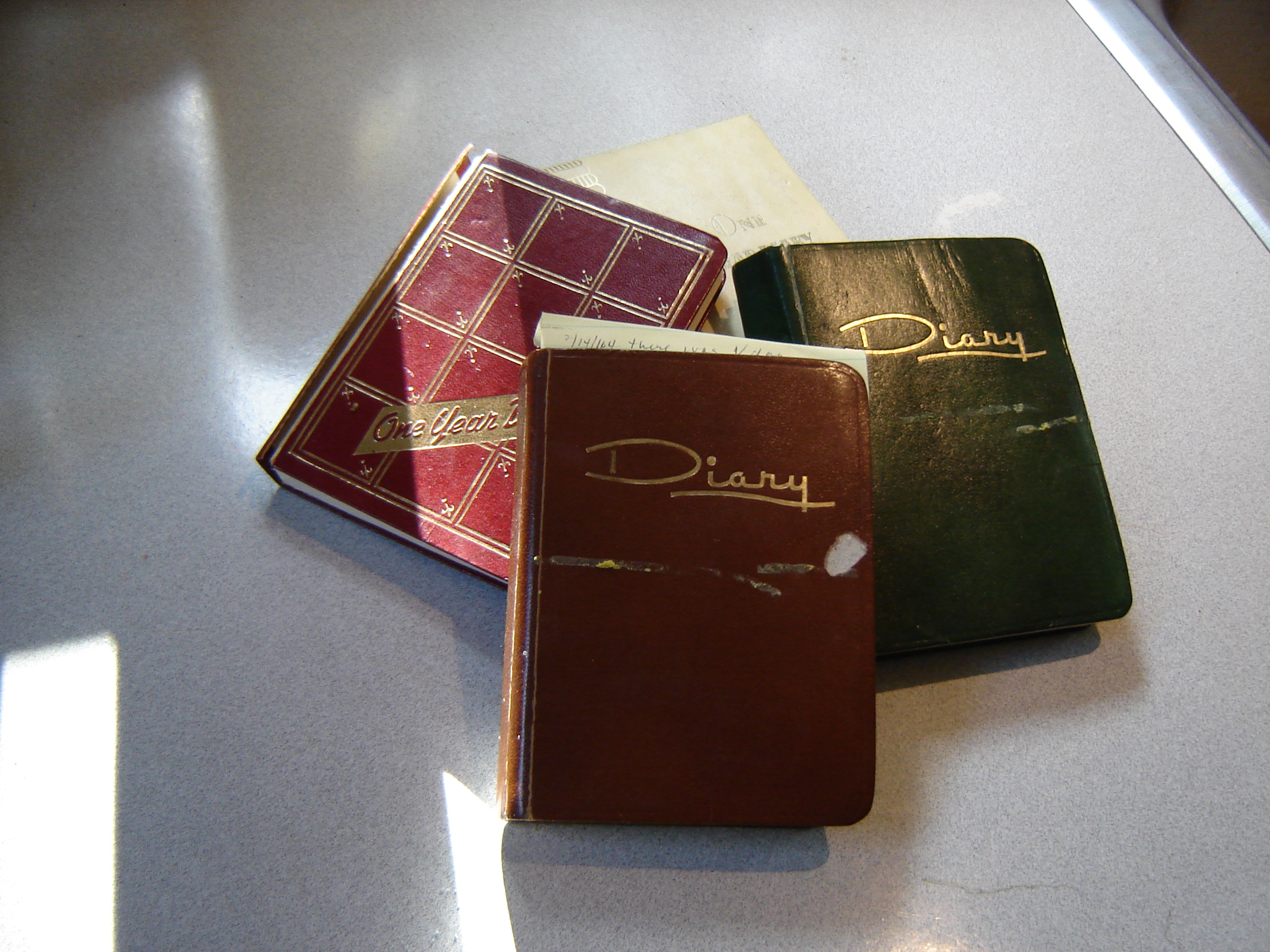
     When I was 14 years old, I kept a diary. It was a corny store-bought book, bound in imitation leather and labeled “Diary” in golden script, starting its lined pages with January.

I kept it that year and continued in similar Diaries for the next three, before I matured to journals, which could be on any paper (and which therefore mostly weren’t preserved).

Anyway, I carted my four Diaries around as I grew older and moved, always meaning to review them and putting it off because I assumed I’d find the reading dull and embarrassing.

Well. Three years ago I received letters from old high school friends, trying to organize a network and a reunion. Those letters made me look for yearbooks and find, among other memorabilia, my old Diaries. Not only did I read them; I got into them. They were interesting. I was kind of rooting for the heroine, the writer. I even transcribed parts for my old boyfriend to enjoy.

I recommend that you keep a journal or diary. I mean “keep” both ways; write the journal and be sure to retain it. It may take years, but your diaries will mature into valuable resources for you.

If I had it to record again, I’d do it a bit differently. Instead of initials, I’d use full names at least somewhere, so I’d know now who I meant then. I’d make a point of noting how the weather was. And how much (little) things cost.

You’ll love to reread your diaries, if you let enough time pass. They are records of your daily life. If you start young then you’ll be able to review your childhood with the perspective of an adult, and you’re going to really like that kid…

Posted in Lessons, Writing | Leave a comment

Googling

     When I was 60, I got the idea to google “he grabbed me by my slender neck.” And there they were: the words of the verse I’d heard in fifth grade with such delight that I’d pushed them into memory.

Often in the intervening half century I have recited that poem, and it was new to my audience every time. I wondered where it came from.

Through Google I saw it printed as lyrics in a collection of bawdy songs. I found no indication of who authored it. But I found mistakes. Not just variations – clear errors (why would he be “hot and warm?” the original was “nice and warm.” – so much better! intimations of Copenhagen Syndrome, as victim begins to appreciate abuser…).

I tried another, lower Google link. Now it came up as authored by “Anon” and as a poem, but presented with 7-beat lines and a few words that clashed with what I recall.

I’m sure I wrote it down. I must have, to remember it so well. Here are the words as they appear in my head:

He grabbed me by my slender neck
I could not yell or scream
He dragged me to his dingy room
Where he could not be seen

He tore away my flimsy wrap
And looked upon my form
I was so cold and damp and scared
And he was nice and warm

His feverish lips pressed close on mine
I could not make him stop
He drained me of my very self
I gave him every drop

He made me what I am today
That’s why you find me here
A broken bottle thrown away
That once was filled with beer.

Posted in Lessons | Leave a comment

Use it or Lose it

When I was around 9 years old, I learned to whistle pretty well. And when I was 59, I learned I lost it.

Really. My father was an excellent whistler. By the time my younger brother was 5 he was managing to emit little melodies. I wasn’t going to let Steve outdo me; the pressure was on to learn.

I think I got it along with blowing gum bubbles. It’s all in the mouth-mind coordination. I wasn’t worth recording, but I could exhale a tune.

In fact, it got to where I could whistle on the inhale too. I never mastered the two-finger taxi call or the air-across-grassblade tune, but back then I could breathe a song like I was my own harmonica.

A year ago I tried to whistle for the first time in I don’t know how long. Nothing came out! I couldn’t believe it. I took my problem inside and experimented.

Initially I couldn’t make a note. Then I found I could generate a weak whistle while inhaling. What the heck? Is it easier to inhale-whistle? Or was the last-acquired skill the best retained?

Over the next several months I occasionally retested my ability. Like wiggling a loose tooth or checking to see if I still have a libido, I tried to whistle now and then. I’m pleased to report that I’m regaining the knack. I’m not as good as I used to be. I suspect my best whistling days are behind me. But if this skill disappears again, it won’t be my fault.

Posted in Lessons | Leave a comment

Directions

     When I was around 56, I encountered an alien.

She looked human. She drove a big old American car like a human. But she revealed an out-of-world perspective that was as different from mine as silicon is from carbon.

I was in North Berkeley that morning, as usual, walking from my house to the BART station. When she pulled over to the curb I was heading south on Sacramento Street, near Cedar, and she was driving north.

“Excuse me?” she query-yelled through the open passenger side window. “Can you tell me how to get to College?”

I paused. I had that walk timed so I never waited more than a few minutes for the train, so I wanted to keep walking, but what could I do? It’s common courtesy. “The university, or the street?” I asked.

“The street.”

“Oooh,” I said. “You’re completely turned around.” She watched me with her head cocked to one side.

“Look, ” I advised. “You need to turn your car around and head south about two miles.” I nodded in the direction I’d been walking. “Then take a left toward the hills. Let’s see…you’ll cross (hmmm – Shattuck, Telegraph…) two major intersections before you reach College. You can’t miss it.”

She looked a little puzzled. “Soooo….” she started, aiming an index finger at her own windshield, “where should I turn?”

I was stymied. I was struck with the realization that this driver had no idea she was piloting a vehicle on the surface of a planet. She had no awareness that there was a large natural bay to her left and a range of hills on her right. And I had no words that could bridge our communication gap.

“I’m sorry,” I concluded. “I have to go. Good luck!” and I crossed the street toward the BART station, in front of her idling car.

Posted in Lessons | Leave a comment