
Blowhard

     When I was 11, a swastika was painted on our driveway. I have a muddled memory of the event now, but I immediately understood that it was bad, it was for me, and it was frivolous.

I saw it before my parents did. I may have brought it to their attention. I know they were profoundly upset, but I sensed that was more on my behalf than on theirs.

I was not a good history student then, but I knew a bit about World War II and I’d never deny that what would come to be called the holocaust happened. My father had served in the Air Force during that war, and both parents had experienced door-blocking prejudice about neighborhoods when they were kids, colleges when teens, and jobs as young adults. Compared to their experiences my way was an easy one, and yet there was that symbol.

Like I said, I knew it was for me, I suspected it was painted by Keith-and-Steve (Detention, August 5, 2010) and there was no recurrence. I don’t think my parents complained to anyone about it; they removed it and talked to me about anti-Semitism (it was kind of like the fact-of-life discussion: a little embarrassing and mostly unnecessary by the time it occurred).

In some way I never articulated to my folks, I took the event as my responsibility. I knew I brought it on myself. I think I was talking too much about my Jewishness at school, arguing too loudly against others’ parents’ beliefs, touting.

I had a hint of confirmation about that last year. I received an email from my first beau, a guy named David from my fourth grade class. I remember chasing him in fun on the playground then, catching him by his yellow cubscout neckerchief. I recall that sixth grade double-date, David and Doug and me and ??, to a Saturday matinee at the Vogue Theater. He told me in his email that in fifth grade he traded a treasure for a junk ring on the playground, and then tried to present the ring to me with a marriage proposal. He remembers how quickly I turned him down, asserting that I’d never be able to marry him because he wasn’t Jewish.

His friend Doug called me a blowhard not long after the swastika event. I didn’t understand the term then or even after Dad tried explaining it to me, but I sure do now. Even so, and though I know I was wrong for proclaiming so many words, the painters were wronger for their act.

Posted in Lessons | Leave a comment

Musical Chairs

     When I was around 13 I was immersed in hormones: my own and those of all my schoolmates. What had started in 4th and 5th grades as the occasional crush in the unusual kid then grew prevalent. Everybody was eying everyone else, either as a love object or a similar wisher.

I didn’t get it. I’d read a lot and I’d had a couple of boyfriends and certainly I planned to be in love before too long, but it seemed like my friends were pushing it, trying to like for the sake of having someone to like.

As I got older and got to counseling my buddies about parents and homework and mostly about dating, I continued to encounter the anyone’s-better-than-nobody syndrome and I found it beyond my powers to defeat.

It was like the nursery game of musical chairs.

Eventually I wondered if that game reflected reality or refracted child intentions.

And even more eventually, like 30 years later, I tried to capture the question in a poem.

A loop of chairs is centered in the room
and round the loop the children promenade
to simple party music, till the tune
is cut abruptly. As the measures fade
each child darts to sit upon a chair,
but furniture is less than kids by one.
So squeals in place of music fill the air,
and sitting’s an emphatic form of fun.

The kids are early taught to play that game
and seem to keep the lesson they are shown,
for adolescent linking feels the same:
latch on to someone, quick, or be alone.
I wonder if the race is wisely planned
that prizes seats when some would rather stand.

Posted in Legends, Lessons, Poetry | Leave a comment

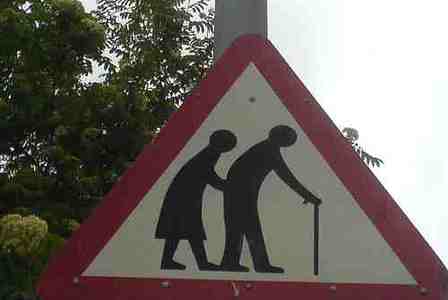
Respecting Elders

     When I was 9, I got kicked out of Sunday School. We lived in Chula Vista and attended a conservative synagogue, and I guess it is more accurate to say I was asked to leave class and not return. Probably I was considered disruptive, or in the whining language of my children’s teachers, “unmotivated to learn.”

Not true. I was the most motivated individual in the room. But I persisted in asking who created God.

It was a sincere question. I had taken in the story of creation as told in Genesis, I had acquired an image of God as a tall farmer-type, white-bearded and fair-minded with a tendency toward benevolence, standing on green grass beside a classic well. He was clad in divine agricultural overalls. The image begged the question: who made Him?

My teacher tried to shush me and changed the subject. I cooperated with the next lesson but then returned to my question. The teacher as much as told me to shut up already, to stop asking and move on. I couldn’t move on. I was stuck at the question. I meant no disrespect; I meant to learn more.

As the tussle continued I became angry. I’m sure my words could be interpreted as disrespectful but as far as I was concerned, that was beside the point. I was shown the door instead of enlightenment. I was asked to stop attending the class.

That wasn’t the only or last time I was told to respect stupid behavior simply because the behaver was old. I disagreed with the idea then and I persist in disagreeing. Even now, an elder myself, I don’t expect respect because of my age.

Don’t misunderstand. I am not advocating disrespect for elders. I just don’t think they should get favored status if they don’t deserve it.

I begin every relationship with respect for the other. That’s the case even if the other isn’t human. And I’m certainly going to assume that an older person, filled with so many experiences, is likely to be more wise, balanced, and worthy of respect than someone less practiced at forming judgments.

But a fool is a fool at any age. And once an individual forfeits the right to respect, she or he will have to act impressively to regain it.

Posted in Lessons | Leave a comment

Snail Trail

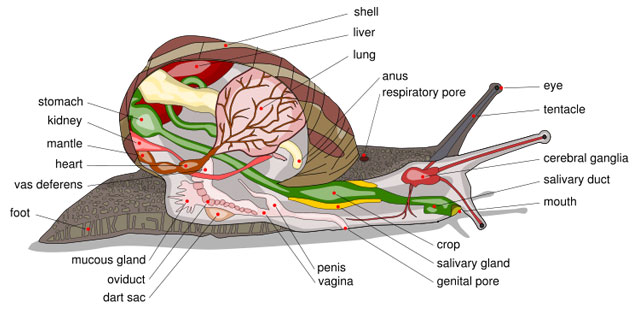
  When I was 48, one morning I killed 48 snails.

Normally I’m non-violent. I wince at even the mention of cruelty to a bird or mammal, and I don’t eat their meat (but that was a decision first made by my kids, and then continued because of my taste preferences instead of my philosophies). More than once I have caught and moved a bee, co-existed with a spider, admired a dragonfly.

But I will kill. Given a chance I’ll exterminate a mosquito or a wasp. And living in garden-loving Berkeley I have learned to loathe snails. I have edged my yard with the occasional toxin. I have hunted in the agapanthus.

I think it was that winter when I tried to take out at least 10 a day. I wondered how many citizens it would take, killing 10 a day, to wipe out the snail population in our town. I became snail vigilant, especially as I walked to BART each weekday morning.

That winter Wednesday, after rain and under clouds, snails were out aplenty. I must have crunched a dozen on my way to the corner with the stucco-fenced property. There was a mass of the pests, medium-sized to impressive, on the short white wall. I went at them like a kick-boxer, and I counted the corpses as they fell.

I cleaned that wall. But I didn’t make a dent in the North Berkeley snail population. Ever since then I’ve looked at them a little differently.

They look like silver perforation marks:
a dotted line of slime on old concrete,
a snail-laid trail of mirror dashes, sparks
of carpeting for moving pseudo-feet.
If I could tear the sidewalk on that line
and turn part in but keep this here with me,
a random trail determining what’s mine
and what is not, responsibility …
diminishes, and I could then allow
me freedom to insult, to litter, sneer
at anything and even raise my voice.
I’m tearing where it’s weakened, and that’s how
direction is established. There’s a near
description of a way to make a choice.

Posted in Critters, Poetry | 2 Comments

Ugly Duckling

   When I was 14 I got my period. I was so retarded my mother almost took me to the doctor about it when finally she got to slap my face (gently and with love, in the tradition of her mother, so I’d retain my rosy complexion). I was already in ninth grade because I’d skipped a year of elementary school, and I’d been faking a menstrual cycle for over a year (we had to “count off” for attendance in junior high PE, and a girl who was undergoing that time of month said “sponge” after her number, indicating she wouldn’t be showering that day, so I’d been saying “sponge” for three days every four weeks even though it wasn’t true).

My adolescence wasn’t conventional in other ways either. I was a reader so I knew girls were supposed to be coltish and lovely at my time of life: long legs, blooming bodies, thick blonde tresses. The first features to grow on me were my nose and my feet (I gave up bowling when I was in seventh grade, just under five feet tall and sporting a 9 on the back of those rented shoes). My dark brown hair went from wavy to frizzy as the hormones kicked in, and my breasts got tender but they didn’t enlarge. Add to all that thick eyeglasses and a loud personality and I think you get the picture.

In time things evened out. I never got blonde and my feet kept growing (size 11), but I acquired contact lenses and a female shape and I grew into my facial features and my personality (still a work in progress). It got to where I looked at earlier pictures of me, taken at times when my self-esteem was at its lowest ebb, and I saw that, really, that girl wasn’t so bad at all. I’m 60 now, and every young person looks good to me. I wish they’d all just settle down and spend a little more time enjoying themselves.

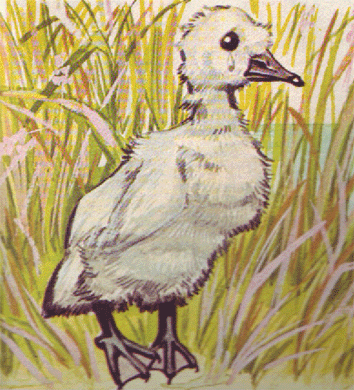
I’m sure everyone has related to the fable at some time or other. For me it’s a favorite and a truth.

Awkward little bird who doesn’t fit,
gawky walker, alien and rude,
following a coterie unlit
by loving or familiar attitude,
infancy who won’t accept despair,
you can’t refuse your life. You’re nothing wrong
to want to understand, and you will dare
continue till you find where you belong.
From your tenacity you will recoup
peace and patience, strong and ever kind.
You will live long enough to meet your group,
and as you face your pain, you’ll be refined.

Embarrassment may be the acid test
that separates the learners from the rest.

Posted in Legends, Lessons, Poetry | Leave a comment

Bad Words

  When I was young, I never heard my parents swear. I never saw my mother read a book. I thought at first that’s just the way they were, but as I grew I learned that they were adjusting their behavior because of us kids.

Of course Dad knew swear words. He was an Air Force veteran, a guy, a person. But when my brothers and I were kids and he was angry, we heard “gol dangit,” “good grief” and (really) “ye gods and little fishies.” Mom didn’t even say those.

They got angry often enough. They were an arguing couple (kitchen cabinet slammers), as often exasperated as any parents. But it was a tone of voice thing instead of curses or insults. Occasionally Dad referred to an act of ours (or Mom’s) as “stupid,” and neither of them were above accusing me of laziness, dishonesty, or a complete lack of common sense, but we never heard “f–k” or “s–t” or any damning around our home.

And once, when I was around 10, Dad’s attempt to combine anger with self-censorship cracked us up.

Of course I don’t remember how Steve and I transgressed. The consequence was a very angry father, standing near us in the living room while we sat (not quite cowering but plenty intimidated) on the floor. He was so mad his face was bright red, his neck was stiff, and veins were prominent on his brow. His arms were aimed straight down, shaking a bit, and his hands were tight fists. He opened his mouth and shouted at us: “god dingit!”

I met Steve’s eyes then. We knew we were in trouble but we started to snicker. There was a moment of deadly silence and then we dared raise our faces to Dad. He was trying hard to maintain sternness, anger, composure. But he lost it. His mouth cracked a smile. And then we all laughed.

It’s delicious, how much more vividly I remember that event than any of his rages.

As for Mom, she wasn’t a big laugher. She didn’t compete with the rest of us for the Sunday comics and she never told jokes. But it turned out she did read. As soon as we’d all left the nest the woman began devouring novels. I knew then that she never read more than a magazine while raising us simply because she was too busy being interrupted by parenthood.

They did a good job.

Posted in Lessons | Leave a comment

Comp Lit 1B

  When I was 18 my comparative literature professor blew my mind.

We all had to take two quarters of English or Comp Lit or Dramatic Arts or Speech (soon to be called Rhetoric), and I would have enrolled in English but the classes were full. It didn’t make much difference; all involved reading and then writing about what was read. We were supposed to be examining assigned texts, but I arranged to add or substitute items of interest to me. We were supposed to be writing literary criticism but I mostly despised that. Even now I think most lit crit is just a form of gossip. It’s okay if someone puts literature in its historical context, but I don’t want the biographical tidbits about the author; I figure the author can tell us what the author wants through the literature.

So I went my own way. I kept a journal. In it I tried composing verse in Spanish, I interpreted some of Yeats’s poetry, and I’m sure I described a few of my own opinions. I don’t have the journal any more; the professor kept it.

Anyway, the final exam was an oral. Each of us was assigned a quarter hour in the professor’s office. When I showed up for my 15 minutes the student ahead of me wasn’t finished. I was invited into the room and I participated in a spot-analysis of a Dylan Thomas poem. By the time we were done with that the student who was after me had arrived, so I expected the first kid to leave and the next guy to join us. But the professor asked the next student to wait, please, and she shut her office door.

“So tell me,” she said as she spun her chair my way, “tell me why you write like a man.” She reached for my journal and that gave me a moment to recover from shock.

“Uh,” I stammered, “I guess it must be because the authors I admire are male. I guess I’m modeling my style on what I like.”

Then the professor gave me lovely words. She told me it was time for me to start developing my own style. She said that I could use my femaleness, ride my own hormones even, to produce different effects. She let me know that a woman artist is likely to enhance her work by her emotional life, while a male will probably be distracted from his work by love.

She encouraged me, in the true sense of the word. She heartened me. And she asked to keep my journal, for at least awhile.

I saw her again, in different circumstances and with a different name, four years later. She still had the journal then. That’s okay with me. I have her advice.

Posted in Lessons, School | Leave a comment

How To

  When I was around 10, I gave up thumb-sucking. My parents had tried to talk or trick me into forsaking the activity for as long as I could remember, but it was fear of peers that inspired me. I was allowed to spend the night at a friend’s house by then, and I was too embarrassed about the habit to continue it.

When I was around 12 I stopped biting my fingernails. Again my parents had tried and failed, especially Mom and even to the point of painting on some vile-tasting “polish” (she glopped the tan-colored stuff on so thickly that it was quite easy for me to pick it off). I gave up the habit because I was becoming more style-conscious, and I loathed the look of fingertips bulging above bitten nails.

As I matured I acquired other undesirable habits, like escape into dietary binges, excessive consumption of chewing gum and soda, cigarettes, inactivity. I’ve managed to cure myself of those, a practice that is now called behavior modification. And here’s what I have to say about how to do it.

First off, know yourself. No How-To manual can tell you what you know best: your own self, what motivates you, what you fear, how you are.

Next, make time. You’re probably already fully occupied so the moments you’ll need for this work must be reserved (I love it when I answer the phone and my caller asks if I was doing anything…how not? I don’t know anyone who just sits there waiting for the phone to ring).

Now map your campaign. Breaking an old habit or forming a new one is similar to a military plan; it requires a strategy (which is the overall path, the part set by the general before the action starts) and also tactics (the responses in the field, to whatever obstacle or opportunity presents itself). At the least, the strategy arranges the time for work and the tactics describe the feedback.

Finally, build in some room for grief. Because the truth is, a habit is a very close friend, and losing a close friend is a grievous experience. It may take only 6 weeks to form a new habit, but it will take a full year to process the grief about what you gave up.

Posted in Lessons | Leave a comment

My Medical Blessing

When I was 35, I kind of reinvented myself. It wasn’t my idea to rupture that ovarian cyst, and it wasn’t really my doctor’s fault when she made that judgment call and decided not to open me up at first. She was trying to be non-invasive, and the odds were my system would take care of the necessary repair itself. My toddler son was certainly not trying to exacerbate the issue when he bounded onto me with loving glee scant days after the laparoscopy. But what with one thing and another the pain and immobility increased, I got severely unwell, and I ended up losing my reproductive organs but keeping my life.

It was a profound experience, all in all, and it left me with at least two conditions: a lifelong aversion to the smell of a hospital and a deep appreciation for automotion. Before then I thought the worst disability (after losing my mind) would be blindness. Not so! I could learn Braille and hear books on tape. That’s when I understood how vital it is for me to be able to move my body where I wish.

As I recovered I began to exercise. I bought a stationary bike and started riding 20 minutes every other night, after dinner. And that’s when part two began. I was married to a very stressed out individual at the time. We were responsible for two offices and four young children, contending with half-crazy exes and a variety of clients, and there was seldom a moment of peace in our household. But every other night I got to retreat to the small study over the driveway, close the door, and spend 20 minutes by myself, reading whatever I wished. It was heavenly. And it wasn’t long before I increased the minutes to 30 and the activity to daily.

I took up regular exercise in gratitude and for perpetuation of my own mobility. I soon learned that it was in no way a punishment; it was in fact a self-indulgence, a method of necessary self-care, almost a luxury. I switched it to the morning, every morning, and added more walking and dancing and other forms of movement to it. I realized that it was a better stress-reliever than vacation, a truer consciousness-alterer than any recreational substance.

That was over a quarter century ago. I now walk for transportation and am in better shape than when I was young. I don’t wish catastrophe on anyone, but I do wish I could find the argument that would convince everyone I love to use their bodies often and well.

Posted in Health, Lessons | Leave a comment

Enemy Lessons

  When I was 45 or so, I learned what “subtext” means.

It was a lawyer who said it to me – “There’s no subtext” – on the phone, and from his context I gathered that he used the word to signify he meant what he was saying to me with no hidden or second message.

He’d recently inherited the position of managing partner from an ethical man with whom I enjoyed a satisfying business relationship. He was a different type of person than his predecessor but I didn’t know that yet; I assumed he was honest and clear.

Well it turned out he was a creep and a crook. He tried to steal time from me. We made an agreement about each of us doing our parts to terminate his company retirement plan. He was to perform his acts by a certain time and I would then do mine for a certain fee. He failed to hit his deadline. He tried to blame me for that failure, claiming his delay was owing to a question I’d already answered, and then he tried to coerce me to do the extra work necessitated by his delay, for no extra compensation. It was when he started trying to blame me (“I have no complaints about all you’ve done for us to date”) that he used that “subtext” phrase, and at first I took him at his word and continued conversing with him. But as soon as I dug my heels in and refused to do extra free work, he started ranting. He dredged up imaginary past complaints. He threatened to blacklist me.

Of course I didn’t do the extra work. Of course he made no dent in my business life. Of course he went on to build a sleazy reputation for himself.

I thought at the time, “how odd, that the very person who uses the word subtext and claims to not engage in it is doing it so much,” but that started me noticing.

I didn’t know it then, but there was a frenemy right in my small office. It wasn’t until she left and tried to make work more difficult for me and get more money than her already-unearned overpay, after she looked me in the eyes and pre-apologized for letting her husband try to bully me, that I understood how truly murky and messed up she was. I thought she was speaking wisdom when she once commented about an acquaintance: “she ought to get out of her own way and stop tripping herself.” Later I learned that the reason my co-worker knew that phrase was that it mostly applied to herself!

Beware, kids. When pithy words emerge from the mouth of a murky soul, look to the speaker. It’s really about him or her, and not about you.

Posted in Lessons | Leave a comment