Coming Out

  When I was 45, I had to declare my sexual orientation to my dinner companion. It was a weeknight and I’d just had a delicious meal and satisfying conversation with an accountant who’d become a friend and colleague, and we were walking back to my place, when she announced her crush on me and asked me out.

We both knew that she is gay and I am not. I said something like, “I’m flattered, but as you know I’m straight.” She responded with, “Are you sure?”

I’ll admit I stammered a little. But I came right back with, “Yeah I’m sure. I’m 45. I think I know by now.”

Since then I’ve had to come out as a straight woman many more times than my several lesbian friends have had to disclose their orientation. I always smile. I always experience a moment of sardonic emotion. I declare my heterosexuality promptly and clearly and I often hope aloud that I deserve to be called straight-but-not-narrow. I find it most effective to opine that I’m a gay woman trapped in a straight body. That’s usually met with a moment of silence and an appreciative grin.

If I were gay I’d never be alone.
The lesbians have courted me for years
with candles, incense, invitations, leers
of gentle greediness. My telephone
too often carries waver, giggle, moan
or sigh. I’d dance forever, it appears,
if I could only shift my joining gears
to like, but I am drawn to the unknown.

They want to think I’m body-straight but gay
in fact inside. It isn’t that complex.
The visions in my head are clear and true.
As sure as I am sitting here today,
I’m velvet-coating iron-dreaming sex,
consumed by choreographies of you.

Posted in Poetry | Leave a comment

What’s in a Name?

When I was born my parents named me Marilynn Renée Cohn. My mother was particular about the two “n’s” in the first and my father had strong feelings about the accent in the second. They intended to call me Lindy, probably, but about five years later brother Steve made it Mar (that’s with the “a” of apple, at least in New York – Californians tended to say it Mare).

The Cohn was really Horan, bureaucratically changed at Ellis Island. And my first two names were for my maternal grandmother and her mother, Molly and Rose. So I was given the Jewish names “Mayta Razel” (long “a’s” in those first syllables). Marilynn Renée Mayta Razel Cohn Horan.

But it turned out that Mayta and Razel were actually Yiddish and not Hebrew, and of course Molly and Rose were dead or I couldn’t have been named for them, so after a bit of asking around it was decided that my Hebrew names were Molka Rack-hel (“Raquel” but with a hard “ch”). Marilynn Renée Mayta Razel Molka Rachel Cohn Horan.

When I was 22 I married Nick and acquired his last name. He went by Krause, but his family name was actually Merrill (his father had taken a beloved stepdad’s Krause). We decided not to hyphenate; we could see that getting silly in a generation or two. I took his name and he took Judaism. Marilynn Renée Mayta Razel Molka Rachel Cohn Horan Krause Merrill.

I could go on but I won’t. I have a lot of names and, really, I think none of them fits. But I figure I’d get sick of any I picked, too. For the same reason that I never wrote my marriage vows, I’ll stick with what I was given and complain about it.

What’s in a name? Probably a lot. The first thing Adam did after getting created was to name creatures. Ursula Le Guin proposes that one can perform real magic if one knows the recipient’s true name.

Oh well.

Posted in Lessons, Question | Leave a comment

Instructions

   When I was 11 or 12, I got an effective demonstration of why it’s a good idea to at least check out the instructions before starting a written test.

I think it was 7th grade. I’m having trouble recalling the teacher, but I get a picture of a woman and one of several, so I’m pretty sure I was in junior high but not far into it. Normally I remember with the aid of journals or geography. If I wrote it down I’m likely to remember it better. And those moves my family made – from Long Island all the way to Southern California when I was almost 9 and all the (cultural) distance from Chula Vista to Marin County when I was pushing 16 – they help me locate and pinpoint the event I’m trying to recall. For this one, though, I wrack the memory and I pull in a feeling of being a big kid but not too big; of entering a school year where teachers talked about study habits and other attempts to organize our minds; of sitting in a chair desk facing eastward, on a fall or spring afternoon, situated between 7 and 8 o’clock in the class seating pattern.

The teacher passed out a word-covered sheet of paper to each of us, told us all we’d need was that paper and a pencil for this little test, and warned us more than once to read the instructions thoroughly before starting to work. Time!

I looked at the paper. It opened with the same advice: read all instructions before starting. Then there was a command to print my name, in capitals, in the upper left corner of the page, and by item 3 the paper had launched into a series of apparently unrelated questions, many of them requiring simple math, some in the nature of trivia or history, maybe a puzzler or two. Like everyone else in the class, I turned the page over and began some of the calculations long before I read to the bottom of the page. The only redeeming statement I can make is I did less of the henscratching than my colleagues.

Because here’s the hook. The very last instruction on the crowded page said “now that you’ve read all items, complete numbers 1 and 2 only.”

Posted in Lessons, School | Leave a comment

Exotics

     When I was 5 we had exotic neighbors. We moved into the house in Glen Cove in 1953 and they may have lived there then, but they didn’t make big impressions on me for a couple of years. We left for California when I was almost 9; they relocated about a year before we did.

We were a suburban family, so neighbors were like aunts and uncles and cousins to us: not necessarily liked or respected, but always around, familiar.

Across the street and on one side we had small Catholic households; a culture with which my ghetto-raised mother was well-acquainted. A pale but Jewish family lived on the other side; their son Barry was my age, dull-witted and slow-eating, enamored of ketchup on his crustless sandwiches, and memorable to me only for the occasion when he tried to get me to lick blood off the back of his hand, the area between his thumb and his wrist, by telling me it was ketchup (whatever made Barry think I’d lick anything off his hand?!)

Up the street, on our side and near the curve it made on its way from dead end to through road, lived Dabney’s family. They were from the South. They talked funny. They had a Saint Bernard named Sheba. Dabney was the only child in the house, a daughter two or three years older than I.

I’d never known a Dabney. The family language sounded odd and graceful. The father was courteous and the mother had glamour. The dog was drool-y but lovable. I have memories of brother Steve walking down our street beside a sauntering Sheba, his right arm laid like it belonged there, upon her neck.

Dabney’s birthday was on Halloween. Each year they had a party for her and I was invited along with the other neighborhood kids. I remember that the cake had a charm hidden in it, and the person who found the charm got a special gift.

I think I went to three of the Halloween birthday parties before the family left. Their move was soon after and probably caused by the mother’s suicide. It was the first time tragedy occurred so close to where I lived. It was the first time I was around self murder.

We had amazing neighbors. I recall
a Saint Bernard, and every Halloween
they threw a party and invited all
the children on the block. That festive scene
astounded: all was glitter, costume, charm
inside a chocolate cake the mother made,
her rubies like a gash upon her arm,
her shirtwaist dress a banner in the shade.

They cut a dashing figure on our block –
transplanted Southern hospitality
engrafted on Long Island – till the shock
my mother, washing dishes, handed me.
While weeping she addressed the window shelf
and told me Dabney’s mother killed herself.

Posted in Lessons, Poetry | Leave a comment

Best Neighbor

     When I was 9, I met Jeff. He was my platonic friend. His family moved in next door to ours, one similar house to the west of us, and stayed long enough to become close neighbors before they took up the 2-year post in Okinawa. Most of the families in our tract-home neighborhood had the father-in-the-navy condition; it seemed like some household was always moving to Okinawa and returning, carrying numbers and words in Japanese and vague post-service ideas that usually resulted in the dad going to work in car sales.

We became closer when Jeff’s family moved back. They mostly matched ours. His parents were my parents’ age and got along well enough. The moms became best friends and the fathers were good sports. Jeff and I were in the same grade and his younger brother Stevie was approximately the age of my brother Steve. They didn’t have a match for Andy but they did have a spirited mutt named Murphy; Andy played with the dog and with us and with the parents too.

Jeff and I were very unlike. He was as athletic as I was sedentary. I was as bookish as he was active. He ate extensively to maintain extreme skinniness; I struggled with snacks and bulges. He longed to pitch baseball and I aimed to be a writer.

But we liked each other, we played well together, and we neither of us ever harbored even the slightest frisson of attraction toward the other.

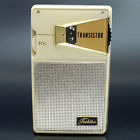
The summer I was 14 we played Casino just about every night. We sat face to face on Jeff’s twin bed, dealing the cards on the smoothed bedspread between us, all the while listening to his AM transistor radio. Transistors were just then becoming popular, moving us away from fan-cooled vacuum tubes and toward portability. We listened to the same station with the same playlist every night (not the Wolfman – he was for late nights when his Tijuana signal made him impossible to ignore). Our evening peaked when we got to hear “Twist and Shout.”

As far as I can recall, we were about even for wins and losses. And the games didn’t continue after that summer. But the goodwill and friendship did, in a neighborly way.

Posted in Lessons | Leave a comment

Rapunzel

     When I was 10 the Shirley Temple Storybook show was on TV every Sunday for awhile, and I was a fan. A bit later my parents gave me the storybook itself, a collection of about a dozen famous fables, with fresh illustrations. That was the book that introduced me to the tale of The Wild Swans, The Little Lame Prince, and The Land of Green Ginger, and it reacquainted me with Rapunzel. I loved the book and lost it, and eventually bought an out-of-print copy for my kids, who never enjoyed it like I had. So far none of the grandboys has exhibited any interest either. I may have to reread it to myself.

Rapunzel is still no favorite of mine. I like the part about rapunzel being rampion and rampion being an unfamiliar root vegetable. I appreciate the pregnancy cravings. But I always found the heroine too passive, the hair unbelievable, and the witch gratuitously cruel.

However … who can resist that tower? Sometimes a symbol is too glaring to ignore.

I composed a sonnet on it twenty years ago, and recently revised it into respectability.

The tower stands alone upon a plain,
a solitary pinnacle of stone
without a door. Around it thorns restrain
encroaching sand, in wind as bare as bone.
And high within it dwells a lady, fair
enough in face, enough in attitude,
who never lives a day she loves her hair,
who’s half as likely to be wise as rude.

So probably she’ll be alone forever.
The way is steep and shrieky, and the height
forbidding too. A hero must be clever,
sure of balance, stamina, and sight.
And even if he wins, his vigor proved,
she might grow discontented when she’s moved.

Posted in Legends, Poetry | Leave a comment

Albert

     When I was almost 15, my next door neighbor gave me a kitten. My mother was not into pets but Dad prevailed earlier that year, and the family acquired a beagle we named Becky. Mom wouldn’t let Becky the Beagle live inside with us; she was relegated to a dog house on our back patio. And Mom drew the line against a cat.

She was convinced that cats carried diseases and she suspected them of harboring bad wishes toward her. She claimed to like kittens, but she wasn’t even convincing about that. I’d been after her for awhile, and I’d just about given up hoping.

Then Jeff swooped in with a yellow male kitty. It was Christmas/Hanukah time, and he and his mother nagged mine about it, and a miracle happened. I was allowed to keep the kitten. But he would have to live outside.

I named him Albert after Einstein. I played with him and petted him that first evening – such a sweet ball of yellow fur – till my mother made me put him outside and close the drapes over the sliding door.

Minutes later Becky bayed, and we pulled back the curtains to reveal the wet kitty, but it wasn’t till the next night that we witnessed the cause. That first time I took Albert in and dried him off and then carefully placed him back outside, in the dog house, for what turned out to be an uneventful night.

The next evening we spied on kitten and dog after I put Albert out. We watched the beagle lift the kitten up, carefully and naturally by the scruff of the neck, dunk him in the water bowl, set him wet and bedraggled between beagle front paws, and then sit back and howl the deed. Again I retrieved the wet kitten, laughing this time at the dignified beagle, dried him off, caressed him, returned him to the back yard.

Becky the Beagle and Albert the Cat settled down after that. They became accustomed to sleeping together in the dog house. Albert didn’t know he was a cat. He gave up purring and started to wag his tail. He tried to dig under the redwood fence instead of climbing over it.

Our parents made us give Becky and Albert away eight months later. We were moving to Marin County and they weren’t allowed to come with us. Becky went to some folks in the country. Albert was taken by a school friend. Phyllis’s family neutered him and the next time I saw him he was a fat old cat.

Posted in Critters | Leave a comment

Emperor

     When I was 9 I was asked to leave Sunday School because I became obnoxious about my questions. When I was around 11 I got into a fight with a ruffian, because I kept talking to her on the playground and asserting what I believed. When I was 13 I spoke my mind so forcefully to a teacher that, when word got back to my parents, my father drove me to the teacher’s house and waited in the car until I had knocked on the door and apologized.

I blurted what I saw. I was frequently shushed. Still am.

That’s the point I wish to make. Still am. In fact, the older I get the more frequently I note a disconnect between popular perceptions and what I recognize as reality. Instead of a fine tune there’s a squawk in my head, almost a Bronx cheer, when I encounter the contradiction between what is and what is said.

This progress seems natural to me. I’ve learned to modulate the tone of voice and facial expressions (mostly? a bit? OK: a work in progress), but I not only didn’t lose the ability to detect dissonance or delusion; I’ve improved at it. And the truth is, the quality was about as rare in the kids around me as it is among the ambient adults.

So I can read The Emperor’s New Clothes, but I think the tale is so exaggerated that it’s silly. I mean, everyone wants the biggest cookie, right? And a young child won’t yet have learned the social inhibition that restrains her from acting on that impulse. But that’s not a lesson for any of us to learn. The art, I think, is to acknowledge the greed, lightly and with humor, and reach for that cookie if it’s really important to you, but do so without sneaking.

The emperor is neither fair nor free,
but his the biggest power is to hold,
for he can choose to grant a subject’s plea
or doom him to perspire in the cold.
The emperor has fawns instead of friends,
who girdle him with words of empty air,
so round the purple seat deceit depends
and affectation whispers everywhere.

The fable says the emperor was nude,
apparelled in the vapor of a lie,
until a child, pure in attitude,
gave language to the image in his eye.
And though the moral’s innocence and youth,
it takes an age to recognize the truth.

Posted in Legends, Lessons, Poetry | 2 Comments

The Record

10.17.10

When I was 10 and in fifth grade, the teacher showed us something I’d never known.

It was an afternoon in early spring. Mr. Borup wanted us to hear a piece of music, which was not unusual. He walked over to the recordplayer, a low fidelity machine in the front right corner of the room, by the windows to the outside corridor and poinsettia hedge, and he set the needle into the record groove.

I don’t remember the tune. It sank in afterward that what was played wasn’t the point.

We all sat quietly while the record spun. He was an innovative and masterful teacher, and I don’t remember any big disruptions in his class ever, except laughter, in which he invariably joined.

When the music stopped, Mr. Borup walked to the phonograph, lifted the arm, and shut off the turntable. Then he surprised the class.

He said he’d been watching us while the music played. He reported that almost every one of us was looking toward the recordplayer. He commented that it isn’t necessary to watch the record in order to enjoy the music it makes.

That led to a discussion about how sight-oriented people are. And to a custom, in me anyway, of seldom looking at the source of good sounds.

Posted in Lessons, School | Leave a comment

Hot Pink

   When I was 14 I had a vivid demonstration of the paint chip illusion.

The paint wasn’t actually chipping. The term referred to small squares of color on strips of light cardboard, with dramatic names printed below them. Stores that sold paint provided them then and now, to allow customers to choose their new hues without starting the job.

My parents had decided to change the color of our kitchen. I’m sure it was my mother’s idea and Dad went along, but what I remember of the incident is from my diary, and I didn’t record the backstory. I do know that they took on the painting themselves; they paid Mr. Shannon to manage the garden and Mom occasionally hired an (always unsatisfactory) cleaning woman, but they did all the other house jobs on their own. When they painted a room they always seemed to get to work after dark, and they blamed the poor lighting for the “holidays” (weird term, I thought, learned from them at that time) they saw when the sun lit the room the next day.

They spent awhile choosing the color. Mom wanted pink and there were scads of options. They brought home several chips and took turns holding them against parts of the wall before they selected.

The kitchen was large and the chips were small. When they finished the paint job they were uncertain at night and then astounded in the morning. The color was glaring. In daylight it almost hurt our eyes. It was too much.

But so was the job of repainting the room. Mom said we’d get used to it. She switched the window curtains to a darker fabric and lowered them a bit.

In time we adjusted. But we never loved that color. And we didn’t repaint the room. We moved a year later and said goodbye to pink as an interior design element.

Do I remember 1964
because I was so vividly impressed
with punch experience? Or is it more
because I took those notes? I never guessed
a kitchen pink or kitten gift would ring
this loud this distant from that infant year.
The blood and diets fountained from that spring,
distorting everything that had been clear.

I gained a little wisdom by the end.
I grew an inch and took off 7 pounds,
and most of what I wrote I recollect,
perhaps for writing. Did the words I penned
engrave my brain, coordinate my bounds?
I marvel as I read and I suspect.

Posted in Lessons, Poetry, Writing | Leave a comment