Post-Modernism

peacesign[1]

Remember peace and love and stringy hair?
Insipid daisy-giving? Dancing gauze?
Encounter groups and love-ins everywhere?
The way the groups made every thought a cause?
I recollect them with the same contempt
engendered then by every boring pose;
it seemed so few were making real attempt
to reach for truth, or deal with what they chose.

And as our generation aged, those souls
appeared to turn to other views, as much
as ever seeking ease by playing roles.
But here’s a group still meeting just to touch!
You tell me there’s an enclave still? Again?
I’m just about as skeptical as then . . .

Posted in Poetry | Leave a comment

Dam

air-canada-glenn-ey-sailor-rescue

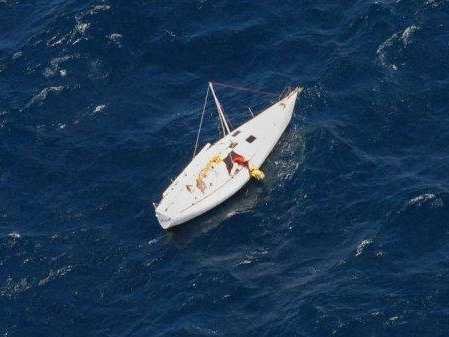
So there was I, a river-skimming bark,
a traveling observer on the tide,
reacting to the sunlight and the dark,
disdaining anchorage at either side,
and thinking I could keep on drifting so,
until I’d spot a something on the shore
which captivated me. Then I would know
the time’s arrived to beach this metaphor.

I launched without a compass or a scope –
it’s like I thought I’d float with zero drag.
My pitch was whimsy and my ballast hope.
I never figured I would hit a snag
and tangle in a net of my own need:
myopic like I was, and simile’d.

Posted in Poetry | Leave a comment

Life Contingencies (End)

actuarial formula

“Oh Brad – I felt like a piece of shit. It didn’t help that she was young and lovely. I mean it would have been awful no matter who slipped and fell, but it was of course easier to feel bad about Aisha because she was so pretty and nice.

“I asked her if I could call 9-1-1. She said no; she had contacted her supervisor and wanted to wait for him. I helped pull her to a better sitting position, got her some water, talked to her. She told me she’d just bought a new motorcycle yesterday. She said she thought she’d heard something snap when she fell. At one point she looked at me with her big brown eyes and asked “Didn’t you hear me yelling?” and I just said no, and mumbled something about working in the back of the house, about music, about weird acoustics. I felt terrible not letting her know that her cries were heard, but it didn’t seem like the time to go into issues about what I thought and why I did (or didn’t) do what I didn’t do. I know that’s chickenshit but I remember thinking it wasn’t about me right then; it was about getting her help and help could come any time and that would interrupt a conversation, so we’d better not be having a complicated conversation.

“But like I said: that’s chickenshit. I was ashamed of myself and didn’t want to go into it. I can do all sorts of rationalizing…about how Aisha got to learn that desperation cries don’t get answered but quiet ones do…or how I thought it was bitch lady…or why didn’t any of the drivers go to her aid, but the fact is I didn’t put myself out, rise to the occasion, do the right thing. I pride myself on righteous behavior, and this morning I failed.”

Brad tried to reassure her but Susan wasn’t having any of it. She was part way through processing the event, and she knew that she’d have to run outside the next time she heard a cry for help. No matter who she thought it was. She didn’t want to feel this way about herself again.

It didn’t take long to settle the tab and get out of the restaurant. Brad and Susan exchanged nods with the waiter and good words with the bartender; they were making progress as Friday regulars.

In the half block to the office they caught up with the demonstration. It was pro-Palestinian and clogging their intersection. They waited at the corner. Brad thought he’d use the time to smoke a cigarette. He pulled an Export A out of the box and was trying to work his lighter when a scuffle occurred. From somewhere right in front of them an Israeli flag appeared and suddenly several young men were attempting to tear and trample it.

Something snapped in Susan. She watched as if she were outside herself while she dashed into the melee and began jerking the flag away from the boys. Boys? That’s what they seemed. She yelled at them like they were her sons, and they relented just enough that she almost had the flag. It was off the ground. She got a good grip on a corner. Then she realized someone else had an equally strong grip on the opposite corner. She pulled, downward, determined. The person at the opposite end pulled just as hard. She started to pull again but then she looked up, into a cop’s eyes, and just released her hold. The flag went with the cop.

Susan is Jewish but no Zionist. That wasn’t it. Maybe it was the Pinot Grigio or maybe the need for a karmic shift or maybe something else, but at that moment Susan, who normally is no respecter of symbols, couldn’t bear to see any flag trampled.

Brad was astonished. A little scared after the fact for his sister, as if she had jumped in to break up a dog fight. He forgot to smoke his cigarette.

Susan relished the adrenaline coursing through her neck, down her legs. She hid the high like an extramarital attraction but she walked with more vigor.

“So on a lighter note,” she said as they finally crossed the street, “let’s talk exact terms about this work arrangement.”

Brad shifted mental gears. “I’m really excited about the possibilities,” he said, “and even though everyone warns that odds are against you when you try to work with family, I’m pretty sure this will be good for both of us.”

“Don’t worry about the odds.”

“Oh yeah. That’s right. Spoken like an actuary.”

Susan giggled. “For what it’s worth, the probability of our success and the probability of our failure are bound to add to one.”

“The same old One?”

“Just One.”

“Well, I guess that’s better than zero,” Brad opined as he opened the door for them.

Susan smiled and cast her reply back like salt. “Way better,” she said, striding forward.

Posted in Fiction | Leave a comment

Life Contingencies (Middle)

actuarial formula

It was a demonstration, but they couldn’t tell if it was for Haiti, Palestine, or janitors. They were so accustomed to Friday financial district activism that they hardly paused. The waiter nodded toward the street with a fond look on his face, and left. Brad asked about the wine. “I think you’re being too empathetic here,” he observed. “Looks like you’re drinking extra when my life’s a mess. Or maybe you’re already having second thoughts about the work thing.”

“Oh no. I have my very own stresses.”

“Yeah well…”

“No. Really. Even today.” She looked for the wine but it was too soon to expect it. “I didn’t behave well this morning.”

Brad sat back, attentive. “The PG&E meter reader slipped on my path at around 9 today, and broke her ankle.”

“Shit!” Brad blurted impulsively. Still without thinking he added, “But I’ve warned you about that path…”

“I know; I know. Don’t start with me. It wasn’t even the main part of the path.” There was a brick walkway from the sidewalk to Susan’s house. It was probably as antique as her 90 year-old abode. The land sloped down from the street to her front door, and the brick path lay on the land. It was picturesquely edged with moss, and after rain it could be as slippery as ice. Susan often swept, brushed, hosed, or scrubbed at those bricks, in an effort to make them less slick. Sometimes in the wettest part of the winter she looped a rope across the pathway where it started at the sidewalk, so anyone approaching her place would be encouraged to tread the lumpy asphalt of her driveway instead of the slick bricks.

It wasn’t a straight walkway. It headed directly for the center of her house from the sidewalk, but it forked six feet short of her porch. The left branch led to her front door. The right side went nowhere: to the part of the house outside the kitchen, without even a yard. The only thing there was the electric meter. It had never occurred to Susan that she should be scrubbing the right-side path.

“Well I’m sure your homeowners insurance will…”

“Oh that’s not what I’m worried about. For all I know, there may not even be a claim. I mean, isn’t this kind of an occupational hazard for a meter reader? They have to come on people’s property under all sorts of conditions, so maybe they take responsibility if they fall down. That part of the path was very slippery, especially after last week’s deluge, but it looked slippery, you know? An experienced person should have known to step off it onto the dirt alongside. Ahh,” she interrupted herself as the waiter set her glass of wine on the table. She nodded her thanks and took two sips. “No. That’s not the part that’s bothering me.”

Brad looked attentive. His spoon hovered over his custard.

“She screamed like crazy when she fell. And I ignored her.” A gulp of wine. “Worse, when she asked me later if I had heard her, I lied.”

“Hmmm.” Brad was surprised but tried to hide it. When they were kids he took all the merit badges. Susan was notorious for lying, cheating, even experimental stealing, while Brad was the good neighbor and excellent sport. Their mother still treasured the letter of commendation from the local police, written after Brad turned in a cash-stuffed wallet he found on the street. But as adults Susan was the honest sibling. Brad’s teasing and story-telling sometimes crossed the line. He waited to hear more.

“Of course I heard her. She was amazingly loud. I was in the middle of doing an aerobics tape and suddenly there were these shrieks: ‘Help! Help me! Somebody! Please! Help! Me!’ My immediate responses were ‘Oh shit, I don’t have time for this’ as well as ‘Nobody in real distress could yell that strongly, that lustily.’

“To be honest (now, anyway), I didn’t think she was for real. And I had no idea she was on my property. I thought she was one of the walking crazies in my neighborhood. I’ve described Tim, the barking man. And I know I mentioned the tall guy with the red helmet who kneels and genuflects at every corner. He’s harmless, and now that I’ve gotten to know Tim I don’t see his barking as all that provocative. But the bitch lady is a whole other matter, and that’s who I thought was yelling.

“She looks clean enough. Fiftyish and dowdy. Carries bags of bags in each hand. Likes to yell at residents if she thinks their dogs should be inaudible or their yards altered. Every time she sees me she curses me. Loudly. Once she even thrust her middle finger right in my face. If I try to be friendly she mimics me and then yells at me. If I ignore her she just yells. I’ve never heard her do a ‘Help Me’ yell but she’s who I pictured as I endured those screams. I thought she was one or maybe two houses away, on the sidewalk. It was sunny this morning, and there was a line of cars edging up the street, and I remember thinking that some of those drivers had to be hearing the screams, with their windows open and all, and since they weren’t reacting, my assumption that it was bitch lady, acting out, was probably correct.”

Susan swallowed more wine. Brad pushed his dessert plate toward the middle of the table and drank the last of his coffee. The waiter stopped by their table and slid their tab in its vinyl folder onto the well-laundered cloth. Susan didn’t look at the total before covering it with her card.

“It got quiet after that. Actually, I’d paused the tape and I went downstairs then for more coffee. I thought I heard a voice and even wondered if bitch lady had gone into the neighbor’s front yard and was mock-calling the police about something; that would be her style. I carried my coffee upstairs and finished my tape.

“Then I went into the bathroom to shower. I opened the window to see if the traffic was still as bad as it had been. ‘Hello?’ I heard from immediately below. ‘Please?’ came quietly. And then ‘Can you help me?’ I leaned out the window and looked down. I was horrified to see a young woman sprawled on my brick path.

“‘Omigod! Just a moment! I’m coming!’ I yelled. I raced downstairs and outside and over to her, where I slipped on the bricks and nearly went down myself.
Posted in Fiction | Leave a comment

Life Contingencies (Beginning)

actuarial formula

“So how does a pension actuary differ from the other kind?” Brad asked. He leaned forward in his chair and the buttons pulled across the belly of his blue shirt.

“Actually, it’s just an alphabetic matter,” Susan explained. He heard the smile in her voice and saw it in her eyes. She’d just spent most of their entree time describing what an actuary does. Her brother was trying a career switch – after 25 years of moving around the world with his wife’s job in the State Department, he was newly-divorced, cut loose, back home at 48 and needing a plan. His kids were grown and on their own. His ex was in Cambodia. He’d read that the profession with the lowest stress was that of actuary, and he’d come to Susan to talk.

Their desserts arrived. He was two bites into his creme brulee and Susan tasted her grapefruit soup before she continued. “See, it’s all a matter of statistics. And probabilities built off them. You start with 100,000 people born in a year and count how many are alive each year after. The difference is simply the number who died. The number who lived, divided by the starting number, is the probability of living that year. The number who died, divided by the starting number, is the probability of death. The two probabilities always equal one.

“The insurance actuary deals with probability of death. The functions he uses happen to be expressed with the letters C and M. The pension actuary takes the opposite – the probability of life. His functions are D and N. It doesn’t matter. It’s all the same math. Two parts of the ultimate One.” She patted her mouth with her napkin.

Brad eye-flirted with their waiter, two tables away. It wasn’t sexual; he just wanted his espresso before he finished dessert. Also he wanted the staff to recognize him. He and Susan had been there for lunch two Fridays in a row and they were personable and generous; it shouldn’t take long before they were greeted with familiarity and seated with what felt like priority. All his life Brad had been an outgoing hospitable guy. The years abroad, with house servants and an expatriate cocktail life, hadn’t slowed him down.

For that matter, and for an actuary, Susan wasn’t a social slouch either. Their family of origin was argumentative and passionate, and they’d had to learn to get along and get a word in or they wouldn’t have been allowed words at all. Both of them could put people at ease, make them laugh, or get them talking.

Brad caught the waiter’s eyes, who in turn signaled with his brows and chin that coffee was the next task he’d set himself. He mimed a run toward the bar and soon returned with the double macchiato.

“Maybe I should give it a try,” Brad ventured as he stirred in his foam.

“Actuary?”

“Yeah. It looks like you could use some help in the office.” He had been working there over the past week and a half, cleaning Susan’s server and defragging her office PCs…generally tweaking her electronics. He couldn’t fail to notice that she labored longer and harder than her three employees and still had too much to do. “Not like I’d be any kind of actuary any time soon,” he continued. “But you seem to have to do a lot of non-actuarial shit, too…maybe I can help with some of that.”

She put her spoon down. “I’ve always said I wanted a manager,” she stated. “Or a wife.” They smiled across the table. “What the hell: let’s try it.” Picking up her spoon again, she added, “Keep you off the street.”

She considered her accidental career. She hadn’t even known what an actuary was when she took the clerk/typist position at age 22. She was a hippie who thought of herself as a beatnik, who’d turned her back on her math aptitude to be avant garde and write, who landed while awaiting grad school (English, for the writing) in a small stressed office, who quickly came to like the job more than the school and the numbers more than the words.

“Hanging with the Hassids,” was what one of her college friends said when Susan told him she was going to be an actuary. And it’s true that the field drew as many of that Jewish sect as the diamond industry in New York. Some of the professional conferences looked like rabbinical schools. But actuaries also were made from computer-oriented math nerds, from school-age bookies and pot head hackers. There weren’t many forelocks and black hats among the small-plan pension actuaries, and that was Susan’s cohort. There weren’t many women either.

Their waiter paused by their table and offered her more regular coffee. He was at least ten years older than Susan so she knew he’d understand her hesitation at 2 p.m. He told them he worked 12 hour days – 10 to 10 – so caffeine was still his friend, but he pointed out that espresso packs less punch than brew, and suggested a drink like Brad’s. She thought about it. She opted for a glass of Pinot Grigio instead. That made Brad raise his brows, because Susan was the least inclined in their family to drink. He was about to comment when they were all distracted by parade-type activity in the street.

Posted in Fiction | Leave a comment

Hex

imagesCAOA9G2Q

Every minute yesterday it seemed
I had to push me up an endless hill
with leaden legs, on avenues that teemed
with people who looked hungry, sad or ill.

The sun was golden warm and stronger bright
than it had been for all the weekend past,
but I was not receptive to that sight;
I cloaked my view in murky overcast.

For angry disappointment held my arms
and pushing me, it acted as support,
while bitchiness embellished me like charms
and egged me on and made fatigue retort:
Till I precipitated my debris
and took a bath, and there uncovered me.

Posted in Bath, Poetry | Leave a comment

Q & A

talkbubble2[1]

A question needs an answer or it dies
an awkward conversational demise.
But all the questions hunt for are replies;
if truth the object is, it’s been forgot.

I’ve long ignored the evidence my eyes
and ears collect in all my futile tries,
so seeing it in words is a surprise,
but having seen it I deny it not.

A question gets an answer, it is true,
but true and answer needn’t be the same.
And auditors mishear, deny or duck
more often than they will attend to you.
So answering’s more likely trope or game
than loosing truth, and dialogue is luck.

Posted in Poetry | Leave a comment

JSYK (3 of 3)

Hospital[1]

There was a button I was supposed to use if I needed the nurse. I had to reach above my head to push it. Some time late during that long night, close to morning, I felt another wave of nausea start to crest and I was simply too tired and disgusted to follow the procedure. Lying there on my back, I let the wave break. Vomit surged out of my mouth and fell back on me, sliding down both sides of my face and streaking my hair. I reached up with my right hand and pushed the button. Next thing I remember, I had an unattractive nurse at each side of me, sponging my face and hair and clucking. “Disgusting girl!” “You should be ashamed of yourself!” “Look at the mess you made!” I don’t think I said a word. I hope I didn’t say a word. I wasn’t sorry. I’m not sorry now.

Daylight came at last. I was put in a wheelchair for the final ride back to where I’d left my parents. They had looks of love and concern on their faces and a new ballerina doll in their hands. I never did like that doll.

***

So what do you think? I told that story to a good child psychologist once and she said, “Shit, if I were trying to write a prescription for how to make a child autistic, I don’t think I could have done better than that. It’s a miracle you survived.” But it wasn’t a miracle. From where I stood, there was never any doubt. For the truth was, I already had a rock-solid personality. It wasn’t going to retreat into the realm of nonresponsiveness. Instead, what I did was decide, then and there and once and for all, that I and only I was going to be in charge of me. Grownups do not necessarily know what is best. In fact, many of them are too stupid or inattentive or forgetful to be good guides.

I assumed control and responsibility for my life then. That’s what made it natural for me to cut the second day of kindergarten, and go next door where the class seemed more interesting. That’s what made it obvious for me to always wonder why so many students would consistently obey one not-even-very-tall teacher. To marvel, in fact, that you two will listen to me.

That’s what made me an information junkie! JSYK. All I ever want is word about what’s coming, so I can prepare myself or amend my schedule. JSYK, my children say to me as others would clear their throats. Just so you know…

But what made five-and-a-half year old me select responsibility over autism? Here’s the sweet thing: the very same childish parents who sent me unprepared down the hospital corridor also wrapped me every moment in love and care, childish love even, filled with impatient energy and fun. I think they liked me so much that I just had to like myself.
My parents are Americans. Childish. Rambunctious, impulsive, impatient, mischievous. They’ve always had roll-down-the-slope energy. An obsession about fairness.

It’s complicated, but maybe childishness is good.

See: grownups don’t tell the truth. Not so much because they’re dishonest as because they’re lazy. Mostly we all find adolescence so exhausting that we hang up the effort when we get to twenty-something. We put our questing on the Restoration Hardware hook that’s just inside the front door and we don’t use it and it atrophies. We don’t even often notice it’s gone, because we all contract a benign amnesia and we agree to forget how smart we were as kids.

Children are realists. Kids have the courage of their imaginations. So they’re limited by lack of experience…so what? every adult I know is complicated and imperfect. We’re all accommodating all the time. That’s the dance.

Of course I made mistakes with you. But I always liked and loved you so much that you can’t help but love yourselves. Lucky. Perfectly imperfect. JSYK.

Love,
I

cc: Mom & Dad, with thanks

Posted in Fiction, Health | Leave a comment

JSYK (2 of 3)

Dimethyl-ether-3D-balls

I think even my five-year-old self thought it was pretty inefficient to make me part of whatever their system was, but I held onto the paper and I got upset when some people pushed the sleeping man away from me. I complained aloud, and I remember someone (female?) approaching me and asking “And what are you doing here?” which did nothing to reassure me. All of the people who worked there seemed clueless about their jobs! I told this person that I’d been watching a sleeping man across the hall who was no longer there because some people had wheeled him away, and she acted like I made no sense and took the paper from me and looked at it. The next thing I knew, the door behind me opened and my chair was swiveled into a room. I was lifted from the chair onto a table-like surface, and wet strips of something like white cloth were laid across my eyes. Even so, I saw the steel strainer-like thing as it was lowered over my nose and mouth.

Then there were colors, all colors but especially vivid oranges and reds, and they spiraled before my cool-covered eyes. I heard a screaming chanting “Mom-mee, Mom-mee.” I think I remember the pressure of restraint; I recall feeling pushed into the surface on which I lay. Afterwards, I was told what I heard were my own screams. Long afterwards, I learned from an anesthesiologist that ether acts on us like alcohol, and children don’t like being drunk, and so ether isn’t used on children now. I know I hated it.

When I woke up I was in a bed and the bed was moving. Someone was guiding it into an elevator and down some halls to a huge room. Once we stopped moving, I realized there were raised sides on the bed like a crib; I didn’t know even the adults had cribs there, and I felt indignant.

I also felt nauseated. Someone showed me how to raise my head and vomit into a metal pan. So I lay on my back in a crib, in pain and disorientation, lifting my head and turning to vomit with obnoxious regularity.

As it happened, I wasn’t the only kid who had a tonsillectomy in the 1950s: just the first in my cohort. Everyone else was promised all the ice cream he or she could eat. I wasn’t told what would be done to me and I wasn’t promised anything. I was offered ginger ale.

I spent the night in that crib in that big room in that inhospitable hospital. It seemed to me then that I didn’t sleep at all. In the middle of the long dark time, I heard what sounded like a family chatting in their kitchen. I figure now it must have been medical folks talking and dealing with bottled supplies, but there were conversations involving a male voice, a female voice and a voice like that of a boy on the verge of adolescence, and I heard what sounded like the opening and closing of a refrigerator door and the clanking of glass on glass or metal. Those people sounded cozy and comfortable and I remember wanting to be with them but feeling unwelcome, uncomfortable, angry, sad.

Posted in Fiction, Health | Leave a comment

JSYK (1 of 3)

Hospital[1]

Kids:

My earliest memory, I think: I am posed like a doll upon my painted wooden toy box to be dressed, and then I’m riding with my parents, standing between them on the bench seat of their Chrysler, to drop Dad off at a Jolly Roger restaurant for his commute. I was around two years old. I also remember waiting in shame for my father to come home for lunch – I’d failed to use the toilet and Mom made me wear my soiled underpants – but since I understand I reverted in toilet training after my brother was born, I had to be at least three then. I think I remember real fear of the front loading washer, but maybe I recall my parents’ stories about that instead. I have a good memory, but I was the first-born of camera-crazy people, and I’m sure I confuse my impressions with theirs and with the slides I’ve seen so many times.

The toy box/Jolly Roger memory is mine; they don’t remember it. And hurt and shame memories are unphotographed and my own. Like the loaded underpants. Or the time when five-year-old I sat on the red hassock watching TV and my two-year-old brother bit me on the back. I date our eleven year sibling war from then. No one but me remembers when my mother caught me masturbating behind the couch in the livingroom (I was about five for that too), so I call it a true memory…

And though others were involved, I own the memory of my barbaric tonsillectomy. I was five and a half for that, and I understand the surgery was necessary because I was chronically ill with colds and swollen adenoids; my hearing was threatened. They also tell me the doctors advised my parents not to talk to me about the operation before it was performed. I find this hard to believe, but my parents are intelligent and honest, so I accept it.

We drove to the hospital and sat in a waiting area. A nurse-type woman came and took me away from my parents and into an elevator. She leaned forward and braced her hands on her knees, a posture I’ve hated at least since then. She asked “How are you today, MaryAnn?” I don’t recall what I said, but I was dismayed that she got my name wrong. I remember thinking she was stupid, phony, and ill-informed.

She brought me to an L-shaped room and disappeared from my life. The place was narrow where I entered it, with a pair of bunk beds on the right wall, and it opened up at the end to a light area with windows and a circular table covered with coloring books, and chairs holding two boys about my age. I wasn’t allowed to sit and color; instead I was laid across the bottom bunk, my pants were pulled down, and without warning or explanation I was given a shot in the butt. It happened too fast for me to protest, but I remember feeling outrage about the shot and humiliation about the boys.

Next they put me in a wheelchair. I didn’t mind the ride, but too soon the chair stopped and was backed against a corridor wall by a door. The person who had been pushing put a paper in my hand and said to stay in the chair and watch the man who was lying on the wheeled bed across the hall. This man appeared to be sleeping on his back, covered to the neck with a white sheet.

Posted in Fiction, Health | Leave a comment