Green

tmp5170[1]

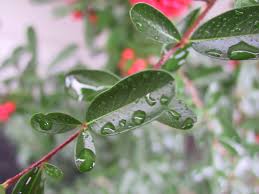
There may be more varieties of green
than any other color. This is why
our brains adore it; this is what we mean
when we refer to nourishing the eye.
There’s spring and olive, Kelly, drab and pea.
No other color clashes by its side.
The only verdant negatives we see
are green for envy, mold, or pesticide.

We should have picked some other tones of ink
to print our currency. Our choice of hue
is counter to its clarity. I think
we ought to make our money honest blue
and strong as currents, red as all our debt,
on white of industry, lest we forget.

Posted in Poetry | Leave a comment

WTW (Part 3 of 3)

old-english-dictionary

That evening Mellie had dinner at Candace’s house. She liked dining there, even though she thought the tacos smelled funny. At Candace’s house the girls could eat without having a parent around. And they were allowed to watch “The Twilight Zone.”

Carmella was out but she returned to the house after dinner. Bob was with her and they seemed to have gotten over their argument. They headed to the back yard while the girls watched TV.

“What do you think they’re doing?” Candace asked during an ad break.

“We already know ‘who’ and ‘where’ and ‘when’ and even ‘why,’ but the article won’t be complete without a ‘what’.”

“This show is a rerun; let’s check them out.” Candace rose from the old hide-a-bed sofa first. Mellie followed her stealthy progress to the sliding glass patio door.

They could see two figures on the bench near the pool. Carmella and Bob were sitting close together and facing away from the house. The girls edged the glass door open just enough for them to shimmy through to the outside. As they snuck forward their eyes adjusted to the murk and they both recognized the telltale head movements of deep kissing. Bob groaned words that sounded like “Baby, baby.” His hand went to the nape of Carmella’s neck and then her head sank below the benchback. The bench remained motionless. The silhouette of Bob’s head and shoulders didn’t move.

Candace and Mellie looked at one another and shrugged. Together they tiptoed a few steps closer, and Mellie stumbled on the edge of a poolside planter. Carmella’s head bobbed up immediately.

“What the …?” she barked. “You whores! Get the hell out of here!”

Mellie and Candace ran back, indoors and through the house. They might not have thought further about what they’d seen if Bob had stayed still. But each carried the impression of a man adjusting himself, dealing with his fly. Neither girl had heard of oral sex – the idea of it skimmed the edges of their minds, like a fourth dimensional object just out of the reach of comprehension. They each had a dim, grossed-out impression about what the older kids were doing.

As for what they heard, neither knew what “whore” meant. As soon as they felt safe going back in the house, the pulled the dictionary onto the table.

They must have looked at every “ho” word in the book. They spent several minutes on “hore,” “hored,” “hoar,” “hoared,” and “horde,” but just couldn’t make sense of those as an insult.

“Well this is weird,” Candace commented and started chewing her hair. “We know she’s really angry; what did she mean?”

“Who, what, why …?” Mellie smirked and then she stopped. “Wait a minute… maybe we’re looking at the wrong pages.”

Mellie shifted in her chair, a little excited. “Think about ‘who, what, where.’ The words all start with ‘w,’ but ‘who’ sounds different than the others.”

“Silent ‘w’?” The question no sooner exited Candace’s mouth than her hands began tearing forward in the book. And found the word they sought.

Then the girls were satisfied. They were mystified by the nature of ‘w,’ with its three syllable name and its short and variable sound. They were perplexed about Carmella choosing a slur for them that was maybe appropriate to herself. But mostly they were gratified to discover and correctly spell a power word they knew they’d use.

Carmella didn’t finish high school. She turned up pregnant the next school term and her parents sent her to her aunt’s place, out of state, until the baby was born and adopted.

Candace and Mellie grew older, and in time they grew apart. Their names changed to Candy and Mel and their paths, while continuing sexually interested, diverged. Before their friendship eroded, before the first of them (Candy) took the big step, they came up with a list of qualities they agreed any good lover should acquire. They discussed the subject at length and in depth, and they concluded that they needed to excel at imagination, coordination, consideration, and practice.

Candy dispensed with her virginity in 10th grade but was no longer close enough to Mel to tell her about it. Mel became sexually active two days after she started college. Like most humans, after awhile at it, each of them got good enough.

Posted in Fiction, Melania | Leave a comment

WTW (Part 2 of 3)

old-english-dictionary

It was hard for the young spies to operate near the handball courts. There was no shelter except the concrete structure itself, and the ground was clear in all directions around it. Candace and Mellie watched Carmella enter the area, heard laughter and other nonverbal sounds, and witnessed some suggestive exits, like when Carmella headed with three boys for the hills behind the school or the time she emerged, hair mussed, with her sometime boyfriend Bob’s arm so wrapped around her that his hand was almost touching her right breast. But for real action they had to stalk the older teens in the wild or catch Carmella with a date at Candace’s house.

The arid hills behind the high school were undeveloped. The campus had been built a few years ago, on property hacked out of clay-filled dirt and a landscape of manzanita and scrub. There were birds and rodents and rattlesnakes out there, and there were no parents. Kids climbed the walls of small canyons and dared one another to jump off the tops onto the piles of eroded sand below. They discovered small semi-caves, holes worn in the adobe clifflets, and they used the pockets as secret meeting places. Boys brought their 22s out there, and took shots at small animals. Girls like Mellie wrote protest poetry about those hunting forays. Mellie’s father had given her a copy of The Sea Around Us for her birthday, and Rachel Carson had made her a budding conservationist.

Sometimes Candace and Mellie headed into the scrub on their own, walking and talking or even visiting one of the small caves themselves. There was a medium-sized hole-in-a-dirt-wall they thought of as theirs, until the afternoon they visited it and found the cigarette butts and condoms. They didn’t know what the balloon-like litter was then; they were a year or so away from the season when the local boys would start proudly showing off Trojan packets and ring-impressions in their worn wallets. But they knew the cavelet was being used by others, and they stopped entering it. They observed it from a distance whenever they walked by it. They played investigative reporters and tried answering the five “W” questions. They’d heard about yellow journalism and wanted to write some.

One afternoon they almost ran into Bob’s friend Tony there. They were nearly in plain view of the cavelet’s entrance when they heard human noise and ducked behind a thick clump of manzanita. Tony walked toward the school, passing within about ten feet of them, luckily oblivious. Additional noise made the girls hunker lower. At which point Bob exited the cave. Right behind him was Carmella, obviously distraught. Her hair was mussed and she acted angrier than Candace had ever seen her. “Hey it was no big…” Bob said back to her, but Carmella yelled, “I hate you! I can’t believe this!” and then stumbled on a rock. She almost fell to the ground. Bob went back to her and after a short tussle took her arm. He was murmuring something as they half-walked, half-staggered past the foliage that concealed Candace and Mellie.

The young girls looked into the cavelet after that. A few empty beer cans and a lounge chair pad had been added to the litter.

Posted in Fiction, Melania | Leave a comment

WTW (Part 1 of 3)

old-english-dictionary

When Candace and Mellie were 13, they were sex fiends. That was their favorite subject, for private musing or confidential conversations. They’d been friends since they were 10, and they still played with their Barbie dolls. But not with the Mattel clothes. They fashioned provocative outfits out of small silk scarves. They made wild women of those manikins.

They also sought pornography in word and picture, but those were difficult to acquire. Neither had an older brother from whose drawers they could filch. Candace’s dad was absent and Mellie’s disdained men’s mags, so there was no Playboy stash to discover. But they were desperate girls with active imaginations; they made do with what they had. Mellie borrowed her father’s copy of Candide (copyright 1930, Hartsdale House, Inc.), illustrated by Mahlon Blaine (and by A. Zaidenberg at the chapter ends). She never found anything sexy in the words of the book, but some of the pictures were much more inflammatory than the National Geographic photos her classmates went for. There was an etching of two naked girls opposite the title page, to Mellie’s initial shock and continuing delight, and just about every following picture was suggestive. On Candace’s part was Another Country, by James Baldwin. Her grandmother had given it to her for her birthday a month before, figuring it would broaden the child’s perspective. When they learned that the opening scene includes balcony sex at a party, the grandmother tried to take back the book and the granddaughter became so interested she proceeded to read the whole novel. Candace was disappointed that the sex didn’t get better, but she liked the book anyway.

The girlfriends were into sex but not yet up for boyfriends. Their classmates were too childish and even the notion of an older male was intimidating. They agreed that their obsession was really a form of preparation. They had an idea about what was ahead of them, and they aimed to be good at it.

They were also into getting away from their parents. That’s the main reason they were trying out new variations on their names. They answered to Candy and Melanie in their homes. But Candace had recently decided her nickname sounded cheap; she was experimenting with her full Christian name. Mellie didn’t have a Christian name, she said, because she was Jewish. But she’d never been crazy about her three syllable appellation and she’d recently met a character named Melly in the longest book she’d ever read, so she was then trying on a short version. The name project was not caused by their sex obsession but the two courses were obviously coincidental, both incidental to adolescence.

As was their shared interest in journalism. They volunteered to work on their junior high newspaper. They covered subjects like the afternoon football games and pencil sales at the little student store on their campus. They had some ideas about becoming glamorous, sexy reporters when they grew up. They perused Brenda Starr in the Sunday comics with stars in their own eyes. They regularly chanted like a catechism: who, what, why, when, where?

So Candace and Mellie read and viewed what they found, took their doll play in directions parents don’t want to imagine, invented the raciest stories they could think of and once even showed one another how they touched themselves. But by far their favorite activity was spying on Candace’s sister.

Carmella was almost four years older than they. At 16½ she had curvy hips and a real bustline. She filled her bra (Candace and Mellie did not need their stretchy training models, and were about two weeks away from experimenting with toilet paper implants). Carmella’s hair was long and straight, peroxide-encouraged to remain blonde: exactly what teen sex wants. And she had boyfriends.

The younger girls had always found Carmella’s activities interesting compared to their own, but this was her first year of high school, and she’d taken a turn into what Candace and Mellie considered a darker side. Carmella had given up trying for the cheerleader positions and girl-cliques of late junior high, in favor of a pouty edgy type of solitude. She dressed in tighter clothes and walked around alone a lot. When they could do it discreetly, Candace and Mellie followed her.

They knew she sometimes met up with a group of boys at the practice tennis/handball courts on the school grounds. The courts were stark white concrete backboards, open at one end and separated by thick walls. They were built for tennis and handball players, but they were used for quick meetings and sketching sessions. A few kids brought paint but most drew with chalk or with the coal-like rocks that littered the ground nearby. Everyone learned how to sketch sex organs on those walls.

Posted in Fiction, Melania | Leave a comment

Low Maintenance

ivy

The English ivy blossoms in the yard
as ugly as the fungus where a tile
lost its grout, tenacious and as hard
to kill. In shape like jacks collected while
the ball allows, they’re wasp-attracting signs
of pestilence and immortality:
pale-toned and too prolific, like the lines
of telemarketing vitality.

Beneath peculiar sky, those flowers spread
their awkward shapes, their undistinguished scent,
their stupid futures. Better they were dead
than uncontrolled. Better if they went
away with juniper. No garden needs
these rampant vines. We ought to call them weeds.

Posted in Poetry | Leave a comment

Dandelion

dandelionfluff

The earth has wheeled again around the sky;
a dozen months have cycled in their turn.
If we could view the revolution high
above ourselves, then maybe we would learn
our planet is a dandelion heart:
The stem is spun between the maker’s hands;
our days are seeds in gossamer that part
from us as spinning energy expands
and fly away like strands of spider fluff,
like ashes, dust and memories of youth,
and settle randomly but sift enough
upon our shoulders that we feel the truth
that’s kerneled in the days of every year
and never known until they disappear.

Posted in Poetry | Leave a comment

Facets (End)

Apollo_synthetic_diamond

That’s where I come in. It was 1979 and Bethany and I were 29. Trying to make a go of India Inc., our occult-bookstore-with-art-supplies. We didn’t (make a go), but Bethany and Tom made lots of sparks and then a pretty amazing relationship.

They were so into each other then that Bethany and I had some rough spots between us. It took me awhile to make room for Tom, and it took Bethany some time to learn how to share her attention between us. But we were settling into it by late 1980, when Bethany and I faced the facts and closed the store. Even knowing her as well as I did, I was surprised that she turned Tom down when he tried to marry her and give her that gemstone.

She brought the diamond to me right after that. Although she had told him no, Tom asked her to consider for awhile and hold onto the velvet-covered box while she did so. I remember when she showed up at my place that bright December day; she was wrapped in her pigskin-suede belted jacket with the fur collar and cuffs, an un-Bethany jacket that she could only wear in the few chill weeks each winter when it didn’t rain. She came into the room pink-cheeked, shining-eyed, and she only shrugged out of her jacket after she sat on the couch. She was wearing dark colors underneath, probably jeans and a black turtleneck like now, and I remember after she pulled the box out of her pocket and took the ring out of the box, how bright the stone looked against the dark colors and beneath her winter-chilled chin.

“Look at it,” she breathed on the diamond as she spoke. “It has twelve sides. One for each sign.” That was just like Bethany. She’d been into astrology and Tarot for as long as I’d known her, and she does love diamonds. Personally, I can leave them alone; I admit they’re great for drilling and polishing, but as a gem I find them cold. Called ice for a reason. In fact, they conduct heat so well that they are colder than glass or surrounding air…

I took the ring into my palm when she handed it to me. It was faceted and colorless, the way I don’t like stones, but I had to admit it was fine. When I looked into it I could find every color I’ve ever seen or even imagined. I wasn’t crazy about the ring it was set in, but that could be changed.

“You look pale. Like the stone,” she said to me then. I remember looking up at her and thinking something about how maybe she should marry Tom. I don’t know what I said. “I’m not into marriage,” she stated firmly. She was looking straight at me. “I don’t need to be married for economic reasons,” she said. “And you know I don’t want kids. I love Tom, sure, but what’s the hurry? And anyway, as great as our relationship is, sometimes I know he’s not seeing me. There are times when he relates to me like I’m some sort of representative of women, or of women his age, or of women-who-like-to-read-and-tend-to-render-opinions-readily. Like I’m not really present. Like he’s thinking out loud and making it appear to be dialogue – that’ll fool everyone but the person who’s supposed to be on the other end of the dialogue, you know?

“I’m not interested in that. We can take our time. If that means I refuse this beauty, well… it’s kind of cursed anyway. I sense it’s been wrapped in guilt for most of its refined existence. It can wait too.”

The thing about my friend Bethany is, she meant it. Nearly 20 years have passed since that day, and she has held the marriage line. Till now. When she told me last week that she can’t live without the diamond any more, I knew enough to not believe her, of course. But when she said she wanted to marry Tom I didn’t know what to think.

She had the diamond again. She pulled the box out of the pocket of her lined black coat, opened it, placed the old ring into her other gloved palm, breathed on it, and said, “I’ve decided to marry Tom now. After all this time I am committed to him. I knew it would happen this way. You see,” she said as she sat back on my couch and looked around for a second, “it never could have worked for me to say some words and hear him say them and have that be enough. I had to live it and come to trust that we really can respect each other and pay attention. Of course we could go on the way we have. But it would mean a lot to him for us to marry. There’s room for that. The relationship will bear up under the form.”

She tossed the ring at me then and I caught it with both hands, almost in my lap. “We want you to have this stone.” I gaped at her. She laughed. “Really. Tom and I agree. It’s done more than enough for us. It’s been our light at the end of the tunnel, and we don’t need it any more. And we like to think we’ve worn off its guilt by now. Maybe repaired its karma. Besides,” she said as she got up to find wine or something to drink. “You’ll be its lucky twelfth owner. It’ll be interesting to see what you do with it.”

“Only if you count owners creatively,” I said as I walked to my refrigerator for the open wine. “Like if, say, Herschel and Gus were just middlemen.” I looked once more at the brilliant gem before I closed the box and put it in my pocket.

Posted in Fiction | Leave a comment

Facets (Middle)

Apollo_synthetic_diamond

Most marriages were still arranged back then. Esther was determined to pair one of her sons with Millie, the daughter of her own best friend. According to Hersch’s comments, this was a practical as well as loving consideration on the part of Esther; Millie was an only child and her father was wealthy.

Tom’s grandfather Isaac refused. It sounds like he was a romantic, holding out for love. Esther must have hounded him about it for years, because she didn’t start working on her younger sons until 1919. Anyway, second son Gus married Millie in 1920. Esther celebrated the union by giving her diamond to the bride. Meanwhile, Isaac continued on his romantic gentile-attracted ways, while youngest son Sid appears to have pursued a Talmudic and somewhat homosexual approach to life.

Millie owned the diamond from 1920 to her death (influenza) in 1941. She had it set into a platinum ring in 1936. Herschel commented that her hands were skinny and prematurely aged; he said the diamond only drew attention to a feature best left unnoticed. Herschel died in 1937; without his diaries it’s harder to glean details about the stone’s subsequent history, but I know that Millie and Gus had no children, and that for some reason Gus gave the ring to his younger brother Sid in 1941.

Sid owned the diamond from then until his death in 1948. It was first set into a large tie tack during that time, and then into the elegant head of an ebony walking stick. There are photographs of well-dressed Sid sauntering on a nice sidewalk, punctuating his footsteps with that walking stick. Based on the family rumors about his young Talmudic proteges, based on the fact of Sid’s death by violence (he was fatally stabbed by one Jonathan Kane, who resented the months of attention (and ebony walking stick) that Sid gave to Jonathan’s dear friend Jacob), there is every indication that the diamond’s tendency to turbulence continued.

After the walking stick was recovered the diamond went to Tom’s grandfather, Isaac, who had achieved his romantic/erotic dream and found it wanting. By then Isaac had been married to his non-Jewish wife Grace for 26 years, 23 of which had been quietly, desperately boring. They were an ecstatically happy couple in 1922 when they married, in 1923 when they got pregnant, and in 1924 when they were enjoying their first-born David (Tom’s father), and working on what would be the twins. By 1925 they were experiencing significant irreconcilable differences in their opinions about how to raise their young family, and in 1928 Isaac found and settled in with his first of several Jewish mistresses. When he acquired the diamond in 1948 he had it set in a gold choker. By then he had been seeing Miriam for years, and even his son David knew it. David wasn’t present when his father first put the necklace around Miriam’s neck – he didn’t hear Isaac’s words as he attempted to compensate Miriam for his inability to marry her – but he knew his father and the situation enough by then that he might as well have been a fly on that wall.

Miriam left Isaac in 1954. She couldn’t handle being the other woman any more. She was in her early 60s and she emigrated to Israel with her sister’s family. Her neck was too old for a choker anyway. She returned the diamond necklace before she embarked. Eight months later Isaac killed himself.

He left a note and the necklace for David. Grace inherited enough by law to do all right (in fact as we all know, she hired a companion and began to travel, in a short time her companion became her lover, and Grace and Barbara were together until Grace’s death in 1977). Meanwhile, David married Ruth (1947), sired Tom (1948) and Sarah (1950), and then fell in love with Sandy (1952 or 1953).

When David inherited the diamond he promptly presented it to Sandy. He was madly in love with her but unwilling to leave Ruth; he wanted to give Sandy anything else he could. They had it reset into the ring it is today. But Ruth caught David and Sandy in 1964, when the kids were 16 and 14; she blackmailed him and the diamond away from Sandy and wore the ring until David couldn’t stand the sight of it, until 1979.

By then Ruth hated the ring too. She and David were mired in habits of bitter mutual contempt. Tom had met and declared his intention to marry Bethany. His mother didn’t disapprove. She gave him the ring.

Posted in Fiction | Leave a comment

Facets (Beginning)

Apollo_synthetic_diamond

You don’t see many twelve-sided diamonds around. They’re hard to cut, which is why the cut requires a hard stone, which is why the only twelve-sided gems are diamonds. A twelve needs a big stone or a really good cutter, and both of those are limited commodities. The fact is that an eight will get almost as much money, so the twelves just aren’t done any more.

I’ve looked into this. I’m not a gemologist or artisan, but I’ve been considering the Bethany diamond for almost 20 years. That’s what I call it. Because Bethany was the first woman to refuse the stone in its 93-year history.

Bethany is my best friend. We met in college, 31 years ago, and we haven’t stopped talking since. She fell in love with Tom in 1979 when we were 29 and trying to manage a failing bookstore. He proposed marriage a year later, but she resisted. They’re still together. He tried to give her the diamond when he first proposed. He’s offered it regularly since.

The diamond is only 2.7 carats but it’s a beauty. I mean, 2.7 carats is a good size, but it’s a small stone for the amount of attention it’s gotten, from Tom and Bethany and me, not to mention its previous owners. It’s a guilt diamond, but it has just about been reformed now.

I know quite a bit about its history. It was found in a Brazilian river gravel mine shortly after the turn of the century. Most diamonds are octahedral; the rare rhombic dodecahedrons almost all came from Brazil instead of Africa or India. Fyvush Lubunsky, the cutter, was also the original seller; he told Tom’s great-grandfather Herschel.

According to Herschel’s notes, the stone was cut in 1905. He says Lubunsky didn’t know how best to treat the diamond until the cleaving of the 971-carat Excelsior in Amsterdam in 1904. And the cut Bethany diamond’s size wasn’t officially determined until 1913, when the U.S. adopted the metric carat (200 milligrams) as its standard; by then the diamond was on the breast of its second owner.

Herschel Goldman bought the stone in 1906, had it set in a gold necklace, and draped it around the swan-like neck of his mistress Sylvie. He was then 40 and she was 25; from the way he wrote about her it’s clear he was smitten and would do just about anything to keep her. Except leave his wife Esther. She was a good Jewish woman who had given him three sons; in 1906 divorce simply wasn’t an option. So Herschel bought the diamond for Sylvie.

She left him anyway, five years later. She broke his horny heart. She gave him back the diamond. But hurt Hersch wore his broken heart on his sleeve and Esther became suspicious. In a token of guilty placation, on their 25th wedding anniversary, Herschel presented the diamond to his wife.

Esther wore the stone from 1911 to 1920. She had it reset into a brooch in 1913, and she fastened the gem on her prow-like bodice for all important occasions. Herschel commented in his notes about growing to hate the look of the diamond staring at him like an unblinking eye from that momentous bosom.

Posted in Fiction | Leave a comment

Screens

screen

Admitting the mosquitos won the war
of open window, I have purchased screens.
They come from factory instead of store.
They look attractive but their presence means
I won’t be reaching outside any more:
my hand won’t touch the rain, my head won’t lean
to let my face salute the moon, adore
the stars or breathe amid the pendant greens.

I put myself at distance from my yard
with this commodity; I built a wall
as tangible as gossamer or gauze.
The air continues free but this is hard –
I seal myself reluctantly – I fall
inside, the tiny flies my buzzard cause.

Posted in Poetry | Leave a comment