Hide and Seek

tenderloin

The child’s father gives him fare to hell,
releasing him with cigarettes and cash
to Turk and something starting with an L.
He’s cured of scabies and he’s acting rash.

The adolescent’s daddy is a jerk,
who can’t insist or guide and won’t enjoin
from traveling to Leavenworth and Turk
a 13-year-old toy of Tenderloin.

He’s looking forward to a camping trip
who will not look his present in the face.
He let his child through his fingers slip
who doesn’t even hold himself. No place
is safe for babies when the adults doze,
and who the children are, nobody knows.

Posted in Poetry | 2 Comments

Dig (2/2)

263px-Tennis_ball.svg[1]

Maggie has been married, twice. Aggie has known men (four). Their experiences have produced Maggie’s daughter Sarah (now twenty-six, working in Philadelphia, and happily pregnant), Agatha’s two abortions, various and sundry orgasms, and individual conclusions that neither wants marriage and that Aggie probably doesn’t want a man. She may not want a woman either, that way. She thinks sex is overrated. Maggie is more highly sexed but tends to agree with her friend; American sex in the new millennium is more talk than action. Everybody’s jawing about it, making jokes and movies and surveys and studies about it, and most folks seem too old, too tired, too disappointed to actually do it.

They have sex on their minds lately, because of Sarah’s pregnancy. She’s unmarried, but she has been with Jack for two years; she’s sure about paternity. And she seems very happy right now, but Maggie wonders and Aggie worries. They know Sarah, or they remember themselves, and they are not prepared for her to remain mated.

Walking along the ridge trail, watching Diggy flush an old tennis ball from a tangle of juniper and planning a visit to Sarah before the snow gets too deep, the two old friends make a comfortable sight. Maggie is wearing a green jacket over blue jeans, striding a bit ahead of Aggie and then pausing. Aggie’s gray-blonde curls bounce over a red sweatshirt above brown cords; they are colorful under the November sun. The dog runs ahead of them and comes back with the ball, drops it slimily on Maggie’s toe, barks at her to throw.

They speak of airline schedules, but they both know what’s on Maggie’s mind. Her mother is dying. Aggie lost her mother when she was in college; only through Mag has she experienced advanced age with an elderly mom. But Maggie’s mother lives close and has been close. She had her first heart attack twelve years ago. She had her first stroke last summer. She is now in the hospital and no one expects her to come out alive. She reclines on an adjustable bed within a complex web of tubes and wires, with very little power left to choose or even speak.

Aggie has never been a hospital patient, but she was there when Maggie had complications delivering Sarah, and again when Maggie had to have an emergency hysterectomy two decades ago. They both know how sudden and utter the loss of dignity can be.

“I just can’t stand seeing her like that,” Maggie grumps, kicking a gnarled stick with the toe of her right shoe. “I want to pull all that tubing and get her out of there.”

“I know. I know,” and Aggie touches her jacket sleeve at the elbow. “But, honey, even before she went in, she was frail …” It’s true. Like a sick child Maggie’s ailing mother has become passive and sweet, her once-feisty energy submerged in some pain-laden, fear-laced condition. “At least you had her all this time.”

That strikes home with Maggie, not only because Aggie lost her mother early, but because Maggie’s own mother was unmothered at twenty-six, at Sarah’s age, when she was pregnant with Maggie.

“I guess.”

“I’m not trying to sell you on anything.” Aggie dances from foot to foot, trying to dodge Dig’s attempts to give her the filthy tennis ball. “At least you’ve been able to be close these last three decades. And thank God your dad went first.” Maggie’s father had been less than resilient, and besotted with his wife; he would have made a pathetic widower.

“Based on what your mother taught us,” Aggie concludes, “we’d be better off planning our visit to Sarah than the kidnapping of your terminal parent.”

Maggie smiles at her friend, stoops for the tennis ball, throws with a looping hook to the left. “Too bad Mom won’t be around to meet the baby. I know. I know. At least she got twenty-six years of Sarah. Infinitely more than her mother got of me.”

I guess this is it. I may last a few more days or a week, but I can feel life leaving me, like water leeching from a sponge. Like the almost-felt dissipation of a headache.

Ironic that I who spoke so much and so fast can’t talk at all at the end. Now the ideas tumble in on me that decades of projected words held at bay. Now the ideas crowd and surprise: they aren’t as oppressive as I always thought they’d be.

Here’s my girl, Mother-of-Sarah, soon-to-be-grandmother, and I can’t speak to her. I realize I’m thinking at her in Yiddish and, really, I haven’t been there for sixty years. Here’s old Aggie, who I’ve known forever, and we can only communicate with eyes and hand presses. If I weren’t so tired this would be beyond frustrating.

I’m leaving you girls. Girls. Go ahead and be happy. Be a little rash and impulsive. Do whatever it takes (no hurting). This stuff doesn’t matter. This posture, this equipment: it’s only on a body, for a short time. Make your whiles worthy.

Posted in Fiction | Leave a comment

Dig (1/2)

263px-Tennis_ball.svg[1]

Oh the promises we make to babies. We hold those small bodies to our chests, we kiss their big sweet heads, and we murmur that we will care for them and never never never let them be hurt. Impossible promises to warm smooth round heads.

I kissed and I promised in Yiddish, five times. Four of you live still, but to all of you I broke the promises that parents make and cannot keep. And now you, soon you, will kiss and promise to your own. In English.

I thought I would be here to meet her. Always I envisioned myself a matriarch, rewarded for all the work with a surround of graduated descendants.

Not to be. You’ll birth my last best granddaughter in five more months, and I won’t be here to meet her. I die soon, my darling, but if I didn’t have this tube in me, if I could speak, I’d probably make you another promise …

I’m too young for this. Within I am articulate. Without accent. In English. I look at you. Squeeze your hand. Feebly. The body that has worked so hard and well these sixty years is failing. I’m sorry. I meant to be helpful. I meant to be here.

I was thirty-five when you came. I thought I was done with babies, but you began and your grandmother stopped me from stopping you.

Look at you so beautiful. Your brothers are handsome, your sister can be attractive, but you are a miracle. I envision you old, two decades older than I ever will see, and I know you will always be lovely.

When you were a baby your beauty disturbed me. You were the only one born in a hospital, and for your first two years, until you began to resemble my mother, I sometimes wondered if they gave me the wrong infant. That weird experience. Half-sleep. Grayness. People wandering in and out. The robed man peering between my legs. It was better to have the babies at home. In the hospital I was treated like a body only: manipulated, worked upon, disregarded. Afterwards, though, it was good to be there. I rested then, and they brought you to me. So beautiful …

Shit. Fuck. See? I did learn the English from you and your siblings. Mostly from you. By then I had some time. I know the Anglo-Saxon. I shoveled shit. I got fucked. At sixty I have the form of a crone ninety years old, thanks to all that honest work, the successive pregnancies, the rough abortions. I repel myself but even so, I’d live longer if I could.

I’d like more time to try to get it right. There has to be more than what I’ve known.

Answers. Give me answers. Let me go to God after this, for answers. Let the baby you’re carrying, my last best granddaughter, be powerful enough to choose her men, her time. And let her have a daughter even more powerful.

I love my sons like I never loved their father (rude horny man), so much that I understand their frailty … all men’s frailty. Let my daughter’s daughter daughter rule her world.

Maggie and Aggie are sixty-something housemates. They are each now single and neither very gay, but they live together like old spouses. They co-parent Diggy the dog. Hot-Diggity is the retriever’s full name, but they started calling him Diggity when he was a romping puppy, and that elided to Dig or Diggy in short time.

Neither gay but gray. They are aging urban white women in the year 2010, so they live in gray areas. Maggie is straight, really, but many women assume she’s a dyke. Aggie is more gay that straight, if truth be told, but not sexual enough for it to matter anyway. They’re long-time best friends, and each dreams occasionally about the possibility of a relationship with someone she’s not yet met, but most of the world assumes they’re a couple, and women couples are known for seldom-sex anyway, so maybe there isn’t much difference between a complacent heterosexual marriage and the Maggie&Aggie menage.

They look mismatched. Maggie is tall, small-breasted and broad-hipped, originally brunette, with unusual olive green eyes (like her maternal grandmother’s, for whom she is named and who died while she was in utero). She tends to walk fast and use her long stride; alone she will cover a mile in sixteen minutes. Agatha is just an inch over five feet, buxom, and naturally sedentary. She has watery blue eyes and hair that was once bewitchingly blonde and curly. She walks for companionship, not exercise, and Maggie always has to shorten her stride or pause frequently while Aggie catches up. Diggy of course runs ahead or lags behind, leash environment permitting. Diggy doesn’t hunt or herd or even dig. He lives to retrieve any and every thing thrown, and appears to understand his mistresses.

What Margaret and Agatha have, what binds them more strongly than love&marriage, is an active respect for each other and a shorthand method of communication. They needn’t complete sentences. Their conversation is on a different plane than their talk with other people. They seldom misunderstand each other.

They’re like found identical twins. Separated at birth (Maggie to the San Francisco Bay Area and Aggie to upstate New York), surgically altered to appear unalike. It isn’t that one feels pain if the other burns herself: nothing that simple. Rather, it’s that if one burns herself, she only has to articulate a few words about how interesting the pain is, before the other fully comprehends. Everyone else they know would just say “ouch,” or would take their sentences as elaborate complaints, but Maggie&Aggie find their own discomforts undesirable yet interesting.
Posted in Fiction | Leave a comment

Affadavit

glenpark[1]

Increasing strain I missed the train today,
retarded by disabled folk on stairs.
The escalator, still, would not convey,
awaiting more unscheduled repairs.
It didn’t work to cut the time so tight,
and now I ride a hopeful Fremont train.
I’m trying to remind me that it’s quite
enough to revel in the morning rain.

I’m old enough to understand the tide.
I needn’t rush around; no urgency
is stronger than my justified demand
to relish and remember. Satisfied
by nothing less than everything I see,
I’m taking in and noting all, by hand.

Posted in Poetry | Leave a comment

Reading the News on August 31, 2001

reading the news

Today the banner tells of HIV
mutating speedier than research learns,
and yells of the arrest and mystery
of some young homicidal Slav. The burns
up north are caused by angry eremites,
suburban-branded outcasts, pariahs
of proms and teams who learned to love the nights,
and grew the Counties emerald as Oz.

Events in current ink inform my brain
today, for I have taken time to read
the Chronicle. Recording headlines press
and pin on me, define and entertain,
like newspapers wind-loosed upon the street:
a drift of litter skittering its mess.

Posted in Poetry | Leave a comment

Hindsight

220px-Cerebral_lobes[1]

The infant sees a point, a line, a plane,
but must live years to wrap himself around
the temporal dimension. Shaped a strange
phenomenon, with neither form nor sound,
our moments of existence are as blind
as phalluses, as mute as solitude,
as odorless as dream. Our time’s a kind
of ruler marking stress and interlude.

We see in larger spaces as we grow.
We live in longer time as we survive.
There wasn’t any way for me to know,
15 and glum, in 1965,
that ‘63 to ‘68 would be
so big a wedge of private history.

Posted in Poetry | Leave a comment

Thunderbeck’s Machine (3 of 3)

grinder

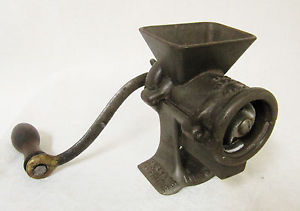
I notice when Sandy tries to get Liz gossiping (“Do you hear what they’re talking about? Can you believe it?”) and Liz does too. Sandy is clearly homophobic and definitely bad at whispering; she is forever being overheard. Liz must have felt for Stephanie, cause she shuts Sandy up by leaving the table abruptly. She covers her movement by advising Charlie to start some hot dogs for the kids, and she joins me and Stephanie while Charlie gets to work.

I contribute to the social salvage. “So how are you doing?” I ask Liz. “Charlie tells me you love to entertain.”

“Say what?”

“You mean I was misinformed?”

“I wish my time at home could be for me. Every time I turn around, Charlie’s inviting people over. Now it’s his brother’s family, but it can be visitors at work, acquaintances who were once college friends but he hasn’t seen in fifteen years, whatever. He needs people to like him; he’s got to be the superhost. And he expects me to be his partner in all of it.” She shifts her weight from leg to leg, as if she were barefoot on hot sand. She gulps her margarita.

“Is he still working as hard as he was? Or did you give him Hank’s number?”

“Still working. Oh, I’m not going to tell him about Hank’s deal. I know Hank too well. Charlie would not like him. There’s no point in even telling Charlie about that job. What he doesn’t know won’t hurt him.”

From what I’ve heard, the job with Hank would be great for Charlie. I’m thinking Liz may be underestimating Charlie’s ability to deal with different personalities. I feel sorry that she’s filtering for him. But I take a moment to come up with a nice way to say that (instead of my usual blurt), and while I do, the conversation shifts.

“Look at the puppies,” Stephanie coos. Tristan has tempted Anya to resume play, and the dogs are starting to frolic around on the lawn.

“Maybe the smell of cooking meat revived them,” I suggest, and that becomes my exit line as I cross the deck to Charlie. He’s brought out a big plate of franks and he’s poking half a dozen of them around on the rack of the barbecue. The others wait on a low table behind him.

“These are for the kids, Tommy.”

“Maybe some, but you and I are still kids enough to need ‘em too.” We watch the franks start to blister, and we salivate. “You know,” I continue, “I think I actually prefer the dogs to the burgers. It’s true I don’t know what’s in them, but I like the neatness of the package. I always know what size they’ll be.” Or maybe it’s just that Charlie, with his usual expansiveness, makes the burgers too big. He’s definitely a more-is-better guy. I don’t say that.

“You’re right. Let’s have some. Liz says we should wait for my parents, but I want a hot dog.” He sounds almost petulant. “Shit. My brother comes early. My parents come late. Liz is in a mood and she’s about to hit the vodka. I need more pot.” Charlie turns the franks again. They’re bulging all around and almost ready. He puts six buns on the grill.

“Candace has a theory.” I’ve stepped to the cooler and hand him an open Red Rock. “She says if it’s true that there’s an impulse gene, then there’s probably a patience gene too. She thinks different people live at different rates. We’ve been talking about it a lot lately. I think she may have something. We all know about respecting another’s space, but what about respecting the rate at which another feels?”

Charlie looks at me like I’ve lost it. “You and Candace have strange chats,” he says, as he inserts each hot dog into a toasted sesame bun. He calls Brad and Scott over and gives them two apiece. He hands one to me and takes the last one himself. We hear Liz complain to Stephanie about her hot feet as we take our first bites. Reduced fat oozes deliciously. While we savor our food, Tristan and Anya move quietly behind us and eat all the uncooked franks.

Posted in Fiction | Leave a comment

Thunderbeck’s Machine (2 of 3)

grinder

We don’t make it to the study. Ten-year-old Scott, who never walks when he can run, who actually tries to climb walls, Charlie’s nephew Scott finds us before we get through the doorway. We give up the idea of finishing our smoke and instead listen to his reports of skateboard daring. He brought his board on the walk and managed to terrify both his mother and neighbor Stephanie.

“You should have seen me Uncle Charlie!” he sings out, at once trying to jump up and dance ahead of us as we turn back outside. “I did a one-eighty and a jump off the curb and I almost caught my board when I tipped up,” he continues, and Charlie doesn’t have to give him more than a pat and a nod in response before he dashes off. I say: “Liz doesn’t sound too comfortable right now. I don’t think she’s up for this party.”

“Oh, she’s just a little tired. A margarita will shape her right up. She loves to entertain.” We turn right and through the French doors. The yard is now crowded.

Charlie’s brother and sister-in-law are seated at the table with Liz. Jeff is drinking a beer as usual and Sandy is pretending she isn’t, by refusing a bottle of her own and drinking most of her husband’s. She’s also looking for Charlie, because she quit smoking a year ago and she wants to mooch hits off his cigarettes. Stephanie, the frustratingly lovely lesbian insurance attorney, is standing at the edge of the deck watching the pooped puppies. And Scott’s fourteen-year-old brother Brad is trying to get the dogs to play with him on the lawn.

The animals are having none of it.

Liz and Charlie live in one of the sunniest neighborhoods in Oakland. I’m just outside it, on the other side of a freeway. Their place nestles in a flat triangle between three major roadways, and it’s always at least five degrees warmer than elsewhere in the area. It’s about eighty-five in the yard right now. Their Anya is a two-year old collie, heavy-coated. Stephanie’s puppy is a Bernese Mountain Dog. She calls him Tristan and he looks like an Ewok. His coat feels as thick as a sea otter’s. Both dogs are doing everything they can to cool. Lying on their sides, tongues lolling onto the ground, they are black-brown-and-white mounds of pulsing fur.

We join the folks on the deck with Scott dancing around us. I let myself space through the Jeff-and-Sandy greetings; I know they both think I’m stupid or brain-damaged or something, the weird friend of brother Charlie’s, and I don’t much like them so I do nothing to correct that impression. Jeff may be okay, but he seems too desperate to be happy. Sandy is vain, attention-hungry, and alcoholic. Those sentences simplify them, of course, but since it’s how I’ve heard each of them describe the other, the statements probably are not unfair, on some level…

While Charlie goes into jovial mode by the door, opening the cooler and pressing wet bottles into hands with particular comments about color and body, I move to the edge of the deck, to Stephanie’s side.

“Tristan is growing so fast you can almost see it happen while he rests,” I comment. The puppy is starting to come to life on the lawn. He’s still overheated but too young to stay down long. Stephanie looks fondly at him and then turns her liquid chocolate eyes my way. “He’s such a sweetie,” she murmurs and smiles toward the lawn. Her dark hair shines in the sunlight. “I don’t know what I would have done without him these last few months.”

She and her ex-wife broke up shortly after acquiring Tristan. Karen says the puppy is the one thing she’ll really miss from their marriage. What with Charlie’s hospitality and Liz’s tendency to say nice things, it was inevitable that they’d be friends with their neighbors. And Stephanie and Karen were lovely neighbors. Both in their mid-thirties, both fit, brunette, pretty, smart, and friendly, the only surprise to the other residents at this end of the block was their domestic and sexual relationship. And they weren’t in anyone’s face about that, except when they forgot to lower the bedroom shade all the way, and then only Liz and Charlie could see, and they didn’t have to look. No, it wasn’t the couple’s love that shocked the neighborhood. After a few years of being together, Stephanie and Karen began to fight with each other, and there was the shock. Then everyone learned how much Karen drank. Then everyone heard how abusive and violent pretty Stephanie could be.

When Karen concluded she had no choice but to leave, Liz and Charlie put her up till she could find a new place. So they stayed in the middle of it. And they’re still the audience for Stephanie’s and Karen’s individual stories of what went wrong (everyone’s ex is crazy), and how their dating scenes are going now. I’m over here a lot, and I’ve become audience too. So it’s no surprise to hear Stephanie launch into descriptions of the last four women she dated.

It’s also no surprise that Sandy is fascinated. She hears what Stephanie is talking about (she has to make a bit of a lean-back effort from the table to eavesdrop) and she relishes it. I can’t figure why she’s so fascinated about the idea of women loving women, but she is. Come to think of it, she seems acutely and vulgarly interested in anything to do with sex; her eyes light up when conversation or action becomes suggestive, and she loves double entendre.

Posted in Fiction | Leave a comment

Thunderbeck’s Machine (1 of 3)

grinder

I come around the corner of the house just in time to hear Liz complain. “Char-leeee…” her tone climbs as she drags out the last syllable. “My feet are hot. You know how much it bothers me when my feet are hot.”

“So take your shoes off.” Charlie is mixing margaritas in the kitchen. His voice comes through the screened window above the sink. Liz walks across their deck to the window. She sends her words through the screen like cigarette smoke.

“I can’t take my shoes off,” she whisper-shouts at her husband. “My toenail fungus is too ugly.”

“Jeez, Liz.” I can hear Charlie’s exasperation with her. He doesn’t want this conversation. “Can’t you just put on lighter shoes?”

“You know I hate it when it’s squishy in my shoes. So I’d have to wear socks. And then my feet will be hot. Which is the problem I have now.”

I speak. “Hey folks…What up? Do you really want me to hear this? Where is everybody?” I take the four steps in two strides and sit down at their round glass table.

“Like you haven’t heard worse!” Charlie snorts at me through the screen. “Jeff and Sandy and Stephanie are walking the dogs and the kids. My parents won’t arrive till later. What’ll you drink, Tom?”

I’ve known Charlie for more than fifteen years now, and Liz for the ten they’ve been married. He’s a dedicated host. As usual, he has placed a cooler on the deck, between the wood-framed double-paned French doors to the breakfast nook and the window to the kitchen. It’s filled with boutique beers and waters, stuck in crushed ice like cloves in oranges. One of those or a margarita? With everyone else away he’ll probably offer hits; beer will go better with pot. I pull an Anchor Steam. I smile hello to Liz as I consider whether to sit down again or to wander inside.

“You’re looking good Tommy.” Liz’s words hold me there. “Is that a new shirt?”

Liz is obese. She’s five feet tall and seems about as wide, with tits each bigger than her head. Charlie’s big too, but he’s over six feet and can carry it. Anyway, as Candace has informed me more than once, men wear weight better in our culture. A portly man can be attractive but it’s still a challenge for us to admire a large white woman. With all my flaws, I’m not fat. I work out. Liz always looks at me like she appreciates my body, and she often comments on my clothes. It’s like she’s flirting. But she tends to say nice things to everyone. To their face anyway. She’s complicated. She’s referring now to the new shirt Candace gave me: silk or rayon or something light, in good colors. “Yeah,” I answer. “Candace didn’t want to come but at least she dressed me for the occasion.” I could kick myself as I hear my own words. Didn’t want to come? Why didn’t I say couldn’t come? I told the unnecessary truth again. Tommy the space cadet. At least Charlie and Liz are used to it.

Charlie appears at the door stomach first, brass proto-pipe in hand. He tamps its contents with a thumb, makes his quartz lighter glow, tokes through his multi-colored beard. “Couldn’t get Candace here, huh?” he asks without exhaling.

“As usual. But that’s okay with me. It works for us to socialize separately.” I’m sure Candace would be just as independent even if we were married, but I’ve come to accept her position on the concept. When she comments that she’s tried it twice and isn’t good at it, that’s about as self-effacing as she gets. I’ll take it. I receive the pipe from Charlie and draw on it slowly, making an orange disk in the bowl; then I hand it back to him. I look at their well-tended garden and exhale.

“Uh-oh. Here come the kids. Let’s go to the study to finish this.”

I follow him through the kitchen, past the huge tossed salad, the fixings, the platters of half-pound burgers and kosher hot dogs. All Charlie has to do is fire up the gas barbecue and we’ll be ten minutes away from grilled meat. As we edge between their tall plastic garbage can and the kitchen bar I read the empty hot dog packages on the top of the trash. Kosher reduced-fat all-beef franks. “What part of the beef do you suppose is in reduced-fat all-beef franks?” I ask.

Charlie turns his big grin toward me as he moves across the dining room. “I don’t know what’s in the ones with unreduced fat. I guess they just remove the big white globs of lard before they grind.”

Posted in Fiction | Leave a comment

Noticing

pyracantha

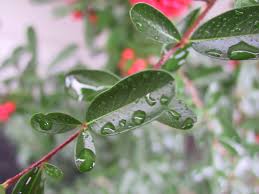
I didn’t notice pyracantha leaves
until I tried to fit them in a line
of poetry. I know the fruit achieves
by fermentation autumn sparrow wine,
but till I looked at leaves to make a song
I never saw how varied were those parts:
they range from rounded oval to oblong,
a few conjoined to form distended hearts.

The elm leaves rolling down the street, by breeze
propelled to golden wheels of brittle stuff,
I might have missed. The red and yellow trees
against the dry blue sky are not enough
without a job to show me in the dark
a squirrel standing like a question mark.

Posted in Poetry, Writing | Leave a comment