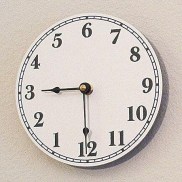
Aura Floss #1

imagesCAQI0GSO

This job requires someone who can speak
effectively, with openness and sense.
The organizers of the program seek
a soul attractive, for intelligence
is not enough; charisma’s needed too.
Ability to take correction must
be present, and no arrogance will do
from anyone in whom they place their trust.

So reads the glossy text in the brochure,
but my acquaintance doesn’t see two-thirds
of it. His sight is short. He’s insecure
most every day and so ignores the words.
He doesn’t know himself – he’s so concealed,
he bought their program and now craves their field.

Posted in Behavior Modification, Poetry | Leave a comment

My Favorite Monster

MinotaurLabyrinth[1]

I thought I knew, a thousand days ago,
the secret to the wisdom of my age.
But I let go the clue where I don’t know
and now I find myself within a maze.
I need to pause and recollect the thread
I dropped distracted by my grand success –
it’s up to me to mend the yarn instead
of playing it, and smooth its knotty mess.

The minotaur, who crouches at the core
of labyrinth, is not as fierce as I.
The monster fed will only howl more
and endlessly, and neither laugh nor cry
until I see him, free him, leap aboard
and ride him out with thread instead of sword.

Posted in Behavior Modification, Poetry | Leave a comment

Spa

220px-Cerebral_lobes[1]

The port side of her chin has got a crease
as if impressed by linen on her skin,
but it’s instead a mark of years, a piece
of lost elastic collagen within.
And yet that visage hosts a blemish too:
a pimple on her nose that’s hardly fair,
as if at 44, she’s going through
a teenage episode of skin despair.

So she massages, lathers, rubs and creams
a face that aging dryly sculpts in rows,
resisting scalpel, needle, all extremes –
for she who wasn’t pretty younger knows
that openness, receptiveness and laughs
will suit her more than toxic shots or grafts.

Posted in Aging, Poetry | Leave a comment

Paint

Red-and-yellow-make-orange-artful-dodgers

Edie and Frankie have been BFFs for 50 years. Since college. Among their other traits in common, both like white walls. Or any shade of off-white. They’re colorful characters, unafraid of tint or tone, but each opts for uncolored walls. For that matter, Edie won’t even wear beige – she says it’s for interior decor.

They’ve gone through many changes during their five decades of friendship. Frankie now answers to Francesca, from everyone except Edie, a name modification she took up ten years ago, when she got involved with Ralph and appreciated his heritage so much that she went along with his idea and they switched their handles to Francesca and Rafael. Edie is still Edie but her uncolored hair is just that: uncolored. She’s gone from salt-and-pepper to almost pure silvery white, which ages her in general even while it makes her facial features seem contrastingly young, and which has forced her to undergo a tidal shift in opinion, from a person who accepted her dark curls and even found beauty in the hair/skin contrast to an older individual who now sees crazy-white hair whenever she looks in a mirror or shop glass.

But their mutual aversion to colored walls dates back almost to the beginning of their friendship.

They met at the end of their freshman year, in the dormitory elevator. Edie lived on the third floor and Frankie’s room was next to the kitchen on seven. Their attachment was fast and ferocious. They wanted to room together the following year, but Edie’s parents decided she wasn’t ready for an apartment, and Frankie wasn’t willing to follow her to the co-op (an improvement in freedom over the dorm, but not enough). So Frankie went to a modern apartment with her dormmate Judy, and Edie took up residence in a triple room on the second floor of a northside coed co-op, and they nurtured their cohabitational goals while enjoying their second terms away from home.

They moved in together that summer. They spent three months subletting a friend’s flat, and then they found their place.

It was a ground floor apartment about six blocks from campus. The shingled building (probably once the traditional brown but long ago painted a gloppy gray) housed eight one-bedroom residences on two floors. Theirs was on the lower right side as you faced the south entrance (the building was on a southeast corner, with half of the units opening to each street side). The layout was consecutive, from circular bedroom on the street side, through livingroom and kitchen and finally the small bath (with no tub), at the north end of the apartment. The floors were old pine, the walls were old paint, the windows were original and double-hung, most of which had lost some rope. The apartment entrance was into the living room, so you turned right for the turret-like bedroom or left for the kitchen/pantry/bath. The building was a century old. The window glass had the ripples of long life.

As soon as Edie and Frankie moved in, they set about improving. They bought bent white rods and stitched up cheap curtains for the windows (bedroom first, of course). They acquired some used furniture and placed it. They assembled bookshelves out of planks and cinder blocks and loaded them.

Then they addressed the kitchen.

Of course it was funky. The appliances were a noisy refrigerator and an uneven stove/oven. There was no garbage disposal and only two outlets. The cabinetry didn’t deserve the term: drawers had no glides, doors were chipped, hinges were not true. There were decades of paint on the woodwork – in one place where a wall phone had hung and a divot had been gouged, they counted seven layers of bad color.

They added to it. Neither knew where to shop for paint, so they went to Montgomery Wards. This was in the days when the big box stores were Sears and Wards (no one said “Sears Roebuck;” everyone said “Monkey Wards”). Families could be classified by which one they frequented, just as accurately as they could be sorted as Republican or Democrat, Chevy or Ford.

Frankie hailed from a Wards/Ford/Republican clan. Edie’s heritage was Sears/Chevy/ Democrat. Wards was within walk/bus range of the apartment, so Frankie acted as their guide.

They did not buy good paint. It’s possible that Wards didn’t stock good paint. They selected oil-based stuff – you had to go that way then, or you wouldn’t be able to scrub the painted surfaces – in two colors. The yellow was closer to lemon than sunshine. The orange reminded them of creamsicles: milkier than bright.

They didn’t prepare the surfaces. Oh, they washed drawer and cabinet fronts, and wiped down walls, but they didn’t invite any sandpaper or putty to their party. Edie would eventually learn that prep is what painting is all about (she’d also acquire a taste for applying oil-based paint while smoking cigarettes – so much so that she never really warmed to water-based kitchen paint), but for this first project, neither had a clue. They shook the cans, pried them open, dipped in their brushes, and painted.

Of course their application was uneven. They painted old drippy paint rather than actual wood. But far worse than their technique was their taste.

For they were consistent in hideousness. They agreed to the alternating scheme. The project took them three days, but Frankie and Edie ended up with a thoroughly bi-colored kitchen – three yellow walls and one orange one, all as backdrops for the alternating cabinet and drawer fronts. They even went to the trouble of painting the old wooden knobs, so that yellow-knobbed orange drawers abutted those with yellow paint and orange knobs, and cabinets featured the same style.

It could only have been uglier if they’d done the windows.

They lived together in that apartment for one full year. Then Edie moved to a studio. It wasn’t that they didn’t get along and enjoy one another – in fact, they’ve been close and compatible for half a century, they’ve traveled well together, and they are now considering the same retirement home, perhaps as roommates but more likely as neighbors. Edie moved out of their first apartment because they’d both acquired boyfriends, and it got to where the boyfriends were over so often that they were pretty much living there, and the apartment simply wasn’t big enough for four. Even after they established a sleeping area for Edie and mate in the living room, the schedules were off; Frankie and her guy were up almost all night and asleep till noon every day, while Edie and Ted kept farm hours.

Edie moved out but Frankie stayed for another year. The kitchen remained yellow and orange.

Surely it has been repainted since, but Frankie and Edie don’t know that. The building still sits, apparently unimproved. The exterior color has been changed from gloppy gray to dead dark brown but there’s no other visible alteration.

Edie went on to experience three other apartments, three different houses, and now her small condo. Frankie dwelled in three apartments after theirs, bought and enjoyed one house, and now occupies a condo slightly bigger than Edie’s.

Edie learned how to paint. She enjoys it. She spends whatever time it takes to clean, sand, scrape, repair, and tape a room before she opens the can. Her work looks professional. But it’s always white.

Frankie doesn’t do home improvements. She has learned to hire people for those tasks. She says if she never holds a paintbrush again she’ll be just fine. She tends to pick arty furniture in vivid colors. She likes to hang pictures on her walls and she views window “treatments” (she’d never say “curtains”) as a vibrant manner of self-expression. There’s no lack of color in her environment. But the walls are white.

Posted in Fiction | Leave a comment

Since

day after day

It’s day one twenty since I smoked my last –
a quarter year since I vowed now’s enough.
And since I met him, nine full months have passed
(gestation out-of-body – not too tough).
Selections made have brought me to today
where I in choosing couldn’t clearly see,
for prescience has never been my way;
that’s why I call the future “destiny.”

The circle is circumference, nothing more
than shape the edge of radius denotes.
And “since” is just a point I can’t explore
for points have less existence than the motes
of dust that dance in beams of morning light,
or squiggles seen when eyelids are pressed tight.

Posted in Behavior Modification, Poetry | Leave a comment

Marks

17physed-tmagArticle

She always wears black cloth to exercise:
a sleeveless Tee and pants of cotton knit.
She sweats from every bend, and when it dries
the signs of salt are quite appropriate.
So there’s a chalky circle near complete
upon her chest, at back and waist a dart,
and where her upper thighs and belly meet,
her perspiration makes a perfect heart.

She senses moisture moving down her face,
amassing on her fingers as she works
the pedals of a bike that stays in place.
She feels the sweat, the rhythms, and the jerks,
but only seldom and through sweating eyes
does she remark the marks of exercise.

Posted in Poetry | Leave a comment

Seeping

labychartfloor[1]

My own metabolism’s acting mean –
what is this one pound loss a week? A drop
of nothing in a bucket. I’m the queen
of calories; my chemistry can’t stop.
I cherish my obsession with my weight
more tenderly than children, for I own
this baby utterly, without a mate –
I play with it whenever I’m alone.

If there’s a wisdom in late parenthood,
perspective in the place of energy,
I postulate there’s recompense as good
in having one more turn at pulling me,
frustrated, through the coils of a maze
I seep to conquer in a thousand days.

Posted in Behavior Modification, Poetry | Leave a comment

My Own

Pike_brassRing_2

When I begin to make a miracle,
I have to fight the urge to pray for strength
and use that energy, instead, to pull
me to the starting line and walk the length
I’ve mapped out for my personal crusade
(my loving cup becomes a grail I’ve grown),
for when I later look at what I’ve made,
I want it to be mine, and mine alone.

I’ll make the effort and I’ll take the prize;
although I know the work alone could be
sufficient answer to my earnest tries,
still I will reach beyond sufficiency
to grasp the golden ring I barely touch,
for that’s the endless end I want so much.

Posted in Behavior Modification, Poetry | Leave a comment

Lego Community

IMG_9103 (2)

When Molly was young, she used Legos with her brothers. They constructed tidy villages or irrational towers out of the colored plastic bricks. This was in the olden days, before all the kits and specialized pieces. Before mini-figures.

Now she plays with her grandsons. They consume Lego sets on every occasion and whenever their allowances accumulate the purchase price. They are bright boys ages nine, seven and five. They acquire the sets and build them, once, per the instructions. After that the pieces are tossed into one of four large bins, to be used again and never reconstructed.

In the beginning, Molly tried playing Legos with her grandsons the way she had with her brothers. She selected bricks and started building. No sooner did her structure become interesting than an admiring boy would begin appropriating parts of it or restricting her access to similar parts. Molly’s a good sport, but she isn’t going to play long at an unfun game.

The main thing the grandsons want to do is wage war. They long to construct creatures and do battle. Maybe it’s a gender thing. Molly is not classically feminine, but she has no interest in fighting.

So began the mini-figure project.

Molly is an orderly person who has never minded a sorting job. She was searching for long bricks that morning, to add to the ranch house she was attempting to build, and five year old Finn was claiming the desired pieces as soon as she found them, when she turned her attention to torsos and heads. She pieced them together and looked for legs. She didn’t attempt to create matching, as-designed figures; at first she just pushed parts together to make them bigger and less likely to fall to the bottom of the bin. But then she got into the work: seeking out legs and snatching up accessories like little prizes.

She saw much disability. Some torsos were missing arms (nine year old Ollie told her the boys had been calling the arms “sleeves” and thought they could trade them, and then discovered after wholesale removal that only Ollie had the ability to replace them; Lorenzo and Finn just threw them into the bin (immediately or after a Mom-demanded floor cleanup), where of course they gravitated to the bottom). Many hands were gone, because Finn used to like to remove them with his teeth. The hands are so small that they were even more evasive than the arms, sometimes wedging into the underside of a brick where they had to be pried out with a Lego spear.

But Molly found arms for most of the torsos. She found helmets and hair and caps, weapons and horses and many sets of legs. She got into assembling a motley crew. Ollie was the first to join her, splitting his attention between figure-building and small-piece hoarding. He brought a plastic rack of drawers from his desk and spent some of his time sorting small pieces into them. Finn helped with the figure-building but also kept flying his Bionicle dragon around the air space, hoping for an opponent to battle. Seven year old Lorenzo acted as a true partner in Molly’s project. He brought over the biggest base plate he could find and began setting the completed figures on it in grid formation. He and Molly deemed a figure complete if it had head, torso, legs, and at least one arm, and then revisited some of the amputees as they found spare arms and hands.

“We have sixty-three, Grandma” was his first tally, after they’d been at the project for about an hour.

“Awesome, Lorenzo.”

“Let’s go for one hundred!”

“That’s a good goal. But it’s going to get harder now.” They’d gleaned pretty well from all the bins by then. They had to either take the trust-testing step of dumping a bin and “committing” to the consequent cleanup (Molly was too experienced with the boys to leap into that option), or start really raking the plastic pieces for the smallest, most elusive items at the bottom (they voted unanimously for that one, although Ollie and Lorenzo kept mentioning the dump alternative every time a minute or two passed without a find).

They continued to populate the base plate.

The four broke for lunch and then a parent-mandated walk and trip to the bookstore, but they returned to their project that evening and again the next day.

They assembled one hundred and kept at it.

Their grid became a bit disorderly due to crowding.

By the time the boys’ mother, Molly’s daughter-in-law Jill, joined them, there were one hundred thirteen characters on the base plate. “Some of the figures are missing arms,” Lorenzo told her. “And hands too!” came from young Finn.

“Well, people don’t need arms or hands or legs to be people,” she said. “What about Lefty? Or Wheelie Will?” The family is into punk culture, and many of their adult friends have been in horrific motorcycle accidents.

No one disagreed with Jill. But the boys and Molly knew you couldn’t make a mini-figure apparent on the base plate if it didn’t have legs. The figure can’t hold a weapon if it doesn’t have a hand. Lego hasn’t yet developed prostheses for its figures. Then again, Lego is all-prostheses already.

The boys called the project their Lego army. Molly referred to the assembly as a community. That’s probably another gender difference.

Posted in Fiction | Leave a comment

Strategic Love

imagesCAUU9BC6

I didn’t love him then, and I don’t yet,
for I am so protective and resolved
that I’ll be warm as love, but I won’t let
my selfish heart be suitably involved.

“You never love your lover,” says my friend,
who stands so close she disinters my fears,
interpreting the purpose I intend
and brushing off the salt and sand of years.

The birds of dream in tight formation fly
and clouds become the pigment of the breeze.
A new Tiresias divines the sky
with sightless eyes, a new Cassandra sees
enough to know her words will be ignored,
and still makes prophecies to no reward.

Posted in Poetry | Leave a comment