Air

When I was 5½, I had my first airplane ride. The carrier was TWA or Pan Am, and we crossed the continent.

We lived in Glen Cove, NY at the time. That’s on Long Island. My mother’s family was still in New York – Scarsdale or White Plains, mostly – but my dad’s sisters had moved, one family at a time, to the LA area

The flight was over eight hours long. We had the seats over the wings; they faced each other and were known for providing the smoothest ride.

At that time, the crew welcomed kids aboard. We were each given playing cards, coloring books and crayons, flight wing pins, and a trip to see the cockpit and meet the pilot. There were no movies on the long flight. The food was infamously bad and the stewardesses were famously young and lovely. They were not called flight attendants then.

I remember that flight as long but fascinating. And what I recall of LA was not all the aunts and cousins – it was Disneyland.

My second flight, certainly on TWA, was three years later and horrible. In October 1958 we moved to California. My father had gone ahead; Mom had to make that long haul with almost-9-year old me, 5½-year old Steve, and 3-month old Andy. Small wonder she couldn’t see to my needs.

We didn’t have wing seats. I was close to Mom but not adjacent (in my mind’s eye, she’s across the aisle and one row up; I’m in a middle seat). I was terrified of the toilet. When the urge rose I wanted her to accompany me. She told me in no uncertain terms that I was old enough to go alone. I’m sure she was correct – what was she to do? Take baby and me to the small bathroom and leave Steve? Ask a stewardess to help?

I couldn’t do it. I was just too scared of that chemical toilet to visit it alone. I held my urine as long as I could. The relief I felt when I finally let go was profound and hot. I stayed in my seat till it dried.

Posted in Lessons | Leave a comment

Riding

When I was around 11, my parents signed me up for horseback riding lessons. I don’t know whose idea it was, but I was eager for them. My brother Steve was enrolled too, with or shortly after me, but he never took to the sport the way I did. I have a vivid memory of him mounted on an ornery palomino named Wasp, unable to control the gelding in any way. Wasp just walked forward, backward or wherever regardless of Steve’s motions.

We took English type lessons, which are lovely and as impractical as super-long fingernails. An English saddle is light on the horse, but the rider can’t use the stirrups to bear any weight. The bridle is softer in the horse’s mouth than a Western rig, but the rider has to use both hands on the four reins. English riding lessons are posture exercises, leg work for the posting the rider does when the horse trots, indentured training with the goal of someday jumping, similar to the way ballet training holds the promise of toe shoes.

I loved it. I happily put up with the protocols in order to feel the horse move beneath me under my control. I liked the sensation of bending back in the saddle till my head touched the horse’s rump. I clucked naturally to the animals, I looked them in the eyes and cupped their velvet muzzles. We got along.

The lessons were at the livery stables in Bonita, through the lemon groves just north of our house and down the hill to the beginning of that unincorporated community. I could still ride my bike to those stables now if they hadn’t built the freeway – I got to know the route well a year or two later, when I had friends there – but I’m sure Mom drove us to those lessons.

I don’t remember why we stopped, but I got to continue riding. A year or two later, when I was in junior high, I made friends with Alice and Susie and others who lived in Bonita, and they owned horses. Alice’s family had a retired polo pony named Polopony (accent on the second syllable); we rode him double. Susie’s big gelding was named Bubbles. There was another girl we hung with, someone we didn’t like much but she had two horses, and I can’t remember her name. But I remember Dingo. The nameless almost-friend rode a young part-Arabian herself, but she had a spare ride, an old quarter horse named Dingo, who became my friend. Dingo was a plodder except on the short course up by the water tank, where he’d beat all others. Mostly we just walked around. But no saddle was required. Even a bridle was optional. We spent time together. We swam in the pond together.

I don’t know what it is about teenage girls and horses, but I had it. Most will pooh-pooh when I say it wasn’t about sex. It wasn’t. It was friendship with a big warm protective mammal, present at the first time of self-aware transition.

By the time I was 14 I was okay being a teen. I no longer needed a horse.

Posted in Critters, Lessons | Leave a comment

The Spaghetti Squash Incident

     When I was around 43, I terrorized my kids with a vegetable.

We were living in our North Berkeley creekside cottage. Katie was approaching 16 and Danny was around 9. I think both of them had gone vegetarian by then – certainly Katie had – and since I was never a meat lover I had no trouble refraining from purchase and preparation. I continued to eat fish and seafood, but those were my go-to choices when I dined out; I never brought meat into the kitchen. That’s an advantage, by the way, if you’re a lackadaisical cleaner like me. An untidy meatless kitchen is much safer and more savory than a mess with old meat.

I love winter squash. I don’t know why it’s called by the same name as the thin-skinned cucumber-like summer variety, which tastes boring. I love the substance and down-to-earth sweetness of acorn squash, butternut, and their cousins.

And I enjoy pasta. Especially the stuff I can twirl around a fork. I think it’s a crime to break spaghetti before cooking it.

So I thought it was a miracle that nature combined winter squash with stringy texture. Shortly after I was introduced to spaghetti squash I bought one, carried it home, and prepared it for serving while I prepared my kids for a treat.

Well. They hated it. They more than hated it: they loathed and despised it. They looked at me with horror, like I was some alien who clearly didn’t understand them if I could even consider serving such vile victuals to them. They acted like the plates holding their portions were reverse magnets to their bellies, pushing them in their chairs away from our small square table.

To this day, they look at me without humor when I mention spaghetti squash. If they’re together their eyes seek each other’s and bond again in agreement. And neither will eat ANY kind of winter squash.

I hope to live long enough and wisely enough to understand.

Posted in Food, Question | 2 Comments

Gulliver’s Grades

When I was 21, I examined misanthropy. Really. I compared Shakespeare’s Timon (of Athens) to the Old Man on the hill from Fielding’s Tom Jones to Swift’s Gulliver after his fourth voyage.

I had to write a senior thesis to complete my undergraduate work in English, and I simply couldn’t focus on a subject like use-of-light-symbolism-in-so-and-so. I was attracted to bigger issues.

It was fun. There was an easy and elegant conclusion. See, Shakespeare and Fielding created typical embittered hermits, but Gulliver was a scientist, his misanthropy was learned instead of experienced, and his lessons were objective.

Gulliver’s misanthropy was respectable. He wasn’t personally let down by people and his complaints aren’t laced with the sourness of disappointment.

I am similarly disinterested and objective, but my disdain is not aimed at my fellow creatures. I am contemptuous of our primary schools.

Unfair, uncool, uninteresting.

Too time-consuming, too boring, too cruel.

Ineffective.

I wasn’t one of those bright kids who struggled in school. I knew them of course: people like Richard, who is brilliant but has the worst case of attention deficit disorder I’ve ever encountered. He didn’t do well in school, and he blames it for much more than it could have effected. I also knew kids who were excellent at art or music but couldn’t get science or math. They suffered for it, and they blame school for their suffering.

I was one of those bright children who got just about everything fast. I never had to work hard and I wasn’t burdened with homework. In fact I found summer vacations too long; I was always eager for school to begin and then quickly disappointed when it did.

I was the kind of student who excelled at everything except the social sciences, which didn’t interest me and didn’t appear to be sciences. Now that I have life perspective, now that I’ve disconnected the science from it, I am getting interested in history and economics and philosophy.

Like Gulliver, I wasn’t damaged by the enemy. Yet I despise it. I long to improve it.

The short list:

A school day probably shouldn’t exceed four hours. Morning for young kids and late afternoon (3 pm to 7 pm) for teens.

The school year should be continuous with evenly spaced breaks. We’re not an agricultural society any more and instruction doesn’t have to pulse like snake digestion.

Kids should teach kids.

We should be less afraid of subjectivity.

There’s nothing at all wrong with activities like research races, current events quizzes, airball breaks, reading stories while kids do art, adding dance to song, using kickball (everyone can do it!) as the recess team sport.

Posted in School | Leave a comment

Writing on the Wall

   When I was 16, I got permission to write on the walls of my bedroom. The room’s closet and the adjoining bathroom created about four feet of entry hall that begged for decoration. After I made a short argument for self-expression my parents agreed to let me mark on the walls provided that I’d repaint before going to college.

And so I wrote. I think I rendered some of the little drawings I’d created for my binder – you know: heads and symbols etched in ballpoint ink on books covered in cloth or brown paper – but mostly I inscribed the words of writers I admired.

I quoted Vonnegut, especially from the end of Cat’s Cradle. I’m sure I put down some phrases from Ayn Rand, Robert Service, Piet Hein, Omar Khayyam.

And I’m sure it was good for me. I had been raised with such biblio-reverence that I was uncomfortable marking any book; I didn’t dog-ear pages or pen marginalia or underline or even highlight. I needed to make some mess and clean it up. I could use a do-and-destroy lesson.

I so enjoyed the year of wall-writing that I never felt the urge to do it again. I got tired of even the loveliest wittiest words. I learned then that none could be perfect enough to inscribe on my flesh or to worship.

Even the end of Great Gatsby, or the beginning of Fool’s Die, even my own best poem, lose luster with use.

I hope you all get a chance to write on walls. Or on the undersides of furniture. That works too, and may not need cleaning.

I used to have a little three-legged stool. It was made of a smooth light wood like fir or maple. On the underside of the seat, in pencil, I drew a princess. It wasn’t easy; the legs of the stool got in my arm’s way. My princess was dressed in a bell-shaped long skirt that looked like a bombe cake, festooned with scallops of ribbon cinched to the cloth with roses. I must have decorated that stool when I was around 6. I last saw the thing in Chula Vista, near the house door to the garage, around 1962. I flipped it over and smiled at its secret side.

Posted in Lessons, Writing | Leave a comment

School Camp

     When I was 11, I went away to Camp Palomar for five days.

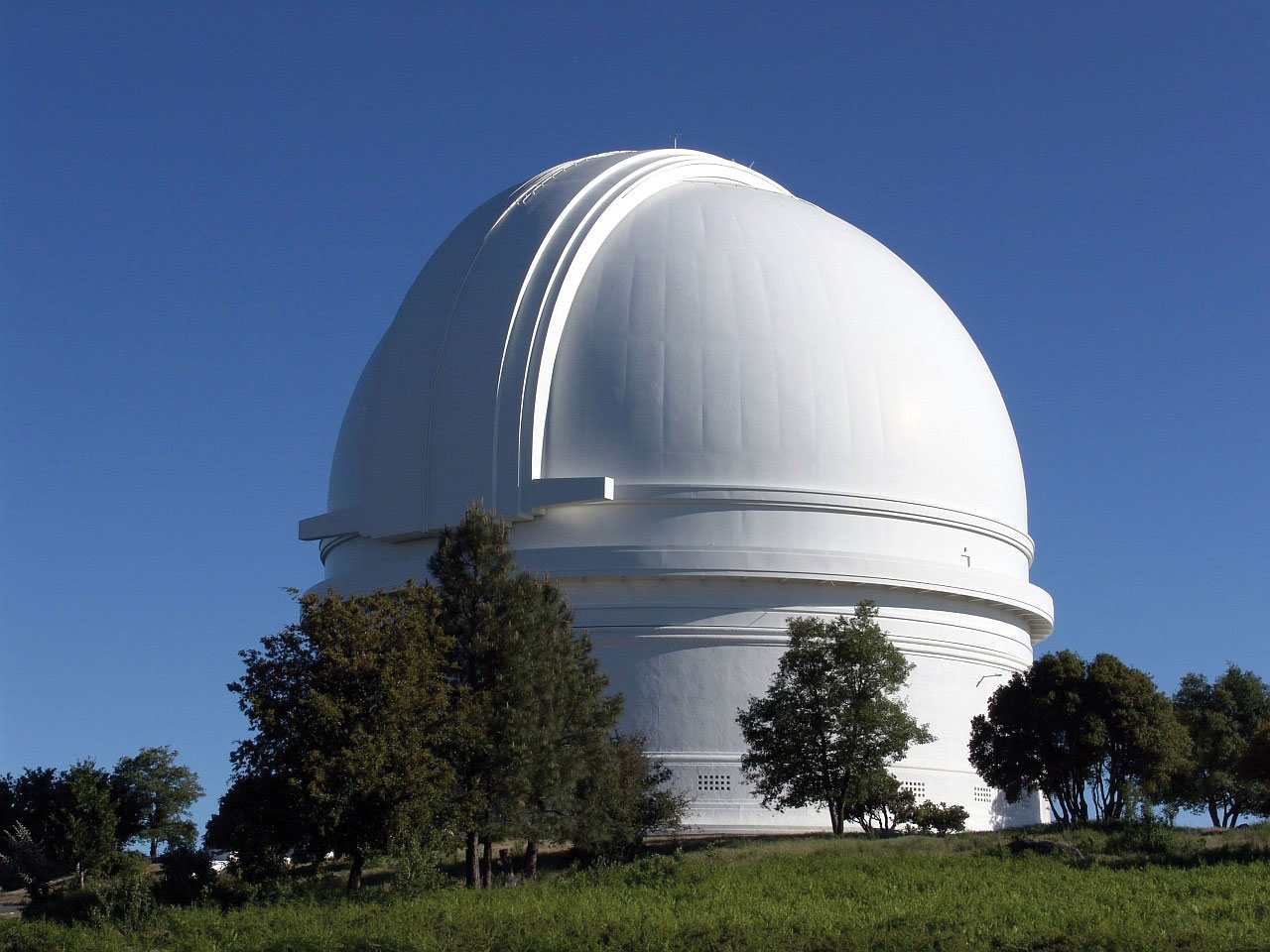
Our whole sixth grade class went – it was a scheduled part of the curriculum back then (1961). We were bused one spring Monday morning from Hilltop Elementary in Chula Vista to a camp built below the famous observatory, and we didn’t return till Friday afternoon.

I was assigned a cabin with three or five other girls; I don’t remember whom. I unpacked the clothes so recently labeled by my (“who has time for this?”) mother. I was given a lower bunk, and I had no trouble sleeping till the last night, Thursday, when I was so stricken with homesickness that it hurt my chest and made me too itchy and warm.

The food was eatable. The crafts were the usual unnecessary boring activities, and the stories were by and large too slow. One day (probably Wednesday), the craft activity was a mandatory letter home.

But I liked the singing around the campfire. I was tickled to look at planets through the big telescope. And I enjoyed hiking. What I remember most is trooping behind a male counselor through meadows and among mature trees, clambering over some friendly rocks, watching birds and butterflies.

At one point we stopped and the counselor offered us water. No one carried a personal bottle back then; the counselor had a big container or canteen. He let us each have a gulp or two and then he stood up, tipped the mouth of the container to his own, and enjoyed a healthy quaff.

“Hey!” objected one of the boys in our group. “How come you get so much?”

The counselor smiled and knelt down to us again. He capped the container as he said words I’ll never forget: “Big truck radiators need more water than little sports cars.”

Posted in School | Leave a comment

Day Camp

     When I was 8, I went to day camp. I know I was 8 because we were singing “Purple People Eater,” and I just looked that up and learned that it was released in 1958. I don’t remember much about day camp, especially compared to all I recall from the summer I was 5½, but here is what I find.

It was a topic of disagreement between my parents. Mom had gone to camp when she was a kid; she remembers attending when her sister Ruth was a counselor. She has good memories about getting away from summertime New York City. She intended to send me away too.

Dad disliked the idea to the point of determined refusal. He was into spending time with the whole family and he couldn’t be talked into accepting my absence. Although he told us some snippets about traveling to a farm in the summer when he was young, about eating corn uncooked and fresh off the stalk, camp wasn’t part of his culture.

The compromise was that YMCA summer day program.

So I recall singing One-eyed One-horned Flying Purple People Eater. I remember making trivets out of white glue and popsicle sticks. But my most persistent and vivid memory is this: there was a large grassy playing field that we all looked upon as we entered the camp grounds. It was low turf a bit below the road, and I was told that it was four acres in area. It had room for baseball and football and dodgeball and kickball. I remember looking at it, day after day, and informing the gauge in my head that what I saw was four acres.

And that’s it. I don’t think that program was a success for me. Maybe Mom was right; for camp to be an experience it should involve sleeping away from home.

My kids went to day camp in the late 80s and early 90s. Kee Tov in Berkeley. Perhaps they got more from it than I did; maybe they’ll tell us. There were some sleepovers. And I know they had more songs.

Posted in Lessons | Leave a comment

Precious

     When I was 5 or 6, my parents enrolled me in an acting class.

I think it was a summer community program. I know there were two skill levels and diversity within those. The older kids performed “Peter & The Wolf.” We littler students put on “The Gingerbread Man.” I must have been one of the youngest of the younger cast; a non-speaking role was created for me.

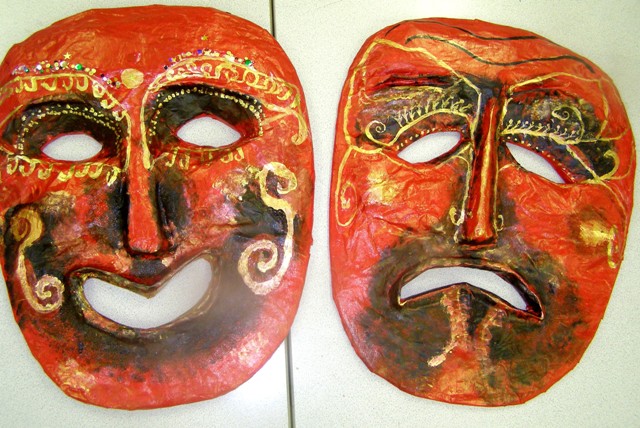
I was the daughter of the cow that the gingerbread boy interviews while on his runaway travels. My costume was a black leotard and tights, a pinned-on tail, and a huge paper-mache head. I was told to walk on my hands and feet (not my hands and knees, so I had to keep my legs awkwardly bent throughout my minutes on stage).

I had no lines. My part was simply to be there with my cow mother, and to follow her when she moved off-stage.

It was acoustically fascinating within my mask. I had at least as much room as one of those hose-connected deep sea divers, but instead of glass I had wire mesh between my face and the front of the calf-head. That paper-mache cavern provided an echo to my whisper. And I’d just discovered that I liked the sound of the word “precious.”

So the whole time I was on stage I was whispering “precious” inside that head. “Precious precious precious.” Delicious.

We must have performed our little skit before the older kids put on Peter & The Wolf, because my other memory involves watching the longer play with my parents. I may have sat between them; I remember having my father on my left.

During a scene where Peter is skipping around in front of his cottage, a length of the little picket fence that defined the yard collapsed. The kid playing Peter managed to right the prop while making one of his or her skipping circuits. My father admired that. He told me what “poise” is.

That’s what I learned from acting class. Precious and poise.

Posted in Lessons | Leave a comment

The Marketing Argument, Concluded

     When I was 60 I completed my argument about why marketing is not inherently creative.

I’d already reported that we use our left brain hemisphere to make money and our right lobe to make art, but the discussion didn’t seem complete even after that proof.

I spent a few weeks paying acute attention to ads, especially on TV. And a few months building this blog.

For an ad to have any chance of getting me to buy, it has to provide information. If it is creative I appreciate the entertainment, but that does not produce any desire to acquire. Some beer ads are great. I’ve laughed out loud at what Apple puts up. Even the sad-mop Swiffer ads are cute. But they don’t introduce me to the products, let alone get me to buy. The beer I like doesn’t advertise. I admire Macs but use a PC. And I do have a Swiffer, but my mother bought it for me, and she did that because she heard from a friend that they work, tried one, and knew I could use it.

On the other hand, those blue-screen (seen on TV) ads can work. They’re no more creative than a classified ad. Instead of entertainment they provide information. We even call them infomercials.

Then I’m asked: “Don’t you agree that such-and-such is a creative art?”

I balk. I sputter. Creative art? As opposed to uncreative art? Who did that?! Why insert the adjective? It’s as silly as putting “critical” with thinking or “competent” ahead of counsel. What the triple heck?

And this blog? Right now I’m building content and getting to know its features, but eventually I want to reach you. The “pub” is for public or publications.

How do I get more readers? How do I create a little wave that may move a grain of sand? Achieving that goal isn’t about selling. It has nothing to do with money.

As I reiterate to my head-shaking loved ones, creativity is a way of doing – not a what you’re doing.

I want to reach people. I aim to provoke responses, discussion, the genesis of fresh ideas. And I can feel which lobe of my brain I exercise in this attempt.

The only way you can call this marketing is if you remove the “market.”

Yes.

I’m “ing.”

Posted in Question | Leave a comment

Counsel

When I was 15 my mother began referring to me as Dear Abby.

It was the spring of my sophomore year in high school. Our house in Chula Vista was just half a block from Hilltop High, and maybe that’s what facilitated the parade of advice-seeking friends, but I had so many visitors that I seemed popular.

Most of the girls who came by were cuter than I, more Southern Californian, less good in school, and successful with boys. My male visitors tended to be a year ahead of us, smart, fit but not jocks, witty or comical, and into those girls. They all brought me their questions, mostly about the opposite sex (and sex) but sometimes about grades, parents, politics, the future.

It wasn’t a new thing. In fact I’d been mouthing off forever, and since talk (if it’s not stupid chatter) provokes talk, I’d been hearing secrets and making comments for years. So I’d had some practice. I was pretty good at listening and suggesting.

We moved to Marin County half a year later, but I continued to correspond with at least a dozen for at least the rest of high school, and then went on to Cal (new friends, many more issues) and provisional adulthood and parenthood and self-employment. In short, I haven’t stopped providing advice. I’m pretty good at it. And when I’m doing it, I’m a kinder gentler person than when I’m not.

A month ago Danny asked my advice about how to give advice. He’s 28 and he modestly noted that he’s just started on his life path, so how can he possibly know enough to guide others?

“Oh,” I blurted, “you don’t have to know the answers. You’re not a guru and that’s not what advice is.”

Here’s what I told him.

First you have to determine that the friend wants advice. It’s a waste of time and credibility to give it when it’s unsolicited. The friend has to ask for it and the request has to be sincere.

Then you have to carefully describe what you hear your friend say and compare it to how your friend is acting. There’s usually a significant discrepancy between what she says she wants and how she’s choosing. You have to be careful and honest here. If the contradiction is huge you may even have to back away from the conversation. Because it’s not okay to shake someone up to the point of partial-wreckage unless you’re aboard for the (time-consuming) reconstruction that needs follow.

And you have to remove your self from the questions. Only on rare occasions will it be appropriate for you to say “If I were you…” Most of the time you’ll be saying something like “I’ve noticed you do such-and-such, but doesn’t that contradict your stated intention to do so-and-so?”

You’re trying to help them back into sync. Either their words or their actions need adjustment, and you point that out, but you don’t get to decide which.

Posted in Lessons | Leave a comment