Style

I knit myself a sweater out of steel
in knotty mesh of chain link irony.
Entwining my protection had appeal,
but that apparel had no room for me
to stretch an arm or add a bit of length,
and it took heavy blocking to fit right.

So I, more bound than sheltered by its strength,
forsook that garb and looked for something light
enough to let me move my limbs with ease,
and pliable enough to fit new form.
For I will move my muscles where they please
me most to go, and that’ll keep me warm.

Unblocked my new apparel has to be,
and made without the crimps of irony.

Posted in Poetry | Leave a comment

May(o)hem

I dislike mayonnaise, but I succumb to it. I can’t come up with a better lube for tuna or egg salad. I used to make my own, when I had a full house and a food processor, but the homemade emulsion never lasted more than half a week in the refrigerator, so that’s not an option for solitary one-room me. I buy a small jar of Best Foods and it lasts forever (scary as a Twinkie).

Mayo was on my shopping list a month ago, when I walked to the Red Apple market in my Eugene neighborhood, and I selected the smallest jar there and paid for it and I thought I packed it in the green cloth bag I was carrying.

But when I got back to my cottage and put my purchases away and opened the can of tuna, drained it, and forked it onto the plate, when I was ready for the dollop of mayo, I couldn’t find the jar. I looked in the proper kitchen cabinet: no. I pulled the green bag back out of my closet: no. I was fielding grandson questions at the time about why I wouldn’t give them snacks, and also barring the 4-month old puppy from entering my place to steal my bath puff (again), and I began to feel harassed. I dashed to the front house and Sean informed me that theirs is a Miracle Whip kitchen: no.

It was with exasperation that I put my boots and jacket back on, and headed down the street again, to purchase mayo again, to complete my lunch.

My luck turned. I was thinking I’d have to go to Red Barn at least, and maybe all the way back to the supermarket, but I could see the train that was going to slow me down, so I decided to try the Quick Stop on our side of the tracks. Glory be: the owner had Best Foods mayo! The jar was a little bigger than I wanted, and the price a little higher at $4.59, but lunch awaited and that train was a long one. I bought it and headed home.

Which is when I had a deja vu moment. I experienced a strong recollection of returning home, recently, with mayo in my possession, and putting the unopened jar in the refrigerator.

Yep. That’s where the small jar was. I castigated myself while I laughed. I mashed up the tuna with mayo while I wondered: was I too flustered by kids and dog to think clearly? Was the episode a symptom of coming dementia?

And then I laughed louder. I realized my error was due to geographical confusion. See, when I’m in Berkeley I have so few kitchen shelves that I store even unopened jars in the fridge. In Eugene I have a full kitchen; I can use cupboards and refrigerator as designers intended. In my distraction, unpacking while talking to kids, I’d placed that unopened mayo where it belongs in my other house.

It worked out okay. I decided I’m not crazy yet. And I learned that Katie doesn’t like Miracle Whip either. Now she has a mayo source in the cottage behind her house.

Posted in Food | Leave a comment

The Third Charm

Prometheus put fire at our feet.
He taught us to control its smoke and blaze.
Then we could warm the night, and cook the meat,
and fire pots, and so evolve a ways.

And someone sometime stumbled on the wheel,
a shape we use to help us stumble less.
Like fire it took off with huge appeal
and blazed us ways we couldn’t then express.

Inventions and discoveries were they
that formed the base for most our growth since then,
but I suggest they’ve had their brightest day
and we don’t need to look that way again.
To take us further than we’ve come before
we need to matter less, and venture more.

Posted in Legends, Poetry | Leave a comment

Chronos (End)

Pete was starting his meal with the white corn soup and she was trying the heirloom tomato gazpacho when Lily told him she thought the most powerful god was Morpheus. “Yeah. God of Sleep,” she confirmed, leaning over her bowl. “Everybody seems to want to nap, to sleep in, to sleepwalk through life on drugs or on autopilot. Yeah. Sleep is very seductive… but I don’t get it. Why aren’t people resisting? They can sleep when they’re dead.”

Lily realizes as she recalls this that she is often like that with him, coming at him out of nowhere with one of her ideas. He fields well, though. That is one of the things she likes about him. They seem to think at the same rate. Pete had looked up at her, smiled, and tipped his wristwatch at her. “I don’t know,” he said. “It may be time instead of sleep. I mean,” and he leaned back against his chair, straining his white shirt across his medium-sized middle-aged paunch, “I always look forward to the weekend thinking I’m going to sleep in, relax, take it totally easy, and 45 minutes into that I’m bored and looking for something to do. No, I don’t think it’s really sleep we want. I think it’s time away from this taskmaster,” and he rolled his wrist again.

“But you’re self-employed! You’re the boss; you have a lot of control over your schedule.”

“Yeah, but I can’t ask others to be in the office at 9 and then not be there myself. Maybe it’s the old army habits, but I feel very controlled by work time.”

Lily stops pacing and lets her body drop into a chair. It’s getting to where she can’t take the silence. She wishes her father would come home, no matter what he has to say. She’s about to try Pete again on the phone. As she reaches for the headset it rings.

“Hel-” she begins and she hears the beloved voice: “Mom?”

“Zachary?! Are you okay?”

“We’re fine. We got lost.”

“Lost?”

“We forgot to hang the packs and I guess a bear got into them last night. We lost our compass. We got turned around hiking out.”

“Oh Zack. Is Eli all right?”

“We’re both fine. Just a little hungry. You know what saved us? My watch. Remember how you taught me to use it as a compass?”

“Ahh. When will you be home?”

“We’re on the way now. We’ll stop for a quick bite. See you in about four hours.”

“Good.”

Her father walks in seconds after she hangs up the phone. “Where are Zack and Eli?”

“On their way. They got delayed a little. Hey, Dad: want to wear your old watch?”

Lily’s father smiles at the timepiece as she hands it to him. Lifts his face and smiles wider at her. “It’s a nice watch,” he says and he sets it carefully on the table between them as he sits across from her. “You keep it.”

(Her father taught her: Any daytime but noon, aim the end of the hour hand at the sun. Find the spot halfway between the hour hand and the 12, and that’s south. Really.)
Posted in Fiction | Leave a comment

Chronos (Middle)

If Lily’s father comes in he’ll ask after Zack, so maybe she should distract him with the watch. She doesn’t want to talk about her son. Zack went camping with his girlfriend Eli, and Lily’s father doesn’t approve of premarital camping. He’s much more gentle on the subject than he was when Lily was young, but even so he can be tiresome. She doesn’t want to defend Zack’s sex life to her father. She doesn’t want the conversation to then proceed, as she suspects it will, to her affair with Pete, and what her father thinks of that. Most of all she doesn’t want to share her growing worry. Zack and Eli are late reporting in, and Lily is beginning to freak out. She thinks her father will agitate rather than soothe her.

Thinking about Pete, Lily phones him. Gets his voicemail. Leaves no message. She wants someone to talk her down from her mounting anxiety. Zack and Eli are only a few hours later than she expected. But she has crossed some worry threshold and is now completely distracted.

She looks around her study and notes her old broken clock/radio. It’s a battery-powered machine and the clock doesn’t work, but she keeps it around because the radio is good and the clock amuses her.

She likes to have an analog timepiece near her bed. She doesn’t want a lighted display; she can see the hands of a clock face even in the dim of middle night. She needs battery power because she’s short on outlets and her neighborhood often loses electricity. Her old clock/radio was perfect until she dropped it: the black blade-like minute hand somehow fouled with the red wand-like second hand and now both sweep around the face together, once a minute. Lily likes to say her clock is absolutely correct every minute of the day and it is: for exactly one second out of that minute.

She wasn’t able to find another battery-powered analog clock/radio. She wakes now to the beep of a battery digital. So she keeps the old clock/radio around, tuned to an all-news AM station, for those quick reports after earthquakes. And it entertains her to watch the clock hands sweep around the face. She appreciates the metaphor and keeps replacing the battery.

Lily begins pacing, desperate to hear from Zack. Her Luddite son refused to pack a cell phone. She tries distracting herself with erotic thoughts about Pete, but all she can recall is their last lunch. She paces some more.

(to be concluded tomorrow)

Posted in Fiction | Leave a comment

Chronos (Beginning)

Her eyes are nearly fifty years old but they can still accommodate close work. Lily feels unreasonable pride about that. As if she could take credit for the elasticity of her lenses.

She can read the tiny characters etched into the back of the old watch: A.F.U.S. ARMY/TYPE A-11/SPEC.NO.94-27834-B. Et cetera. She remembers when she first took it for repair, a few months after her father gave it to her. The watchmaker was delighted, because all he had to do was read the back of the steel case to ascertain what parts were needed.

It was a simple job and he didn’t charge much for it. But even after that and the addition of a black leather wrist strap, Lily didn’t wear the watch as often as she thought she would. It gained five minutes a day. It was so heavy that it tended to slide sideways on her wrist and she kept banging it into door frames and furniture.

When her father first showed her his old Air Force watch, he told her that the creamy numbers and hands glowed against the black-gray face in cockpit light. The second hand stopped when the pin was pulled out, so the instrument could be synchronized with others.

He gave her the watch a few years later. It had lost its band by then. When she spun the stem the mechanism raced, the minute hand a dizzy whirl and the hour hand sweeping like seconds.

Her father lives with her now. With her and her 17 year-old son Zack. Lily’s father is 78 and was in love with his wife her mother all the years (53) of their marriage. Lily’s parents gave her a brilliant example of happy union but the lesson didn’t take. She’s twice divorced and disinclined to try again. She knows that her parents loved each other and were happy – she was there and witnessed it – but she also believes that each would have been a better person alone.

Her mother died of a massive heart attack four years ago. She never knew what hit her, which was a good thing, because Lily’s mother was not a patient woman. Her father stayed put in the old house for the year everyone advised, but he was miserable. And he couldn’t bear the idea of an old folks’ home as he called it, for he was an active anti-social septuagenarian. He moved into Lily’s big house with her and Zack. The three of them get along pretty well.

If her father comes in and sees her playing with the old Air Force watch, he’ll make a remark about wanting it back. He’ll start reminiscing about what a great watch it was, how they don’t make them like that any more. He has a problem discarding any machine that works. Lily got him a new phone when he moved in. He came to appreciate its features. But he hasn’t tossed his old one.

(to be continued tomorrow)

Posted in Fiction | Leave a comment

Death Valley

We arrow like electrons, driving flux-
impelled directly east across the state.
Zigzagging past the pachydermal trucks,
we slow our mood as we accelerate.

We ratchet down like gears the attitude
that in the city agitates our days,
adopt the view of rocks, and let the mood
of stars and planets influence our gaze.

As hummingbirds to mastodons are we,
compared to lives of lakes or canyon walls.
Our sojourn, in the stars’ chronology,
is less material than waterfalls.
But here is silence slow enough to try
to hear the planet talking to the sky.

Posted in Poetry | Leave a comment

Anarchy

I argued with my dad for anarchy.
I told him total freedom is my cause
and said if we were all we’re meant to be,
we wouldn’t need to fashion any laws.
But he asserted lawmaking’s a proof
that we are wise enough to know our need;
we make of rules a basement and a roof
that let our species prosper and proceed.

He’d have the laws denote a miracle
of self-evaluation and control,
but is that cup half-empty or half-full?
I don’t see signs in laws of wisdom’s role.
What’s good enough may not be for our kind:
we’d better question what we have designed.

Posted in Poetry | Leave a comment

For Whom the Bell Curves

I seldom speak to telemarketers or survey-takers any more. My caller ID warns me when it’s one of those folks and if I’m too distracted to read the display, there’s always that tell-tale silence after I answer – while the “system” informs some minimum-wage caller that a live one has spoken – and when that caller begins I try to close the connection firmly but without rudeness.

Seldom isn’t always, though. I’ve fielded the “just a few minutes to gather your opinion” inquiry enough to write this about it.

Don’t survey me. Don’t collect my opinions. Because I know a little bit about statistics, and it will be a waste of our time.

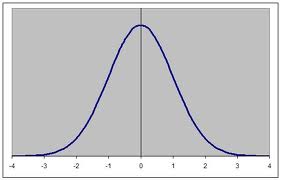
That’s because the researchers are going to plot the responses on a graph. The line of the graph will form a shape we call the bell curve; there will be a few responses at the far short ends of the line but most answers are going to cluster in the fat middle section, reaching for the top of the graph. The folks who analyze the survey have been taught to disregard the short edge parts of the shape.

My answers are going to be at the far end of the bell. Disregarded. Really. I don’t drive a car. I don’t like to shop. I don’t eat most meats. I avoid the medical industry like it’s the plague. I love to live alone. I tend to view problems differently than most. Interviewing me will be a waste of my time and the surveyor’s – I’ll be disregarded and discarded.

Really? Yeah. And yet …

I exert undue influence. I don’t mean to, but I have a large personality and a good vocabulary. I like people. I do lunch well. I am by no means a world-shaker or any kind of celebrity, but I’d be speaking falsely if I didn’t admit that people have strong reactions to me, and those reactions often produce behavior that might otherwise not have occurred.

And I’m small stuff. Consider some of the acknowledged shakers of our species. Individuals like Leonardo, Franklin, Payne and Twain. Do you think their responses to telemarketing surveys would fall inside the bell curve?

Posted in Lessons | Leave a comment

Hypochondriac

9.8.08
I looked it up today. I knew the “hypo” meant low but I didn’t have a clue about chondria until I googled around. Khondrios is cartilage, specifically that around the breastbone. Originally, hypochondria referred to a pain in the high stomach area, besetting women more than men, just a suggestion or so away from hysteria, or vapours, or somesuch.

In the beginning, hypochondria referred to an unnamed complaint at the bottom of the esophagus. Probably gastric reflux, I say. Probably due to feminine frustration. Understandable.

By the late 1600s it referred to a person who suffered from depression without an identifiable cause.

Last century the term assumed its job of describing a person who is overly interested in and worried about his or her health.

Why am I composing this post? That’s a legitimate question. Here’s the answer. I have been accused of hypochondria. True, the accuser was a beloved enemy, a close relative who will not be named at this time, but the term was declared, overheard by me, internalized for a bit, debated here.

I am not hypochondriacal. There’s a difference between being observant and being somewhat fascinated by an observed changed in oneself, or being pathologically preoccupied with one’s health. The truth is that I pay attention to my body and its messages more than do many of my friends. I enjoy very good health. So when something goes off, I notice it, I wonder about it, I give voice to the situation. That may be boring but it’s not dysfunctional.

So there.

Posted in Language | Leave a comment