September 24, 2001 (Part 3 of 3)

The bleeding stopped but Bill had a headache. The top of his head throbbed beneath the bandage. He leaned against his workbench despairing a little, wishing the older kids would visit. But he knew that wasn’t going to happen right then. Emily was still besotted with her rich husband and their “work,” and Ned wanted to avoid any political arguments. It was hard for Bill to admit it, but his daughters were apparently horny and his sons were just not aggressive.

Rick’s shooting misadventure made him a juvenile felon, and while that wasn’t going on his adult record it was enough to keep him out of the army. At 27, Ned was too old unless he really pushed himself, and Bill knew Ned wasn’t going to do that. The girls wouldn’t serve because they didn’t have to serve.

It made Bill feel angry. Powerless. He knew it was corny but he opened his gun safe and started cleaning his revolver. There was something about the heft of the handle that was comforting.

“Things fall apart,” he thought then, and “The centre will not hold.” He saw the English spelling in his head and knew he was quoting poetry, but he couldn’t remember whose.

Mary, Liz, and Laney were still in the kitchen. Mary had been reminiscing about old games all day, and she suggested that they work on a jigsaw puzzle. The girls thought it would be fun. They didn’t know and Mary had forgotten how hard a jigsaw can be on the solvers’ lower backs.

They rejected the puzzle with the picture of Manhattan. They’d just agreed on the circular farm scene when the gunshots startled them. Each looked at the other and they hurtled to the garage.

It had been a rat. Bill was okay. He was cleaning his gun when he saw the nasty rodent poking around in the far corner of the garage, where it was darkest. On any other day Bill probably would have walked inside, made a comment, called the exterminator. He didn’t know what came over him, but he just aimed his gun and fired. Kind of nicked a hole in the garage wall but really blasted the rat. Got him right in the head.

Bill cleaned up the rat carcass. Everybody looked a little better to him after that. Mary didn’t seem so insipid. Liz might not die. Laney could mature. And Rick: well, actually Rick was doing better than anyone expected a few years back. Just as he had that thought, Rick himself appeared in the garage doorway. Home safe from the peace rally. Looking blonde and friendly. Looking like a kid.

“Hey, son…help me out. I’ve got a poem in my head. ‘The centre falls apart?’”

“That’s ‘The Second Coming’ by Yeats, Dad.” Rick didn’t like history or science but had an affinity for math and poetry. He quoted the ending: “And what rough beast, its hour come at last, slouches toward Bethlehem to be born?”

Something in Bill’s chest seemed to melt then, and he was filled with tender anxiety. Rick’s future loomed long and uncertain in Bill’s imagination, and he felt too tired to know what should be done. He clapped his right arm around Rick’s shoulder. They walked into the house.

Everybody felt a little better. It was like a storm had passed; the air was lighter, and clean. Together they started to work on the puzzle.

 
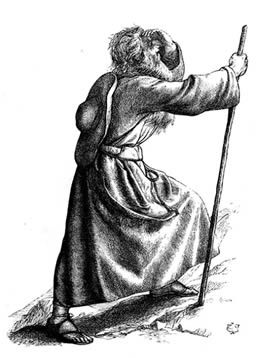
The Second Coming

Turning and turning in the widening gyre
The falcon cannot hear the falconer;
Things fall apart; the centre cannot hold;
Mere anarchy is loosed upon the world,
The blood-dimmed tide is loosed, and everywhere
The ceremony of innocence is drowned;
The best lack all conviction, while the worst
Are full of passionate intensity.

Surely some revelation is at hand;
Surely the Second Coming is at hand.
The Second Coming! Hardly are those words out
When a vast image out of Spiritus Mundi
Troubles my sight: somewhere in sands of the desert
A shape with lion body and the head of a man,
A gaze blank and pitiless as the sun,
Is moving its slow thighs, while all about it
Reel shadows of the indignant desert birds.
The darkness drops again; but now I know
That twenty centuries of stony sleep
Were vexed to nightmare by a rocking cradle,
And what rough beast, its hour come round at last,
Slouches toward Bethlehem to be born?

– William Butler Yeats, 1920

Posted in Fiction | Leave a comment

September 24, 2001 (Part 2 of 3)

Scalp wounds bleed. The way the blood came out of Bill’s head reminded Mary of the time Liz pierced her ear once too often. She went against direct parental orders with that hole in her cartilage, and Mary had thought the appropriate consequence was removal of the stud. For such a thin little ear, she was amazed at the quantity of blood that poured from it. Ribbons of bright red in the white bathroom sink.

It was a little more understandable, all the blood welling from a gash in the head instead of a little hole in an ear, but even so it was impressive. Mary stained three towels with it, applied pressure and ice, and still it bled. They were in the kitchen – they needed the room – Bill sitting upright at the table and Mary ministering above and around him. The blood looked very bright against his pale scalp, matting his thin dark hair, clotting above his right temple. He became quiet: that and his pallor gave Mary the idea he might be in a little shock, even though the cut was not deep. She didn’t think they’d need the hospital. She offered him a drink. She wrapped a soft bandage around his head.

“There,” she stated with some satisfaction. “You look like Yankee Doodle.”

Bill fingered the gauze. “Hah,” he retorted with a wry look. He sipped his bourbon. “I’d sure as hell fight if I were younger.”

“Mmmmm.” Mary resumed cleaning the kitchen, which was the activity that led to her opening the window and Bill standing up into it, in the first place.

They heard the back door open, followed by the voices of their younger daughters. Liz and Laney entered the kitchen and startled their parents again, Liz with her pierced, tattooed emaciation and Laney with hideous hair. Lately she sported a head one-third shaved, with the remaining hair dyed chartreuse. They were discussing their lovers without discretion; Bill and Mary got to hear about Liz’s latest dark beau (they all looked Middle Eastern to Bill, but they were probably just Mexican), and Laney’s enthusiastic conversion to homosexuality (she was completely infatuated by an older and not unattractive dyke named Barbara).

“Where’s your brother?” Bill asked them, as much to change their subject as anything else.

They looked a little guilty, and Bill knew Rick was at the peace rally. The girls even tried to forestall Bill’s rant by acting like he was inquiring about their older brother instead, but that didn’t distract Bill. Laney admitted that they had left young Rick at the civic center park, marching with the other lefties.

“I don’t get it,” Bill said. “It’s pretty strange that a kid who shot his junior high teacher has now become so passive.”

“Pacifist, Dad,” corrected Liz. “Not passive.”

“Yeah,” compounded Laney. “And it’s not so weird. Maybe Rick actually learned… You know the saying: ‘Good judgment comes from experience. And experience comes from bad judgment.’”

They were right, but that didn’t calm Bill. In fact he felt like he was going crazy. He was filled with a love of country and passion to avenge lately, and he was surrounded by a moron, a junkie, a hippie, and a delinquent, all of whom preached nonviolence. Agreeing with each other. Reinforcing one another. He downed his bourbon and rose abruptly. He headed for his workbench in the garage.

Posted in Fiction | Leave a comment

September 24, 2001 (Part 1 of 3)

The timing was unfortunate, as far as Bill was concerned. Not that there was ever a particularly good time for war, but since it looked like they were going to have one, he wished he or his could participate in a meaningful way. Heroic. Historic. At least mentionable.

Bill himself was a coastal boomer; he missed the military boat. He was raised a Navy brat – that’s how his folks came to settle near San Diego after his father retired – but he was first a student and then a young man with a high-lottery birthday (December 15th was number 266) – so he avoided the whole Southeast Asian conflict without having to feign insanity or homosexuality or emigration. He didn’t use his Masters in English literature; the kids came too soon, and he first worked at and then owned the car dealership his father had established. He despised that. But he justified it.

The kids were too young for the Gulf War, and were now either too old, too bad, or too female to serve in the real one. All Bill could do was hoist the flag up in front and talk to the neighbors out back. To the extent his family was around they didn’t agree with him.

His wife ignored him. It wasn’t anything personal; Mary puttered around the kitchen, plump, blonde, and stupid, in Bill’s eyes no longer cute, alternately nurturing and petulant, a passive-aggressive pacifist.

The older kids, the good ones, the twins with brown hair like Bill’s family, they’d both moved out and on. He was left among the pale ones, Liz and Laney and Rick, with round blue eyes and round fair faces like their mom.

That’s when Bill tore his head on the bottom edge of the kitchen window. Minor accidents were common around the household; if Mary wasn’t cutting her hand with a paring knife then Bill could probably be counted on to smack his head against something. The kids sustained the usual assortment of injuries. In the beginning they spent some evenings in the emergency room, but they gained medical confidence over time, and now they treated most wounds on their own.

Their tract home was a single-story stucco ranch house, with crank-open aluminum casement windows. One of the kitchen windows was directly above the spigot for the front-yard hose. Although Bill usually injured himself, that morning he was Mary’s victim. She didn’t intend to get him, but she couldn’t have done it better if she’d had a choreographer.

She didn’t know Bill was there, turning the water to the lawn sprinkler on, when she decided she was hot, immediately and unbearably hot for a menopausal moment, and abruptly cranked open the kitchen window for some air. Bill was bent over the spigot, his back obscured by the hibiscus bush that bloomed there most of the year. He couldn’t even hear the window opening, because he was paying attention to the sound of the water, gauging the pressure to the sprinklers by the hum in the hose. He bent, she cranked, the window swung outward, and Bill, righting himself, smashed the crown of his head into the aluminum frame.

Posted in Fiction | Leave a comment

Disneyland Visit, September 2001

There may just be a Disney dance, where staff
at thrill attractions have to switch their place
so when each rider exits, as the laugh
or gasp releases, there’s a different face
to monitor the trade. Does that make fun
for employees? Or is it more control?
For we were welcomed on each ride by one
and, leaving, saw another had the role.

That choreography is multi-tiered:
concentric revolutions silhouette
the symmetry that someone now dead dreamed –
or so in swirls of industry appeared
the park to us: like clockwork infinite
in scope, escapements of the people gleamed.

Posted in Poetry | Leave a comment

Editorial

A thousand poems this weekend I reviewed;
a myriad of metered monographs
have filled my time and sent my attitude
to proud embarrassment, self-conscious laughs,
and growing confidence. Oh, I read those
I should discard, but there are dozens more
I like enough to keep or recompose,
and others that contain a vein of ore.

Now I begin to mine those early tries,
spelunking in the patterns I have dug.
A lamp is beaming from above my eyes,
and I detect a shelter in the hug
of curving walls, the balm of moving air,
while my canary’s singing everywhere.

Posted in Poetry, Writing | Leave a comment

The Club House (End)

The building was white, one tall story, and rectangular. It was only about twenty feet deep but it seemed five times that wide. It didn’t have a proper loft – more of a hay mezzanine – but Vickie and Beth and Vickie weren’t about to complain. Once they got in.

There were two locked doors to the structure, and it took some time to work the weakest loose. But the girls weren’t nervous; the place seemed so benign and neglected that they didn’t worry about being discovered. They entered through the bottom half of the Dutch door on the north end of the place, and they none of them imagined so much dust could exist in the world. They spent three secret afternoons sweeping out the barn with the empty burlap bags they found stacked in two corners. They sneezed till tears ran in hot tracks through the powdery dust on their cheeks. But they had a place, to be alone.

White painted outside, raw wood inside, omnipresent dust. Aromatic remnants of old horse manure in the slowly convecting interior air. They only had their secret place for a few weeks, but memory differs for two of them. Vickie J, whose family moved to Maine, who witnessed the straggling death of her parents’ marriage and then moved again, with only her mother, to Rhode Island (and changed her nickname to Tori), remembered the place whenever she smelled horse manure, which was often in her equestrian set, and recollected their quasi-pornographic times there like they’d gone on for a year. Vickie D went on to kill a quarter of her brain cells with alcohol and speed; she never remembered 1963 at all. Beth forgot all about it for almost forty years, until she came across her 1963 diary during a comprehensive housecleaning in 2001; then she remembered it as a season, for a minute, before she read the truth of four short weeks.

They found the place in late October. The last mention of it was November 23rd. That was all. Beth couldn’t misremember it after she read her own words.

She hadn’t made a note of it the day they discovered it. The first mention in her diary was October 22nd, after they spent a couple of hours cleaning it. There was no reason to write of their use of it.

There was also no mention in her diary of JFK’s assassination. But there was a comment about the return of normal TV. 1963 was of course before cable television. Viewers had channels 2, 4, 5, 7, 9 and maybe 11. All were preempted for the news and the funeral.

School was closed. Even though she heard the grave PA announcement, Beth didn’t take in the news until she neared her house and saw that her father had mounted the flag at half mast. But there was no TV. There was nothing to do. Beth and Vickie and Vickie snuck away Friday evening to their secret place. To discover it had been discovered. By Lavonne and Kevin, who were actually doing it, copulating on the barn floor, when the girls peeked in through the bottom door.

That wasn’t enough to kill their barn for them. Not quite. They figured Kevin and Lavonne wouldn’t tell others, and couldn’t use it every night. The girls tried again on the 23rd. They waited till dark before walking to the barn. They made sure they weren’t followed; they didn’t know how Kevin and Lavonne found the place, but they weren’t going to lead anyone else there.

The barn was in use again. Kevin wasn’t around that night but Lavonne was. On her knees in the dry dust of the barn floor, her face bouncing back and forth into the soft suit pants of a standing man whom Beth, Vickie and Vickie recognized, to their simultaneous shock, as Vickie J’s handsome dad. They pulled each other away, but not before the sight was etched into each of their brains: Lavonne with her hair swinging by the sides of her face as her mouth moved shiny against dark fabric.

They never went back. (Vickie J’s family moved not long after that. Lavonne left home for a year. Vickie D and Beth didn’t see each other in school and each made other friends.)

They never visited the barn again. The days were getting shorter and the nights were getting colder. Normal programming resumed on November 26th.

Posted in Fiction | Leave a comment

The Club House (Middle)

It was unfortunate about the unreliability of Vickie J’s parents’ absences, because otherwise her house would have suited the three girls best. Her father had a wonderful hidden collection of magazines with provocative pictures, and her mother had fine clothes and cosmetics for them to examine. There was always Coke® and aspirin if they wanted to experiment with getting high (they tried and failed).

Vickie D’s house had its own pluses and minuses. Her mother was often there, but she was completely lenient. She smelled like tobacco and beer. She looked like an older version of her daughters: freckle-faced, buxom, with mouse-brown hair (which took color well). She let the girls eat tacos and watch “The Twilight Zone.” Vickie’s sister was sometimes there; Lavonne was obnoxious and fascinating. But Vickie J was seldom permitted to visit; her parents always found some reason to prevent her from passing time up the street at the other Vickie’s house. Beth has memories of spending nights there, ensconced with Vickie D in the sofabed in the family room, watching high-risk TV and overhearing the high-risk affections of Lavonne and some greasy-haired boy, and Vickie J is no part of those memories. Beth can recollect unsolitary bathing by the light of the glowing wall heater, what-iffing about life on earth and heaven afterward, and there were just the two of them in that tub. It was only four decades later, while randomly recollecting 1963, that Beth got to view them in perfect class perspective, and saw that Vickie J’s parents were faithless snobs, and Vickie D’s family was trailer trash, and Beth’s own mother had been too self-absorbed and busy to notice any of it.

In 1963 the girls were thirteen and looking for a place to be alone, and one late summer day they found the barn. They had been out behind the high school, exploring cavelets and reading in a book called The Amboy Dukes, which Vickie J had liberated from her father’s closet. They were dusty and thirsty and overheated, walking abreast on the rutted dirt track. Vickie D was telling them about her big sister with the kid from around the block; she leaned forward and her brown hair bounced as she described Kevin groping under Lavonne’s blouse and grabbing at her lap. He was Lavonne’s age: sixteen. He was the nasty red-haired kid in the neighborhood: the one who egged them on Halloween and taught the boys how to masturbate. “Ee-ewe…” came from Vickie J, as she twisted a hank of her smooth blonde hair behind her ear, “Gross.” Beth walked forward between the two Vickies, her eyes unreadable behind the glare off her glasses.

“What’s that?” Beth stopped and pointed to their right. “Is it a machine?” She moved toward the object before anyone answered. Whatever it was looked stationary and rusted, stalled in tall dry weeds fifty feet away from them. Beth continued her approach, careless of foxtails, and the others straggled after her.

“I think it’s some kind of spreader,” she said as the two Vickies joined her. The object was spiky-round and rusty, and looked like it needed a horse to pull it. There was no doubt it would have an effect upon the ground. Then the girls noticed other machinery, in pieces and whole, dotting the meadow in which they stood. And off to the left, shaded almost unnoticeable under big pepper trees, an old barn. “Look,” Beth pointed. They approached together.

Posted in Fiction | Leave a comment

The Club House (Beginning)

They made an unlikely gang. Unalike and not likeable. But they dressed the same (in tank tops and Koret™ shorts) and they spoke in code (transistor radiospeak), and if they hadn’t been white suburban girls in 1963 they might have been threatening.

Sometimes there were several of them, but mostly it was Beth and Vickie and Vickie. They lived on the same two blocks and were naturally reduced to each other’s company. Their tract homes were set on rectangular lots on a grid of streets named “East” this-or-that for the already-established developments, of the same dull names, on the west side of town: the old side of town; the poor side. This was the eastern edge of Chula Vista, south of San Diego, in the early 60s.

They were thirteen. Old enough to sometimes stuff toilet paper in the bras they made their mothers buy them, and too young to know what “whore” meant or how to find it in the dictionary, when Vickie D’s older sister used the word on them and told them to look it up (as it happened, the closest to a whore in the neighborhood was Vickie D’s same big sister, Lavonne, but they didn’t have an inkling about any of that then). They played with dolls, but the dolls were no virgins; they were early, ugly-faced Barbies, and when they tired of the exquisite clothing complete with miniature accessories, they tended to drape the dolls in provocative dresses made of scarves, with predictable consequences (this was before Ken; these Barbies had patent pending on the right cheeks of their asses, but the girls cut their hair and swapped their straight-pinned heads with no regard for how those acts sank the future value of the toys).

The only things they had in common were their sterile neighborhood and their birth year. As they moved through junior high they would be separated, with Beth in the fast track for college and Vickie D in the fast track for life. Vickie J would move to Maine the following year; she’d be sent to a girls’ school and become as elegant and snobbish as her own pedigreed long-haired dachshund. But for that season they were still hanging around together.

Their houses were three-bedroom, two-bath, ranch-style. Their back yards all had six-foot high redwood fences edged with iceplant. Boring lawns and obvious porches. The sidewalks were made of big concrete blocks. The homes presented themselves driveways first. Everyone had a front lawn, with hibiscus or bird-of-paradise or both. Some had pepper trees, or lemons. A few had backyard swimming pools. It was six-tenths of a mile to circle around the block.

Beth and Vickie and Vickie sought other better places. They were girlish young women, and they wanted to be by themselves. Beth’s house never worked for that. Her mother was hospitable to a fault. And Beth had younger brothers. There was always plenty of food around, lots of warmth, no privacy. “Want to try a real pickle?” or “Here: I just learned how to make these shakes,” was the sound of Beth’s mom presenting one of her energetic kitchen experiments to them: the bitter dilled cucumbers she brined in a vat but was too impatient to wait the necessary weeks for … or the milk-ice-and-jam blender shakes she read about, hurriedly between self-interrupted errands, in a ladies’ magazine. “What’s new at school … Phil-UP!” was Beth’s mom asking the answerless parental question even as she swung her dark-haired head around to yell after one of Beth’s maniac brothers. They were always welcome to be with Beth’s family, but they didn’t want to be with a family. And Beth’s made them uncomfortable in their several ways. Her mother was pretty, abrupt, pushy: she smelled of onions and evergreens and she expected Beth, smart, frizzy-haired, myopic Beth, to be into clothes and cosmetics and not to be into sex and philosophy. Her father was professorial. Her brothers were little brothers. The girls were chatty with Beth’s mom, respectful to her dad, and elusive with Philip and Bruce.

Vickie J’s house didn’t work either. She was an only child and both parents were often out, but the girls couldn’t count on that. Her father might come home early from work. He was a handsome man, and he always dressed in fine soft fabrics like cashmere and silk, but his presence put a damper on their conversation. Her mother was usually out shopping or golfing or doing her volunteer work, but she too was known to breeze in unexpectedly. She always smelled of expensive perfume and sometimes of powdery scotch. Vickie J had smooth blonde hair like her mother and a lithe body like her dad. Her nose was too big, and she was then two years away from getting it fixed, which made it odd how she ribbed Beth about hers (referring to “a nose like a toucan” in her inscription of Beth’s yearbook, for everyone to see).

Posted in Fiction | Leave a comment

Repavement

UNEVEN PAVEMENT SURFACE say the signs
on Cedar Street to slow the drivers down,
so cars proceeding westward in their lines
and stopping at the corner, seem to bow
like courtiers before their sovereign,
an octagon of cautionary red,
until the sounds of jack hammers begin,
and chase the charmed allusion from my head.

Now asphalt dust whirls upward in a cloud
of noisy irritation, and the street
is stripped to ripples, everywhere a loud
and gritty insult to the lungs, the feet,
the vehicles: the colors gloomy gray
that rise to match the morning fog today.

Posted in Poetry | Leave a comment

Already Autumn

Already autumn seasons us, with darts
of scarlet fallen leaves and crispy air.
The nights befall us earlier. It starts
to hint of winter brevity. Compare
the light at 6 PM to just three weeks
ago, and note the recent rain that made
adobe-colored gutter water, leaks
in old garages, rivulets of shade.

Already fall approaches. I should fix
the broken, reinforce the frail, replace
with prudence and prepare myself for six
months on the other side, but I’ve a pace
too skewed right now – intention aimed elsewhere,
exposed to elements of self-repair.

Posted in Poetry, Weather | 4 Comments