Bible Stories (2 of 2)

Now it was Jacob’s time to shine. Off he went to visit a cousin and acquire a wife and start patriarchin’. He promptly encountered a young woman named Rachel who happened to be the cousin’s daughter. Love at first sight. He asked Rachel’s dad (named Laban I think) if he could have her. Well I reckon so, said Laban. But only after you work for me for seven years.

The wedding was lovely, exactly seven years later. But the marriage kiss wasn’t. When Jacob lifted his bride’s veil it wasn’t Rachel’s visage upon which he gazed. It was the face of her older sister Leah. But the marriage was done.

What the hammer? Jacob complained to his father-in-law. Laban said, I couldn’t marry Rachel off while her older sister sat at home, a virgin. If you still want Rachel, that’ll be another seven years.

So Jacob didn’t get to marry his love until he’d put in fourteen years of hard labor. But he wasn’t celibate. He didn’t hate Leah. He didn’t hate her handmaiden either. And he was of course affectionate when he finally got around Rachel. So affectionate that he “knew” her handmaiden too. The book tells us he had six sons by his first wife and two by his second. He also had two sons each by the handmaidens, and one daughter by Leah. Jacob fathered twelve boys and a girl.

(At least. There were other daughters who aren’t named in the Bible. There have been persistent rumors about a thirteenth son, and we have the Rastafarians to prove it.)

Now things get complicated. Multiply the protagonist by twelve and the story expands. It’s not very surprising that Jacob favored the two boys he got from Rachel. The younger of those sons was named Benjamin, and he was such a baby in the family that he was protected by all. But the older boy, Joseph, was close enough to his brothers’ ages that he competed with them. He was such a father’s pet that they resented him. And it appears it all went to his head. He got cocky. Arrogant even. He was cruising for a fall.

His brothers helped. They threw him in a pit. They told their parents that Joseph had come to a sad accidental end but they really sold him into slavery. Joe went to Egypt.

And thrived. He did well at every job he got. But he ran into trouble with his boss’s wife. She tried to seduce him, he refused her, and she then complained to her husband that Joseph had raped her. Joseph lost his job and his liberty. I hate that theme of female dishonesty and I always wanted to believe it was misogynist propaganda. Unfortunately, I’ve now lived long enough to witness actual examples of it. Nasty.

But Joseph came out on top. While in jail he had an opportunity to interpret a few Pharaonic dreams. He predicted the famine that in fact came to pass, in time and credibly enough that grain was stockpiled, so Egypt survived and even had surplus to feed hungry immigrants from what’s now Israel, including Joseph’s own brothers, which led to reconciliation and other events.

Of course there’s more to these stories. I haven’t yet mentioned that Jacob was sent away for masquerading as the first-born, which is how he could dream of a ladder to heaven and angel-wrestling, and how he came to be visiting the cousin that gave him all the mothers of his sons. I haven’t mentioned much. But I hope I’ve provided enough to acquaint you a bit with some root stories from your culture. I hope I’ve whetted your whistle for more.

Posted in Fiction | Leave a comment

Bible Stories (1 of 2)

I remember a bit of Sunday school. I recall a few stories, from the rabbis and others. I suppose it gelled in college, when I majored in traditional English lit. All drama and fiction in our language started with Bible stories. I became acquainted with the tales.

I’ve been surprised recently, to learn in conversations with educated loved ones, that they don’t know these stories. They are familiar with the Greco-Roman myths, maybe even with some of the Norse legends, but I get blank stares when I mention the rape of Dinah or even her 12 brothers.

I wonder if I can recite the beginning adventures from memory.

It all starts with Abraham. Not the Bible (that opens with Adam and cruises through genealogies and Noah), but the Jews. I recall a children’s story about Abraham as a kid. He grew up in the Mesopotamian big city Ur, and his father was an idol-maker. One day a woman entered the family shop seeking a new big stone idol. Because her old big stone idol had been stolen the night before. While Abraham’s father took the order and began the carving, the boy wondered: how could a god allow himself to be stolen? Shouldn’t a god be powerful enough to protect against simple theft?

Abraham got to thinking. He concluded that a stone statue, built by his own dad, couldn’t be a god. He went on the roof to continue wondering and was struck in the face by all the sunshine. Hello! he thought. The sun is all-powerful; it must be God. And he stayed on the roof, worshiping and probably tanning a bit, until the sun set. Set?! Whoa: up came the moon. The moon appeared to conquer the sun. The moon must be God. But then a cloud covered the moon. And just when the boy was about to name the cloud God, a wind scattered it.

Abraham had seen enough. He sensed the trend. He had a revelation. The only way to answer his question, finally, was to conceive of an all-powerful, invisible God. Just one. There was no need for more than one, and more than one brought problems that resembled silly humanity. No. Just one. Really powerful.

He was the first monotheist. The initial Jew. The male convert from whom most guys who become Jews take a name (the female convert name most popular is Ruth). If he started his ruminations as a child and made his first deal with God when he was beyond full-grown (see below), then he must have mulled over the question all his life. No surprise.

The book says he made a deal with God, promising to circumcise all male children. And (in time) God made an agreement with him, resulting in the birth of a son from Abraham’s long-sterile wife. By then Abraham already had a son, Ishmael, born of his Egyptian concubine Hagar. Wife Sarah birthed Isaac. Isaac became the second Jewish patriarch and Ishmael became the first of Islam. Yes. Brothers.

God wasn’t quite done with Abraham. He tested the man’s devotion by commanding him to sacrifice his beloved son Isaac. God stopped him at the last moment, but the vignette is one of the more disturbing scenes in Genesis.

Isaac was allowed to grow up. He became the father of twin boys, Esau and Jacob. Esau was the slightly older, so he stood to inherit his dad’s position. In Bible terms, Esau held the birthright. That was too bad, because as the boys grew it became apparent to all but Isaac that Jacob was the proper heir. Esau just wanted to hunt and engage in good-old-boy activities. In fact, one day he returned to the family kitchen, footsore and hungry after a day of hunting, and he said to his homebody brother that he’d trade anything for a good meal. Really? asked Jacob. Oh yeah. Will you trade your birthright for a bowl of my stew? You betcha.

And so it was, at least between the twins. Dad still had to be contended with, and Isaac wasn’t about to give the patriarch’s blessing to the younger son. But Isaac was on his death bed and not seeing well. The family put gauntlets of animal hide over Jacob’s arms and, when Isaac felt all the rough hair, he thought he was touching Esau. He gave Jacob the Esau-blessing. Mission accomplished.

Posted in Fiction | Leave a comment

Profunditty

Show tunes, cartoons,
child memories:
were they girlish? Not as I recall.
Full moons, new moons,
fiction histories:
being female made me view them all
beneath the lens unfairness. How could I
be other than my brothers in my heart?
How could I be different in my soul?
So I have a fundamental part
of hidden shape: why do theirs control?

(I couldn’t then and no more can I now
accept my primitive society.
If rights and powers must derive from how
I am in parts of my anatomy,
then I refuse to play the game of life.
I must assume that woman’s destiny
is more than nurturer and less than wife,
for otherwise the scheme’s inanity.)

Posted in Poetry | Leave a comment

Maeta’s Fable: Hard Work

Goofus and Gallant were given exactly the same items to acquire. It isn’t that surprising – their mothers had always been close friends, and the two women agreed about some of the snacks they liked to include in their pantries. So on that particular Tuesday, each young man was tasked with the purchase of jumbo sunflower seeds, a certain brand of biscotti, a bag of pepitas, and dried tart cherries.

Everyone knows only Andronico’s carries the jumbo seeds. That store has the biscotti too. For the pumpkin seeds and the Montmorencies one goes to Trader Joe’s. So it wasn’t like a scavenger hunt. It was just a small shopping list at the beginning of a normal day.

Gallant drove his car. Goofus had to walk unless he paid bus fare. Those conditions were expected effects after their individual causes: Gallant had his Toyota because of his grades and his excellent performance in the driver ed class; Goofus got into trouble so often that he didn’t receive rewards.

Gallant got right on the errands. He buzzed off to Andronico’s and purchased the bags of sunflower seeds. Then he couldn’t read his list – there was interference in the store and his iPhone garbled – and that so frustrated him that he left the place. He was almost home when he remembered the dried cherries. He detoured to Trader Joe’s for them.

His e-problem cleared by the time he got back to the house. That’s when he realized he’d forgotten the biscotti. That kind of mistake wasn’t like him; he made another trip to Andronico’s in a state of exasperation. So it wasn’t till he returned home for the second time that he saw the fourth item. He had to go out again, back to Trader Joe’s for the pepitas, and the whole project ended up making him late for his afternoon activities.

Goofus had an alternate experience. He didn’t want to shop for his mother but he knew there was no way out of it. He wrote the four items in the small notebook he carried – Goofus didn’t have an iPhone or any type of PDA, so he analogged with paper and ink. He slung his old backpack on over his right shoulder and hit the streets.

He figured he’d visit Andronico’s first. It was farthest from home and that way he’d make that leg of the trip with his pack at its lightest. Not that the items were weighty, but Goofus had learned to spare himself what he could. So he walked briskly to Andronico’s and purchased sunflower seeds and biscotti. He drew lines through those words on his list, put the items and the list in his pack, and proceeded to Trader Joe’s. That’s where he added the pepitas and dried cherries to his purchases. That’s when he headed home.

He plopped the four foods on the kitchen counter, kissed his mother, and headed out for the rest of his day. His pack felt light and his mood was easy.

Both mothers served biscotti for dessert that evening. Goofus dunked his in green tea. Gallant declined. He said the sight of the twice-baked cookies reminded him of how hard he worked, running errands, and how that made him late all day. His parents clucked sympathetically.

Posted in Fiction, Maeta's Fables | Leave a comment

Recollection

I fed my lap with toddler tush commuting to the west.
Remember that? I told myself I would.
The bus’s back, the northern side, the day one of our best:
I knew the moment for its perfect good.

For I remember looking at the bay,
the morning glorious and warm and clean,
a bundle on my legs outwarming day
and brighter, sweeter felt than any scene.

And I remember thinking as we rode,
inhaling shining hair, embracing waist
that puppy-curved within my palms and showed
the shape and scent of love, the baby taste,
that life is hard and no one promised peace or harmony,
but I at least could capture bliss within my memory.

Posted in Poetry | Leave a comment

Relativity (End)

Bill was almost as old as Max, and Keith was 15 years younger. When Sunrise ran strong they’d both been hounds, with Bill cruising the older women and Keith panting after the young ones. Keith was only 20 when he first arrived, but that was too old for what he did with the Posen twins (even though they were promiscuous, they were 12 and indiscreet, and as Max said, the commune definitely couldn’t risk that sort of attention). To the extent that the group ever had problems about sex, it was either Bill or Keith and their priapic activities with other men’s women or children, so it was a huge surprise to everyone when they decided that they were gay and for each other. They’d been a couple for 18 years. They were offended that Max was too busy with Guen to greet them.

Robert couldn’t shed any light for them. He’d been acquainted with Guen for a couple of years but he didn’t know her. He was too involved in his own cognition to pay much attention to other people. He had always been impulsive and distractable, and he set up his life to govern those conditions. He made few appointments. He was so careful to watch himself in social situations that he didn’t have the energy to notice others. He thought if he just let everyone do what they wanted, no one would have a complaint. He never altered that opinion even though it didn’t work. Half of Robert’s children dropped out of high school and never came back but he contended it was poor schools and bad luck. He met Guen in a small empowerment group, and they both enjoyed camping. He kept hoping it would lead to sex. She knew it wouldn’t.

Sunrise reunited for four and a half days, and the tension between Max and Guen continued the whole time. No matter how he tried to lecture, she modified it from the general to the personal. No matter what he tried to engineer, she revealed the emotional manipulation. It wasn’t until they were splitting up that Bill told them all he’d researched Lilith and learned that the demon Semuel was her brother. That was the name Guen had hissed. She admitted she was Max’s little sister. She was ten years younger but the Goldberg family haled from San Jose, so she spent time with the SRI guys along with her big brother. In her opinion the wakeup had to come from within. She was as charismatic as any of them, and smarter.

Max and Guen hadn’t seen each other for over a decade. She had enough money saved that they could live there awhile. Everyone else drove away from them, bumping on the dirt drive and seeing them in rearview mirrors, a pair standing in sunlight, crazed by golden dust.

Posted in Fiction | Leave a comment

Relativity (Middle)

Robert left in 1977. Max sent him away. He assigned Robert to San Francisco, to start a group with a woman named Kell, and after Kell allowed sex Robert wanted to marry her. She refused marriage but permitted sex as long as they ran the group.

Max couldn’t stay at Sunrise without disciples. The place was supported by the small sums people brought with them and by their group efforts at agriculture and handcrafts. It was a subsistence income in the good years, and nonexistent by 1978. Max moved farther up the valley and landed in Grass Valley. He got a job at a junior college.

The original members were inconsistently anti-technological. They liked science fiction but disdained appliances, gadgets, and electronic devices. Ironically the Internet and e-mail got them back together.

Max established a website. Within a year, Philip and Maggie and Bill and Keith checked in. All the true captains of the old Starship Sunrise, except Robert. He wasn’t connected until he met Guen who was, and then the six of them planned the reunion.

Max had visited Sunrise regularly in the intervening decades, but he hadn’t often been able to afford any work on the property. He camped there at least once a year. Scrub and brush ranged out of control.

The inevitable fire was more cathartic than catastrophic. It oxidized the outbuildings and additions, but the original stone structure survived. So did the stand of old California live oaks. The ground was scoured to a fine golden brown. Seasons passed.

It was over 22 years since the communards had been together. Philip came from his place in Oregon, with his fifth wife and four of his nine children. He looked as worn out as if he had borne the babies himself.

Maggie had been a stout girl at 28 and was a barrelhouse at 50. A gay woman who disliked lesbians for being, in general, too poor and too rigid, she hadn’t managed a relationship of longer than a few months, ever.

Maggie flew from San Francisco to Bakersfield and then rented a car to get to Sunrise. She and Philip arrived at the same time. They were standing on the front porch with Max when Robert arrived. As soon as Guen and Max saw one another, according to both Philip and Maggie, the ambient energy rose. It was like a taut wire formed between Max and Guen, and a current began zapping both ways along it. Or maybe zapping from her to him, because everyone said that Max looked shook, and Guen had a satisfied expression on her face.

“Like Lilith,” Max exhaled. Guen immediately replied with something Maggie called a hiss and Philip described as a hum.

Then she said she had to talk to Mr. Goldberg, which mystified Robert, and she walked off at an angle away from the house and the vehicles, but Max followed her, and they conversed with vehement gestures. Philip and Maggie and Robert had no idea what was happening, and the mystery wasn’t resolved when Bill and Keith drove into their midst a few minutes later.

Bill and Keith were mystery enough in themselves.

Posted in Fiction | Leave a comment

Relativity (Beginning)

The mystery at Sunrise lasted four and a half days. A group of old hippies reunited on a Friday and it was all over by Tuesday night.

Robert said he was the catalyst but actually he brought her. He drove up in his dirty white truck and he had her with him. Her given name was Sharon and her taken name was Guen.

Sunrise is an old commune. In its heyday, around 1972, as many as 58 people lived there, ranging in age from newborn to 40. It’s situated in a shallow valley in the hills above Bakersfield, California, and it’s named for the way the light sweeps west to east across it as the sun rises each morning above the eastern mountains.

It is 12 acres all told, but most of it is useless for cultivation or building. The terrain is rocky, the soil is full of clay, and there’s not enough water. In fact, the property isn’t very desirable, which is the reason it’s still private, these days, in California.

Sunrise was originally part of the Del Rios estate; by 1963 it was the property of the sole descendant of that once-numerous family, the lesbian Maria Elena del Rios Smythe. Maena, as she was called, had no children, but at the age of 60 she met and fell in thrall to the teachings of the guru Maximillion Gold (born Maxwell Goldberg). Max and Maena were close friends until her death in 1970, and she bequeathed the property to him.

There was a small scandal at the time. A male heir for Maena surprised a number of people; her attendant, her secretary, and her former companion all contested the will. And although neighbors were few and those few were accustomed to Maena’s strange house parties, there were protests when the longhairs began to arrive. But Max had been leading groups in the Los Angeles area for several years then, he had a vision of Sunrise as a sort of counter-university, and there was no stopping the commune once he had title to the property.

Robert was one of the original members. By then he had followed Max for a year. He read Max’s flyer on the wall of the Free Clinic while waiting for VD treatment with his first wife. He was 28 and had married 19 year-old Tracy because he loved having sex, but she loved having sex even more, and had it with others than him, and that’s why they were both in the Clinic that night, in front of the flyer that Max made. Robert took Tracy with him to the first Max session, and even had her by his side during the all-night talk that followed and for the first five meetings in Max’s LA apartment, but by the time Max and Robert went to Sunrise, Tracy was long gone.

They established the commune in late 1970, it peaked in 1972, and it was derelict by 1978. When they first drove out with their duffle bags Max was 38 and Robert near 30. There was one acolyte older than Max, and she took on a lot of the cooking chores; the rest of the group was younger.

They wore and tore the buildings but they tended to respect the high desert land. In an attempt to wake them up and help them remember themselves, Max distracted them from sleep and assigned them strange duties. Turning the house into a starship for a week was a good idea, except that their exuberance to cover all windows had an adverse effect on the custom draperies. The building of an addition onto the main house was a necessity, especially after the babies started coming, but it would have been wiser to hire a professional than to design that (unroofable) wing themselves. Max sent introverts to drama lessons and extroverts to the library. Anything to get people off autopilot.

It didn’t work for everybody, but it did for Max and Robert. Most of the other members eventually reverted to habit and instinct. Sexual jealousies conquered theories of non-possessiveness. Hunger for goods overpowered the sweet rewards of cooperation. Imperfect nuclear families formed and reformed and, as the children grew too old to run naked on the hard-packed golden dirt, dry-skinned grownups packed them into cars and drove off to small stucco houses and smaller dead jobs, in Fresno and Bakersfield and Stockton.

Posted in Fiction | Leave a comment

Encounter

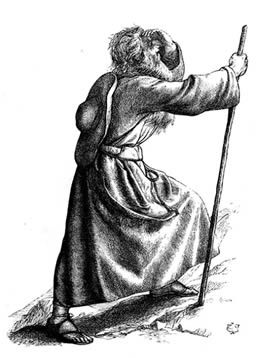
A pilgrim stopped me on my way to work
and asked me what I couldn’t understand.
Three times he spoke and twice his words were murk,
till finally I gathered what he planned.
His “P’otion?” was a traveler’s request
for confirmation that his aim was straight,
to walk ambitious miles toward the west
and meet the ocean at the golden gate.

How could I dream, when I awoke today,
that chancy fortune would bestow on me
this gift of wayward humor? On my way
to ride a train, with little energy,
I met surprise that would have been unknown
if I’d been vain enough to stay at home.

Posted in Poetry | Leave a comment

Talking to Myself

Beherding birds along the way to work,
rehearsing words out loud to no one’s ear,
bemused I dance a little to the perk
of autumn peppering the atmosphere
with crisp incursions into trees and dreams,
lancets like hummingbirds imbibing sage.
Considering myself I note what seems
the rub: I never learned to act my age.

October is for birds to leave and leaves
to turn, but what am I supposed to do?
The season winds to winter and deceives
with death suggestion, but in fact the view
is wonderful, the temperature is mild,
and I’m as manifold as any child.

Posted in Poetry, Weather | Leave a comment