Octrave

suggestion_box[1][1]

Funny how some customs start. Octrave began with a rant Olivia delivered to her friend Kris, who laughed so sincerely that Olivia wrote it up for her blog. It tumbled then into local popularity, was test-driven in Berkeley, and soon spread up and down the west coast. From those points, Internet and geographical, it ballooned into a tradition.

But it started on an evening walk. Olivia had had a trying day, and she ventilated about it to her best friend. Kris and Olivia had been walking and talking for decades and the best reason their friendship thrived was their mutual respect.

They are dissimilar women. Kris is short, blonde, buxom, and into people. She majored in Sociology. She is not an intellectual or an athlete. She is one of the nicest people Olivia ever met, but it’s a sincere niceness, so it doesn’t repel Olivia the way smarminess does. Kris hasn’t married or had kids. She’s always employed but she doesn’t describe any job as her career.

Olivia is tall, dark, slim, introverted. She took a degree in English because she could never stop reading and writing. She’s been married three times, has two children, works at least full time, and is critical about everything.

The two women talk on the phone every day (even now, when telephoning is almost as dead as videotapes). They try to take a walk together at least once a week. They have agreed to allow any sort of talk on those walks.

The walk environment means Kris can be judgmental. She has strict ideas about manners and the importance of education and sports, but she’s usually too polite to voice them the way she feels them. With Olivia she can be draconian, at least for her.

Olivia has always excelled at indignation. She has a quick mind, a powerful vocabulary, and a very expressive mien; she often scares or intimidates her interlocutors without meaning to. But when she walks with her BFF she can say it all. She can let it rip and not be held accountable for it. She can obtain relief.

So on that fateful walk, after releasing into the evening air her disdain for her work colleagues and her contempt for her fellow commuters, Olivia had a brainstorm.

“I have a proposal,” she announced. “You know the seventh inning stretch in baseball? I always liked that idea. Well, I think we need a verbal stretch. All of us. Every day.”

“When’s the seventh inning?” Kris asked. She was half a step behind Olivia and took her right arm as they walked.

“Oh mid-afternoon.” Olivia pondered for a few paces. “How’s this? From 3:07 to 3:15 p.m., every work day, everyone can say whatever they want, and not be held accountable for their words …”

She stopped walking and faced Kris as she spoke. “Really. Anything. You can be politically incorrect, make racist statements, engage in unfair verbal attacks. Anything goes. For eight minutes in the middle of the afternoon. Then it’s over. You reassume the mantle of civilization. And feel so much better.”

“Kind of like temporary Tourettes?”

Olivia laughed harder at that. “Exactly. I mean, we’re of course not supposed to make jokes about Tourette Syndrome, right? That would be senseless and inconsiderate and rude. But it will be allowed, from 3:07 to 3:15.”

“So what are we going to call it: Temp-Tourette?”

“That’s pretty good,” Olivia responded. “Maybe.” She paced forward for a few seconds. “Wait a minute. I don’t know why I specified 3:07 to 3:15. I mean, I wanted mid-afternoon because that feels like the seventh inning in a normal work day, but I don’t know how I came up with eight minutes. Maybe that’s too long. No … I like 8. It gives everyone time to stand up and shout. And it’s a lucky number; it’s the only one that ends in an upstroke. It’s factorable. It’s an octave. Oh! Oct-rave. Octrave.”

And so it went. Within six weeks, small businesses were adopting the Octrave break. It started like a guerilla action in bigger companies, where HR departments were so universally unsuccessful at shutting it down that they recognized inevitability and went with “if you can’t beat ‘em, join ‘em.” Even sole proprietors, working out of home offices, engaged in Octrave or said they did.

Octrave parties were thrown on weekends and holidays. Octrave-included tours were organized for travel. Octraves joined humor as the only practical response to worsening world, national, state, and local conditions.

It’s entirely possible that Olivia is correct in her assessment that the human species is headed for extinction, that we’ve passed the tipping point as irreversibly as polar ice melt. But philosophers and psychologists are starting to agree that, if there’s any hope for the survival of human personality, it may be owing to the initiation of the Octrave.

Posted in Fiction | Leave a comment

Scales (Part 2 of 2)

concertina

Alan can feel her respiration slow over the next few minutes. She has always been a good sleeper, she’s better at it when she’s depressed, and she’s been under treatment for depression for a couple of years. She is soon asleep. Alan takes his arm back and rolls to face the other way.

Again he wishes for the white noise generator. Anything but the sound of Hope’s breathing and Cutty’s restlessness. No: not anything – not the sound of the regular number 10 Muni bus down 10th Avenue in San Francisco, every 40 minutes all night, when he and his first wife Janice lived at 10th and Geary in 1972. They were young and skilled at sleeping then, and their bedroom was one away from the front of the flat, but those roaring diesel buses stirred their dreams nine times a night.

Alan’s mind meanders from the winter nights of 1972 to the summer evenings of 1973. That was when he and Jan first packed into the middle fork of the Feather River. Minerva Bar or was it No Ear? Minerva he thinks. He probably has a map around, in one of the boxes stacked among the rafters in the garage, but Alan certainly isn’t going to look for it now. The name doesn’t matter. He remembers the scene so well…

A flat area at the intersection of Washington Creek and the river. Well-furnished. The placer miners brought amenities into the steep canyon, made it even steeper by eroding the hillsides screeful in their search for gold, and then found it best to leave the amenities by the river. So Minerva Bar had a locked cabin, with pots and pans hanging on its outside, a strong clothesline, a stone fire pit and separate outdoor stove, even a movable toilet-seat-on-legs. There were boulders around just right for sitting or reclining. The river was cool but swimmable; the creek was cold and delicious.

They set their tent up on the flat slab of dirt that marked the right-angle intersection of creek and river. All night they heard the twin symphonies of moving water. Alan is remembering those cold-meets-cool sounds that contained every conversation he had ever heard, every echo he’d ever made, when he falls asleep.

Cutty wakes him at 4 AM. The unmistakable percussive sound of a dog regurgitating. Alan comes to consciousness with a groan. Hope appears to sleep through it. But Alan wonders; she’s a nurse by training after all – does she really not hear sounds of illness? It seems to him that the longer she has remained depressed, the less she has been willing to do.

He cleans up the mess. He returns to bed. He’s aware again of the elusiveness of Morpheus.

It worked earlier; Alan relaxes his body and thinks about the white noise of Washington Creek and the Feather River. But this time the meditation leads him to memories of making music.

The trombone in 5th grade. Teaching himself harmonica, and electric piano, and then picking out tunes on the Hammond organ his father bought. Alan didn’t get much formal training but he had a natural ear; his chords weren’t sophisticated but he could pick out a melody on any instrument. White-boy rock: thin and stringy but energetic. White blues: sad enough and classic but without the lowdown throb.

Thinking about making music does not create the white noise in Alan’s head that he needs in order to return to sleep. But it carries him through the dark hour and a half before dawn without depressing him. He lies lightly on the bed. He decides that he wants to make music again. He’ll dust off the synthesizer and find the concertina. A tune is beginning in him and he wants to play it.

At 5:45 Alan realizes that he doesn’t need a white noise generator. He needs real white noise. He wants to move them near a large creek or a small river, or maybe just build a fountain outside their window, but one way or another he’ll have the sound-of-all-voices again.

Seven minutes later he’s thinking it will be good for Hope too, and he’s imagining the sounds of falling water, when he finally drifts again into sleep. He’s so tired that he doesn’t move a muscle from then until Hope wakes him when she leaves their bed to have her first cup of coffee and cigarette.

Alan is insufficiently rested but he’s still optimistic. He’s determined to return to music and to make his own white noise. He blurts his intentions to Hope. It deflates him a little when she doesn’t respond to his declarations. He figures he’ll deal with the dog and the groceries before attending to his new plans.

He’s a little irritated when he puts the leash around Cutty’s neck, a little bitter at Hope. He does so much, listens so carefully, tries so hard; he thinks she owes him an open mind about change. When he realizes that he has the choke chain on upside down, he doesn’t just stop walking to straighten it out. Maybe he unconsciously wants to disobey Hope, but he yanks the leash off while moving, startling Cutty, and startled Cutty races down the street. At that same moment Plato the Chihuahua slips through his opening front door and crosses his yard; before Alan can get closer than 30 feet Cutty is on the little tan dog, Plato is up and in Cutty’s mouth, Plato is motionless on the sidewalk.

Alan and Plato’s owners reach the small dog at the same time. Plato’s thin leash dangles from his master’s hand like a fuse. From the angle of the body it’s obvious that Plato’s neck has been broken. Cutty continues running but stops five houses down the block.

Alan’s head feels stuffed with cotton. There’s white noise in his brain, rushing in all the spectra of sound, containing every conversation he’s ever heard. There’s a thick dirge within. He straightens his lower back and puts his plans on hold as he sets off to catch Cutty, to have him destroyed.

Posted in Fiction | Leave a comment

Scales (Part 1 of 2)

concertina

Alan is 50. There was an adage when he was 20 about not trusting anyone over 30, and that saying is now more than 30 years old. He has just finished watching a documentary on PBS about the 60s. He was surprised to learn that the Free Speech Movement grew out of the HUAC hearings in San Francisco. He is astounded to realize how many decades have passed since the assassinations and devastations of 1968.

He is still in his TV chair. Alan has a weak back and can’t seem to get consistent with abdominal crunches. But ever since his surgery he knows how to nurture himself. He spent nearly $3,000 on a power-recliner/massager, and he’s never regretted the purchase. It’s more comfortable than bed. He lolls in the chair now, remote commander on the table at his right, sleepy Dalmatian curled on the floor at his left.

“Al? Honey? Alan…” Hope’s voice reaches him from their bathroom; he knows if he doesn’t go to her she’ll come down the hall to him, toothbrush in her mouth or lotion in her hand.

“Be right there,” he calls to her. “I’m just looking up something.” Hope likes him to be with her when she turns out the light, and he’s tired anyway. But he’s had a little trouble falling asleep and staying asleep lately. He’s a bit tense.

The catalogue has two types of sound soothers. (Three actually, if the tiny Travel Soother is included, but it has only Seaside, Summer Night, Brook and Rain – no white noise – so Alan has deemed it not a true soother.) There’s a portable Sound Soother, with or without AM/FM radio, for $120 to $155. And there’s the larger and clearly more serious Stereo Sound Soother (with SuperView Screen) for $229. Alan has the room and the assets; he decides to go for the stereo model.

He also decides to head for the bedroom. He presses the button that puts the footrest down and the chairback up, and by that action disturbs the dog. Cutty is a liver-spotted Dalmatian, with spots so few and light that he looks almost pure white, and they named him Cutty Sark for the scotch they fed him to help him through a rough puppyhood. Cutty was the runt of the litter and born deaf in one ear. He has always been a difficult dog, excitable like a terrier and even more prone to fight, but Hope and Alan love him.

Cutty jumps up and snaps air near the chair as Alan with an “Easy boy” attempts to calm him. He tries to be patient with the dog, but he’s tired of problems. He feels like he’s walking toward a bundle of wifely need, dogged by a neurotic companion about to trip him with frantic movements. Alan wishes he had the white noise generator, now, so he could tune out the whines of his dependents. But he doesn’t have the generator, and he doesn’t want to get the dog agitated, and he certainly doesn’t aim to give Hope anything more to feed her despair. He’d rather avoid her stiff-backed anger in bed and a cold morning tomorrow, and he can do without a couple of hours of “talking” now. So Alan doesn’t kick Cutty. He brushes his teeth, pulls off his clothes and climbs into bed with his wife.

Hope backs her cold butt into Alan’s belly. She wriggles against him. It isn’t that she wants sex; she’s nestling her curved body into his the way she likes to go to sleep, wearing a big T-shirt so her skin doesn’t stick to his. But the shirt always rides up, with the wriggling and nestling, and Hope’s butt is always cold. It used to be a bigger butt when Hope was happier, and Alan didn’t mind that, but in the last year she has lost her appetite and 25 pounds. Now her butt is narrow. Still cold but narrow. Not nearly as much fun to warm.

“I wish we had time tomorrow to work on the deck,” she murmurs with a final squirm as she pulls Alan’s arm across her middle. They have just installed a hot tub in their yard but they can’t use it until the surrounding deck is sealed. Hope talks like her happiness depends upon being able to soak in hot chlorinated water surrounded by her beloved garden, and Alan has therefore been doing more than all he can to deliver her desire. He can’t figure out why she continues to sound so forlorn about it. He’s beginning to resent it that she doesn’t act grateful about his effort. Or even optimistic.

But he doesn’t address his feelings about the matter. “We’ll make time, honey,” he says to her. “We haven’t got that much going on.”

“Cutty needs his bath, and we’ve got to go shopping, and I want to work the far flower bed and cook. And I need to finish some bowls.”

“Um… okay. I’ll bathe the dog and do the shopping. You can garden and work on ceramics or food prep: whatever. There will be plenty of time.” Alan has a fleeting vision of himself, alternately frantic or idle but never in the good Saturday place between, and suddenly, strongly, he wants to make some music. He used to play any keyboard instrument around. He used to play recorded music on the stereo. When did that stop? It couldn’t have been too long ago; he owns a player…

“You better give Cutty a long walk before you try the bath. Otherwise he’ll be way too hyper.”

“Right.”

“Watch him when you walk him. Keep him on the leash. I really think he tried to kill that cat the other day.”

“Oh come on.”

“No, Alan. I was there.” Hope cranes her head off the pillow and turns her face in Alan’s direction. “We both saw the small cat under the car, and I swear – it was like tactical: Cutty waited till the rare car approached and then flushed the kitty out. He raced in the cat’s direction, snarling and really loud, and the car nearly hit the freaked-out cat. It was disturbing.”

“Shit. If Cutty’s going to kill a small mammal, he might as well go for old Play-doh.”

“Alan!” Her reprimand is whispered and sarcastic. Their mutual contempt for the neighborhood Chihuahua promotes an immediate connection. The small tan dog is classically nervous, yippy, and unattractive. It took them months after meeting Play-doh’s elderly owners before they realized the dog’s name was really “Plato.”

“G’night Hope.”

“G’night honey.”

Posted in Fiction | Leave a comment

Inside Biking

tunturi-e80-exercise-bike[1]

This morning as I pedaled on my bike,
the music pumping rhythm in my head
and coffee by my side the way I like
my early exercise, the while I sped
my body through that working half an hour,
I think the thing that struck me most was sweat:
collecting, dripping down my face as power
coursed within – I gloried in the wet.

For I’m so filled with restless energy,
that movement channels it but as it does
it manufactures more, compelling me
to step it up in hunger for the buzz
of muscle madness, circulating glee,
and sweaty fluid limber ecstasy.

Posted in Health, Poetry | Leave a comment

Being (T)here

suitcase[1]

I like to walk a visit to a place,
acquaint my feet and legs with its terrain,
inhale its air, examine every face,
and let its ambience itself explain.
I don’t care overmuch about the food
and I don’t want to board a guided tour,
but let me through my legs absorb the mood –
impress me through my soles as I explore –
and I will meet the spirit of the site,
penetrate a little mystery,
feel the rhythm of its day and night,
sense the pulsing of its history.
I’ll take away pedestrian success
perambulating into happiness.

Posted in Poetry | Leave a comment

Rosemary’s Maybe (End)

Why-You-Should-Avoid-Using-The-Word-Maybe

Rick poor Rick is the victim of a beautiful narcissistic mother. Her name was Tammy, she was actually born in Tennessee, and she had six husbands before settling into her current cranky dowagerhood. Her marriages took her and her boy Rick to Virginia, New York, Montana, Idaho, Colorado, Texas and now (for her) Arizona. When she wasn’t sleeping with a husband she had Rick in her bed. Actually, to little Rick it was the other way around; he slept with his beautiful mom except when he was displaced by one of her husbands.

Of course he grew angry. But he acted friendly and happy because that’s the way he got attention from Tammy. In time Rick married a beautiful woman who would never betray him. Charlotte is lovely, but she is a wife and mother first, a Catholic second, and a person only third. She will never leave Rick. She will never cheat on Rick. She will nurture and love his children like Tammy didn’t nurture and love him. Meanwhile, Rick has systematically and continuously cheated on Charlotte. He’s had to: he has committed himself to punishing women with love. And the only women he can really love are the ones who won’t be faithful to him. Like the 17 year-old slut who seduced him when he was 15 and then did his two best friends. Or Pamela, whom he loved when he was in the Marines after college, and who fucked his cousin while he was away. Or Rosemary, the one out of all his marital affairs who was married. The only lover he had to send back to a husband when he headed home to Charlotte.

Rosemary isn’t married now; will Rick remain interested in her? She stopped seeing Rick around the time she met Ray, for whom she later left her first husband, and when she and Ray split up Rick was out of the area. Now he is back. Now he is nearly 60, now he says he hasn’t fooled around in six years, now he says he and Charlotte never do it… Actually, Rick probably won’t be bothered even if Rosemary is faithful to him. And she probably won’t remain faithful. Once the dam is breached, she thinks, she may just enjoy a sexual renaissance. So Rick could get his psychological rocks off too…

It would be fun. Rick is so carefree and abandoned when they are together. He drops that suburban macho middle-aged attitude and is young again. Free and foolish.

Rosemary wonders why Stephen appeared in her dream and concludes that he was about sex. He was her last partner, sex is obviously on her mind, why not? And the steps, the missing steps…

She used to have a recurring dream when she was a little girl. Well, it recurred until she tamed it. In the dream her father sent her to the basement for something. She flipped the switch at the top of the stairs but the bulb must have blown. The stairway and the basement remained dark. Her father’s demand was urgent; she had to get whatever it was out of the basement anyway. She started down the stairs into the dark.

In the dream there were no stairs. Her foot stepped down on nothing and she began to fall endlessly into the terrifying dark. She recalls having that nightmare repeatedly, until she taught herself to become aware, even while she was falling, that she was asleep. That’s all it took. As she recognized dream, the dark turned into sweet yellow light and the fall turned into swooping flight.

She smiles now as she remembers. Rosemary smiles and wonders about the opportunities in missing steps.

Posted in Fiction | Leave a comment

Rosemary’s Maybe (Middle)

Why-You-Should-Avoid-Using-The-Word-Maybe

Sex would be fun, Rosemary thinks. Rick would be fun. He’s grown a little plump and more suburban, but he still laughs well. He’s surprisingly nervous, she knows. He has an acid stomach and hand rashes. He’ll ever be married and bored with good Charlotte. He’ll ever be attracted to Rosemary, or to a woman like Rosemary, who won’t be true to him. But he’s boyish, self-deprecating, fun. And he knows how to get into making love.

Rosemary would like some fun. She’s generally pretty happy but she’s often too responsible. Thinking about it, she can only remember a few days in her life that she can call purely fun. The first wasn’t just a day; she remembers a full week of it. When she was seven. When she and her brother Hank were the only children of her parents, two years before the twins. Their family of four went with another family to the shores of Lake Winnepesaukie, in New Hampshire. They had a cabin right on a pier which stretched out over the crystal clear water, and the kids were free to run down that pier and jump into the lake any time of the day. Rosemary remembers swimming underwater as long as her breath held out, opening her eyes to that fresh cool water, scanning the sea of big boulders on the lake bottom. Her father called her a mermaid when she surfaced with her seal-sleek head and sparkling eyes. He called her a pearl fisher when she brought him little treasures from below. She remembers her dad so happy that week. He was usually too busy being a father and an architect to laugh. But that week he joked around with his friend Jim. They smoked cigars together. They played tricks on their wives. They drank Pabst Blue Ribbon beer and carved birch walking sticks for the kids. They hooked arms and danced around the cabin porches, singing. Rosemary had never seen her father carefree before. And she who with her brother Hank was so closely monitored by parents, she’d never felt so free herself.

She remembers another purely fun occasion: her brother Hank’s wedding. She was with her second husband Ray then, when Hank married her friend Carol. That night, Rosemary danced with Ray, and Rosemary had fun. She and Ray could really move together, fighting a bit for the lead, pulling and swinging one another so hard that their armpits ached pleasantly the next morning. They danced so well that the rest of the wedding guests backed up into a circle around them and applauded when they were done.

Ray was usually an uptight man, very high energy and nervous. He had a lot of responsibilities and he took them with military seriousness. He was a suburban patriarch. Rosemary used to say that Ray couldn’t relax without losing consciousness, and the one time that wasn’t true was when Ray was dancing like they did that night. Dancing hard and knowing they’d have good sex later. Ray relaxed. Rosemary felt so free she laughed with joy.

That was ten years ago. Ray and Rosemary have been divorced for six. Rosemary’s thoughts shift back to Rick. Should she or shouldn’t she? She doesn’t consider his wife Charlotte. Rosemary and Rick had an affair 20 years ago, when she was with her first husband, and their antics didn’t have anything to do with their marriages. Her time with Rick was sideways-time: sweet warps out of their normal workaday/parental/marital schedules, when they only paid attention to each other, when they only had to be perfect for a set little amount of time. Why not? It was fun…

Posted in Fiction | Leave a comment

Rosemary’s Maybe (Beginning)

Why-You-Should-Avoid-Using-The-Word-Maybe

It’s taking her forever to figure out her life. Rosemary is more than half-way through her expected span. She likes to think she has been paying attention. Most of the time she feels like she’s making her way with her eyes round and her mouth open. Yokel-like. Astounded.

When she was younger she was sure she’d have a handle on it by 50. She was always a people person and quick to read others. It was a useful skill in business and at parties, being able to separate the rats from the rabbits. But it didn’t help her get herself.

Now Rosemary is 51. She is five and a half feet tall and weighs 150 pounds. She exercises regularly because it helps her manage stress and it keeps her muscles firm. She has her curly hair professionally colored and cut, but she hasn’t yet signed up for the facelift.

She has a quick mind and a fast mouth. She grew up in an articulate household, where debates were polysyllabic and loud. She early learned to organize her argument and deliver it with decibels. She sometimes makes what sound like bigoted comments, but her insertions of ethnic or other descriptions are really just fast speech from a large vocabulary; she grabs adjectives for emphasis, and blurts them before considering.

Taken all together, she’s attractive and interesting. She would have no trouble finding a boyfriend if she got out in the evenings, but she likes to stay home. As it is, she has recently re-attracted the attentions of an old married lover, and she is about to decide whether to do it with Rick, or not.

She had drinks with him last night. Rosemary normally doesn’t drink; alcohol makes her want a cigarette or a man, and she gave up one five years ago and the other two. She meant to give up tobacco. She didn’t mean to give up men, but she hasn’t been with one since she broke up with Stephen, weird Stephen. He was brilliant, tall, slim, with good teeth and deep blue eyes. He had a very nice penis. But he tended to be unfocused, and he was an acolyte in search of a guru. She stopped seeing him when she lost all respect for him when he joined a cult, and she hasn’t really missed him. She meant to find another man. But at her age two years flew by, and now here she is, considering sex again at last.

She had drinks with Rick from 3:45 to 7 PM. Five wheat ales and two shots of tequila. She didn’t get drunk, but she got warm. When Rick drove her home she let him kiss her. She kissed him back. He put her hand on his crotch outside his pants. She didn’t stop him until he slipped his hand into her jeans, between the denim and her panties. She squirmed her bottom away from him but leaned her face toward his. She kissed him goodbye. He looked at her with his warm brown eyes crinkled in the corners, smiling. He showed her the face she loved 20 years ago, older but still his. “Am I going to get lucky?” he asked. She told him she’d talk to him next week.

She didn’t feel drunk after that, but she also didn’t feel hungry. She skipped dinner, skipped her customary joint, removed her makeup and her contact lenses, and got into her bed. She drowsed from 8 PM to 8 AM and because she didn’t smoke dope, and because with that much down-time a lot of her sleep was light, she remembered some of her dreams.

Stairs. She dreamt of stairs. Her house has a single pine staircase, but in her dream there was a short half-set of stairs in addition to the main flight. She has no idea where the half-set went (in her mind’s eye the day after, it seems to her that there were only four steps and they led to a large window), but she knows that in the dream there was a tread missing from the half-set, and another tread missing from the full flight. Missing pieces. Missing steps. That part of the dream was easy to interpret. But the other part, the part with Stephen walking toward her up the entry steps (what entry steps? her house doesn’t have entry steps): what did that mean? He wore a turquoise T- shirt, a bit tight on his firm chest, and a pair of soft corduroy pants, too loose on his thin body, hanging beltless from his narrow hips, showing the plaid waistband of his boxers. Stephen walking toward her, shabby as ever, gray-haired, gray-faced, with those deep gray-blue eyes, smiling warmly.

Posted in Fiction | Leave a comment

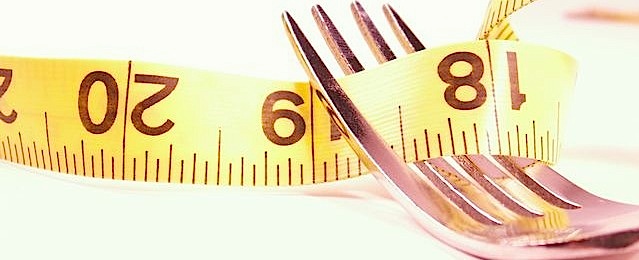
Eating Disorder

KONICA MINOLTA DIGITAL CAMERA

“If only I could…” “You’re not old enough.”
“But all I really want…” “You’ll have to wait.”
More singular than Beauty’s rose and tough
as diamonds to obtain, I dedicate
intelligence to choosing strategy
and tactics so my body will behave.
That’s all I’m asking presently of me:
the only thing I wish nobody gave.

Too many years to decades grown and passed
have witnessed me recording all the rules
I fabricated to defy. At last
there’s light to recognize the dance of fools
who take a backward tumble in the hush
behind the vacuum of the toilet’s flush.

Posted in Health, Poetry | Leave a comment

Sabbatical

Today is for recovery and rest.
I dedicate the daylight to my fix.
I’ll hold the dying dog against my chest
whose mess I rose to clean – four forty-six
this morning: dire sound before the birds.
She’s dreaming now upon her laundered bed
but I’m a tired person, short on words
and at the precipice of aching head.

I’ve traveled lately more than I’ve been home.
I’ve worn my contacts every day for weeks.
I haven’t studied Spanish, made a poem,
or contemplated rain as window streaks
since when? I see a Sabbath now. I’ll sit,
till I recover stamina and wit.

Posted in Poetry | 2 Comments