Whatever (Middle)

affirm (2)

Connie called about nothing that night, and Jim didn’t call about something. Without any warning he showed up nearly half an hour early. It was nothing personal; in his perpetual fear of forgetting or being late, SuddenJim often arrived early. He tended to push everything, to fidget everywhere, eagerly, boyishly, naggingly. Connie found it attractive, probably in contrast to her dour husband Duane. To Deirdre it was exasperating. She thought she spent time with Jim because her character was ready to develop that next step, the step that would enable her to say no to a sweet puppylike male, dancing on her doorstep singing wordlessly “Let me in. Oh let me in. Let me in and I will be happy. Let me be happy.”

So Jim showed up early, looking eager to be happy, fidget/dancing on her doorstep like he needed to go to the bathroom. Deirdre had to get dressed and drag her son to the school pageant, and Jim and Connie were coming along. They wanted to come. Neither Deirdre nor Ian understood that.

“Why are we going to this thing again, Mom?” Ian asked through the knit cotton of his favorite black T-shirt as he pulled it over his head. Next he’d be putting his hooded sweatshirt on, pulling the neck up so he spoke through that cloth, letting the stretched cuffs fall over his fingers. Ian would chew on his hood strings as he talked to Jim, to his Aunt Connie or Uncle Duane, poking his thumbs through the holes in his cuffs, shuffling.

“Some people like this stuff, Kiddo,” Deirdre answered. “Lights and noise and all. Jim seems to thrive on it. Something about hating school when he was a kid, y’know? He wants to like school now. And I guess we have to go because I would have gone if you hadn’t gotten kicked out of the assembly: I would have been proud to watch you perform.”

“I’m sorry,” but they both understood he said it just to make his mother stop talking about his misbehavior. And Deirdre knew she wouldn’t have wanted to attend the Christmas pageant even if Ian hadn’t fucked up and gotten suspended. Again.

She looked at his hair, peroxide-orange over dark-brown, remembering their coloring session earlier that week. Jim didn’t approve: thought somehow the consequences for Ian’s misbehavior ought to be hair hell. Deirdre didn’t mind coloring his hair. They talked while the bleach worked; she well remembered being a kid, so she always gave her son information. “You’ve got to like yourself,” she told him. “There’s no point in retrospective guilt, but I use what I call prospective guilt to guide me.” Ian uplooked a question at her through his lashes. “I mean that I imagine how I’ll feel about myself tomorrow, or next week, or next year – whatever’s appropriate – when I decide about my behavior today. I always choose the thing that will make me like myself more in the future. Because there’s nothing better than liking yourself. And nothing worse than disliking yourself,” and she saw that heartbreaking answering glint then in his eyes. She watched his face congest but he held back the tears.

“And Aunt Connie’s coming to the pageant,” she resumed, “partly for love of you but also because she’s lonely. Uncle Duane has to fly tonight.” Duane was a navy pilot, nearing his 25-year retirement mark, and it was true that he was working that night, but he was due in any time. Connie always tried to make Duane sound exciting – career navy pilot and all – but her husband was a humorless boring bitter man. He was an undiagnosed dyslexic and he never learned to read well, so he’d hated school as much as Jim did. Connie claimed he was very bright, but Deirdre thought you wouldn’t know that by knowing Duane. And although she bragged he was bright to others, Connie nagged him like he was a forgetful child, so that Deirdre and Ian preferred seeing Connie or Duane alone to visiting them together.

Posted in Fiction | Leave a comment

Whatever (Beginning)

affirm (2)

W(hate)ver. Deirdre liked the T-shirts and tractor caps at first. She bought an XL, green-letters-on-white, as a sleepshirt for her 12 year-old son. Afterward the phrase came to represent for her the essence of passive-aggressive response. WHATever. WhatEVer. Not nice, really.

And later still, riding the bus home one night, glancing out the window at a stop, she saw a bulldyke wearing the shirt with a brown leather pilot’s jacket over it, hands in her jeans pockets so the jacket hung open, its bronze zipper teeth like tiny horizontal fringe, cropping to “hate” the Whatever.

Progressions like that made Deirdre distrust her initial responses. She figured she must be counter-intuitive, so often disagreeing with herself. Gradually she learned to reserve judgment. She began to see beauty even in dereliction. Broken glass in a vacant lot, viewed in the sun from her commuter train, sparkled like morning-gilt ocean or mica in a sidewalk. The scab-faced rope-haired crazy drunk, leg-splayed on the floor of the train station against a tiled wall with his penis apparent in the gaping hole in the crotch of his smear-stiff corduroys: that penis the only handsome thing about him, large like a Scandinavian, circumcised and smooth.

If she weren’t reserving judgment she wouldn’t be dressing for the school holiday pageant. She always hated these events. Having to hope for a crowd. Glaring garish lights. The seesaw between embarrassment at the amateurism and the face-thickening demands of emotional manipulation. How heartwarming is that diversity…

But everyone said she should go. Mom and Connie, SuddenJim. Everyone but she and Ian. Deirdre reserving judgment dressed to leave her house.

Her phone rang (Connie). And didn’t (Jim). Connie as usual called for no reason Deirdre could determine. She did some big-sister bossing about what Deirdre should wear to the pageant (“Not the old T-shirt again, Dee,” she declared. “You have to set an example for Ian.” As if clothes could make the boy behave.) And she wanted to rave about some guy she and Duane met in a bar the night before. Connie prided herself on the accuracy of her first reactions to new people. She claimed she could size a person up, character-wise, in five minutes of conversation, and this guy was going to be good for Duane’s career. Deirdre figured that if Connie’s assessments were that accurate she would never be disappointed in people, and since her sister was almost always complaining about how someone let her down, her first impressions probably weren’t often as correct as she thought.

Connie had said Jim Sullivan was a catch when she first met him. She tried to sell Deirdre on him. She described him as eccentric but highly intelligent, weird but fascinating. Actually he was quite smart but had a cognitive disorder; he’d always been distractable unless the subject grabbed him, and he’d coped with his problem by narrowing his field of engagement to what he could manage, and by taking in every kind of stimulant. He drank quarts of black coffee each day. He went through a carton of non-filter cigarettes a week.

If the schools caught a Jim Sullivan now, they’d get him to a shrink and onto some form of speed. They could even test him for his ailment; he has attention deficit disorder, and the doctors would see it if they gave him traceable glucose and watched how little of it was taken up by his brain. Like so many boys with ADD, his condition made him hyperactive the way a toddler who misses his nap is hyperactive; the poor man had a tired brain and needed a little wake-him-up.

But Jim is 54; back when he was in school they just told him to pay attention and punished him when he didn’t. They called him impulsive. They nicknamed him Sudden Sullivan. He learned to hate school, to go into a trade where he could work his body and therapize his mind, to limit his appointments and engagements so he could remember to keep them. At this point medical science figured he was coping well enough that he didn’t need any meds.

Jim latched onto Deirdre when he met her three years earlier. Connie introduced them, and she and Jim concluded that he and Deirdre made a wonderful couple. They were both into enneagrams and the numbers worked. Deirdre didn’t necessarily agree, but she reserved judgment. She couldn’t see a purpose to personality typing systems. She enjoyed some conversations with Jim, especially the ones that took place in bed after languorous kissing and vigorous sex. She didn’t see herself as half of a committed couple, but gradually she realized that Connie, and SuddenJim, and the rest of the world did. She tried to argue about it but no one wanted to listen; she sometimes thought she’d have to stop seeing Jim just to prove to them all that it was casual.

Posted in Fiction | Leave a comment

Fall

leaf (2)

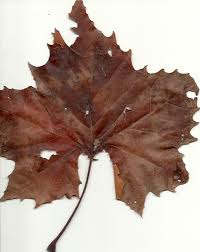
A folded fallen leaf I saw today,
sienna on the sidewalk’s white concrete,
appeared at first a dead bird in my way
and I prepared to step out on the street,
until I recognized it for the leaf
it is: a time-bleached piece of sycamore
whose fall betokens otherwise than grief
or detour as it opens autumn’s door.

If I suspect an omen from a bird
that isn’t there (my eyes more skilled or blind
than old Tiresias) it’s not absurd
to read this vision for intent of mind:
Whatever tender I once held for him
detached last night to settle, dead and dim.

Posted in Poetry | Leave a comment

Rescue

buterfleoge

I glanced outside, and saw a butterfly
suspended in the web a spider set
from oak tree to garage. She caught my eye
as fast as silk had wrapped her in its net,
her wings a banner in the morning sun
that shuttered black and gold against the air.
Then I prepared to watch the spider run
the web and take the beauty captured there.

A half a minute let me justify
my interference, for no spider came.
I dashed outside to free that butterfly,
but never did I touch her wing or aim
for any other thing than liberty
for butterflies in autumn webs, and me.

Posted in Poetry | Leave a comment

Pi

pi

“Dig it: I think I just figured out the number of infinity.”

“What are you talking about?”

“Oh not really of course. But it’s a grabber of a topic sentence, huh?”

“Again, say what?”

“Bear with me. Consider the circle.”

“Must I?”

“Very funny. If you want to calculate the circumference of any circle, the formula is 2πr. You know: 2 times the radius times pi.”

(hand in the air, palm outward): “I think you’re going intellectual on me.”

“Shut up. So 2πr is the same as 2 times r times π. And 2 times the radius is exactly the diameter. So you could say the formula for figuring the circumference of any circle is the diameter times pi.”

“Which the long way of stating…?”

“Sorry. I’m just developing this, so I need to rehearse it. You’re my audience.”

(mumbling): “…more like your dummy.”

“Just a minute. So if circumference is diameter times pi, then another way of telling the truth is to say that if you divide the circumference of any circle by its own diameter, you always get this value we call pi. So pi isn’t a number as much as it is a ratio. A relationship. The way you torque a line into a circle.”

“Okaaay…”

“Now consider the circle.”

“Jeez. I just wanted coffee.”

“I’ll owe you. Stay with me. A circle is actually a polygon with an infinite number of infinitely small sides. Yes?”

“Yes!”

“And whenever someone or some computer or some collection of computers sets out to calculate the value of pi, he/she/it/they always discover that the calculation is endless and doesn’t repeat. Oh I love that.”

“You love it, why?”

“Because if the division did come to an end or the numbers started repeating, well, that would indicate that a finite number of small sides could make a circle. Which isn’t so. Pi has to be infinite or there’s be no such thing as a circle.”

“And that makes you conclude pi is the number of infinity.”

“Doesn’t it?”

“The problem with your reasoning is that numbers aren’t real. They’re a human concept. They’re not part of the actual world.”

“Oh no. Precisely wrong. Reality is clearly our subjective experience of it. Nothing else is certain. We can argue about what a car is, or the color red, or the concept of love. But no one disagrees about 2.”

Posted in Uncategorized | Leave a comment

Wednesday Commute

Bay_Area_Rapid_Transit-San_Francisco-image[1]

I get another span of privacy
before the seat beside me’s occupied
and open up this book: three minutes free
to put to words the gloom I host inside…
No sooner written than it came to be –
as quick as ballpoint ink was laid and dried,
a fellow took the space but doesn’t see
my writing, for he’s studying a guide.

Arrest Report Appendices, I note,
as I allow my glance a shifting right
and mark his shaven head, his hairy toes
in Birkenstocks, his youth a bright
momentum, quiet energy at bay,
infecting me resiliently today.

Posted in Poetry | Leave a comment

Spin (2 of 2)

pppaddle

We talked directly about suicide. We agreed it was the ultimate selfish act. But only because it was ultimate. Ginny said there were plenty of other equally selfish acts. I’d rolled a joint and handed it to her, and I was holding a match to the end of it when she said, “It’s selfish when someone is late for an arranged meeting and they don’t call. It says they don’t value my time. It’s rude.” Her speech blew out the flame. I struck another match.

“And what does it teach me?” she continued, but she was talking to some spot on the wall behind me. She wasn’t looking at me. “Only to disregard you. Only to be unconcerned. Is that what you want?” She took a deep hit on the joint and I shook out the short flame.

It turned out she was addressing her married old boyfriend, but she hadn’t tried to kill herself over him. She looked at me and she said wearily but convincingly that she had felt she just didn’t have the stamina to go on. There seemed to be nothing else for it. I invited her to stay with me for awhile.

My brother then lived close by. We were into one of our habitual competitions, and I happened to have the table, so he was over at my place most nights.

I guess we got into ping pong back in 1964. That’s when I remember playing every night; I think my parents bought us the table that summer. I was 14 and Paul was 12 and it may be that AM transistor radios were just getting popular then, because I remember a small black one that aired the same run of rock ‘n’ roll songs while we played ping pong, and that thrust “Satisfaction” at me when I held it by my pillow at night.

The evenings were warm. Our parents sat on matching floral cushions in matching redwood chairs on their Southern California patio, looking at us or at their iceplant-edged lawn (or was it dichondra? those were dichondra days…), sipping martinis made with very little vermouth. Mom kept telling us to turn the radio down, and we ignored her. Paul stood six feet away from his end of the green table, ready to power the little ball back at me every chance he got. That meant I had to stand farther away from the table than I wanted – about three feet – but close enough that I could slice the way I liked at the hollow white ball.

I hit that ball back to him almost every time. We were pretty well matched. But I usually managed to cut at it with my paddle at an angle, to skim at the edge of it or pull away slightly even as I was pushing, so the ball went back to him over the stiff white net, but it never bounced the way he expected it would, and sometimes it fooled him enough that he mistruck. I loved it when that happened.

Paul and I don’t consistently play ping pong; it’s like we have infections and then remissions. When we’re into it we tend to neglect regular duties. We were having a good bout of it when Ginny moved in. She got to know Paul by watching us play. I’m sure that skewed her vision.

They met, they mated, and they married. Some of it was plain old timing; she was 28 and he was 30 and marriage was an age-appropriate exercise. But I know a lot of it had to do with misplaced emotions about me. For both of them.

Hannah and I have talked about this, and I kind of wish Ginny would overhear it. We know from Ginny and I know even from Paul that Ginny and Paul don’t have sex. Maybe once a year they do it, when they’re drunk and away from home in a nice hotel, under the influence of adult movies and limitless towels, but never at home. Ginny says she’s really not interested any more and she might try a woman. Paul says he doesn’t particularly like intercourse; he likes to cuddle. Both statements are weird.

I think it may be that Ginny and Paul each got together with the other as a way of having sex of a sort with me. And when it didn’t work they stopped having sex. Something like that.

Hannah and I agreed long ago that that’s the way it is. At least, I said it a lot and she didn’t seem to disagree. I can usually count on Hannah to let me know when she disagrees. I’m surprised Ginny hasn’t overheard us. And kind of sorry.

So Ginny and Paul are married. And Ginny is having an affair with a septuagenarian. She’s not exactly having sex with him, although she tells me he’s getting some Viagra, and they expect to consummate their relationship soon. For now, she says he spends hours on her pleasure.

I think it’s just plain silly. Sometime I feel like pushing her. Push…pull. Flirt…finesse. Give her a little spin till she sees herself.

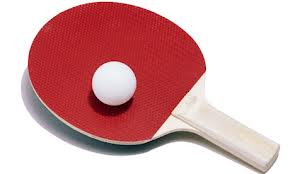
I’ve invited her over for a game of ping pong. I hauled the old table out of the attic and set it up on the back patio, under the drooping pods of wisteria. It’s still bright green, and its lines are as white as first-aid tape. It reminds me of playground markings on asphalt, for four-square or dodgeball, of white alphabets on the classroom greenboards that replaced old blackboards. I ran my thumb over the red-patterned surface of a paddle and I cupped a white ball in my hand.

If Ginny could confront me about hearing my telephone conversations, then she can face me over a table tennis net. I imagine she’ll start close to the edge of the table but it won’t surprise me if she turns out to be a power hitter. I’m flexing my wrists with anticipation. We’ll see about her angles.

Posted in Fiction | Leave a comment

Spin (1 of 2)

pppaddle

“You know, I really don’t want to sleep with my father.”

I was so embarrassed. There we were, alone in the office that Friday afternoon, and Ginny had just let me know that she often overheard my telephone conversations. I was startled at that. I stammered out some sort of apology and told her I hoped she hadn’t heard anything upsetting, and that’s when she made the father statement. “Oh shit,” I thought: “Busted.” I talked daily to Hannah on the phone, and we discussed everyone we knew, so of course I described Ginny’s affair with the old man. Who wouldn’t? A relatively attractive 40ish woman in bed with a 75 year old guy…

The fact is, I never said Ginny wanted to sleep with her father. What Hannah and I had been discussing was Ginny’s track record with older men. This was not the first time she had sex with someone more than 30 years her senior. I’d known Ginny for two decades, and this one was at least her sixth. She was a patsy for any older, courteous gentleman who let her know he adored her. No, Ginny didn’t want to sleep with her father. But she seemed to want something from a man his age.

My dad was a great dad. Hannah’s dad was a great dad. Neither Hannah nor I would be charmed by a flirtatious older man. We would feel distinctly uncomfortable and get far away fast. But Ginny lapped up the attention. She found the old guys debonair. She took them seriously as men.

I should have said it then. Something like: “I don’t think you want to fuck your father; I never said you did. But the fact that you’re consistently attracted to men his age who treat you well: I think you’d better look at that.” But she stood before me, short and blocky, blonde and bosomy, almost vibrating with apparent determination to speak up to me. I don’t know. I think I didn’t want to quash that spirit.

Ginny hates everyone she loves, and I’m in her top five. Me, her mother, her two brothers, and her husband who happens to be my brother. I didn’t understand what “passive aggressive” meant till I met her. Ginny is almost always resenting someone, and you can tell who’s on the top of her shit list because she speaks the sweetest to that person. She’ll avoid the conversation if possible, but if not, she’ll be amazingly nice. Time and again I’ve stepped into her office and she has signaled that she’s trapped on a phone call but that I should wait. Then I’ve watched her, gushing good service with her voice into the mouthpiece while she’s flipping the client off with her hand or aiming her index finger toward her open mouth in that universal gag pantomime.

So I really think I was pleased, all in all, that Ginny confronted me about my telephone calls. The truth is, I didn’t mind that she overheard.

Hannah and I are best friends, and our friendship is sustained by telephone. Our schedules and locations are such that we only get together every six weeks or so, but we talk at least every other day. We know each other’s phone voices and mannerisms better than we’ll ever know our hand gestures or faces. I’m sure I’ll take her business telephone number to my grave.

We met in college, our first year, and that’s when we began telling each other our stories. We were constantly talking and sometimes analyzing. We keep each other honest; we both try not to rewrite. We’ve watched others revise their personal plots. We’re mystified by that process.

We wouldn’t have wanted Ginny to hear us discussing her weight, or her selection of those godawful polyester big blouses, under which her breasts protrude like the prow of a luxury liner. But we wouldn’t have minded if she heard our comments about her affairs.

When I met Ginny she was 25. I was 30. That was 20 years ago. She came to work in my office, assigned to assist me, and we got friendly. She was interesting and competent, but she was promiscuous when she drank. And she drank almost every night. She used to go to one of the many Marina bars and swallow her vodka in several arrangements, and then she left with some older fellow, and gave him head in his car. Ginny generally hated herself the next morning.

It wasn’t long before she tried to kill herself. Most of the folks who talked about it said it was a cry for help, but I thought she meant it. She took a full bottle of barbiturates with a fifth of her favorite vodka, and if she hadn’t been so experienced at drinking she would have passed out before calling her old friend Betty in Fresno, who called Ginny’s mother, who called the cops, who got there in time to bring her back.

Afterward I had to take care of her, because her mother and her brothers wouldn’t. For their various reasons, which they tried once, twice and more than thrice to justify to me, they just couldn’t be with Ginny right then. I had to be.

Posted in Fiction | Leave a comment

Sand Blast

sandstorm

The lane of history is scoured out
by sands of time. The blaster of recall
erodes the rims and makes a coward out
of witnesses, whose memories enthrall
by comforting, and hold just close enough
to truth that they are sanctified in mind.
Reality is unrehearsed and rough
no matter when, and though it’s sometimes kind,
it rarely is as smooth as it appears
when viewed across the acreage of years.

So I am set to sift the sacred sand.
By sieve and brush I’ll try to understand
that yesterday was sadder than today,
and some tomorrows promise holiday.

Posted in Poetry | Leave a comment

Ice Caves and Hot Springs

ice cave

Metal ladder staircase to the chill,
mossy wooden ladder to the warm,
fog enwreathing forest on a hill,
valley heat and desert thunderstorm;
bold mosquitos,
lurking poison oak,
avenues of gravel, dirt, and brush,
campsite resined wood that sends up smoke
instead of light,
emphatic in the hush;
dripping fog on ancient redwood trees,
pickup trucks and boots and tractor caps;
lava tubes,
volcanic cavities,
and half a dozen road and topo maps
together fill a reticule for me
to plunder when I weave this memory.

Posted in Poetry | Leave a comment