Ague

jaynesAgueMix

She’s standing underneath her morning shower,
the heat so good she cannot get her fill,
and it requires force of willful power
to turn that water off and face the chill.
So she imagines coziness of socks,
a hooded sweatshirt, easy-fitting jeans,
selecting shoes designed to cushion shocks,
and walking into Sunday winter scenes.

And even though she knows her state of mind
is indicating worse than sick fatigue,
she can’t help using Sunday to unwind
and so enlists a head cold as colleague
in her conspiracy to get some rest
and cultivate an attitude less stressed.

Posted in Poetry | Leave a comment

A Day in Bay Area January

bayarearain

Disarming day too beautiful to hold
in words or frame within a camera lens,
I walk in loveliness today cajoled
by nature, stunned beyond the scope of men’s
associations, women’s earnest groups.
The carat raindrops bead the sculpted trees,
and air as clean as silk massages loops
of cool upon my face and in my knees.

I’d wear the sparkle raindrops if I could
in patterns on a cape of morning air.
I’d dance beneath the limbs of winter wood
and scatter gems of water everywhere,
but I am bound in cloth and spun in speech;
I paid for shelter with a straitened reach.

Posted in Poetry, Weather | Leave a comment

Arousal (3 of 3)

citiblocs_1

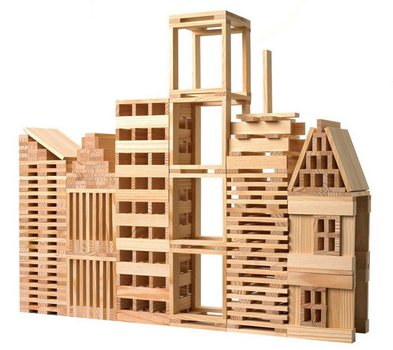
She’s moving easier now. Younger. Her heel doesn’t hurt and her knee isn’t bothering her. She’s about to open her front door and step south toward the bird tree and east to her newspaper, the dog is beside her and her left hand is on the brass doorknob ready to turn-and-pull, when she stops, arrested by the sight of the small windows in the door. Small rectangular windows. Like blocks well set together.

A week ago she went to a design workshop. A local developer wants to build a high-density low-income apartment building a block away from her house, and that proposal has drawn Natalie into activism. Not that she isn’t for such housing in concept, but she and most of her neighbors worry about the project’s affect on their traffic and safety. So she went to a massing meeting, where they heard what the development had to have and were able to arrange little foam blocks as they wished, trying to fit the essentials into the space. Before they got started, Chris the architect moved the blocks for them, demonstrating various configurations. That’s what Natalie remembers now.

Chris stood before their circle of metal stackable chairs. He’s a tall man, an inch or two over six feet, and he bent his knees a little and hunched slightly to handle the blocks. Mostly he looked at the seated neighbors while he moved the foam pieces, occasionally glancing down at his nonstop hands. He placed the blocks with such authority, and they fit on the cardboard platform so well, that Natalie was flooded with a wash of well-being. She was caught momentarily in a powerful, comfortable body-recollection, and the experience fascinated her. She knew immediately that an early childhood memory had been summoned for her, and she began stretching toward it, hunting around it like lightly scratching near a mosquito bite. Like seeing from the sides of her eyes in the pre-dawn light of her bedroom.

It was a man. A big man but not her father. Moving pale wooden blocks, with authority and confidence. Thunking them against one another with certainty. Building strength and spare beauty, a wall well-meant. Natalie thinks she was under age five. The memory is pre-school.

The dog whines eagerly and Natalie opens the door; he dashes and she walks out into the white light of 6:15 on an August morning, so typically overcast that it won’t be any lighter for hours. She sees movement in the tree and spots the big crow among the starlings. The dog rushes the tree with his tail sweeping in a large happy arc. Natalie watches smiling. She read somewhere that domesticated dogs are like permanent puppies: face-licking, playful, adorable. It occurs to her that Americans are like that; if dogs are permanent puppies then Americans are permanent children. Rambunctious and ready to smile. Hopeful and sunward. Impulsive. Concerned with fairness. She’s always looking for an index to her culture; she thinks she may be on to one.

She likes the notion. Under the momentary influence of exuberance, she picks up her pace along the brick wall to the newspaper. She almost skips. But she’s barefoot and the bricks are rough. She clips her left little toe as she cuts her turn too tightly around the front porch. The pain is immediate and mounting. Even so, she gets her paper before returning, hop-hobble, to the shadows in her house.

Twenty years ago it would have been a simple toe stub. Now it’s at least a sprain. It begins to swell. Discolor. She can’t walk on it. She sits down and gets it up. She blankets it with a bag of frozen peas.

Natalie admits she will have to slow down a little. At least for a day, she isn’t going to move fast or far. As the sun rises on an August Sunday at the western edge of her continent, she sits with her left leg elevated. She takes a deep breath and then another one. She begins, tentatively and inexorably, to feel again.

Posted in Fiction | Leave a comment

Arousal (2 of 3)

citiblocs_1

She checks herself out as she walks to the bathroom. A little stiff in the left heel and knee, in the right hip and lower back, in her neck. She’s a set of bones strung on worn cartilage, covered with fat and skin. She has to stretch the inner edges before they’ll stop their wake-up grating. Heat up the fibers till they ease and move smoothly with her. But she’s not bad, for all the wear. She’s put her body through weight swings from 140 to 190, through two pregnancies and births, through miles of barefoot walking. Sure she hurts some mornings. But if she takes the time to remember, she can recall regular eyestrain headaches in grade school, or how her circulation was so bad in her teens that her legs grew itchy and splotchy if she stood for five minutes. She can remember heavy menstrual periods with deep ceaseless cramping. A wart virus on the sole of her left foot that compromised her piece of mind and sent her to a podiatrist, weekly, for a year and a half in her late twenties. Certainly there have been some carefree, body-wonderful moments, and it intrigues her that the few times she has achieved that state she was usually immersed in water, but mostly Natalie has found life to be a complicated elegant mixture of many simultaneous sensations.

Sitting backward almost falling onto the wooden toilet seat, she relaxes in her supported morning squat. It occurs to her, as it often does, that morning farts don’t smell. Exercise farts don’t seem to smell either. She figures it must be like perspiration: only offensive when there’s an agenda.

Now she relaxes, eliminates, cries. Natalie cries first thing every morning. She sits on the toilet, opens a handy book or magazine, and drips tears onto the page. Spatters the inside of her eyeglasses. Enough sometimes to make her nose run.

Her optometrist has a theory about this phenomenon. He says everyone builds up tears around the eye when reclining asleep, but for most people those tears retreat back down a duct when they rise. Natalie must have a duct a bit clogged. It’s probably easier for the extra tears to flow down the front than to drain out the back. She cries painless water. She thinks of it as cleansing.

Her mother’s mother said if you laugh before breakfast you’ll cry before dinner. Natalie likes to think her morning tears set her up for a humorous day.

Anyway, she smiles at herself while she holds the Sonicare against the four quadrants of her mouth for the prescribed two minutes. Her face sags less when she smiles. She thinks about the many little jobs that await her, and she starts to fret, but she sees her own face in the mirror and she smiles.

It is two minutes after 6 when she puts her foot onto the first floor of her small house. The dog precedes her. The sun will rise in seventeen minutes, but the eastern hills will hide the orb for another hour. Actually, the morning fog will hide it longer than that. But the sky is lightening as she enters her kitchen, turns the dial on the coffee mill, flips the one-armed faucet up to fill the glass carafe with water. She can see the white-bagged newspaper, centered on the bricks between the laurel trees, as she turns her head to the right while pouring the water from the carafe to the side chamber of her coffeemaker. She unfolds a natural brown filter into the black plastic cone, knocks the fresh ground coffee into it, clicks the knob to “on,” and walks out of the kitchen to the sound of the first stammering suck of water up the tube.

Posted in Fiction | Leave a comment

Arousal (1 of 3)

citiblocs_1

Most of the time now, it doesn’t even work when Natalie masturbates. She used to be very orgasmic, but for the last several years it feels like her nerve endings have retreated. She’s still in there, but too deep to reach easily.

Or maybe it’s just that she doesn’t take enough time. Perhaps she’s as deficient in respecting the rhythm of her autoeroticism as most couples are respecting their mutualities. Lately she’s so busy she rushes her own sleep.

It’s 5:45 on a Sunday morning, and it appears that she’s awake for the day. The newspaper hasn’t yet even hit the walkway. Like everyone else, Natalie slept through most of her infancy, woke for longer and napped less as she rolled through childhood, became nocturnal as a teenager, and has been steadily retreating from that arrangement back to diurnal and toward napping as she wanders the expanse of middle age. She’s exactly fifty now, and she hasn’t slept past 9 a.m. in two years.

She notices bird chatter. In fact there’s an actual ruckus in the tree outside her window. A raucous ruckus. She almost giggles. It must have just started, she tells herself. She would have noticed it before if it was going on, loud as it is. But would she have? The bird chatter is like one of the cracks that so often appear in the paint on the walls of her old house; she never knows if she’s noticing them as they occur or if they’re there, in front of her habitual unseeing eyes for weeks or months, before some random moment makes her attend.

She stretches. It’s a luxurious diagonal movement in her queensize bed, alone before the sun or the Sunday paper. She detects a dull ache in her right hip and the chronic crampiness in her left knee but she thinks, all in all, that’s not bad. Natalie has friends with daily headaches and nightly heartburn. A bit of joint pain doesn’t seem too unlucky to her.

There’s a loud caw from the tree. The chatter has sounded like starlings or finches but now Natalie hears the authority of a shiny black bird. She can imagine the crow like a negative seagull, an American raven in the almost-dawn light. She hears the coin-sound of tags on a collar as her dog raises and shakes his head on the floor beside her bed.

She opens her eyes. Her room is a graysome dark, a little gloaming from the streetlight poking into her corner bookshelf, but mostly a murk of night and her nearsightedness. She pulls her bedside clock to her face, reads ten or so to 6, and sets it back on her nightstand. She got into the habit of a battery-operated alarm when she first moved in and had too few outlets, but she’s come to appreciate the other advantages. Her clock works when there’s a power outage. Because it’s cordless it’s easy to pull it to herself, like now, and see its clean analog face.

She closes her eyes. She strokes herself. She can’t concentrate. Neither Eros nor Morpheus attend her this morning. She forms a wish and hears it granted: the thunk/slide/swish of the plastic-bagged newspaper hitting her front walk. She rolls to her side and sits up on the edge of her bed, mentally checks her lumbar region, pets the dog, and rises to her morning height of five foot six. By bedtime she will have compressed half an inch. That’s all she knows about today.

Natalie has short curly hair, colored multi-brown over graying dark. She has a fit body which carries thirty extra pounds. She has a synthetic mind. That’s her term for it. But she’s alone, awake early, and exercising her power of self-description, so her term is what she uses. Synthetic. As in what comes after thesis and antithesis.

Posted in Fiction | Leave a comment

Anthropology

Forensic-Anthro-Icon

Your mission, said the leader of the clan,
is to investigate without surprise.
Observe the people, notice all you can,
but do it from the depth of quiet eyes.
Inform yourself with their technology,
their politics, their ethics and their art.
Collect the threads of their mythology
and seek out evidence of mind and heart.

I send you out to watch and analyze
(I’ll hold your bias and apology).
Now fetch me information; make me wise;
but don’t forget that anthropology
is snapshot thin or else too broad to view –
The more you measure us, the less is true.

Posted in Poetry | Leave a comment

Selection

golden-goose-golden-egg

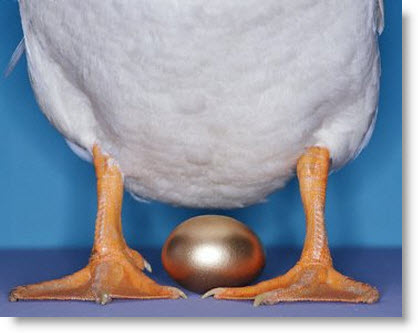
A mass of metal glows upon the ground,
intensely densely yellow-cored and cold.
Beside it waddles awkwardly around
the mutant goose that laid those eggs of gold.
A solemn guardian presents your choice:
Now which, he asks, would you prefer to hold –
will this enchanted goose make you rejoice,
or would you rather own the heap of gold?

And even though the bird requires care
beyond the vigilance that metal needs,
the chooser every time and anywhere
will always pick the treasure that self-breeds.
Now don’t you think selection seems absurd
when product over process is preferred?

Posted in Legends, Poetry | Leave a comment

Base Two

base2cards

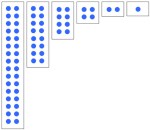
If how we use our brains creates neural pathways that in turn permit how we use our brains, then perhaps how we use our communication devices creates avenues that govern our relationships with our communicators.

Ancient Greek had a dual tense. Nouns could be singular, plural or dual. Much of the Iliad is in dual; heroes and their best friends adventure together and the verbs used are for a pair of people.

When I studied Greek in college I was exposed to the dual. I learned then that older forms of English and German had it too. “Brether” and “childer” are almost-survivors in our language, lurking between “brother” and “brethren” and between “child” and “children” to show us a bit of how we used to speak.

I was enjoying dinner out with a dear friend recently, and we began bemoaning, nostalgically, the extinction of best-friendships. Both of us remember having a closest friend from age 12 or so: that junior high buddy, the everyday telephone connection, the pen pal during summer vacations, the go-to peer.

Our kids don’t have best friends. And their kids, as far as we can judge from the fledgling cohorts, don’t have best buddies either. The generations after ours are social – as interested in what their fellows are doing and as likely to be infected with FOMO (Fear Of Missing Out) as any youth who has gone before them – but they don’t limit their sharing to one special person, and their communications, broad and often spiced with TMI, don’t go as deep or reach as intimately as dialogue between two.

The idea that struck me over dinner: is it all about the phone?

I was a child of single-digit age in the 1950s. Homes had phones, but families had to share the lines and use operators to place calls, at least in the early years. I remember the rotary dial was high-tech that decade, and residential customers would pay extra to avoid a party line.

By the time I was entering adolescence we could place almost all calls on our own (we still used the operator for person-to-person connections to ourselves, which signified to our callers that we were home and prepared to answer the cheaper station-to-station ring, and kids away from home had to use the operator to reverse charges too). Then Ma Bell introduced the push-button number pad; I remember a new-tech display in Tomorrowland where I, super fast on the dial, couldn’t complete a call as fast as my unmotivated brother could push the new buttons. By the mid-1960s every home had a private line and all phones had buttons. Some of my girlfriends even scored their own bedroom extension – those adorable princess models that, we quickly learned, were too light-weight and short of cord to stay on our nightstands.

By the time I was 15 I was using the phone regularly. I was conversing nightly with my closest girlfriend and, occasionally, with a brave boy who called me to stammer into a conversation about nothing, always at risk that my father or younger brother would pick up the headset in the kitchen and harass us. Remember? Because I’m typing this all from memory, partly because I’m too lazy to research and also because I want to record recollection untainted by facts.

My kids didn’t cart cell phones to school but they seemed to have innate computer skills and they took to Internetworking like it was mother’s milk. I remember noting how prevalent mobile phone use was in Paris compared to here, when I spent some time there in 1997 – it seemed then that US cellphone service lagged behind Europe’s and that made sense; we’d so perfected our landlines that they didn’t need “improvement” the way phone systems elsewhere did.

But the kids were interacting. They were soon using email so much they started a special language for it. And then along came the bulletin board services that opened the way for LiveJournal and a few years later Facebook. Et cetera. The generations after the babyboomers dove into those media, lifting their eyes from their screens only long enough to roll them at us for our failure to understand how useful their networks are.

After us, kids didn’t engage one-to-one. They began speaking at large, sharing intimate details with their cohorts and omitting the deep revelations that only surface after heavy and continued communication with a trusted other. After us, it seems that a kid doesn’t relate to a person as much as to a posse.
Posted in Language, Question | Leave a comment

On the New Year’s Eve Puzzle

imagesCA2AFO5M

We bought the new year puzzle yesterday:
a comic illustration of a bar
with aliens at drink and fight or play.
But it won’t interlock – most pieces are
designed to lean together and abut.
There’s nothing positive about the fit
so we don’t like the way the thing was cut.
But we can’t argue with the fact of it.

The object is to piece the pic together
without the box top, fast as we are able,
for this predicts the months ahead and whether
we’ll have the use again of our one table.
Of course we don’t know what the year will bring;
we solve and hope it’s surer than this thing.

Posted in Poetry | Leave a comment

Shattered

shattered-glass[1]

Alan pulled to the curb outside Cassie’s place. It was nearly sunset on the last day of spring, still light at 8:30. He had such mixed feelings about this walk that he remained in his car for a minute.

What did he want? That’s what all his friends and family kept asking, and he still didn’t have an answer. He’d lived almost 55 years without asking the question; he wished everyone would give him a little more time to reply.

But it seemed there wasn’t much time left. Cassie blew their marriage apart almost two years ago, and now even she wanted some movement one way or another.

He couldn’t just sit in the car. He knew she knew he had arrived; it would be weird if he didn’t proceed up the path and to her door. He glanced at her front window and saw the curtain twitch. He hoisted his body out of his sedan.

At least it was a trimmer body. At first he dropped weight from confusion and upset, then there were the additional dog walks and the activities with Rhonda; Alan was at least 40 pounds lighter than when it all began. Everyone around him thinks he should have been angry, or devastated, but mostly what he experienced was like a hallucinogenic shift. When they got married it was forever, as far as he was concerned. He didn’t count the years each anniversary – that would be like X-ing off days on a prison (or holiday) calendar. When you’re in it for the rest of your life, individual years don’t matter. And sure he knew it wasn’t perfect, but what marriage is?

No: when he noticed the words on the screen of Cassie’s computer, when he confronted her about it and she confessed her affair, that started a cascade of shock and awe for him that was more surreal than anything he’d ever experienced.

But he still cared about her. He was in love with Rhonda but he still thought he and Cassie might be life partners. He certainly wanted to be amicable, be friends. Maybe he even wanted to stay married. He flip-flopped daily. He wished he could combine selected qualities in Cassie and Rhonda. But he knew he needed to choose.

He let Bingo out of the backseat. He retrieved her leash, the mail he’d collected for Cassie, and his jacket. He pulled the magnum of vodka off the floor and lifted it by the bag handles. The bottom ripped out.

The drop was only about two feet, but that’s all it took. That bottle hit the pavement squarely. The noise wasn’t loud – just a solid thunk – but the breakage was total. Alan was spattered with expensive liquor from his knees to his toes.

Posted in Fiction | Leave a comment