Apricot (1 of 2)

apricot

Mag had a little epiphany as she reached for the apricots.

She’d been a selfish child and she continued the behavior into adulthood. She became more subtle about it, but the truth is that she always wanted the best cookie on the plate. She was pretty sure everyone wanted the best cookie but that most of her fellows forgot that, after years of polite habits.

Mag angled for the best cookie and she noted who got it when she didn’t.

Dried apricots come in several forms. In addition to the obvious differences between the uncut Turkish variety and the halves Mag preferred, beyond the brown of dehydrated purity or the lovely preserved orange that comes with sulphur dioxide, dried apricots vary in size and dryness. Mag was among those who preferred her aps gooey. She liked to unfold a half and rake her bottom teeth through the flesh, removing the soft inside and leaving the skin for a second swallow.

She was into some excellent apricots lately. They were grown and packaged in Hollister, they were pricey, and they were consistently fine. Even so, a bag would contain a few small ones and a smattering of torn pieces among its prime occupants. Mag always had to decide as she reached into the bag, between going for the gold first, or wending her way through the few inferiors and saving the beauties for last.

The night before last she went to the refrigerator for a serving of apricots. The bag was there because, as she noted when she first bought the brand half a year ago, it had “best if kept refrigerated” printed on it. Mag remembers being surprised when she read that. After all, the fruit was already preserved. Then again it was gooey. She followed the package suggestion. A month ago she mentioned her surprise to her brother. He argued with her. He had just bought a package of the same brand of apricots and he showed her the bag; there was no recommendation about refrigeration. Then Mag was confused. She knows she has a good memory, and there’s no way she dreamed the advice. Recently she purchased the apricots again, and the recommendation was back on the bag, immediately below the company name. She and her brother concluded that the printing on the bag must change now and then.

She reached for the refrigerated bag the night before last and her question recurred: go for the good? get through the mediocre? close my eyes and see what I get? And as the question popped up, her brain slap-answered that it didn’t matter, because they were all hers. Suddenly it slammed into her consciousness that the choosing had always been about getting the best for herself: if she was about to offer the bag to guests then she’d angle for the beauties first; otherwise her preference was always to save the best for later.

It was a little epiphany but her own. I am selfish, Mag said to herself. My mother was right about that. I never got good grades for working with others, and I like to live alone. It works for me. Is there something wrong with me?

Her mother would say yes. But Mag never really agreed with her mom. Her mother accused her of laziness, and Mag is one of the busiest people in the world. Her mom said Mag had smarts but no common sense, and Mag is as sensible as an old witch. Then again, her mother hadn’t used those hard adjectives since Mag was a child 50 years ago. But Mag couldn’t forget the words.

Funny how harsh words stay with people. When Mag was 13 she went to a party in an acquaintance’s garage. One of the things she remembers about that night, dancing to 45s on a concrete floor, was shocking. The recordplayer (this was before folks called them turntables, and upscaled them with diamond styluses, and then outgrew them for tape decks and cassette players and MP3’s and iTunes and then reverted nostalgically to good old vinyl) had a short somewhere, and there was a puddle of water around the legs of the table on which it sat, and one had to step lively around it to avoid getting a shock if one touched near its needle. But the other thing she remembers is a comment one boy made to another in her hearing. About her. She cannot recall who the boys were, and the speaker, while cute, was never one of her crushes. But they’d been considering her, and the cute one said with a young leer “if she’s old enough to bleed she’s old enough to breed (heh heh)” and Mag was at once grossed out and embarrassed. It was such a harsh phrase. But worse: Mag hadn’t yet had her first period, a retardation (in her opinion) that required a coverup (she used to fake it in PE rollcall, adding “sponge” to her call-off number when attendance was taken, for a few days each month, which word signified to all hearers that she would not be showering at the end of the class time.)
Posted in Fiction | Leave a comment

Bargain

Making-A-Bargain

My generation starts to feel its age.
We harden arteries, repair our hair,
deplete our bones of calcium, and wage
cosmetic war to try to hide the wear.
And world recession takes away from us
the consolation that our parents had,
who justified their agonies and fuss
by figuring we wouldn’t have it bad.

As you arise all creaky from your bed
and taste your morning breath, attend my voice.
For I can’t tell you how to get ahead,
but I can lay before you simple choice:
it’s either use your muscles and your mind,
or don’t complain you’ve left yourself behind.

Posted in Poetry | Leave a comment

Language

language

A phrase released can never be unsaid –
it radiates from out the mouth and mind,
and particles of sense insert, instead,
the bits the sayer might have held behind
if thought and strategy preceded tongue
and magic were detected in the word.
For language is the light we loose among
ourselves, no sooner voiced than spiked or blurred.

The speaker says “I take it back” in vain,
and must accept the shape the message made.
and this when most reaction isn’t plain,
but often aims away from what conveyed
the impetus for speaking out at all
the words the speaker rarely can recall.

Posted in Language, Poetry | Leave a comment

De Gustibus Non Est Disputandum

bellcurve

Say it ain’t so. Because it ain’t so, and it’s high time someone spoke up.

De Gustibus Non Est Disputandum. It means “about what we like there can be no argument.” That translation has morphed over time from something like “there’s no accounting for taste,” or “to each his own,” to “what’s good or bad, in art or literature or music or victuals, is simply a matter of personal preference.”

Horse pucky. The truth is, if it’s really good art, fine literature or music, excellent food, everyone agrees it is. And if it’s really bad, everyone agrees about that too, except the few deviants who take adverse positions no matter what, to poke or goose or otherwise provoke reaction.

It’s only the art, books, music, and food in the middle that are matters of personal taste. And those items are not great; that’s why they’re in the big fat middle of the bell curve. So okay: to each his own about the Bs and Cs and Ds, but not about the As and Fs.

On the other hand, we insist on defining marriage, regulating schools, and policing behavior. We deny that there are absolutes about art, but we claim there are absolutes about relationships. Marriage is two people only, one of each sex. Schools proclaim zero tolerance policies. Women are expected to subordinate their ethics to their relationships and men are expected to put loyalty to the team or squadron ahead of independent choice.

In truth, it’s obvious to anyone who considers life and people, that as long as a person isn’t hurting himself or others, as long as a person is behaving with clarity (actions consistent with words consistent with intentions consistent with memory), she should be not be impeded.

Isn’t it backwards? We act like it’s desirable to have judges for art and food, when we all already agree about the great stuff so we don’t really need them. And we claim that it’s not okay to judge others, when that’s exactly what we’re all always doing so we’d be best off facing it, admitting it, and working on how to do it well?

(Then a third voice murmurs, a voice that couldn’t be heard until I wrote out the first two. I see that great art doesn’t need a judge, and that critics are guides for people who desire, for whatever reason, a particular kind of mediocrity. And I understand that, while it’s okay to speak up when you see a friend veer away from where she says she wants to go, that’s a different thing than telling her how to be happy. But what about judging the actions of corporations? Now there seems a good place to judge. Especially after recent rulings, corporations are super-beings, able to move mountains and live forever but entitled to all the rights of a body. They are idless omnipotent creatures. Corporations, more than any product or person, must be judged.)

Posted in Question | Leave a comment

Escape (Part 2 of 2)

toomuchluggage

Wayne got stuck being Mom’s main assistant. Junior mom. That’s probably why he never had kids, why he married a bitch who only wants to be served. I remember when he made his one strike for survival. I was 8 and he was 17. That’s when he began using his middle name. I never understood how my parents could name a boy Leslie. He switched to Wayne and said he wanted to join the Army. And Mom threw a fit. He got the name but not the career.

Bruce is the only one of us who has a real life. That’s because he was the emotional runt of the litter. He used to say Mom loved Wayne more, and Matt, and of course me. We all acted like it was a family joke but we knew he was right. Mom relied on Wayne. She totally babied Matt; he was the best-looking of us and she had some kind of Hollywood dreams about him. And then there was me. Bruce was awkward, kind of ugly, different. Mom paid him much less attention. Lucky boy.

I guess he had a sad go of it as a child, but then he escaped. He went to college. He stayed away. He married Nancy. They had their son and their house and their lives without us.

Okay, if I’m honest, Matt got away too. First into meth and then crack and then death. And now there are 3. Two really, since we never see Bruce.

Near the end of his visit, I tried to talk to Wayne about Mom. He was helping me prepare all her nighttime meds, so we had plenty of time. But he was as usual deaf/dumb/blind. I read somewhere that when there’s more than one son and a dominant mom, the first son never really leaves. Shit, maybe that’s my problem with Bobby.

Anyway, Wayne was useless. Just like when Dad was dying; he listened to the doctors as if they were gods, and he never listened to me. I know Dad would have lived longer if I’d been in full charge; that’s part of the reason I shut out Uncle David and Aunt Ruth. I don’t think Uncle David ever forgave me for that time I stood outside the hospital room door and wouldn’t let him in. Ruth sure hasn’t.

“I think part of Mom’s problem is she’s overmedicated,” I told Wayne. “Every time I take her in they add a new prescription.” But he wasn’t paying attention. Instead he told me how I have to be careful now that her regimen is so complex. Then he went back into Mom’s room, for 5 more minutes of adoration. He must have told her he loved her a dozen times. She loved him back, with her smug grin and pats from her gnarly old hands, and then started whining for me to bring her fresh juice.

Tomorrow

I know the shape of tomorrow. Every tomorrow, unless I do something about it. I’ll have to be here to answer Mom’s demands, to take care of 32-year old Bobby, to respond or not to Aunt Ruth’s bids for attention. I know I can’t count on Wayne for support. Bruce is gone. And Freddy, wherever he is, is as lost to us as Matthew was and probably just as terminal. It’s been over a quarter century since I had sex, and more than that since I had love. I don’t know whether I’m more sad or angry.

I have to get out. I have to escape this sorry life.

I could follow Matt and Freddy. I squirreled away Freddy’s last stash – I didn’t intend to use it or sell it but I remember feeling like I needed a secret, some sort of privacy, and I hid his drugs in the false drawer-back that Matt created when he was still living here. I could learn to use, and leave. It’s Mom’s house anyway; Wayne can move in and see how much he really loves her.

For that matter I could use Mom’s morphine. I’ve cut back on administering it to her lately anyway – she doesn’t seem to be in that much pain, or maybe I’m turning into a sadist – but I’ve been careful to refill the prescription when expected, so there’s a comfortable quantity here.

Or I could stop withholding it from Mom. Make it up to her by letting her have what I’ve denied her these last several weeks. It wouldn’t take that much. I’m sure even if it were discovered there’d be no doubt it was accidental. I’ve been so unhappy lately I think they all think I’m confused.

Then I could call Aunt Ruth. Give her the sad news. Let her know that Mom’s been sicker than we all thought. If I act sorrowful enough she’ll come around. Probably visit and start telling me what to do. Then I’ll rise up and show my anger. Finally. Maybe I’ll visit the medicine cabinet: make someone a special cocktail. Bitch.

Posted in Fiction | Leave a comment

Escape (Part 1 of 2)

toomuchluggage

Yesterday

I got another email from Aunt Ruth last week. I intended to answer it immediately but I couldn’t figure out what to say. So I gave it some time and as usual my intention faded. Now six days have passed – I’m sure she’s angry and it won’t matter what I say – so why bother? It’s not like I have nothing else to do.

She’s not really my aunt anyway. She’s been in my life all my life, but Ruth isn’t blood. She’s my aunt because she married my mother’s brother. But she and Uncle David were close to my parents till after Dad died, and I try to be respectful. She’s such a pest…

No matter what I say or write, Aunt Ruth won’t be satisfied. She’ll think she knows how to fix whatever, and she’ll fill me with “shouldas.” I think I’ve had enough of those.

My name is Barbara and I’m finally in charge. I’ve earned it.

I was the last born of my parents’ 4 kids, and the only girl. I’ll admit I enjoyed the early attention; for all of my childhood I was the family treasure. I was my parents’ princess, the sister my brothers all protected, the angel with the strawberry blonde curls and the pretty clothes and the smarts they all bragged about. Until I was 25 I don’t think they had any complaints about me. And since then: although I’ve seen some iffy looks sometimes, I think the criticisms I’ve heard have come from Aunt Ruth and Uncle David. Even my ex is less judgmental about me than they were and Ruth still is.

Wow. 25. I was 25 almost 30 years ago. The most surprising thing I’ve learned about life is how fast it goes.

Even then the complaints were totally unfair. After all, I picked Craig because of how well he’d fit with my family. If it weren’t for my parents and my brothers too, I would have gone away to college, met someone who rang my bells, had a separate life. But I was doing what they all wanted. I was staying close to home. Daughtering. Marrying to please them all. Then they decide they don’t like Craig and they start blaming me.

Too late. I was pregnant then with Freddy and Bobby was almost 3. I didn’t have a diploma or a job and my folks sure couldn’t support us. Shit: Mom never worked and Dad’s foundry job wasn’t exactly lucrative. Wayne worked at a gas station, Bruce was on the way to leaving us, and Matt had already dedicated his life to his drugs. Craig was my only option and I hung onto him till he couldn’t hold onto a job. When he took the last position, that construction gig in Arizona, it looked for awhile like we might make it. Enough money came in and he was away so much we started to get along again. But then he lost that and moved back in here … and well, looking back now, I see it was just a matter of time. The man drove me nuts with his cockamamie schemes and his slowness.

So for the last 25 years I’ve had no one but me. I’ve been taking care of my sons and my parents and sometimes even my brothers. Wayne and Matt anyway – Bruce became the property of Nancy as soon as they married. He never comes around. I’m in charge of this domain.

Now I’m tired. I figured I’d learn stuff once I started actually writing this journal, but I had no idea it would happen so fast. A page ago all I felt was anger, and now that’s been overrun with weariness. Mom’s asleep. Bobby’s asleep. Freddy is God knows where. I can continue this tomorrow.

Today

Wayne came by today and tried to take Mom out for a drive, but she was having none of it. She only wants to be here, in her chair all day and the bed all night, whining at me for what she thinks she needs. I know that sounds disloyal but the older we both get, the more I realize how long it’s been since I actually loved her.

Better not let Wayne read this. Fuckin’ Mama’s boy. Nearly eligible for Medicare now, and he still won’t challenge her. I’m a fine one to talk (write); I don’t either.

I guess he never had a chance. Mom was always demanding and overprotective and Dad, sweet Dad, worked so much he was only around nights and weekends. Besides, back then the men all trusted the moms to know what they were doing. Like girls are born mother-wise or something. Really: the only thing Dad did wrong was let Mom run the show at home.

Posted in Fiction | Leave a comment

Polly Perverse

language

My daughter doesn’t want a poem to rhyme,
and meter makes her chant the words she reads.
She longs to tune atonally, and time
her syllables to sanguinary needs.
She listens for the shock of the profane,
the punch perverse, the twist of shifted signs,
and little cares if content can explain,
as long as sound and fury fill the lines.

Her mother’s poetry can never please her
regardless of its purpose and intent;
it follows rhyme and meter in its course
and can’t do more than irritate and tease her
when it avoids a blurt for excrement
or slang for metaphor for intercourse.

Posted in Language, Poetry | Leave a comment

16-42-68

lock angle

You’re beautiful, and yet you do your best
to signal unattractive with your style:
the glaring hair, attire always messed,
and indignation overruling smile.
My parents sang to me the same old song
and I contested vehement like you,
and even though I knew my folks were wrong,
I see a bit of wisdom in their view.

Now I don’t think your image summons those
with whom I wish you’d never socialize –
it’s your own hair and sure you can compose
yourself – but if you choose to cross your eyes,
my mom says “Careful: lest you freeze that way”
(for habits of expression tend to stay).

Posted in Poetry | Leave a comment

Errata (End)

brain

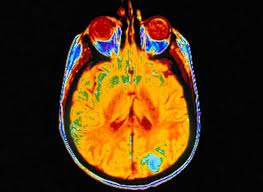
Owen only got worse. He acquired the idea that he was doomed to alcoholism and suicide, like his mother and her father before her, even though he didn’t like to drink. His eating and sleeping slid even further off kilter, and he grew preoccupied with what he called obvious conspiracies in government and industry. He saw four different psychotherapists in the space of six months, and tried seven courses of psychotropic drugs.

I tried to be there for him. His family was exhausting but I wanted to make the effort for Owen. Yet more and more, I found myself hanging out with my friend Bill instead. He was a comparatively simple soul. It seemed strange that I wanted to spend time with a man I didn’t love, while I shied away from being with Owen.

There still might have been a chance. There might have been a moment or two, when Owen and I could have reached into our relationship and saved it. But that’s when his father took me out for coffee and bared his soul.

He parked the car outside the Dennys restaurant and we got a booth near the door. He ordered coffee and apple pie and, like Owen, he stirred sugar into his coffee first, before adding the cream. I drank mine black, and I’d ordered no food, so I watched him. He settled back on the bench seat, cleared his throat, apparently thought he’d try another posture, and shifted his upper body forward, elbows on the table and fingers laced beneath his chin. He made a pretty speech. He begged me to take care of his son.

I was stunned. I was floored to silence with surprise. That was before I knew how ignorant most adults are. It was one of those rare moments in life, alone with another person, when we are thinking poles apart. So it took me a few moments to comprehend. Owen’s father as much as said to me: “I’m too busy with myself right now. You’ll have to parent my kid.”

As soon as I got it I pulled away with revulsion, my back slapping the leatherette booth, but it took years for me to realize how his father had emasculated Owen for me. A long time later I knew our last chance was killed in that coffee shop, by his abnegating dad.

At the time, I went about my business and fell in love with Bill. Owen was interviewing his fifth shrink when I rediscovered the joys of simple lusty sex.

Owen wrestled his demons with faith and a vegetarian diet. He leveled himself. He gave up being rambunctious and brilliant, in exchange for sleep and a railing at the precipice. After he got used to speaking more softly and driving with his lights on, he settled in and embraced the benefits of humble labor. He adjusted to abstinence.

His sisters both grew up to be gay and in stable monogamous unions. Their father maintains that toxic relationships with their mother drove them to it, but everyone knows orientation isn’t a matter of choice.

I married Bill, had three children with him, and eventually left him. But I never regretted the marriage, and I really like the kids.

Owen spent some time on SSI after his bipolar diagnosis. He got his credentials once he stabilized, and he worked a few years as a substitute elementary teacher before returning to school for himself. It took him five years to finish his master’s. He hopes to have his doctorate in another three. Then he’ll look for a job. At fifty-seven.

I see him once or twice a year. I always feel fond when I’m with him and a little sad afterward. I can’t forget the other Owen, the earlier guy. I remember what that brain could have done.

Sometimes I wonder what life would have been like if I’d married him. I know now it wouldn’t have been the union of struggling great writers that played so well in my undergraduate imagination. But we might have had a child or two. I probably would have developed a financial district career somewhere, and he would have gone into teaching. We might have propped each other up at tough times, and maybe we would have written, individually or together. He would have driven me nuts with his little obsessions. I would have irritated him to mimicry with my self-conscious laugh. I might leave the house more readily. He might drive faster, and break some rules.

Then I remember a cup of coffee with his father, and feeling forced to agree to be Owen’s parent. One was dead and the other was preoccupied. I could never have married that.

Right. I couldn’t have. Not the person I was then. In the ensuing thirty years and in the parlance of my many therapists, I have given myself permission to be sweet. The person I am now might have been able to keep loving Owen. But young I never could have done it; I was too busy reacting to my own father and his unrelenting ideas. Given my dad’s expectations, young I could no more have been sweet than my brother could have been slim. But that’s another story about how things could have been better.

As far as Owen goes, his life never changes much after now. His story, for better or worse, is done.

Posted in Fiction | Leave a comment

Errata (Middle)

brain

The end was as simple as catastrophe. When Owen was twenty-two, his mother went from the kitchen to the garage, got comfortable in the front seat of the car with a lumbar pillow and her favorite family picture, started the station wagon engine, and opened the car window. The garage door sealed so well that it only took fourteen minutes for her to asphyxiate herself.

She had called her husband first. But they’d been through almost eighteen years of sporadic counseling and three brief separations, and he was used to her threats by then, and the fact is he opted not to leave work for her. Owen and Sharon and Sheila no longer lived at home, and they didn’t get calls.

Owen’s world fell apart when his mother died. It wasn’t so much her absence as the sudden removal of the foundation of his existence. Because even with all the fights and threats and estrangements, Owen had thought he came from a happy family. His mother’s suicide was an abrupt and undebatable statement to the contrary.

He was just twenty-two. He was a new college graduate, recently single after three years with me, on the cusp of discovering himself as a writer or a graduate student or a stud or all three. Actually, he’d been rather happy in our relationship – he’d only broken up in an impulsive week of wondering what it would be like to fuck someone else – and after two months apart and three unsatisfactory liaisons he’d been trying to patch things up when his mother started her car to nowhere. In the initial, crazy, chest-searing aftermath Owen made a dozen desperate telephone calls to me, and two fevered proposals of marriage.

I was moved but not toward a wedding. I first fell in love with Owen’s way with words on paper and stayed to appreciate his unruly passions, and I’d had several rough weeks after he left me. But I also had time to notice how peaceful the evenings were without his frequent attempts to discuss dissertation ideas, and how restful the weekends were without his plans for our improvement. I was shocked and sympathetic, but I rushed neither to his side nor to acquiescence.

And in the ensuing silence Owen’s insanity was first heard.

He mostly stopped sleeping. The dining habits of the whole household were off, so no one noticed that he wasn’t eating. And by the time I got there, for I did get there after a few weeks, Owen was no longer functioning as a man.

The house was a mess. No one had cleaned since the funeral four weeks earlier. The family had two cats and the place reeked of them. There was hair all over the kitchen counter and stove.

The refrigerator was stocked with canned drinks and the freezer held stacks of casseroles from neighbors. I couldn’t find fresh fruit. The potatoes had sprouted in their drawer.

I had to take charge. Somebody had to do it. I put nineteen year-old Sharon and eighteen year-old Sheila to work on laundry. I set Owen to vacuuming. I dispatched their father to the grocery store, with a list. Then I went to the bathroom and locked the door. I turned on the water, pulled down my jeans, and sat on the toilet. Leaning forward, elbows on knees, I sobbed for a minute into my own hot palms.

Then I peed and flushed and used the running sink water to splash my wet eyes and cheeks. I patted my face with the cleanest towel I could find. I think I even squared my shoulders before I returned to the family.

Within a day the place showed improvement. Postures straightened and glances were met. It wasn’t a profound turnaround, but restoring a little order to the household had a beneficial effect. Except on Owen.

Those first nights we tried every technique we’d ever used but he wasn’t able to come. I even offered to attempt a few ideas we’d heard of and not yet dared, but Owen was frustrated and self-conscious. We said goodnight but he couldn’t relax on the mattress and I couldn’t ignore his tension. We talked, caressed, hassled and wrestled most of the night.

Posted in Fiction | Leave a comment