Absentia (Beginning)

old-english-dictionary

Melanie at five and a half had long black hair and big brown eyes. She was of medium height and normal body shape, and her skin showed a light olive cast. She had a two year old brother who entertained her parents with his cuteness, and she had no friends of her age in her neighborhood. All the other girls were at least two years older or younger, and all the boys were wild. In the following year, the farm behind their house would be developed, and Melanie would attend first grade with a slew of girl peers, but from her neighborhood she went to kindergarten alone.

That’s not to say that she had no girl friend. Melanie idolized Barbara next door, who had naturally curly hair and a turned-up nose and the benefit of two more years of life experience. And Barbara was kind to Melanie. But Barbara was nearly eight years old, so it just wasn’t the same.

Melanie wasn’t completely alone for the kindergarten experience. She had a quasi-friend named Susie, who was enrolled in the classroom immediately next door. Susie and Melanie were quasi-friends because their mothers were actual friends. They’d always been expected to play well when their moms got together for coffee and cake, about twice a month. So even though Susie wasn’t a friend whose house you could walk to, she was someone to ride with in the car to and from the new school, and she was a familiar face on the playground.

A familiar face but not an attractive one. Susie had stringy brown hair around a big round head atop a very round body. She was uncoordinated for her age, freckled in a comic way, too large to be cute. She was a nice placid girl; she exasperated Melanie with her slow amiability. And Susie had ugly teeth. They were too small and too widely spaced and they were so yellow they were almost orange. Melanie had to restrain her expressions, facial and verbal, when she first met Susie at age four. Later her mother explained. “A birth defect,” Melanie’s mom murmured on their way home, “from taking Tetraclycine.”

Of course Melanie asked what that meant. “Who took Tetra-what?” Her mother explained that Susie’s mom had gotten sick while pregnant with Susie, and the doctor prescribed a medicine that had the side effect of possibly wrecking your teeth, but in this case the medicine wrecked the baby’s teeth instead of the mom’s. “So Susie was born with this defect in her teeth. That’s why it’s called a birth defect.” Her mom pushed the lever next to the steering wheel that made the signal blink, and then she turned the car into their driveway. “Emily has a birth defect too.”

Melanie knew what her mother was talking about. No one who met Emily wouldn’t know. Emily was one year older than Melanie and lived two blocks away. Their families met through the neighborhood association. And Emily was missing some fingers. She had thumbs, but where there should be four fingers on each hand she had just two. She could bring their tips together kind of like claws. “Thalidomide,” Melanie’s mother pronounced. And Melanie loved the way the word rolled out of the mouth. “Thal-í-do-mide.” Her mother was wrong about Emily, but her mother was wrong about a lot of things.
Posted in Fiction, Melania | Leave a comment

Artemis

Artemis_Glyptothek_Munich_227

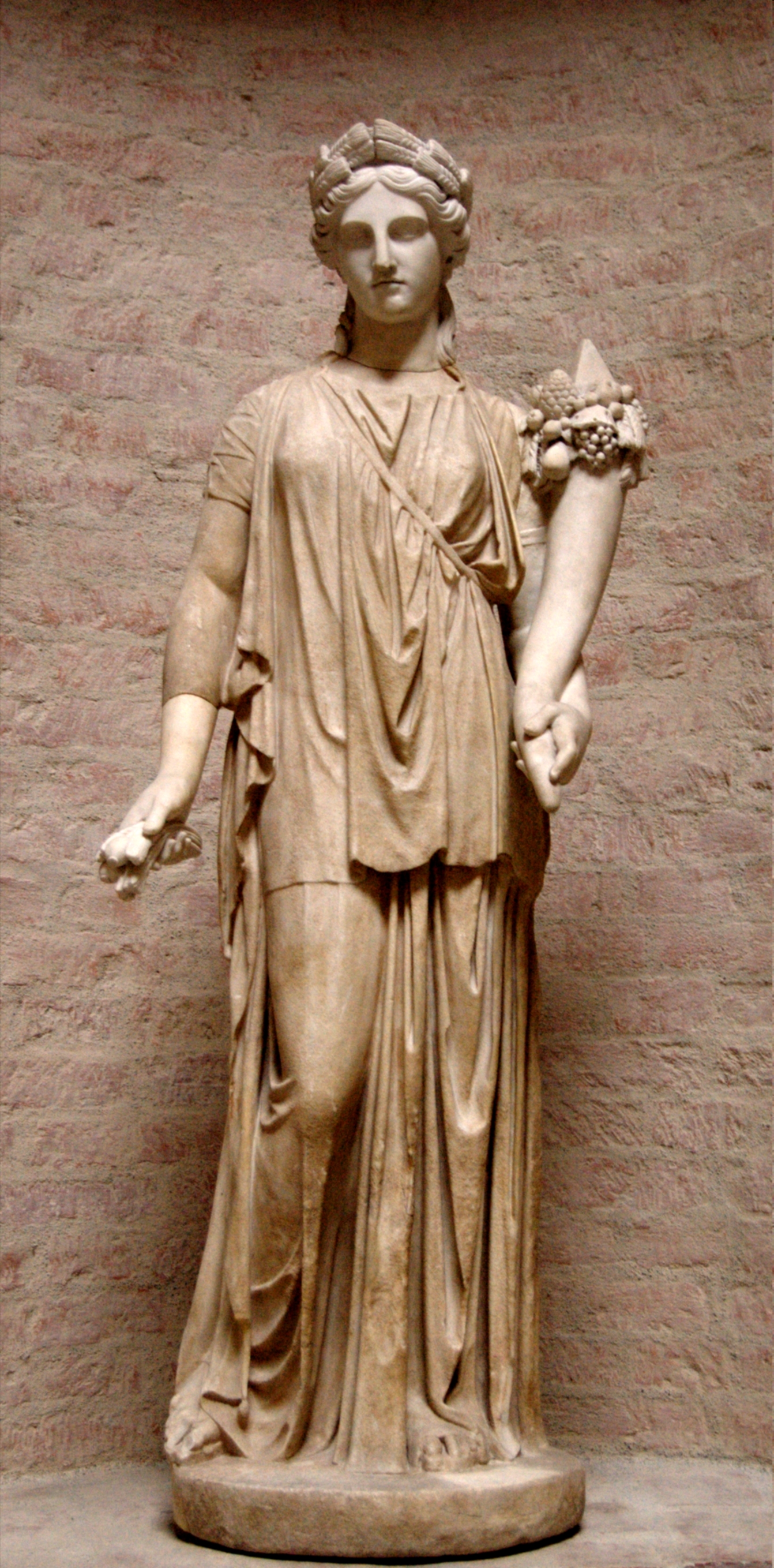
She’s hunting in the language of her birth,
encompassing the landscape with a view
to catch the drama of the rolling earth,
the heat of rampant life, its form and hue.
Invoking wings for ankles made of clay,
detecting roots of fundamental might
to anchor her and balance her today,
she tosses nets of gossamer in flight
that she will use to pause the fairie phrase,
alight to sense it, borrow it for song,
reverberating as it soundly plays
and measuring the whispered with the strong.
Ecstatic is the hunter of the heard
among us, resonant with perfect word.

Posted in Poetry, Writing | Leave a comment

Verdance

ferns

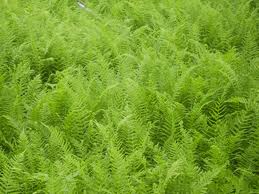
Like fans of green-on-yellow filigree,
the fronds unfurl among the shaded vines.
They ply their color light as silk and free
as air upon the denser ivy lines.
Like grapes, except the clusters rest on top
of deeper sturdy green, the new leaves glow
with golden infancy and host a crop
of flowering, for now the oak trees grow.

As lilting green unfurling like a fern,
that blooming is the center of my mind.
As shining as the oak leaf, so I learn
to wrest more light and leave dark tones behind.
And I am new awake, alert and bold:
past middle life and shot with infant gold.

Posted in Poetry | Leave a comment

Furrow

furrow

I guess I have to call this mood depressed.
It isn’t that I’m worried – I don’t frown
or shout or cry or even feel too stressed –
but time sits on my head and holds me down
as if a weight were pressing me to earth,
or gravity increased its normal pull.
It seems I’ve lost my leap, misplaced my mirth,
and grown too dense to move, all thick and dull.

If I won’t grin, at least I can produce,
so I intend to labor hard today.
This lowness of the spirit must have use
and I’ll engage to figure out a way
to utilize the heavy as a plow,
and overturn the fundament somehow.

Posted in Poetry | Leave a comment

Bed (Part 2 of 2)

bed

Laurel continued to love that bed after she stopped loving Tom. But the mattress failed a year later, exactly when she put the house on the market. She had to empty it of water and fill the frame with pillows to make the bedroom look right for the Open House; then she let her mother pull her to Macy’s for a conventional mattress. Laurel’s mother had never understood the waterbed preference. And Laurel had enough anxiety just then; she didn’t need to be worrying about some water leak. She selected the softest dry mattress she could find. It turned out to be all right for sleep but its edges were too spongy to sit on.

She had to get rid of the beautiful oak frame. It was an odd size and she wasn’t about to pay for a custom mattress and sheets. She gave it to friends and expected them to at least re-use the wood, but they broke it up and burned it in their fireplace. That seemed like a shame to her, but she gave it to them so it was theirs to waste if they wanted.

Eventually she got a better bed anyway.

She put more consideration into the selection of her current bed than she ever did in choosing men. First she noticed magazine ads. Then she test-slept on fancy foam with a shaped pillow and a mattress topper. And last summer she visited a bed boutique. The sales consultant made her tour the display of mattress guts. She insisted that Laurel follow her upstairs and try each style. It turned out that Laurel was neither European enough for full foam nor American enough for extreme springs; she selected a combination version, paid in full, and then waited four weeks for the thing to be fabricated, delivered, and customized for her (it came with no box springs; it floats on a sea of adjustable slats).

She loves not sleeping on it.

Laurel and her friends are now old enough that they don’t sleep very well. Everyone has a recommendation about Tylenol PM or Benadryl or heavier pills, a tale to tell about experiments with melatonin supplements and new pillows. But sleeplessness doesn’t bother Laurel. She had all that early childhood training. Sometimes she gets up for awhile. She sleeps alone; she’s free to do that. Sometimes she just rests in her nice bed. But she also has all that practice with sleep scripts, now as elaborate as porn. Laurel doesn’t need much but when she wants to she can usually put herself under.

Wrapped in furs in a horse-drawn sleigh. On a moving boat. Tucked into a motorcycle sidecar. Sometimes she replays a real memory: camping with Peter in Death Valley when they were surprised by rain – too much to ignore. Normally not ept, Peter became competent when he camped, and he took charge then. He scooped Laurel up and stuffed her and the sleeping bags into the cab of his pickup. He stashed everything else and climbed behind the wheel. Swaddled in down from the wet and all bumps, soothed by the thrum of big raindrops on metal, melting into half dreams, Laurel was moved like a baby in comfort and safety. Cozy like a papoose. On a bough that never breaks.

She almost has that. A slat-built bed in a second story bedroom in an old cottage in a yard full of very big trees.

The only way she’d mate again, the only bed she trade for, would have to be like the one Odysseus made. He built his house around a huge olive tree, and its trunk became one of the bedposts. So he and Penelope had a rooted bed: the heart of their home, their marital secret, their permanence.

This time, if time there be, Laurel hopes for a bed like that.

Posted in Fiction | Leave a comment

Bed (Part 1 of 2)

bed

Laurel disliked her childhood bed. She was one of those kids who never needed to sleep much, and her mother was one of those parents who believed in a child’s bedtime for the parents more than for the child, so she spent too much time in it awake. She hated how narrow it was.

She was forced to develop sleep fantasies, to pass the time and also send herself under. Cozy scripts that had her nesting in a tree bough, a perfect cave, a horse-drawn sleigh.

Her friends had full-size beds. When they spent the night at their houses there was room for both girls. When they were at Laurel’s house, one of them had to sleep on the floor.

She liked going away to college but she despised the dormitory bed. As soon as she was permitted her own apartment she found the money to buy a double. But it wasn’t much money and it was a lumpy double; she could stretch diagonally but she couldn’t get comfortable.

Laurel may have married for the bed. She and Bill wanted to live together, and they knew all four parents would have trouble with that, so they made a no-strings marriage deal. He started it. He proposed. It was on a sunny morning after their usual romping good sex. They woke up in his dorm room in his big waterbed, and they both knew they wanted to keep waking up together like that. He climbed out of the bed (then framed sandbox-like, on the floor) and picked his way through their discarded clothes to his dresser, where he fetched the ring he’d already bought at some pawnshop, and then he dangle-walked back to Laurel and posed the question. She stretched out into the mattress as she said yes.

That bed was odd-sized – Bill had won it in a Benzedrine- and bourbon-fueled marathon Monopoly game – and they spent their engagement summer making a beautiful raised frame for it in the same odd size. They built the frame of clear golden oak and it featured a half-moon headboard, and because Bill was the one with a job that summer, Laurel did almost all of the semi-circular shaping. A year later when the mattress sprouted a leak, they had to sweet-talk a manufacturer in So. San Francisco into fast-fabricating a new odd-sized water mattress, to fit the frame they loved so much.

Bill and Laurel almost didn’t find an apartment by the date of the wedding. That was one of their tensions, because they’d already budgeted for the honeymoon and they needed to spend the first two nights in their own place. They wanted it that way regardless of money: their first marital sex in their special bed. Bill and the best man ended up moving the bed in the morning of the ceremony. They went from there straight to the barber. When they explained what they’d been doing that had them so hot and hurried, the barber said:

“Ah, the marriage bed! Lovely place, at first. But here’s the thing, boys,” and he pointed to the tall glass container that held used black combs in blue solution. “Imagine you have a jar like that,” he instructed. “If you put a bean into it each time that you have sex for the first year of your marriage, and then you remove a bean every time you do it with your wife after that year, I’ll bet you any amount that you’ll die with beans in the jar!” And he laughed so hard he bent forward.

Then he cut their hair and trimmed their beards. This was in 1972; any salonista could style hair, but one had to be a card-carrying member of the barber’s union to shave a face.

There were beans in the jar when Laurel and Bill divorced. By then she had moved on to Tom. But she still loved the bed. Tom was kinkier than Bill. Bill was always willing, but Tom had ideas of his own. Discreetly he added small pegs to unseen parts of the bed frame and he hung a picture that reversed to a plastic mirror above the bed, but not discreetly enough. Bill noticed them once long after the split, when he was upstairs because of something about the kids, and his face twisted with fresh grief.

Posted in Fiction | Leave a comment

Tumbleweed

tumbleweed

The plant matures to arid as days pass,
withstands the wind more weakly every week
till pummeled and untethered, makes a mass
that tumbles free and frolicsome: a freak
and vagabond that travels whither when
and how the currents of the wind command,
experiencing forth and back again
in rootless disconnection from the land.

So I’ve been dried and battered by a mess
of problems big and little that won’t stop.
No sooner have I shaken off one stress
than on my head another one will drop
till like the tumbleweed I’m shaken free,
and anchorless I’m flitting giddily.

Posted in Poetry | Leave a comment

Infant Wisdom

Apollo_synthetic_diamond

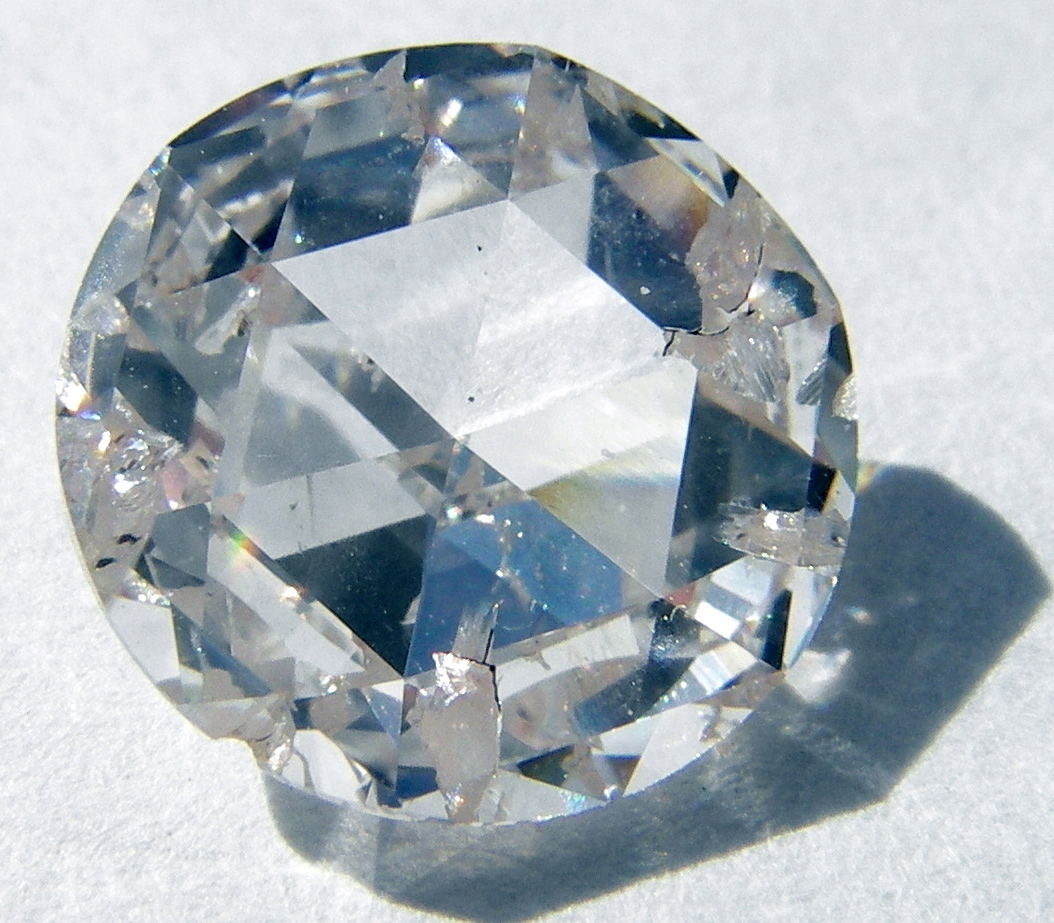
The zircons in my lunch companion’s ears
are much too large for Saturday at noon.
Transparent as her ego, false as tears
of petulance, each signals like the moon
at dawn: a circle empty as a hole
against a surface pale as dying leaves.
They twinkle as she bites her buttered roll.
They glitter as she knots her sweater sleeves.

She moves her head to toss her processed hair
and wink her lobes, conversing as she chews
about her daughter. Twisting in her chair
she gasps “How could that 9 year-old refuse
to stay with me?” Appalled indignant then,
she agitates her zircon ears again.

Posted in Poetry | Leave a comment

PGIO (3 of 3)

22mirror_600[1]

Doug and Charles were completely different, was El’s first idea when she considered the question. One was a hippie and the other was straight about everything but sex. One was a lefty liberal and the other voted Republican. One was born after the big war and the other had childhood memories of D-day. And yet…

They were both Protestant white males born in the noncoastal West. Doug was from Wyoming and Charles’s first home was in Montana. Each had an older sister with whom he was never close – in fact both of those siblings died of rare accidental conditions in their 40s and neither was much mourned by her brother. Doug’s and Charles’s ancestors had been in the U.S. almost as long as the U.S. Each had a quasi-professional father with middle-class aspirations and a pallid, often-silent mother. Doug’s mom was mean-minded and stingy with affection and praise. Charles’s mother doted on him but was submissive to his father’s plan for him, so she permitted her boy to be sent out of state to a military high school.

El had been a seeker of intimacy each time she married, so she got to know her husbands well. She concluded long ago that what she’d thought was silent strength in each of them was really just silence. She had come to understand that both Doug and Charles had received early parental approval for acting like brave little soldiers. Each grew up with a hole in his soul, and acted like the only patch for that was a mate.

She’d never noticed how similar they were. She started to ask herself why she chose that type but her brain slammed the realization into her that she didn’t choose Doug and Charles so much as allow each of them to choose her.

Really. Now that she thought back on events, she admitted that the marriages were their ideas. As much as El always intended to try the institution, if for no other reason because that was the only way to be recognized as an adult in her family of origin, she’d been surprised when Doug had left the waterbed that spring morning to fetch a ring he had hidden in his bureau and to formally propose. She’d been startled by the speed with which Charles turned their affair into an engagement. Both of her husbands had made it excitingly clear that their happiness rested on her consent. They were like thoroughbred stallions who would only let her ride them. Yeah.

El asked herself what sort of man she would have chosen instead. She reviewed old crushes, from high school to the recent past. She was attracted to creative men. She liked a guy who was selfish enough to have his own agenda and not back away from it. She thought nothing was sexier than a well-developed sense of humor. And she knew that neither Doug nor Charles shone in those aspects.

She took five deep breaths as she finished her exercise. She still needed to figure out what to wear. It was time to move toward the office. She and Patrick were going out for lunch at her favorite restaurant; that made the commute worth her time. She started to frame her epiphany for presentation to her brother as she flipped on the shower.

I just googled PGIO. I assumed the Internet would say it stood for Penetrating Glimpse Into the Obvious, but no. I first heard the acronym in 1978 and I’m sure it wasn’t original – Joe was entertaining but not original. I immediately adopted it, in place of the word Ellen and I agreed to call a “no duh” insight: profunditty.

Posted in Fiction | Leave a comment

PGIO (2 of 3)

22mirror_600[1]

She had married for the first time a year after college. Doug had been her closest friend, and five years of their ten were good. They tried grad school, started their first real jobs, bought their house, birthed their three kids. Then they started going stale. Doug stopped wanting adventures and started nursing allergies and hemorrhoids and pessimism. He turned into a complete drag, which made El complain about him to her best friend first and later to himself, which made Doug grumpier, and less secure, and then he started to tiptoe around El and try to second guess what would make her happy, and by the time she got to know her client Charles she was ripe for picking.

And Charles was ripe for dallying. Neither of them knew then that he was experiencing a classic mid-life ego crisis. El was thirty-two and Charles was ten years older. He already drove a red roadster, and he was possessed of a fine home, a successful career, and a willowy blonde wife. They made trips to Europe, held season symphony tickets, and adored their only child, a well-behaved ten year old son. They were both bored almost to tears. His wife engaged in retail therapy and decided she needed another baby. Charles began an outline for the novel he always intended to write, and began having business lunches with El. His book was to be based on his Viet Nam experiences, which contained his only extra-marital affair, and it was probably his memories about that Asian nurse that fired his lust as much as the long lunch conversations. He told El he didn’t make friends often but he treasured his acquaintance with her. He wanted to deepen it. He suggested a regular Friday lunch date.

El thought the invitation peculiar but interesting. She found his personal questions odd but provocative. What new friend asks how you behave when you’re angry? How many other dining companions share war stories and, when you reply with penetrating questions, marvel about how funny it is that his wife never asked?

She agreed to lunch with Charles every other week. Those dates soon became the centerpoint of existence for each of them. Within two months they were fully infatuated and they took the next step. Six weeks after their first sexual tryst they confessed to their spouses and began living together.

Their relationship lasted seven years and their marriage lasted six. It turned out that Charles would rather be bored and comfortable than stimulated and edgy; after he was done with El he contracted a relationship with the old college girlfriend he’d rejected thirty years earlier. El discovered she’d rather be lonely than frustrated; she has remained single ever after.

She interrupted her meditations to pay attention to the abdominal crunches. She tried to keep her belly level, like she was balancing a full bowl of water in the area between her hips and above her pubic bone, while she concentrated on protecting her lower back. There were eighty reps in the sequence. She was happy to get to her feet after that, and kick her heels back one at a time as she worked her butt.

Posted in Fiction | Leave a comment