Near Ms (2 of 3)

imagesCA5XO29E

Meanwhile, Pamela dodged a bullet and missed a path. Her company was downsizing and she was terrified at the idea of being laid off. She dug in and began working extra hard, putting in long hours, showing her boss Ted just how dedicated she could be. She succeeded in keeping her position, but she also conditioned Ted to expect all that labor. If she had been laid off, she would have landed at e-Den.com, and she would have enjoyed their subsequent and famous success. She would have had time to write.

As it was, she worked harder and internalized more stress. Ted was smart but driven, and he demanded a lot from her. He was short – not more than an inch taller than her five foot six – and he had a Napoleonic way of compensating for his lack of height. He was divorced (four times so far), so he had plenty of time to work and expected it of those around him. Pamela’s neck was almost permanently stiff and her sleep became disturbed. She went to the spa as often as she could find any time, for one of Brian’s therapeutic massages, and she began to wonder about him. Even though he was a large man – six feet tall and big-boned – Pamela assumed he was gay. It wasn’t just where he worked; although the cosmetics/personal indulgence field has at least as high a gay percentage as the entertainment industry, straight people can certainly be found. It was Brian’s fastidious habits, his incisive observations about faces and bodies, his conversation about makeup and clothes. He crossed his legs at the knees. He sampled massage oils on his wrist and had a way of then sniffing them, a way even of checking his own pulse when he was exercising, that wasn’t very masculine.

Pamela told herself it didn’t matter what Brian’s orientation was; she only wanted to continue to be massaged by him. He was at least six or seven years younger than she, anyway. But she was lonely. It got to where she was considering the expense and confession of a dating service.

She arranged to get a facial as well as a massage from Brian. Then she threw hesitation to the wind and asked if she could get a full makeover. She booked appointments for massage, manicure, pedicure, facial, hair cut and color and styling, and makeup. It would be a full afternoon, and she intended to go to a formal opera reception and dinner dance, alone if she couldn’t find a date, afterwards.

Brian would perform all of the treatments. That was his idea; he took Pamela’s call and he arranged the calendar. He was simultaneously excited and apprehensive about the afternoon.

After his experience with the Black Widow, he said he didn’t like makeup and adornments. He often amused himself by visualizing everyone around him without their clothes and jewelry. This wasn’t a voyeuristic or pornographic hobby, and he received no sexual stimulation from it. It’s just that he was fascinated by the human form, no matter what its shape, and he only trusted clean nudity.

What drew him to Pamela was her wonderful clarity. Even though all of his spa clients came to him fresh from the pool or tub or shower, Pamela had an extra shine about her. Maybe it was her freckled skin or the glints in her curly brown hair, but it probably had more to do with her direct personality and open-featured face: Pamela acted clean. He liked that.

If it weren’t for the fact that she talked about men, Brian might have thought she was gay. She didn’t act mannish, but hers was a strong personality, she had perpetually clean fingernails, and there was nothing coquettish about her. He knew she’d never been of those shrieky-eeky females, squealing and jumping around when she saw a girlfriend, never going to a public bathroom alone. He knew without asking that she’d always been good at science. And she had a brusque, take-charge-and-fix-it attitude that he usually only saw in nurses and lesbians. But over time she talked enough that he knew she was straight, and once she booked the makeover appointment, he understood that she was getting serious about finding someone.
Posted in Fiction | Leave a comment

Near Ms (1 of 3)

imagesCA5XO29E

Most of the time Pamela didn’t think about Brian. She came to the day spa as often as her schedule permitted: about every three weeks. Brian gave the best massage she’d ever had, so she gratefully considered him immediately before, during and after a visit, but otherwise, she tended to be too busy to think of anything but items on her to-do list and an exhausted future of loneliness, and to be too full of those subjects to notice any opportunities around her. Just a week earlier, for example, she was barreling along on an afternoon walk to get exercise and bagels, striding fast and head forward as usual. She didn’t notice her surroundings or even the people she passed. She had just exchanged automatic greetings with a bearded man working in his garden when she tripped on an uneven bit of sidewalk. She didn’t fall (she didn’t have time to fall, she told herself as she recovered from her stumble and kept pacing). She walked on unknowing that if she had fallen, the bearded man would have come to her assistance, and they would have met, and her future would have been entirely more pleasant.

Brian generally knew all this about Pamela but it didn’t diminish his interest. He’d been at least theoretically attracted to her since he met her a year earlier when he took the job at the spa. She was smart. She was funny. She was complicated. She was safe. He even liked it that she was seven years his senior; that felt comfortable. But he hadn’t done anything about his attraction. He was still recovering.

Eight years before, Brian had been an up-and-coming stock broker. Twenty-seven years old, good enough looking, moving around at light speed and making over a hundred thousand a year. He had a succession of girlfriends and he liked every one of them, but he never fell in love. Maybe he was overly fastidious, but something about each one of his girlfriends prevented even his infatuation: bad toes, a way of pursing her mouth that showed him how ugly her future wrinkles would be, a habit of sucking her teeth… Until Barbara.

They were introduced at a fundraiser for the symphony. She was the most beautiful woman he had ever seen. Glossy black hair, creamy skin, warm blue lash-fringed eyes, crimson mouth and nails, slender wrists and ankles, narrow hands, and a way about her, an elegant magnetism. Brian thought her perfect. He fell in love.

Barbara was from Texas, a young widowed mother with a nine-year old adorable daughter. The investigators hadn’t yet caught up with her.

She was so charming, lovely, and glamorous that she managed to get Brian to pay for her condominium and her daughter’s private school and feel that it was his idea, all in a year and a half when she only actually fucked him four times.

Brian’s friends became concerned about him. They noted his obsession and were helpless to alter his behavior, but they rallied round and tried to comfort him when Barbara suddenly left town. The men from Texas told them that the lovely widow had lost not one but two husbands, actually, both rich and both possibly poisoned, and at the very least, she had questions to answer. But by then Brian was close to filing for bankruptcy.

His heart was even more mangled than his net worth. He didn’t have the hustle to stay in the financial district. He thought he’d be a doctor and even enrolled in some pre-med courses, but he soon realized that he couldn’t afford the long course of study. He diverted himself into anatomy, physical therapy, yoga and cosmetology classes, while working as a masseur and facialist. He grew critical about glamor. But he argued with himself about that. Try as he might to lose it, Brian remained very susceptible to well-applied makeup, nail polish, and lingerie. Perfume got to him. He felt safest with women at his work, who came to his massage table clean and white-robed, without all the ornaments. But he couldn’t lose those fantasies.

Posted in Fiction | Leave a comment

Editing

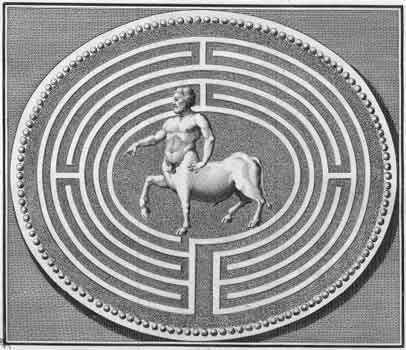
MinotaurLabyrinth[1]

Respectfully I edit what I wrote
three days ago, reviewing it for gist
and attitude. To get it I must quote
myself in love, by composition blissed
and wit remarked. A question begged or left
to hang will hang the piece in paucity;
a pose is poison, and I am bereft
by affectation’s bald dishonesty.

The piece must have beginning, center, end
and more than all must interest anyone
as finicky as we. What I intend
to teach I wrap in fabric I have spun
of entertainment, gambols of my mind,
by repetitious editing refined.

Posted in Poetry | Leave a comment

Walking the Dog

newspaper2

Outside the library, there grows a yard
of lawn-like grass, a triangle of green,
where canines bred to hunt, retrieve, or guard
review the scents of passers-by. The scene
around that place, amid the dirt and dew,
appears the same as what occurs inside:
a bunch of mammals reading what is new
in journals where the ink has barely dried.

Among that lawn grow untrimmed sycamores,
with leafless branches fanning out as they
elongate from the trunks. They seem to draw
vitality from sky of morning gray,
as if the limbs were veins and arteries
of earth, exposed in air for all to see.

Posted in Poetry | Leave a comment

The Loneliest New Year’s Eve (Y2K)

220px-Cerebral_lobes[1]

Alone I’ll be to say a wet goodbye
to all the years that start with 1 and 9.
My house will echo as the dog and I
make mumble-face and forelegs intertwine.
Admittedly I’ll long for company,
imagining a corny perfect date.
I’ll tell myself I’m better off to be
alone than to prefer an other mate.

I’ll cheat nobody’s heart. I’ll slam no soul
withholding clarity. I may invent
companionship and have myself a ball.
I understand how little I control,
but I’ve sufficient power to consent
to joyful intercourse, or none at all.

Posted in Poetry | Leave a comment

First Job in Second Person

tmp5170[1]

If you were me, you were born in early January. That makes your sun sign Capricorn, and nowhere near a cusp. You never studied astrology, and you were skeptical when you encountered it in 1967, but there was no avoiding it then. You were a freshman at Cal, and “what’s your sign?” was asked more often than “what’s your major?”

You were a creative individual – you aspired to be a writer – but you couldn’t ignore the zodiacal feedback you got. They said you were practical and sensible and really good with numbers. You’d do well in business. There was nothing in your chart about art.

By then you’d already received the message in other ways. Your two uncles were accountants, and you were accused of taking after them. You’d been prevailed upon (by your math teacher) to run for the office of student body bookkeeper in eighth grade, and you acquitted yourself well in the job, all of your ninth grade year. You managed the little supply window at lunch. You supervised the popcorn sales at the afternoon football games. You learned to make the faces on the currency always look up and in the same direction. Your till was never out of balance.

You majored in English at Cal, but that didn’t include any creative writing. You signed up for classical Greek as a break from the subjectivity of literature, and discovered it was as neat as arithmetic and as orderly as bookkeeping. You never bounced a check. You helped friends reconcile their bank accounts and, when necessary, you even created budgets for the most disorganized.

So it probably shouldn’t have surprised you when you landed a clerk/typist job in the financial district and flourished at it. But surprised you were. You didn’t commit to the job. You wondered how many other entry-level positions would have worked as well. You left and returned and went part-time and then back to full and even set out your own consulting shingle before you realized you were into it.

You made a career out of that first job. Your accidental field was retirement plan consulting. It was a subject utterly uninteresting to your friends in the 1970s. Forty years later, it’s one of your generation’s favorite topics. You discovered that you enjoyed it. You learned that money is a metaphor for just about everything.

You knew you were helping your clients reduce their taxes, and you couldn’t admire that as a life work. You kept at creative writing, sometimes, and engaged in active philanthropy to offset your financial district career. You maintained ironic distance from your own field by scoffing at its two bases: the concept of income tax and the theory of compound interest. As far as you’re concerned, income tax is unconstitutional. And you know that money is a medium of exchange; civilization’s alchemical tendency to turn it into a tradable commodity is just plain wrong.

Sometimes you ponder your job philosophically. You’ve been trying to figure out the purpose of existence all your life, so it’s natural for you to ask the question from the framework of market valuation and recordkeeping.

You specialize in small plans. They usually cover one or two business owners and a handful of employees. They hold too little to attract the power money managers; the business owners sometimes make plan investments that are closely held, not publicly traded, and therefore difficult to value. But the federal rules require that all plan assets be revalued and all plan accounts updated, at least once a year.

Then the challenge is to price an investment that has no readily ascertainable market value. It’s expensive to hire a valuation expert, especially once a year, especially if the plan is small. In your quest for a method, you find some IRS guidance about the matter.

The fair market value of an investment, that guidance suggests, is the price at which a reasonably sophisticated seller, under no obligation to sell, will let the investment go to a reasonably sophisticated buyer, under no compulsion to buy.

You latch onto the concept. “Oh excellent,” you sing within. You envision two people in a room, sitting across from one another. On a table between them is the object-to-be-valued. You laugh. It’s obvious to you that any two competent human beings would strike an agreement about the sale price within a few minutes.

That begins a train of thought long enough to cross continents. You understand a bit about linguistics and evolution; you know Chomsky wasn’t quite right with his Language Acquisition Device theory, but you also comprehend that your species has language because it is a tool for survival, and that a person will speak whether taught to or not. The reason a newborn baby sounds like a cat is because its voicebox is high in its throat. A few months later it will drop, permitting all sorts of phonation. When that happens, the airway intersects the esophagus, and opens up the possibility of choking. It turns out that choking is one of the main causes of accidental death. You get it: Evolutionarily speaking, humans “chose” vocalization even though it came with the risk of choking.

You see that the species is also well adapted to the marketplace. You theorize that human beings have a genetic predisposition for valuation and exchange.

And you find underpinnings for this idea. You come to the conclusion that bookkeeping must have been the first true profession. Sure there is general agreement that sexual prostitution led the way in human business endeavors, but that can’t be so. Undoubtedly women had been trading consent for food and other creature necessities since the beginning, but that’s not business. As soon as the trade became regularized and managed, there would be a need for someone to keep track of transactions. That’s bookkeeping. That’s record keeping. That’s first.

“Hah!” you think. “Aristotle was wrong. He said man is a political animal.”

You apply your college Greek. You look up the original phrase:

ὁ ἄνθρωπος φύσει πολιτικὸν ζᾤον
(ha anthropos fuzay politikon zo-on)

And yes, the first two words mean “man” or “person.” The third one translates “by nature.” But “politikon zo-on” doesn’t exactly mean “political animal.” “Zo-on” can be translated “animal,” but it’s more of a “life-form capable of mobility” within the larger class of “bios.” One would never use “You Zo-on” as an insult or a description of wild behavior. And “politikon” means “of the polis.” It’s not about campaigns, but about living in a village or city or other (small) community. For us, it means “civic” or “social.”

Yes. We are social beings. We live in the marketplace and we use money as a medium of material (and other) exchange. We invent social networks. We are not primarily about running for office or lying about promises.

Aristotle was correct. And yet …

Man isn’t the only social being. There are bees and ants and many primates, there are marine mammals – there’s a whole lot of socializing going on.

What makes humans unique? The marketplace. The ability to invent media of exchange. In truth, man is by nature a mercantile mobile life form.

Posted in Money Stuff | Leave a comment

Air

8542144c6845bd098ddfc5c3e0b5a319

The sky is falling on my head today.
Thrice rain-beset by storms, my brow is kissed
precipitantly as I wend my way
to work. The atmosphere is filled with mist,
the air is saturated, white as smoke
and cool as fog, wet as geyser steam.
The sky’s upheld on limbs of elm and oak
and heaven makes the sidewalks puddle-gleam.

As if the tears of God were atomized,
and now the holy finger is depressed,
we’ve tiny drops of water everywhere.
Miraculous of course but I’m surprised
the most to recognize, almost distressed,
that no one else appears to like this air.

Posted in Poetry, Weather | Leave a comment

To An Ex

FZCSAQ8F2ZL53DX.MEDIUM[1]

I’m trying to imagine being you
and I can’t find a place inside for fun,
a room for play, a window with a view
horizon-wide and open to the sun.
Instead I see you crouch around your core,
a bulwark fencing elements of stress,
selecting rest and safety over more
accomplishing, but discontent no less.

I witness wider hips beneath a mind
grown narrower with every prudent pick.
You’re cautious, careful, sensitive and kind,
and weekly I have watched you, always sick
and ever tired, fat and furrowed: blue
despair. I think it’s time you noticed you.

Posted in Poetry | Leave a comment

How It Wasn’t (Stop)

original

Chris offered “Coffee? Tea? Water? Wine?” and I asked if there was any beer. There was. I had an Anchor Steam and hoped for analgesic effect. We discussed aging and the attraction to comfort. Agreed one had to resist that. One had to be willing to fall. The sun found the spots on the window glass while we talked.

After awhile I began to wonder what it would be like to have sex with Chris. The idea surprised me. It would be totally inappropriate. But still…watching Chris’s mouth instead of hearing the words…

“I have to get going,” I said as I set the empty beer bottle on the small glass-topped table to my right.

“Are you sure you’re up to walking? I can drive you down the hill…”

“I’ll be fine. I probably should walk. Keep this thing from stiffening up.” I shook my left leg. “Thanks for letting me recover here.”

“Will you let me know you got home all right?”

I smiled at the concern. I took Chris’s number with me. Headed down the hill to my own house, telling myself my knee would be okay.

I made it home and called. We agreed to get together again, but we weren’t specific. I filled the bathtub with very hot water. I rolled a big joint and got into the tub with a new magazine. I soaked my knee and back till the water cooled.

My knee seemed to be no worse than it ever was: stiff in the morning, stiff in the evening, stiff after sitting still. But my lower back grew tighter and more tentative with each hour, and by the afternoon of the next day I had trouble straightening up. I tried aspirin, acetaminophen, ibuprofen, and naproxen. I tried brandy and mooched a Vicodin from a neighbor. I tried rest, but I lacked the patience. Eventually I even called the doctor.

That’s how I was sent to bed for New Year’s Eve. I told Chris, with whom I’d made some unorganized plan, that I was sorry but I didn’t even want to see anyone. I meant to stay down and be quiet.

I bought myself three quarters of a pound of tiger prawns and a bottle of good brut champagne. I ate early because I love prawns and couldn’t stand having them in the house without eating them. I love champagne too, but not by myself. I wasn’t in the mood for it when I ate the prawns, and I didn’t really want to wait till midnight. I opened the bottle shortly before 9, and I toasted the new year with New York.

My back hurt. While most computer-users shut their systems down, and the extremely cautious unplugged their machines and tallied their water bottles, I tried to get comfortable on my bed. While the Internet didn’t begin the anticipated usage interruption that would send ripples of glitch in and out of the network and make loggers-on evaluate their connect times, I glugged champagne and pushed pillows around my torso in a search for spinal support. I was quiet, perforce, but less contemplative than I intended. Even so, some ideas became clear.

“The most important thing is to feel better,” I thought, and I smiled as I committed myself to giving my 50 year-old frame more care. I lay on my side with one pillow beneath my right cheek and one against my lower back. I thought the words and subordinate goals fell into place like marbles percolating through holes in a plastic cube. Clarity like a map.

Body (kids) painting (kids) work (kids) friends (kids). My children are no longer dependently young enough to be first. And friends (sex?) are admittedly last. Adrift in modulated discomfort on my king-size bed, I didn’t reach for a tether. Coming to rest against my own pillows, I understood myself to want, for then, attention to my body, and noticed joy.

The phone rang. I would have had to twist around and almost sit up to answer. The machine was downstairs and I could hear Chris’s voice, checking up on me and wishing me well. I wasn’t sure what Chris and I wanted of each other, but I knew it could wait. I settled my face into my pillow, aimed my eyes at the television, and paid attention to myself.

Posted in Fiction | Leave a comment

How It Wasn’t (Start)

original

I walked up Spruce Street that Saturday, inadvertently stressing my lower back and wondering about the fault. It runs beneath Spruce or Euclid or the Arlington in my part of Berkeley, and I figured I was pacing along on top of it, near the end of an arbitrary millennium.

It would have been too weird if the earth had chosen one of those moments to quake. If a week before the big party the plates of Hayward ground against one another, epicentered.

It would have been so weird it was corny.

It didn’t happen. There was no quake, big or little, while I took my long Christmas walk. There were strange windstorms in Paris the following week, but no cataclysm or apocalypse as the cultural world rotated into its two thousands. Not even an Internet implosion.

Those non-events wouldn’t occur after the news of show cancellations and empty airline flights, when it began to be clear that most people simply didn’t want the pressure of trying to have a party-of-the-millennium, and therefore opted to just stay home. All the Y2K attention diluted the festivity and created a tsunami of anticlimax.

No, those wouldn’t not happen till the following week. On Christmas day I took a long hilly walk. I tried to forget all my tasks. I strode with my customary ground-eating gait, and the force from my heels’ impact on the sidewalk sailed up my skeleton and dislodged my lower back a little. As I wondered what it would be like to have the street wrench and yawn, the disks in my own spine grated against surrounding tissue, slipped to ease intolerable pressure, commenced an inflammation that would soon more than irk. And while that spinal event occurred there was an insistence coiling around my heart as well. I was alone and walking to try to hear myself, sensing nothing yet, but within my moods were eddying into a cyclone. There was a lot going on in me that day.

I tripped on uneven pavement. Berkeley is old enough to have charming small-block sidewalks, gardened enough to have mature tree roots that dislodge those small blocks, seismic enough to shift the sidewalk blocks like miniature tectonic plates. There are many cracks and misalignments. Usually the pedestrian just stumbles (gracelessly) and recovers to walk on (embarrassed), turning back with an accusing glare at the sidewalk. But sometimes the stumbler falls. I tripped on Christmas day when I bumped the toes of my right foot against the edge of an uptilted sidewalk block. I tried to catch myself, running forward to get my feet under my shoulders, jarring my 50 year-old self with each thudding step. I went down with dread. What flashed before my eyes as the ground rushed to meet me was the certainty that I was about to get injured.

“Oh shit,” were the thoughts that can be articulated. “This is going to hurt. This is going to shake up my insides. I won’t even know the full extent of the damage for days. Oh shit.”

I fell forward and took the impact on my left knee and the heels of both palms. I ripped my jeans and the skin on my hands, and I wrenched my left elbow. The next morning I would discover I had badly jarred my spine.

Instead of standing immediately and walking on, I rolled from my fall to sit on the sidewalk, knees up, examining damage. The tear in my pants. Blood beginning to seep along the whorls of exposed dermis. Flecks of sycamore twigs on flayed palms. Deep quivering.

“Are you okay?” The question came from above. I looked up and wondered how I had missed seeing this pedestrian: a bit above medium height, dark-haired, not inconspicuous.

“Sure,” I said, embarrassed, trying to get up before I was ready. Wishing I could just be alone, to nurse my knee with it raised to my face, to press my tender palms against my thighs.

“Let me help you,” and there was a hand extended, so I took it and rose a little shakily to my feet. “Thanks.”

“Really: are you okay? Would you like to sit for a minute? I live right here,” with a gesture down the slope from the sidewalk, toward the view.

“No. No,” I said and said again. “I’ll be all right. Really. I’m fine. Thanks for the assist,” and I looked into blue eyes below dark hair. “I tripped on the bad old sidewalk,” I explained, trying to laugh it off. “I feel incredibly clumsy.”

“Oh, we’ve all done it.” Reassuring smile. “I love it when the person doesn’t actually fall, when they just stumble and do that running forward deal, you know? And then they always look back as if blaming the sidewalk…”

I smiled. “Yeah. Look: maybe I will take you up on that seat. I’m a little shook up.”

“Good. Come in. My name’s Chris,” holding out that hand again, leading me down the brick walkway to the windowed front door, into a small living room and an upholstered armchair. There was a large window at the back of the room, looking out over the clear cold afternoon.

Posted in Fiction | Leave a comment