It was called Shell Shock at first. Then Battle Fatigue. Or Combat Stress Reaction, technically. It didn’t acquire the big syllables until late in the 20th century. PTSD. Post Traumatic Stress Syndrome.
Until a couple of decades ago, only soldiers suffered from it. Now it’s become as common as diabetes.
As far as I can tell, it’s something that strikes you if the trauma isn’t bad enough to make you block out the memory and isn’t light enough to shrug off. So depending upon strength of character and resilience, a person can get PTSD as a result of experiences ranging from a mean boss to horrific violation. Common, nonmilitary PTSD resembles anxiety.
Like everything else, there’s a spectrum. It’s complicated.
The Wagner family was poor. They attempted to eke out an existence on their small farm near Renningen. There was a little uptick in the1930s, when Papa managed to put his knowledge of metal tools to work and got some employment at the nearby auto plant, but the twenty kilometer commute and the political climate put short shrift to that prosperity. Mostly the five Wagners struggled.
Bertilda was the youngest of the three children. She was born in August of 1935. Her brother Fritz was a full decade her senior, and her sister Ute came three years after Fritz and was more like an aunt than a sibling.
She was what we now call a bonus baby. Five years after Ute was born, Bertilda’s parents figured there would be no more pregnancies. They weren’t disappointed. They had a son to follow his Papa and a daughter to help in house, and there never was much money. Their crops supplied them with subsistence, either directly or by the sales Mama and Ute managed, but that was about it. Bertilda was born to a struggling full house and was somewhat overlooked.
Her parents figured a girl raises herself. And Ute and Fritz were around to help care for the baby. Bertilda’s first years were rudimentary and somewhat chilly.
She was a cute little girl in a rickety farm house in a rural area, but that’s where her resemblance to Heidi ended. Instead of a grump-with-heart grandpa she lived under the authority of an overworked cold papa. Amid a drudge mother, a spoiled brother, and a whiny sister. If truth be known, Bertilda was born with a sweet temper and a cooperative soul, but her early needs weren’t met, her mind wasn’t cultivated, and her body received adequate but harsh care; she toughened.
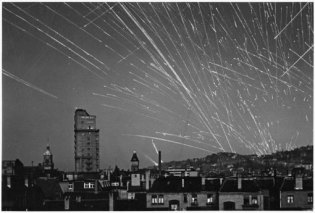
When she was nine years old the bombing raids came. One month after her birthday Stuttgart suffered more than fifty strikes with hundreds of thousands of bombs, ensuing firestorms and resulting death and devastation. By then her father and brother were both away, serving in the army. Mama and Ute and Bertilda experienced the horror without their men.
Daily existence had always been tough; then it was brutal. The Wagners were accustomed to glean from the nearby vineyards and to heat their little house with local timber. But in 1944 all resources were reserved for the military. The Wagner women were reduced to root cellar victuals. They tried to heat their home by burning grape stems.
For the rest of her life Bertilda could get along on little food. There were periods of time even after she came to America and began earning a decent living, when she subsisted on fresh fruit and canned protein. She remembered rising from her childhood cot on winter mornings to ice in her water basin and she didn’t much mind a cold apartment – she just added more sweaters to her skinny frame, like she’d learned in her youth. She could be heard reminiscing about how tough her mama had been, how little Bertilda needed for comfort even when she became old herself. But she never talked about bombs in the night, firestorms on the horizon, dead bodies in the city. She didn’t forget them – she matured into a grumpy old lady, always more likely to complain than to appreciate, but nothing drove her into shouting rage faster than neighborhood noise.
And she never talked about how morose her papa seemed, when he returned home, or how angry her brother Fritz was. For the Wagners were lucky; their menfolk survived. But Bertilda’s father brought home a lung weakness from which he never recovered. He was incapacitated for full-time employment and inattentive to home matters. Fritz, who hadn’t been a doting older brother before his service, acted toward his sisters like a fuhrer when he came home. Ute was able to stay out of his way or stand up to him. Bertilda was the creature he harassed. It started with him just ordering her around like she was his private servant: demanding that she serve him in the kitchen and help him in the barn. Her mother and Ute were happy to avoid Fritz’s bullying themselves, and whatever inclination either had to protect Bertilda was swamped by their own war-induced neuroses. Anyway, they told themselves the little girl was learning valuable skills in obedience and work. Neither was paying any attention when Fritz’s abuse of Bertilda became sexual.
Fritz didn’t deflower his sister. His abuse was progressive but had its limits. It began when his attempts to discipline Bertilda led to spankings. Fritz enjoyed the look and feel of her reddening ass so much that he began to find enough faults in her work to punish her daily. Within weeks his heavy hands wandered and commenced gentle probes and caresses. Bertilda quickly learned that the hitting stopped if she endured the fondles. She became quieter. She acted almost compliant. She consented to sit on her brother’s lap to avoid worse.
On her tenth birthday Fritz exposed himself to her. He held a small gift box in his hand as he instructed her to touch him. Bertilda never liked the bracelet Fritz gave her afterwards, or any other jewelry for that matter. But she learned to touch Fritz. The only thing she refused was to look at his erect penis, a refusal that sometimes induced him to thrust more violently within her palms.
The situation might have continued for the balance of Bertilda’s childhood except the family relocated. Papa’s health became too weak for life on the farm and the Wagners moved into the devastated but resuscitating big city of Stuttgart. Fritz got a job in the auto plant. He was no longer at home during the day. Then he met a woman at work and married her, and he moved out of the family apartment. Bertilda was almost twelve.
They say that whatever doesn’t kill you makes you stronger. That may be true. But it also marks you. It may even freeze you. You didn’t die. You have to believe, at an unconscious level at least, that the decisions you made during the extremity contributed to your survival. And many of you never review those decisions. Most don’t ever drag those childhood strategies up onto the table to look at them and renew or improve them. For the rest of her life Bertilda would be quick to anger, ignorant of her own sadness, adamant in her refusals, and highly irritated by noise.
Most of her adulthood was spent in the USA. She managed to arrange a visit to California, to see some of her mother’s cousins, when she was twenty-two. She never returned to Germany. She stayed in touch with her mother by mail and the occasional pricy long distance call, but she didn’t interact with her father or brother or even Ute after she left.
She landed in Berkeley and got a job at the university, in the then-developing sociology department. She was highly efficient and generally unable to get along with others. She picked up the language and customs quickly, she could smile and act cooperative when approached, but she quickly descended into vehemence when involved in any sort of committee or group project. She was rigid about rule-following and apt to use derogatory names for those with whom she disagreed.
She was engaged to be married for about four months when she was twenty-eight. She was still a virgin then and she insisted on remaining so until the wedding. Her fiancé broke off the engagement and, according to stories she later told, that was either because she refused him sex or he suspected she was an anti-Semite. She never came close to marriage (or intercourse) after that.
Like her engagement, her career ended early. She retired at fifty-six, having collected a settlement from the university. She accused two professors in the department of sexual harassment. Both denied her charges, and Bertilda never had evidence or witnesses, but she was loud and vehement and afterwards able to enjoy a debt-free subsistence retirement.
Because she didn’t need much. She’d bought her apartment as soon as the property owner created a TIC arrangement, and she was one of the original signers when the situation went condo. Because of her early purchase and prop 13, her housing expenses were minimal. She ate simply and little. She almost never ran the heat. She didn’t buy appliances except for the stove/oven and the refrigerator. She made her own clothes from materials found in the People’s Park free box. She never saw doctors or dentists. She drove a rattle-trap car till the county took it away.
That car enabled her to get to and from Marin County, where she volunteered a couple of days a week at the Marine Mammal Center after she retired. She was no more able to cooperate with people there than elsewhere, but it took the nonprofit organization several years to get rid of her. She was told that her service was greatly appreciated but that the organization worried about all the commuting she had to do. She was advised to take the appreciative plaque they presented her and to make room for new volunteers. She believed that.
Bertilda just turned eighty-one. Her body is going strong but she’s losing her memory and her mind. Her neighbors have tolerated decades of her rants and rules and tantrums, interspersed with periods of quiet and obvious attempts to “be nice,” but the situation has grown dangerous now. Bertilda keeps losing keys, electricity, money. She rarely knows what time of day or season of year it is. She has become confused about how to operate the common washing machine in her little condo development, so she has stopped laundering. She has also stopped paying taxes, utilities, insurance, car registration. Nobody can determine what she’s eating, if anything.
Six months ago her neighbors called Adult Protective Services. Bertilda is now a probationary ward of the county. The court date that will make the conservatorship permanent is coming up soon. Meanwhile the county has tried placing several home aides with her. The first bureaucratic goal is to let Bertilda stay in her place.
This story would have a neat conclusion if Bertilda could bond with one of the aides. The latest candidate tried hard. Edie is a heavy-set black woman, probably around forty. She and the county nurse managed to get Bertilda to open the door on the first visit, and they took her to lunch and bought her groceries. The next day Edie arrived alone. Bertilda wouldn’t let her in. Edie kept calling (the county got Bertilda’s phone reconnected). Eventually Bertilda came outside and talked to Edie on the front porch. The day after that, Bertilda refused to see Edie and screamed obscenities at her. Edie hung around for two hours. No go.
If this were fiction, there could be resolution. Bertilda could finally tell her own story and the author could intimate some healing. But that isn’t going to happen. Sadly but not unusually, Bertilda will proceed, shell-shocked and furious, into the long dark night.

![how-to-build-first-aid-kit[1]](https://sputterpub.com/wp-content/uploads/2010/09/how-to-build-first-aid-kit1.jpg?w=246&h=160)
![220px-Cerebral_lobes[1]](https://sputterpub.com/wp-content/uploads/2010/08/220px-cerebral_lobes1.png?w=138&h=161)
![220px-Cerebral_lobes[1]](https://sputterpub.com/wp-content/uploads/2010/08/220px-cerebral_lobes1.png?w=131&h=153)







 Sputterpub's Blog