The family greeted Madison and her boyfriend with open arms, but it wasn’t long before some of us started wondering. We tried to attribute their idiosyncrasies to cultural differences – her island upbringing, their Southern California-ness, youth – but we couldn’t suss out their motivations. We talked about them for days.
Madison was the accidental offspring of a plain professional Jamaican woman and a homely American grad student. Her parents were in their mid 30s when they met in Kingston, he visiting his diplomat sister and she working with the sister’s husband on a tourism campaign, and neither intended more than the lighthearted sex each never seemed able to find. They were dismayed when Paulette got pregnant the first month, but neither was tempted to terminate the sex, so they stuck together. They never really clicked and sometimes they fought like llamas, but they did get married after Madison came, and their union endured. They even had a second child, a planned baby they named Sam, when Maddie was seven.
Madison was an entitled protected bi-racial Jamaican. Both her Jamaican and American grandfathers had money; her little family was buffered from the slings and arrows. She was sent to private schools in the family sedan, and if she wasn’t in school her territory comprised the walled set of buildings she called home. When she was permitted to leave the nest, it was to fly to Los Angeles and enroll at USC.
Where she majored in partying. She made no secret of it. Every Facebook post showed her with a cocktail in one hand and a smoke in the other. Her face grew more decadent along with her clothing. The child seemed to age five years in her first semester.
By the time her second semester was over, she had flunked out and acquired a live-in boyfriend. Max introduced himself as a former USC student, still hanging around when he wasn’t trying to produce a short film or surf. He was eight years older than Madison, a six foot three inch hunk with dark blonde hair, close-set blue eyes, and manly features.
I think Max grew up in Union City but didn’t tell anyone. He was raised by a single working mom who had a pathological relationship with pain pills and as soon as Max learned to talk he took up embellishing. In fact his name was Duane. Max was from his middle moniker, but he said it was short for Maximilian when in fact his mother gave him Maxwell. He sometimes told dead father stories. After he graduated from Logan he left town and never admitted birthplace or alma mater again.
He didn’t see his stories as lying. It wasn’t like he was trying to avoid responsibility or hide his true character; he just wanted a more interesting blurb. As he grew up, he got involved in the municipal swim team and even played high school football, and he liked the coaching that came with the activities. Those experiences made him open, even eager, to follow a few older male new-age philosophers; between high school and meeting Madison, he lived in three different cults.
That’s not to say he didn’t learn. Especially in the second “family,” the Gurdjieff-based commune near Bakersfield, he was sent out for voice lessons, and he enrolled in local community college courses. Max was somewhat charismatic as well as handsome; he assisted in home-schooling at the commune too, and he developed his own calm Socratic way of encouraging students.
Anyway, he fell hard for Madison when he met her. She was waitressing at a bar and grill where he met a buddy for lunch (and to beg some couch room for a week or so in Santa Monica). Mad wasn’t quite old enough to serve beer, but she did all right as part-time hostess and waitress. She wasn’t quite a virgin, but close enough that she appreciated Max’s love-making skills, techniques he exposed her to hours after they met.
Their personalities meshed. They both liked to alter their consciousness and the sex was good. Max’s calm paternal attitude was a balm and a guide to Madison’s impulsiveness and absent-mindedness. It was like Max acquired the fathering he’d missed by acting the part for Madison. She’d had a present dad who loved her but who backed away from her when she entered puberty at 12, and focused all his attention on her little brother.
Max loved Madison, but he embellished for her too. It would have been awkward to confess that some of his opening statements had been untrue, and it was a lifetime habit anyway. So she thought he grew up in San Francisco. She understood that his father had died a heroic firefighter. She never questioned Max’s claim to a college degree. She even believed he would have made the Olympic water polo team if he had stuck with the sport.
They lived together but it was never full time. Max moved into her apartment. He offered to pay his share of rent, but Mad’s family had the lease covered. He bought Madison a black pug puppy she named Tovarich and they formed a little family.
A month later Max told Mad he had to spend weekdays in San Francisco. He had an opportunity to produce a short there (not true), and he also had a part-time gig that would provide living expenses while he worked on his project (somewhat true: $15 per hour branding work for an on-demand personal trainer app). He said he’d crash with his mother Monday through Friday and commute to LA every weekend. In fact his mother was in terrible shape and Max had to help care for her. His texts to Madison were purportedly from a Nob Hill condominium but really from his childhood room.
Their relationship flourished for another academic year. Mad attended Santa Monica College and continued to waitress part-time. She acquired a Buddhist motto tattoo between her breasts and the Jamaican area code on her left clavicle. Max drove down every weekend. The sex continued to be satisfying. He told stories about his branding job and a few vignettes about film. His counseling attitude didn’t wear thin. They probably wouldn’t have lasted two months if they’d been together daily but their part-time passion wore well.
Max finally got his mother into a long-term rehab program. The branding job wore out. Then there was no reason to be in the north, but there was no immediate employment in the south either. He returned to Madison and Tovarich and looked around.
Max is a restless individual. Full-time cohabitation with Mad worked for two and a half weeks and then he was formulating new plans. He’d always had aspirations to surf better than he was able, and that included dreams of trips to Fiji. He had looked into traveling there, but it took more money than he had and was too isolated to provide job opportunities. But New Zealand wasn’t far from there. And New Zealand, especially the Auckland area, attracted him.
He told Madison that his mother was engaged to a Kiwi and that she planned to emigrate with her new husband as soon as they were married. He bought a one-way ticket and shared his plan to try to settle near his mom. He added a sideways invitation for Mad to join him there but it was without a plan she could divine. He knew she had promised her father she’d return to college, in northern California, in a year.
Mad didn’t know what to do next. She would have gone with Max if he’d proposed marriage. As it was, she decided to travel a bit herself. She liked new places. She hoped a separation would make Max realize how much he needed her in his life. She bought a one-way ticket to Thailand. Her apartment lease would be up two days before her departure. The only complication was Tovarich. She arranged a home for him with one of her fellow waitresses.
That’s when the family gathered in the LA area. My nephew, Mad’s cousin, was marrying his girlfriend of six years. My other nephew, the groom’s brother, was acting as best man. Family came from northern California, southern Oregon, eastern Jamaica. Madison was the only one on our side already residing in the area.
We didn’t know their story. We had no idea that their little menage was about to break up. They appeared at the hotel with their little black pug, and they seemed to be a family.
We were all struck by Max’s size and Madison’s attire. My nephews promptly nicknamed their cousin’s boyfriend “Thor.” No one used the name to his face, but that’s how he’s remembered He looked like a big young Viking.
Mad was underdressed. She showed up in a beach shift, with no apparent undergarments. For the rehearsal dinner she kicked her flip flops off and strapped on heeled sandals. At the black tie wedding the shift was floor length but no more formal than the daytime dress. Her hair was unstyled. Her mother was dismayed that her fingernails were not polished; that was the first sign of the stress we all noted between Mad and her mom.
But the couple’s relationship seemed smooth. They acted comfortable together. They seemed to have worked out their deal.
I overheard an exchange between them that made me marvel. After the wedding many of us gathered in my brother’s ground floor room, a mini-suite that served as our hangout all weekend. I sat next to Mad and Max and Tovarich. Although the dog was carried more often than walked, he was without a leash just then, and Mad became agitated about the leash location. She addressed Max.
“Oh God. Where’s the leash? I can’t believe I lost the leash.”
“You haven’t lost the leash,” was his calm response. “And you don’t need to lose your cool.”
I think I would have resented those words from a parent, let alone a significant other. Madison seemed unfazed.
“Do you know where it is?”
“Yes. And so do you, if you’ll just take a moment to remember.”
“I’m drawing a blank.”
“Work with me. Do you remember having Tov on the leash when we came back from dinner?”
“Yes.”
“And then we were stopped by your mother.”
“Ye-e-s-s.”
“And you were upset after talking to her.”
“I didn’t get a chance to talk. You were there. She’s the one who talked. As usual.”
“Be that as it may. As it was. How did you feel when we left her?”
Madison looked up at Max under her eyelashes. She gave him a slow smile. “Okay. I remember now. I was pretty rattled. The leash is in our room.”
It was an interesting interchange. It was strange how we never saw them touch one another, but they seemed companionable.
Mad went for the leash then. First she asked her cousin if she could borrow his room key because she needed a lighter and he said he’d left his by the bed. There were all kinds of people smoking so I couldn’t understand what Mad really wanted, but she left us and returned with leash and lighter about a quarter hour later. Meanwhile I conversed with Max.
He said he was couch-surfing in San Francisco during the week and driving to LA every weekend to be with Mad and Tovarich. He told me his passion was producing independent films but it was near impossible to earn a living at that, so he was planning to emigrate to New Zealand. He volunteered information about his mother. Said she was newly married and that he liked her husband (a small man, compared to Max and his late father, but a kind humorous individual who really made his mother happy). I’m certain he said his mom had already moved to Auckland, and it was when he visited her there that he fell in love with the country.
It must have been 1 a.m. by then. Some of those present decided they were hungry, and five of them, including Mad and Max, piled into Max’s truck to seek munchies. I was beyond tired and not wanting food, so I went up to my room. I missed all the drama.
The truck occupants returned very stimulated. Although there was room for all five of them in the cab, two of them (the nephews of course) jumped into the truck bed to ride. They were pulled over by a cop within a mile of the hotel.
They got off with a warning but the cab occupants were a little freaked because they had an open bottle with them. There were no consequences but adrenalin. Then.
Apparently Max stole the tequila. It’s a hundred dollars a bottle, Don Julio 1942, and my brother always brings some with him when he travels. He went to pour some for the nephews right after the food-seekers returned, and he couldn’t find the bottle. Then he had a brainstorm: “Hey, you guys said you had an open bottle with you. What was it?”
Good question. He prevailed on Max to open the truck and he hauled out his Don Julio. At which point Max objected. He insisted that it was his bottle. That he always carried some because it was needed for an old family recipe. We’re all accustomed to American diversity, but there’s no way Max is Latino…
My brother says the surreal thing was how Max refused to back down. How weird it was to watch a grownup lie and conclude that he really did think if he insisted long enough he’d be believed.
Max surrendered the tequila then, but after he and Madison and Tovarich left, the bottle was missing. The dude had taken it again.
By the next morning, other discoveries were made. Max had told me he had to leave for San Francisco, for one of his jobs, by 4 a.m. But my brother saw him in the lobby at 9. He’d told me his mother lived in Auckland and he told my brother he stayed with his mother when he was in San Francisco, in her condo. When pressed for an address or neighborhood, he said “Snob Hill.” That’s not San Francisco-speak.
Our nephew’s room was broken into. He lost an iPad and some Vicodin. He remembered Madison borrowing his key. But then again, he’s careless. He left his balcony door ajar and the balcony was shared with other residents. All of us, including the bereft nephew, have trouble believing that Madison was in on whatever it was.
Oh, and the cartons of leftover wedding booze were nowhere to be found. The bottles were supplied by the bride’s father, and we all know Max carried the cartons to the loading area after the party ended. But seriously, someone would have noticed or heard clinking bottles during the food-fetching escapade, if the booze had been in the truck. Right?
WTF? Apparently Max lies about who he is. But did he add petty theft because he thought he’d never see us, or the US, again? Does Madison know?
There are continuing conversations about it among the family. The women mostly make comments about Madison’s mother. My brothers want to do nothing. The nephews burn to tell Madison’s father their uncle about Max. Me, I want to talk to Madison. Before she gets on that plane.
We all agree it will be good to have her near us. The girl needs some family attention.
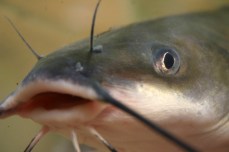
My nephews and brothers say Max is a catfish. I didn’t know the term till that weekend. Coincidentally, my nephews explained it to me when they got to sharing cable TV recommendations with my brother, hours before any of us met Max.
I looked up the term when I got home. Fishermen introduce a few catfish into a load of live cod, to keep the cod healthy on the long trip to the processor. I guess Max is a catfish. He certainly enlivened our weekend. He didn’t really damage any of us. My nephews smile when they say “Thor-the-thief.” And I’ve gotten at least two stories out of it.

![suitcase[1]](https://sputterpub.com/wp-content/uploads/2010/10/suitcase1.jpg?w=189&h=182)
![WIB-6.15.11[1]](https://sputterpub.com/wp-content/uploads/2011/10/wib-6-15-111.jpg?w=233&h=174)


 Sputterpub's Blog