
Beware of Molly. She told the story of our June genesis in the present tense, because that seems to her more vivid and less decided. She says telling in the now encourages the hearer to have opinions. But present-tense narration bugs me. We have to admit it happened already. The hearers will just have to have opinions about history.
The earth rolled beneath our feet and the next thing I knew I was wrapped in a white embrace with the bounteous Linda. That’s one way to put it. Except the movement is only smooth in fancy. In fact, that big quake felt like a series of thudding falls, like an elevator slipping half a floor, or a plane hitting a wind sheer. Boom! and we dropped a foot. Doom! and we were slammed sideways and down. I remember watching the guys move off the small stage as I rose to join Linda and Molly at their table. Then Molly left and I hesitated. Thud. Bang. I was tangled in white nylon pulling tighter as I tried to twist and haul myself loose. I felt a big soft body against most of mine, round head tucked under my chin as we fell together, on my left side her right. The power was out but I knew the cloth was white. I saw dust sparkling so there must have been light coming from somewhere.
We lay still for a moment. My arms embraced her and my fingers at first grasped handfuls of her, corrugated back flesh, before they learned to open and touch rather than hold her surface. There was nothing erotic about the moment. I spent it coming to terms with the event. I admitted that we’d just had an earthquake. I began to allow it to be a big one.
“You okay?” I must have asked, because she mumbled enough of a response that I knew she was. She didn’t move much then; I had to untangle us, or try to, while she lay there like a manatee. If Molly and Paul hadn’t come back I don’t know how much material I would have had to tear to free us. As it was, they found us and unrolled us from our cocoon. We weren’t really wrapped in it – we didn’t even have to spin once to get out of the cloth – but our initial squirms had twisted it around our ankles, and Linda’s inert bulk was a weird impediment to escape. Every time I touched her it seemed a handful of flesh came away from her body.
No. Paul and Molly got us out of that tangle, and then Linda had some kind of a hissy fit, shaking her flabby arms and flailing her hands, squealing “Stay away from me! Get away! Oooooh!” through chattering teeth quivering lips. There was a smack of flesh on flesh. I figured Molly hit Linda because the next thing I heard was a calm “Linda. Linda. Come with me. We have to leave here. Come. Take… my… hand,” in Molly’s deep voice. We all moved toward the back door.
And found Linda’s brother Robert behind the place. Most of the other escapees had dispersed but he was hanging around looking disoriented. Pale faced, wide-eyed. His narrow shoulders slumped and he looked even skinnier than normal. We all gazed for a moment at one another. In the ambient light I saw a handprint on Linda’s right cheek: Molly’s mark like a burn on a big freckled face.
We five stayed together. We heard that the bridges were damaged; there would be no easy way for Linda and Robert to cross back to her place in the San Francisco marina. We thought at first to go to high ground, to Paul’s house in the hills, but our every attempt to travel north or east was blocked by floods of water or people, and we could see fire in Molly’s part of town, even from where we were. So we all headed to my place. That made for some interesting sociology.
I lived then with my wife in a two-bedroom, half-a-house duplex on the southern edge of town. We had the downstairs flat, with more room but less light. It wasn’t even a mile from the club; we walked there in twenty minutes. Cindy was home and freaked, although nothing had happened in our place and our two kids were safe in their own homes in Texas. But Cindy is easily freaked, by small irritations or big catastrophes, and I don’t take her anxieties too seriously any more. I introduced her to Molly and Paul and Linda and Robert, and we all started drinking in front of the TV, watching the same coverage over and over again, more thirsty for news than for the liquor we poured (I remember Cindy asked Molly what she’d like with her vodka and Molly said “vodka”).
We soon learned that Linda and Robert wouldn’t get to the city that night, and we couldn’t get any news about whether Molly or Paul still had homes. Everyone prepared to sleep at my place. Then the power went out and we resorted to a few candles and an old transistor radio.
Molly was in a state. Her son was taking a year off college – he and the family dog were trekking through the Olympic peninsula – so it wasn’t fear for them that got to her. No. It turned out that Molly has an unnatural attachment to her house. It was her third home as a buyer but her first as a single woman, and she treasured the place as if it were her beloved. It had diamond-paned casement windows. It had clinker brick chimneys. Best of all, it had unpainted hardware and undrilled walls, because most of the owners in the house’s eighty years just happened to be single women who, as I then learned, don’t paint window hardware or drill holes in walls.
For the remainder of that night Molly didn’t know whether she had a house or not, and to describe her as distracted is to understate her energies. She was a wreck.
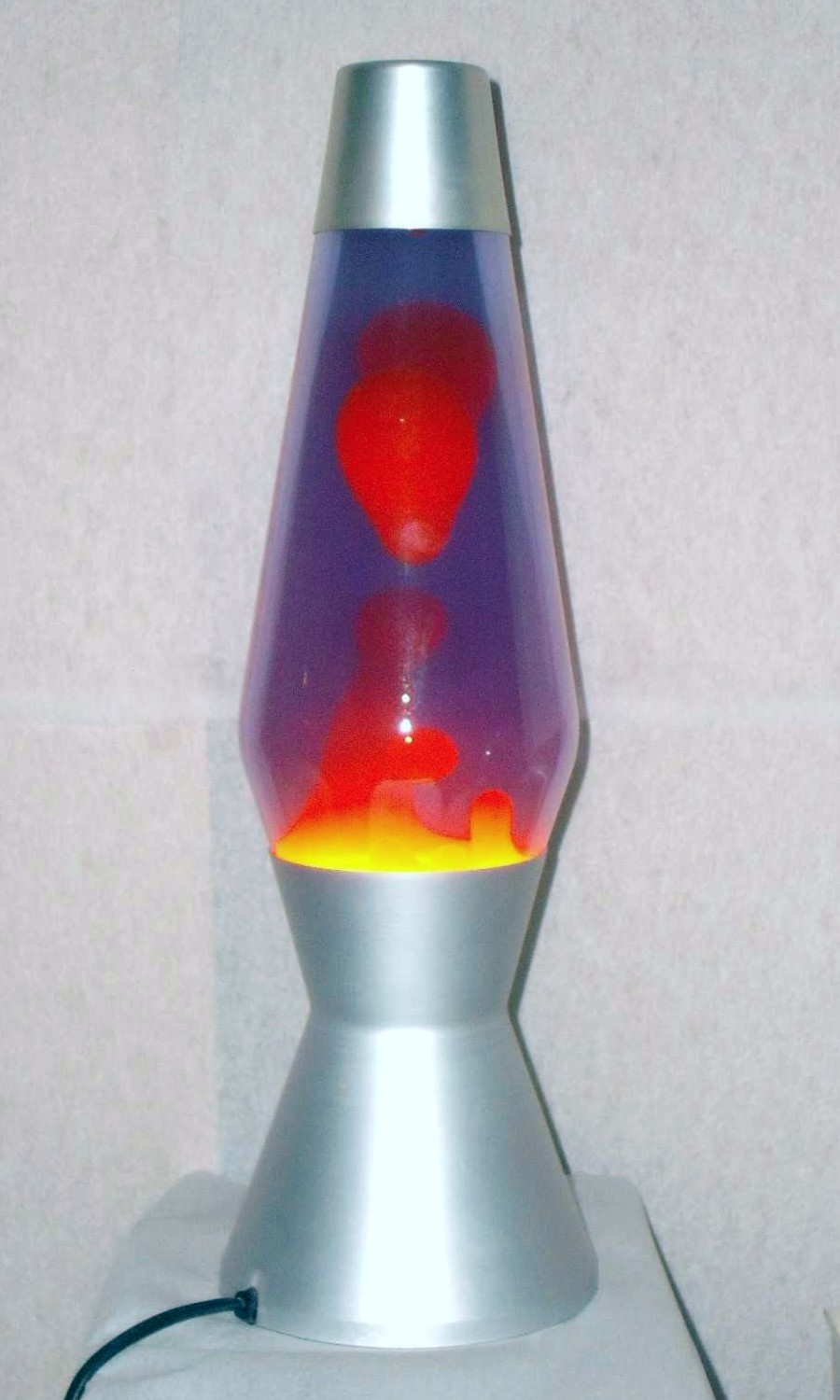
It’s still amazing to me how things sorted themselves out. How people coalesced, separated, and then came together in odd pairs. God’s lava lamp.
At first Cindy and I acted like proper hosts. Funny the social habits one falls into during thirty-plus years of marriage. We both poured drinks and offered crackers. She sat with Linda and Robert, commiserating about their inability to cross the water to San Francisco. They made an interesting tableau: Cindy leaning forward with the affected helpful face I’ve come to despise, offering commiseration to a fat hysteric and her thin near-catatonic brother. I stayed with Molly and Paul, listening to her semi-hysterical and his deliberative conjectures about their houses, trying to calm her and agree with him.
But after awhile Cindy must have decided that Robert needed more attention from her. Linda was annoying/boring but Robert was near panic about something. At the same time I started focusing on Molly and pretty much ignoring Paul’s monotonous pronouncements. Linda and Paul eventually drifted away from the rest of us and toward each other, where they commingled their fastidious exasperation.
The night passed slowly. It was mid-June so it wasn’t a very long one, but I was living so vividly that it impressed me minutely; I’m filled with a thousand images from it, and that thickness makes it seem large. With the power outages and the various fires it was darker than usual and at the same time eerie-toned, and that difference in ambient light may have lengthened the night too.
I lost track of Linda and Paul. They weren’t doing anything interesting or making any noise, and they took themselves out of my line of sight. I think they left together the next morning. I’m sure they parted immediately after that. They both returned to intact homes and orderly lives, and they grew no closer to anyone from the night’s experience. In fact, Linda stopped talking to her brother for months after the event; she acted like he was a big insect on her windshield and only wanted someone else to remove him so she wouldn’t have to think about him. I’ve heard that Paul resumed his insulated existence without apparent reflection or resolution.
I paid a little attention to what was going on between Cindy and Robert. I couldn’t understand why he was so freaked out; I mean, we were all experiencing that adrenaline-dissipating, emergency-accepting exhausted dissonance, like shock-deafened witnesses to explosion. Robert was agitated beyond the catastrophe of the evening. He didn’t cry but seemed consumed with grief or some other serious emotion. Maybe he was just struck by the randomness of calamity.
I’m no longer romantically or possessively interested in my wife, but I have spent most of my life with her, and I couldn’t ignore the fact that she seemed to be providing non-maternal nurture, sex-type attention, to this kid who was about thirty years her junior. I noticed the way she embraced him, neck-caressing breast-intense. The look on her face was almost young.
Cindy and I were still together then because we couldn’t afford to break up. That’s what I thought, anyway. There must have been more to it, though, because I would have left her for love at least three times in the past, if I thought I could afford it, but she broke us up for good the day after the quake, when she realized (as she announced to me) that she was in love with Robert. There was a little meanness in her tone and on her face when she said that, but mostly I believed her. Mostly I saw a smile in her eyes I hadn’t seen since the first year, a renascent Cindy I almost wanted again. She used to be beautiful. She used to be sexy. She’s gotten fat over the years, and nasty/bitter to be around even as she blamed me for her fat. But that morning, after doing whatever she’d done with Robert, she looked young again, and like she wanted to be happy.
I said I almost wanted her again. But I’d been there. Done that. I don’t say that crudely; I just knew then and surely now that Cindy and I were not made for each other. We were far from soulmates. I think your soulmate is supposed to make you feel good about yourself, but Cindy and I had the other skill set: the one that hones the ability to bait and turns a tickle into torture.
Anyway. By then I was fully infatuated with Molly, difficult Molly. I didn’t have the stamina for Cindy too.
She’d been so worried about her house. Her rugs, her pictures, her writing, her windows. She was distraught with anxiety about her stuff. At first she talked to Paul about it. I tried to participate; all I could do was listen. I heard them discuss all her computer files, and it sounded like she wouldn’t be more than inconvenienced. She had duplicate work files at her office in San Francisco, and hard copies of all her writing there too. No, it was something other than that. And she was fitful with worry, unable to sit still. Her restlessness is what shifted her from Paul to me; he was irked at the way she kept rising and pacing and then sitting again only to shift back and forth in her chair. That bothered him, but it kept drawing my attention. I was fascinated with the way her hair flipped around her head; I could almost taste the taut curve where her neck met the slope of her shoulder, I could almost smell that dark red hair. I wanted to catch her moving wrists in my hands, softly cage her fingers’ birdlike flutters, slowly stroke her calm.
Sometime that night Paul turned talking to Linda, and I followed one of Molly’s nervous excursions. I caught up with her in the kitchen, where she turned to me emotional out of all proportion. Her tense shoulders felt like padded stones in my palms. She wouldn’t find out for hours that her house was destroyed, but somehow she knew it already. She realized her homelessness and her face crumpled inward with grievous distress. I couldn’t help but pull her to me. I could do nothing other than pat her back with ineffectual little circular motions as she wracked her slim body with sobs.
She quieted to spasmodic convulsions in minutes. When she raised her face toward mine she showed me hot cheeks streaked with tear trails, a reddened nose and swollen mouth. I couldn’t help it. I covered that mouth with my own. Took her smooth thick heat on my tongue. So salty. So open. I took her and filled her and held her till morning. Till news of her home gone. I’ll never let go.


 Sputterpub's Blog