She’s moving easier now. Younger. Her heel doesn’t hurt and her knee isn’t bothering her. She’s about to open her front door and step south toward the bird tree and east to her newspaper, the dog is beside her and her left hand is on the brass doorknob ready to turn-and-pull, when she stops, arrested by the sight of the small windows in the door. Small rectangular windows. Like blocks well set together.
A week ago she went to a design workshop. A local developer wants to build a high-density low-income apartment building a block away from her house, and that proposal has drawn Natalie into activism. Not that she isn’t for such housing in concept, but she and most of her neighbors worry about the project’s affect on their traffic and safety. So she went to a massing meeting, where they heard what the development had to have and were able to arrange little foam blocks as they wished, trying to fit the essentials into the space. Before they got started, Chris the architect moved the blocks for them, demonstrating various configurations. That’s what Natalie remembers now.
Chris stood before their circle of metal stackable chairs. He’s a tall man, an inch or two over six feet, and he bent his knees a little and hunched slightly to handle the blocks. Mostly he looked at the seated neighbors while he moved the foam pieces, occasionally glancing down at his nonstop hands. He placed the blocks with such authority, and they fit on the cardboard platform so well, that Natalie was flooded with a wash of well-being. She was caught momentarily in a powerful, comfortable body-recollection, and the experience fascinated her. She knew immediately that an early childhood memory had been summoned for her, and she began stretching toward it, hunting around it like lightly scratching near a mosquito bite. Like seeing from the sides of her eyes in the pre-dawn light of her bedroom.
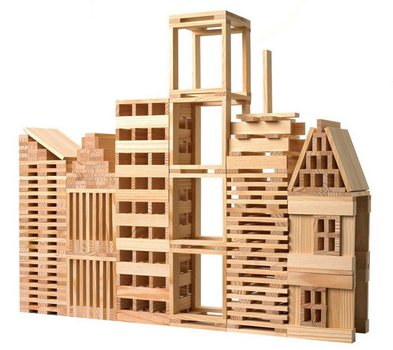
It was a man. A big man but not her father. Moving pale wooden blocks, with authority and confidence. Thunking them against one another with certainty. Building strength and spare beauty, a wall well-meant. Natalie thinks she was under age five. The memory is pre-school.
The dog whines eagerly and Natalie opens the door; he dashes and she walks out into the white light of 6:15 on an August morning, so typically overcast that it won’t be any lighter for hours. She sees movement in the tree and spots the big crow among the starlings. The dog rushes the tree with his tail sweeping in a large happy arc. Natalie watches smiling. She read somewhere that domesticated dogs are like permanent puppies: face-licking, playful, adorable. It occurs to her that Americans are like that; if dogs are permanent puppies then Americans are permanent children. Rambunctious and ready to smile. Hopeful and sunward. Impulsive. Concerned with fairness. She’s always looking for an index to her culture; she thinks she may be on to one.
She likes the notion. Under the momentary influence of exuberance, she picks up her pace along the brick wall to the newspaper. She almost skips. But she’s barefoot and the bricks are rough. She clips her left little toe as she cuts her turn too tightly around the front porch. The pain is immediate and mounting. Even so, she gets her paper before returning, hop-hobble, to the shadows in her house.
Twenty years ago it would have been a simple toe stub. Now it’s at least a sprain. It begins to swell. Discolor. She can’t walk on it. She sits down and gets it up. She blankets it with a bag of frozen peas.
Natalie admits she will have to slow down a little. At least for a day, she isn’t going to move fast or far. As the sun rises on an August Sunday at the western edge of her continent, she sits with her left leg elevated. She takes a deep breath and then another one. She begins, tentatively and inexorably, to feel again.


 Sputterpub's Blog