Abby’s breasts didn’t bring her good fortune but her eyes did. The breasts got her lots of attention and countless free drinks, but the feeling of power she had in the parked cars and strange bedrooms turned out to be temporary and really just a function of blood pressure and body fluids.
Her straightforward eyes opened doors for her. She landed in banking with a sociology degree, and everyone liked her directness. She was trusted. She worked hard enough. She advanced.
Which was more than fortunate, because both her breasts and her eyes quit her early. She put on weight in her 20s, which made her boobs even bigger but her whole shape blocky. The chest that used to stop traffic became a shelf for her short folded arms. She tended to rest her breasts on the lunchroom table (to provide some relief to her aching shoulders, for even the best Wacol bra couldn’t uphold all day). Her bust became the stuff of office jokes. It didn’t help that Abby chose to collect cute little cow ornaments and decorate her office with them.
Her eyes became trouble again when she was 30. She started getting some cloudiness, which her ophthalmologist ascribed to a little corneal edema from oxygen deprivation from her hard lenses. He ordered the latest in gas-permeable material but she hated them (they worked too well for their own good, normalizing her corneas so she began to feel the irritation when a little grit got in her eye, which made wearing them less comfortable than her good old bad lenses), so Abby, in one of the rare disobediences in her life, rejected the doctor’s order and returned to her old pair of lenses.
By the time she was 36 the damage to her corneas was considerable. And hormonal fluctuations were playing games with Abby’s tear production; even after she switched to the most permeable lenses available she didn’t get more than an hour of clear vision before her eyes fogged up. Her days of contact lenses were over.
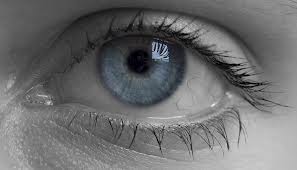
She returned to wearing glasses but she couldn’t see very well. She was starting to get the far-sightedness of middle age; as often as not she left her glasses on her desk and just read the computer screen without correction. Her naked blue eyes took on a soft-focus appearance which was not unattractive.
Sometimes she went without her glasses even outside. It was like the old days in junior high, guessing identities by posture and color.
Which was (again) fortunate, because it allowed her to notice what none of her able-eyed relatives did. If Abby could have seen her father’s face she might have been distracted from his posture. But as it was she detected the change in his walk, the shift in his stance, even the way he held his head a bit to the side. And it was she with her childhood memories of brain pain who paid attention when he mumbled about headaches.
Abby’s father had been having a series of small strokes. Because he never went for a checkup his atrial fibrillation wasn’t discovered until then. The doctors said it would have been very serious, perhaps catastrophic, if it had gone much longer undetected. Abby’s father said it would have gone undetected if it hadn’t been for her.
As for Abby, she said she doubted that. Hugging her father she’d state that it was just a matter of time, short time, before someone else would have commented about him. But she stopped complaining about her bad eyes after that. She settled back and looked at the world myopically, astigmatically, through pretty blue eyes, and found other things in her life with which to disagree.


 Sputterpub's Blog