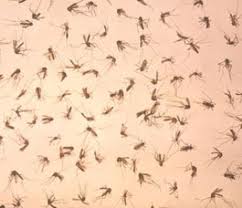
Clara had never been camping, and she liked everything about it except the mosquitos. She hated them. She didn’t understand why something so horrible had such a cute name. Little moscas: mosquitos. They were ugly, hideous bloodsucking abominations as far as Clara was concerned, and she couldn’t see that they served any useful purpose. She once read that the irritation from a mosquito bite comes from an anticoagulant the insect injects before she starts sucking. The article went on to state that if one doesn’t disturb the mosquito, she will withdraw the anticoagulant along with her needle-like proboscis, and there will be no resulting bumpy itchy reminder. It was hard to hold still while the nasty mosquito finished her meal, but Clara tried it. And it didn’t work. The bite left a welt just as irritated as any other, and Clara missed the satisfaction of trying to kill the bug.
The Everglades trip was important in two ways. It got Clara and Hank together; they began a relationship over those few days and, although they were separated by the width of the continent for awhile, they remained a tight couple ever after. Also, the Everglades with its obnoxious and omnipresent mosquitos started Clara thinking along the lines that would later develop into her Laws of Traffic. That was the dawning of the fractalization of traffic, circuit diagrams, and the natural circulatory systems.
People like Hank and Clara escaped anthrax exposure because they regularly failed to read the newspapers. They didn’t live in the suburbs. As innovative as was the terrorist attack against the World Trade Center and the Pentagon, it paled in comparison to the hideous brilliance of the later biological strike. Somehow everyone in America noticed that most cabs were driven by swarthy turbaned men, and that many corner stores were owned by Middle Easterners, but no one observed their other industry. The newspapers were delivered before dawn, after all, tossed with a regular thunk-swish from the darks of car interiors to the rough concrete of residential pathways. Nobody noticed the tossers, who were invariably young men of Arab descent. Hard-working, passionate Muslim men who had limited economic opportunity, no matter what, in this country.
The initial anthrax spores came through the mails, and landed in the offices of the media. No one was watching the home-delivered newspapers. On that Sunday in December nobody got suspicious about the slightly yellowish dust in the folds of the datebook section. Back in the days of old-fashioned inks a number of readers would have washed their hands to remove dark smudges after reading, but with the slightly-glossy convenience of unsmearable printer’s ink few washed between reading and eating breakfast. Americans blithely conveyed inhalational anthrax spores from their palms and index fingers to the warm moist vicinity of their noses and mouths. Epidemic ensued, with the expected vignettes of greed and generosity around the antibiotics. The U.S. lost almost eight percent of its population, mostly in the suburbs. Northern Mexico and southern Canada were affected too.


 Sputterpub's Blog