
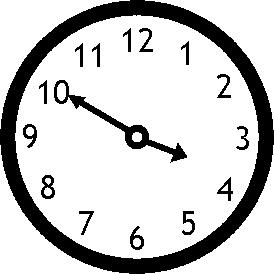
 When I was 22ish I spent some time on a kibbutz. The other volunteers (studentim) were from the US or Canada or the Netherlands, and the Dutch kids were pretty fluent in English. So I was surprised one afternoon, while cleaning potatoes in the big kitchen, to participate in the following exchange.
I was working with a Dutch girl whose name I don’t remember. The potato peeling machine was a heavy metal object that rested on the floor. It worked by spinning the potatoes around in its rough central cylinder, while the operator (one of us) ran cold water into the action. The abrasive interior took off all the dirt and most of the skin; we just had to hand-peel around crevices. We sat low, near the peeling machine, and we had to empty the thing of starchy water whenever we reloaded. The waste water splashed on our bare legs and dried white and stiff, attracting huge flies that we couldn’t easily swat away, because our hands were then occupied with potato and knife.
In the midst of this routine, my companion asked me what time it was, I looked at the sturdy watch on my left wrist, and I said, “Ten of four.”
“Of four?” she shot back. “What is this ‘of?’ Does it mean ten before four? Or ten after?”
Our shift went till 5, so I don’t think she was asking about the minutes, really. It was my first noteworthy experience with the power of prepositions.
We’re taught in elementary school that verbs are the action words. And that’s true, but there’s so much more to it that it may as well be false. It’s the prepositions that suggest intention and relationship. Prepositions are the stage directions of our descriptions.
Take a sentence like “He runs (preposition) the fence:”
He runs at the fence.
He runs to the fence.
He runs by the fence.
He runs into the fence.
He runs under the fence.
He runs around the fence.
He runs over the fence.
He runs toward the fence.
He runs from the fence.
He runs off the fence.
Or hear how a scandal could build: “The priest prays with children” or “The priest preys on children.”
I was exposed to classical Greek 40 years ago, and so impressed that I’ve retained some of what I then learned. Old Greek prepositions were even more powerful than ours. “Epi,” for example, isn’t just “about.” It’s more like “on top of a mountain surveying the widest view.” And “ana” is away from and up, like an army retreating from the seacoast into the defensible hills (thanks, Xenophon).


 Sputterpub's Blog