
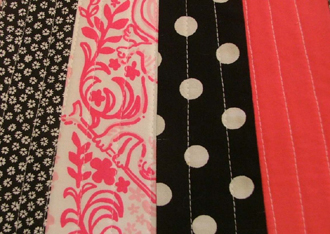
 Be warned: what follows is a really bad poem. I am posting it partly as encouragement to any young poet: yes, your work will probably be as full of itself as this, at first. This is an example of why we must keep at it. I am also posting it as a way of getting rid of it. It feels a little like a gross story; maybe if I say it out loud I can move it out of my head and into yours instead.
These 28 lines got more attention when I wrote them than any others I’ve ever penned. As I recall, the piece was inspired by my passionate outrage about racism, and I loved how much my father loved it, but the praise of others felt wrong in a way I can’t fully explain even now.
I wrote it shortly after my 15th birthday. Dad encouraged me, maybe even nagged me, to submit it to Harper’s magazine. Their rejection was gentle and not unexpected, and I value it more than the poem. Dad was the one who exposed me to poetry, read it to me, memorized it with me. He’s the one who gave me Robert Service, who presented me with the illustrated Rubaiyat of Omar Khayyam. Dad’s comments were always welcome and his advice was often followed.
It was the compliments of teachers, neighbors, and relatives that made me uncomfortable. I may have been sensing the shallowness of pop liberalism, but I think what really put me off was how easy I found the emotional manipulation. It’s like writing a verse “To Mother:” a sure-fire audience mover.
But I kept Patchwork (and the rejection slip). I learned from the experience. And I still prefer its metaphor to the old melting pot.
We’re all people, all human beings,
Black, yellow, white, red; all of one mold.
All of one cloth, but dyed different colors,
Styled a little different, but all of one fold.
The fold called humanity is the cloth of the universe,
The crease called people in the bolt of life,
The fine swath of satin in a strip of material,
But so like thin satin, split with a knife.
The knife that divides us is simply our ignorance,
Stupidity splits us; it keeps us apart,
Prejudice separates us from our brothers,
How can we fight this; Where can we start?
Let’s start at the bottom, the root of our problem,
The fine, thin, rich satin in harsh-colored threads,
The delicate cloth divided through ignorance,
Our once-fine, light satin, now separate bright shreds.
Now we are trying to splice strips together,
We’re trying to build up a cloth that won’t tear.
But how can we come up with satin from patches;
How can fine satin and patchwork compare?
Perhaps if we start with a new piece of satin,
And blend all the colors and dye it to match,
Perhaps if we did this, the cloth would be stronger,
The color more subtle, more soft than a patch.
And maybe if children could learn we’re all equal,
If we could be taught that all races are men,
Then maybe we’d be a much stronger people,
Maybe we’d be fine, strong satin again.
Aack! I couldn’t resist making sarcastic comments as I typed it out. Too bad I rhymed mold with fold and threads with shreds. Too bad I didn’t work that metaphor. Oh well, the meter is pretty good.
Harper’s sent a little typed note (the envelope was postmarked August 30, 1965):
We regret to say, after careful
consideration, that we cannot use the
manuscript which you have sent us. Thank
you for giving us a chance to consider it.
Every issue of Harper’s Magazine
contains material which, like yours, came
unsolicited. However, our editorial space
is necessarily limited and we therefore
have to decline many manuscripts which
are ably written and publishable.
We should like to comment individ-
ually on those we cannot accept, but the
size of our editorial staff makes this
impossible.


 Sputterpub's Blog